

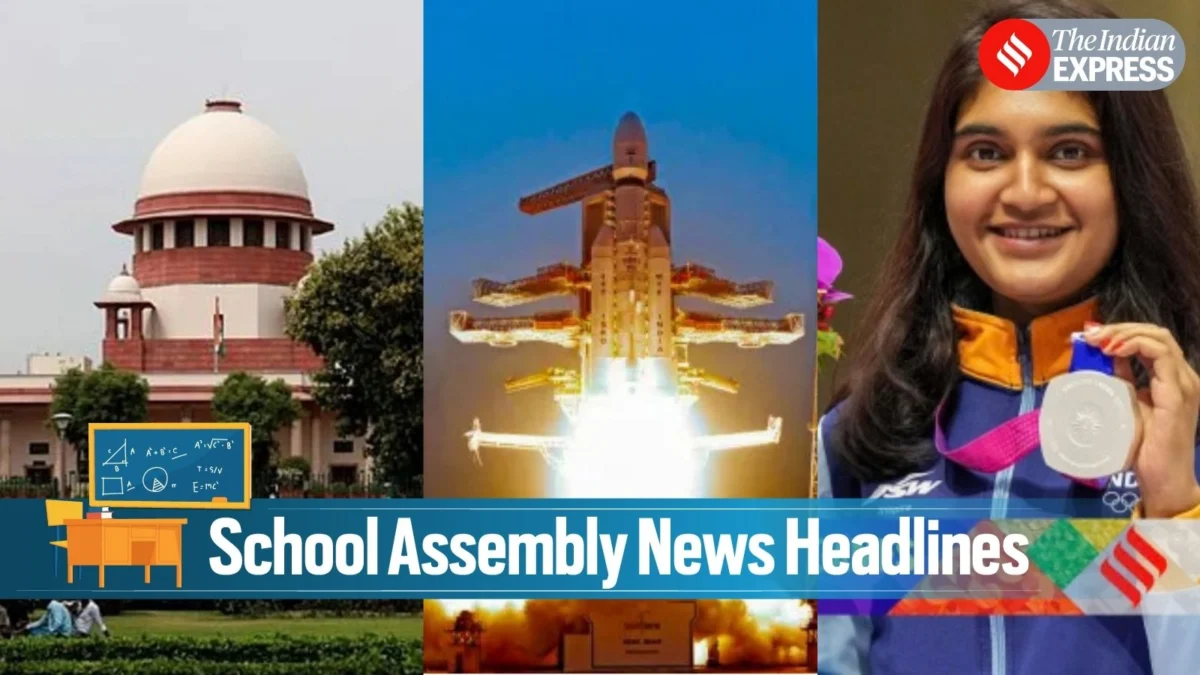
New Delhi, September 28, 2026, 4:34 PM IST – A day of significant developments unfolded across India, touching upon crucial economic policy, international relations, athletic achievements, and the burgeoning space sector. The Supreme Court’s decisive stance on UPI payment charges, coupled with high-level diplomatic engagements, underscored the nation’s proactive approach to domestic and global challenges. Meanwhile, sporting accolades and ambitious ventures in space exploration painted a picture of a nation on an upward trajectory, brimming with innovation and a competitive spirit.
Supreme Court Upholds Centre’s UPI Payment Decision, Rejects Stay Plea
In a landmark ruling, the Supreme Court of India today rejected a plea seeking to halt the central government’s decision to impose Merchant Discount Rate (MDR) on Unified Payments Interface (UPI) transactions. This decision, delivered on September 28, 2026, brings a degree of clarity and stability to the digital payments ecosystem, a sector that has witnessed exponential growth in India over the past decade.
The legal challenge, brought forth by various stakeholders concerned about the potential impact on small businesses and the wider adoption of digital payments, argued that imposing MDR would negate the very principles of accessibility and affordability that propelled UPI to prominence. However, the apex court, after careful consideration of arguments from both sides, ruled in favour of the government’s stance. While the specific details of the court’s reasoning are still being analyzed, initial reports suggest that the bench acknowledged the need for a sustainable revenue model to support the infrastructure and operational costs associated with the robust UPI network.
The government, represented by the Ministry of Finance and the Reserve Bank of India (RBI), had previously argued that while UPI has been instrumental in driving financial inclusion and digital transactions, its continued operation without a viable funding mechanism could pose long-term risks. The introduction of MDR, proponents argue, would ensure that the entities facilitating these transactions are adequately compensated, thereby encouraging continued investment and innovation in the digital payment space.
Chronology of the UPI MDR Dispute:
The debate surrounding MDR on UPI payments has been a recurring theme in recent years. While UPI was initially envisioned as a free person-to-person (P2P) and person-to-merchant (P2M) payment system, the rapid expansion of its usage and the increasing complexity of transactions led to discussions about its long-term financial sustainability.
- Early Stages (Pre-2020): UPI transactions, particularly P2P, were largely free for users and merchants. The initial focus was on adoption and building the digital payment ecosystem.
- Emerging Concerns (2020-2023): As transaction volumes surged, concerns about the operational costs for banks and payment service providers began to surface. Discussions around potential revenue streams, including a possible MDR, gained traction.
- Government Intervention and Policy Formulation (2024-2025): The central government, in consultation with the RBI and industry stakeholders, began exploring policy frameworks to address the financial viability of UPI. This period saw several rounds of consultations and deliberations.
- Announcement of MDR Imposition (Early 2026): The government formally announced its decision to introduce a nominal MDR on certain UPI transactions, sparking widespread debate and leading to the legal challenge.
- Supreme Court Hearing and Verdict (September 2026): The Supreme Court heard the case and delivered its verdict today, upholding the government’s decision.
Supporting Data and Context:
India’s digital payments landscape has transformed dramatically. According to data from the National Payments Corporation of India (NPCI), UPI has facilitated trillions of rupees in transactions, with billions of transactions processed monthly. This widespread adoption has not only benefited consumers but also empowered millions of small and medium-sized enterprises (SMEs) by providing them with an accessible and cost-effective payment gateway.
The imposition of MDR, albeit a small percentage, is expected to generate revenue that can be reinvested in enhancing the security, reliability, and scalability of the UPI platform. It also aims to create a more equitable system where all participants in the transaction chain contribute to its upkeep.
Official Responses and Implications:
The Ministry of Finance welcomed the Supreme Court’s decision, stating that it provides much-needed clarity and will foster a sustainable ecosystem for digital payments. The Reserve Bank of India also reiterated its commitment to ensuring the smooth functioning of UPI while safeguarding the interests of all stakeholders.
The implications of this ruling are far-reaching. For businesses, particularly SMEs, there might be a marginal increase in transaction costs. However, the government has indicated that the MDR will be structured in a way that minimizes the burden on smaller enterprises, potentially through tiered structures or exemptions for micro-merchants. For consumers, the impact is expected to be minimal, as the focus of MDR is primarily on merchant transactions.
This decision is likely to spur further innovation in the digital payments sector, encouraging the development of more efficient and cost-effective solutions. It also signals the government’s commitment to a regulated and sustainable digital economy, ensuring that the growth of fintech is built on a solid financial foundation.
Diplomatic Engagements: Indian Foreign Secretary Meets US Congressional Delegation Amidst Global Sanctions Landscape
In a significant diplomatic development, India’s Foreign Secretary engaged in high-level discussions with a visiting delegation of the United States Congress today. This meeting, held against the backdrop of the recent "Sanctioning Russia and Iran Act" enacted by the US, underscores the intricate geopolitical currents shaping international relations and India’s pivotal role within them.
The delegation, comprising influential lawmakers from both parties, arrived in New Delhi with the objective of fostering deeper bilateral ties and understanding India’s strategic perspectives on a range of global issues. Central to their agenda was a discussion on the implications of the new US legislation, which aims to impose stringent sanctions on entities engaging with Russia and Iran.
India, as a major global power with its own complex geopolitical and economic considerations, has consistently advocated for a balanced and nuanced approach to international sanctions. The nation’s long-standing strategic partnerships and its significant energy import requirements from both Russia and Iran present unique challenges in navigating such a sanctions regime.
The Foreign Secretary, in her discussions, is understood to have articulated India’s position on the importance of multilateralism, international law, and the need for diplomatic solutions to global conflicts. She likely emphasized India’s commitment to its own national interests and its responsibility to ensure energy security and economic stability for its citizens. The delegation, in turn, is believed to have sought India’s insights into regional security dynamics and its approach to maintaining stability in a multipolar world.
Chronology of US-India Diplomatic Engagements (Recent Context):
- Pre-2025: Long-standing strategic partnership between the US and India, marked by increasing cooperation in defense, technology, and trade.
- Early 2026: Escalation of geopolitical tensions involving Russia and Iran, leading to heightened discussions in the US Congress regarding potential sanctions.
- Mid-2026: Enactment of the "Sanctioning Russia and Iran Act" by the US Congress, introducing new complexities for countries with significant ties to these nations.
- Late 2026 (September 28): Visit of a US Congressional delegation to India for high-level discussions with the Indian Foreign Secretary, focusing on the implications of the new sanctions legislation and broader bilateral and global issues.
Supporting Data and Context:
India’s energy imports from Russia and Iran have been a critical component of its energy security strategy. While India has been diversifying its energy sources, these two nations remain significant suppliers. The imposition of broad sanctions could disrupt these supply chains, leading to potential price hikes and energy shortages. Furthermore, India’s growing trade relations with both countries, encompassing various sectors beyond energy, also present a complex web of economic considerations.
The US-India relationship has been steadily growing in strategic importance. Both nations share common interests in maintaining a free and open Indo-Pacific, combating terrorism, and promoting global economic stability. However, differing approaches to certain geopolitical issues, as highlighted by the sanctions legislation, underscore the need for continuous dialogue and understanding.
Official Responses and Implications:
While official statements from the meeting are yet to be released, the engagement signifies a commitment to open communication and mutual understanding. The US delegation’s visit indicates a desire to gauge India’s perspective and potentially explore avenues for coordinated action or at least minimize friction arising from the new US sanctions.
The implications of these discussions are significant for both nations and the broader global order. For India, it presents an opportunity to articulate its strategic autonomy and its commitment to a multipolar world order, while also seeking to manage potential economic and diplomatic fallout from the US sanctions. For the US, it offers insights into the complexities of engaging with a major global player like India and the need for a calibrated approach to sanctions that considers the diverse interests of its allies and partners. This dialogue is crucial in navigating the evolving geopolitical landscape and ensuring that strategic partnerships remain robust amidst global uncertainties.
Pistol Shooter Esha Singh Clinches India’s First Silver Medal at Asian Games 2026
The spirit of athleticism soared today as Indian pistol shooter Esha Singh secured India’s first silver medal on the 10th day of the Asian Games 2026. Her remarkable performance in the women’s 10m air pistol event has brought immense pride and joy to the nation, marking a significant achievement for Indian shooting at the continental championship.
Singh’s journey to the podium was a testament to her dedication, skill, and mental fortitude. Facing a highly competitive field of international athletes, she showcased exceptional composure and precision, battling through intense rounds of qualification and finals. The silver medal not only adds to India’s medal tally but also highlights the burgeoning talent within the country’s shooting fraternity.
This medal is particularly significant as it comes on the 10th day of the Games, potentially galvanizing the rest of the Indian contingent to achieve greater heights. It underscores the rigorous training and strategic preparation that athletes like Esha Singh undergo to compete at such a prestigious level.
Chronology of Esha Singh’s Achievement:
- Pre-Asian Games 2026: Esha Singh participates in various national and international shooting competitions, honing her skills and gaining valuable experience.
- Asian Games 2026 – Qualification Rounds: Singh demonstrates consistent performance in the qualification stages of the women’s 10m air pistol event, securing a spot in the finals.
- Asian Games 2026 – Finals: Facing immense pressure, Esha Singh delivers a stellar performance in the final round, ultimately clinching the silver medal.
- September 28, 2026: The medal is officially awarded, marking a significant moment for Indian sports.
Supporting Data and Context:
The Asian Games are a quadrennial multi-sport event that brings together athletes from across Asia. Shooting has consistently been a strong discipline for India, with numerous Olympic and Asian Games medals to its credit. The performance of athletes like Esha Singh reflects the ongoing investment and support provided to sports development in the country. The rise of young athletes in disciplines like shooting signifies a promising future for Indian sports on the global stage.
Official Responses and Implications:
The Ministry of Youth Affairs and Sports, along with the National Rifle Association of India (NRAI), have lauded Esha Singh’s achievement. Her silver medal is expected to inspire a new generation of aspiring shooters and further boost the profile of the sport in India. This success serves as a powerful reminder of the dedication and talent present within the Indian sporting ecosystem and the potential for further triumphs in the ongoing Games.
Indian Space Startup Launches ‘Country’s First’ Computing Satellite
In a momentous leap for India’s burgeoning private space sector, an Indian space startup today announced the successful launch of what is being hailed as the "country’s first" computing satellite. This pioneering venture marks a significant milestone, showcasing the nation’s growing capabilities in space technology and its ambition to become a key player in the global space economy.
The satellite, equipped with advanced computing capabilities, is designed to perform complex on-board data processing and analysis, reducing reliance on ground stations and enabling faster decision-making for various applications. While specific details about the startup and the satellite’s mission are still emerging, the announcement itself signifies a paradigm shift in India’s approach to space exploration and utilization.
This achievement is particularly noteworthy given the increasing global demand for satellite-based services, ranging from Earth observation and communication to navigation and scientific research. By developing its own computing satellite, India is positioning itself to cater to these demands with indigenous technology, fostering self-reliance and innovation.
Chronology of India’s Space Milestones (Private Sector Focus):
- Pre-2020: Indian space sector predominantly driven by ISRO. Limited private sector involvement.
- 2020 onwards: Government policy reforms to encourage private sector participation in space activities.
- Early 2020s: Emergence of several Indian space startups focusing on various aspects of space technology.
- September 28, 2026: Launch of the "country’s first" computing satellite by an Indian space startup, demonstrating indigenous capability in advanced satellite technology.
Supporting Data and Context:
The global satellite market is projected for substantial growth in the coming years. India, with its strong technical expertise and a growing pool of skilled engineers, is well-positioned to capitalize on this trend. The success of this private sector initiative is a testament to the effectiveness of recent policy changes aimed at fostering a more dynamic and competitive space ecosystem. It also signifies a potential shift from solely government-led missions to a more collaborative approach involving private enterprises.
Official Responses and Implications:
The Indian Space Research Organisation (ISRO) and the Department of Space are expected to commend this achievement, recognizing its contribution to India’s overall space prowess. This launch is likely to attract further investment into the Indian space sector, encouraging more startups to venture into space technology development.
The implications of this launch are substantial. It signals India’s growing self-sufficiency in space technology, paving the way for more complex and ambitious missions. Furthermore, it opens up opportunities for commercialization and export of Indian space technology, contributing to the nation’s economic growth and its standing on the global stage. This "first" computing satellite is more than just a technological marvel; it’s a harbinger of India’s future in the cosmos, driven by innovation and private enterprise.
Nandan Nilekani-Led Task Force Consults Former ISRO Chairman and Experts for Future Growth
In a strategic move to shape India’s technological future, a high-powered task force, led by the eminent Nandan Nilekani, has commenced consultations with a distinguished panel of experts, including former ISRO chairman K. Sivan. This initiative underscores the government’s commitment to leveraging the collective wisdom of seasoned professionals to chart a course for technological advancement and innovation across key sectors.
The task force, established to address critical aspects of India’s technological development and policy formulation, is reportedly focusing on areas such as digital infrastructure, emerging technologies, and their integration into various industries. The inclusion of K. Sivan, a figure synonymous with India’s space achievements, suggests a keen interest in harnessing the lessons learned from ISRO’s success to drive progress in other critical domains.
Discussions with former ISRO leadership are likely to revolve around best practices in project management, research and development, institutional capacity building, and fostering a culture of innovation – elements that have been instrumental in ISRO’s global recognition. The task force aims to translate these insights into actionable strategies for other sectors, ensuring that India remains at the forefront of technological evolution.
Chronology of Task Force Formation and Consultations:
- Mid-2026: Formation of the Nandan Nilekani-led high-powered task force to strategize India’s technological future.
- Late 2026 (September 28 onwards): Commencement of consultations with key stakeholders, including former ISRO chairman K. Sivan and other domain experts.
Supporting Data and Context:
India has made significant strides in various technological fields, from information technology and digital payments to renewable energy and space exploration. However, to maintain and accelerate this momentum, a forward-looking and integrated approach to policy and implementation is crucial. The task force’s mandate reflects a recognition of this need, aiming to create a cohesive roadmap for technological progress. ISRO’s journey, marked by cost-effective innovation and successful missions, serves as a powerful case study for aspiring to similar levels of excellence in other technological endeavors.
Official Responses and Implications:
The establishment of this task force and its proactive engagement with experts signify a commitment to evidence-based policymaking and a collaborative approach to national development. The insights garnered from these consultations are expected to inform future government policies, investments, and regulatory frameworks, ultimately contributing to India’s economic growth and its global competitiveness. The inclusion of former ISRO leadership highlights the importance of interdisciplinary learning and the potential for cross-pollination of ideas to drive innovation across diverse sectors of the Indian economy. This strategic engagement is poised to shape the trajectory of India’s technological landscape for years to come.
