

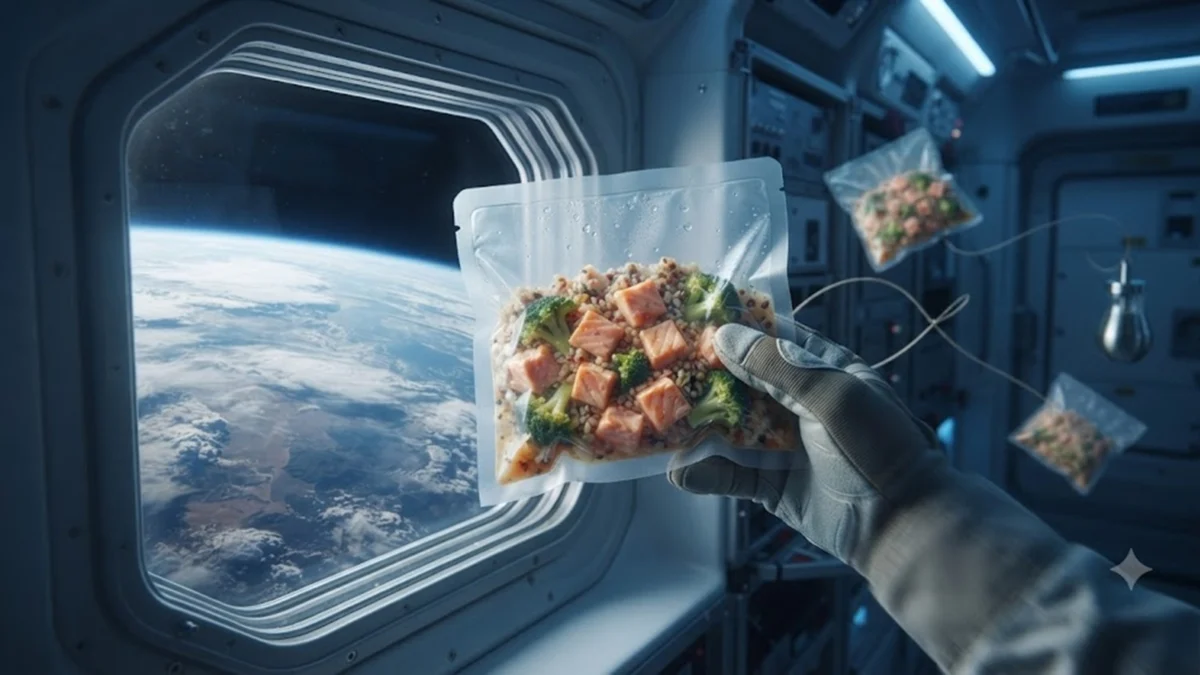
The act of eating is one of the most fundamental human experiences, yet when transported 400 kilometers above the Earth’s surface, it transforms from a routine necessity into a complex feat of engineering and physiological adaptation. Indian astronaut and fighter pilot Shubhanshu Shukla, a key member of the Axiom-4 (Ax-4) mission, recently provided a fascinating window into this extraterrestrial culinary world. Following his return to Earth, Shukla shared a glimpse of his "orbital restaurant," where the primary challenge isn’t just the menu, but the physics of the environment itself.
Through a series of updates, Shukla detailed the preparation of a seemingly simple dish—mango salad—while traveling at a staggering 28,000 kilometers per hour. His insights, coupled with expert medical analysis, reveal that space nutrition is far more than just "food in a tube"; it is a critical pillar of mission success and long-term human survival in the cosmos.
1. Main Facts: The Orbital Kitchen and the Mango Salad Protocol
When Wing Commander Shubhanshu Shukla posted the question, “What’s for lunch when your restaurant is travelling at 28,000 km/h?” he wasn’t just being rhetorical. Life aboard the International Space Station (ISS) requires a complete reimagining of food preparation.
The Preparation Process
Unlike an Earth-based kitchen, where heat and gravity are the primary tools, space food relies on stabilization. Shukla highlighted three primary forms of space rations:
- Dehydrated/Freeze-dried: Water is removed to reduce weight and prevent spoilage.
- Thermally Stabilized: Heat-processed to destroy microorganisms, similar to "ready-to-eat" camping meals but with stricter safety standards.
For his favorite mango salad, the process involved a "little science and a lot of patience." The steps included:
- Rehydration: Injecting a precise amount of water into the food pouch.
- Wait Time: Allowing the water to permeate the dried fruit to restore texture.
- Temperature Control: Using the ISS refrigerator to cool the salad or the food warmer to heat other dishes.
The Missing Microwave
One of the most surprising revelations for the general public was Shukla’s mention that the ISS lacks a microwave. On Earth, microwaves rely on convection to help distribute heat, but in microgravity, air does not circulate the same way. Furthermore, the electromagnetic interference and power requirements of a standard microwave pose safety risks in the delicate electronic environment of the space station. Instead, astronauts use forced-air convection warmers that slowly bring food to the desired temperature.
2. Chronology: From Selection to the "Space Salad"
The journey of Shubhanshu Shukla to the ISS is a landmark moment for the Indian space program. As one of the four astronauts selected for India’s Gaganyaan mission, his participation in the Axiom-4 mission served as a vital bridge between international collaboration and national ambition.
- Training Phase: Before heading to the stars, Shukla underwent rigorous training at NASA’s Johnson Space Center and SpaceX facilities. A significant portion of this training involved "habitability," which includes learning how to manage waste, maintain hygiene, and—crucially—prepare and consume food in microgravity.
- The Mission (Ax-4): During his time in orbit, Shukla participated in various scientific experiments. However, his social media updates focused on the "human" side of the mission, bringing the abstract concept of space travel down to the level of a dinner plate.
- Post-Mission Reflection: Upon his return, Shukla’s documentation of the mango salad served as an educational tool, highlighting that even the most mundane tasks on Earth require "technique" in space.
3. Supporting Data: The Physics and Safety of Space Dining
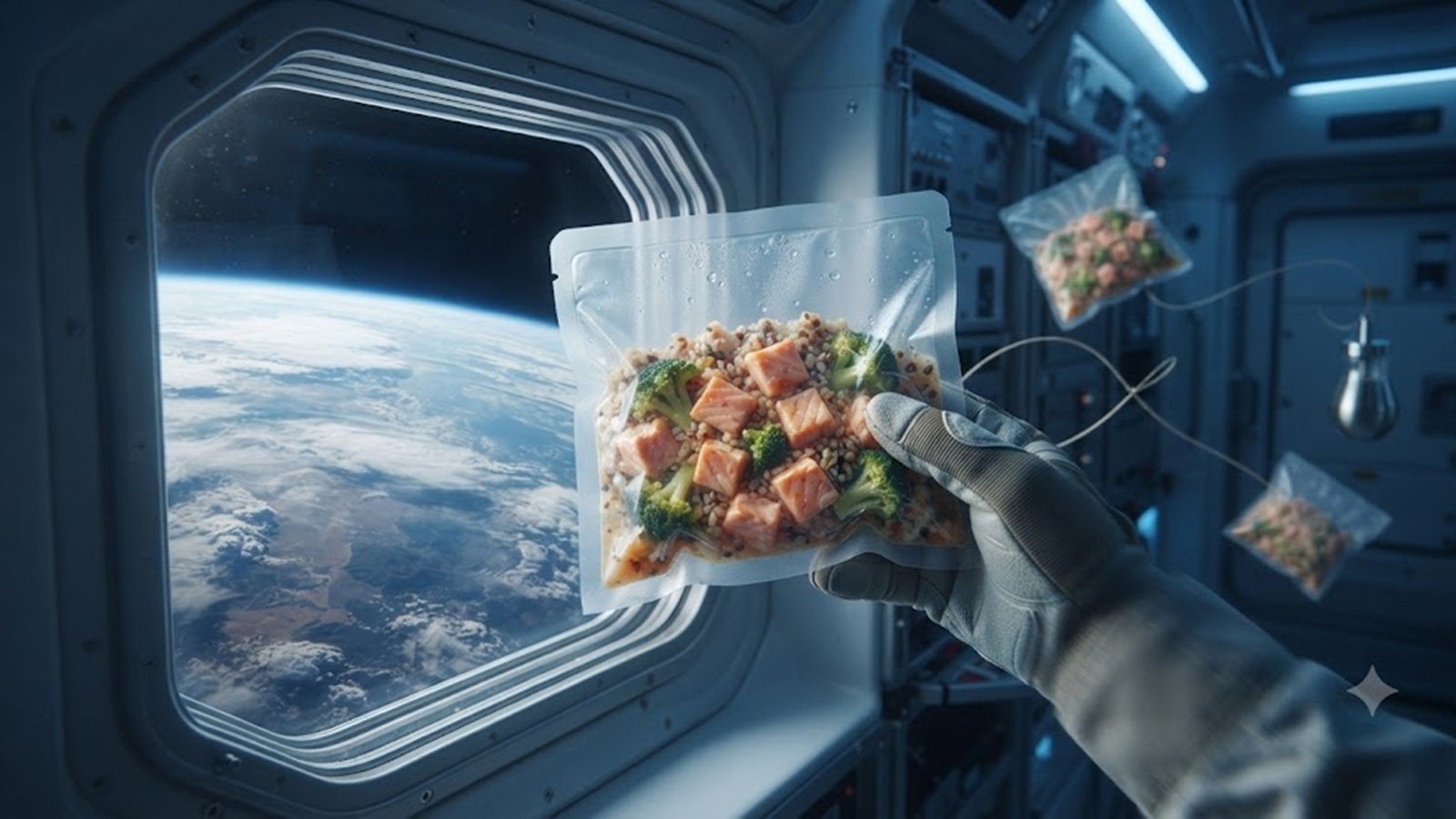
Eating in space is a battle against the laws of physics. On Earth, gravity is a silent assistant that keeps food on the plate and crumbs on the floor. In orbit, gravity is absent, leading to several logistical hurdles.
The Hazard of the Floating Crumb
Shukla noted that in microgravity, crumbs "don’t politely fall onto your plate. They float around, looking for adventure." This is not merely a cleanliness issue; it is a critical safety concern. Floating particles can:
- Be inhaled by astronauts, leading to respiratory irritation or choking.
- Infiltrate sensitive electronic equipment, causing short circuits.
- Clog the station’s complex ventilation and life-support systems.
Because of this, foods that are naturally "crumbly," like bread or crackers, are largely avoided or replaced with tortillas and "sticky" alternatives that hold their form.
Fluid Dynamics
Dr. Amit Saraf, Director of Internal Medicine at Jupiter Hospital, Thane, explains that liquids behave as spheres in space due to surface tension. Without gravity to keep water in a glass, astronauts must drink through sealed pouches and straws. This same principle applies to wet foods like mango salad; the moisture helps the food stick to the spoon through capillary action, allowing the astronaut to move it from the pouch to their mouth without it drifting away.
4. Official Responses: The Physiological Impact of Space Food
While the "space salad" might seem like a novelty, medical experts emphasize that the nutritional profile of these meals is a matter of life and death. Dr. Amit Saraf provided a detailed breakdown of how microgravity alters the human body’s relationship with food.
Appetite and Sensory Changes
Dr. Saraf noted that astronauts often experience a "fluid shift" during the early days of a mission. Without gravity to pull fluids toward the lower body, blood and interstitial fluids migrate toward the head. This causes "puffy face" syndrome and nasal congestion, which significantly dulls the senses of taste and smell. Consequently, many astronauts find Earth-food bland and prefer spicy or highly seasoned items to stimulate their appetite.
Digestion and Metabolism
While the digestive system (peristalsis) continues to function in space, the body’s metabolic demands change. "Reduced physical activity compared with life on Earth can alter energy requirements," says Dr. Saraf. However, the intensity of space-based exercise (required to prevent muscle loss) means astronauts still need a high-calorie, nutrient-dense diet.
The Risk of Malnutrition
The stakes for maintaining a strict diet are incredibly high. Dr. Saraf highlighted several risks associated with inadequate nutrition during long-duration missions:
- Bone Density Loss: In microgravity, the lack of mechanical loading on bones leads to accelerated calcium loss. Without precise amounts of Vitamin D and Calcium, astronauts risk developing "space-induced osteoporosis."
- Muscle Atrophy: Even with exercise, insufficient protein intake can lead to the wasting of skeletal muscles.
- Immune Suppression: Micronutrient deficiencies can weaken the immune system, making it harder for the body to fight off infections or heal wounds in the sterile but challenging environment of the ISS.
5. Implications: What Space Food Teaches Us About Earth
The meticulous nature of Shubhanshu Shukla’s mango salad preparation offers broader lessons for both future space exploration and terrestrial nutrition.
The Future of Deep Space Travel
As humanity looks toward Mars, the lessons learned by astronauts like Shukla are vital. A mission to Mars would take roughly three years, meaning food cannot just be "stabilized"—it must be grown. The psychological comfort of "fresh" food, like a mango salad, will be essential for the mental health of crews isolated from Earth. Shukla’s experience underscores the need for a "taste of home" to maintain morale in the void of space.
Lessons for Earthly Nutrition
Dr. Saraf suggests that the way astronauts eat reinforces a fundamental health principle: nutrition must suit the environment. Just as an astronaut must adjust their diet for microgravity, humans on Earth must tailor their intake to their specific physiological demands, whether they are sedentary, athletic, or recovering from illness.
Technological Innovation
The "technique" Shukla mentioned—the use of specialized pouches, rehydration stations, and crumb-free recipes—is already trickling down to Earth. Innovations in food preservation and lightweight packaging developed for the ISS are being utilized in emergency relief efforts, military rations, and long-distance trekking.
Conclusion
Shubhanshu Shukla’s orbital mango salad is more than just a meal; it is a testament to human ingenuity. It highlights a world where "lunch" is a scientific experiment and "dining out" involves a view of the entire planet every 90 minutes. As India continues its journey toward becoming a major power in crewed spaceflight through the Gaganyaan program, the experiences of pioneers like Shukla ensure that when Indian astronauts finally reach the stars on their own rockets, they will be well-fed, healthy, and ready for the challenges of the final frontier.
Bon appétit, indeed—from 400 kilometers up.
Disclaimer: This article is based on information from the public domain, social media updates from Wing Commander Shubhanshu Shukla, and medical insights provided by Dr. Amit Saraf. Space mission protocols are subject to change based on NASA and ISRO guidelines.
