

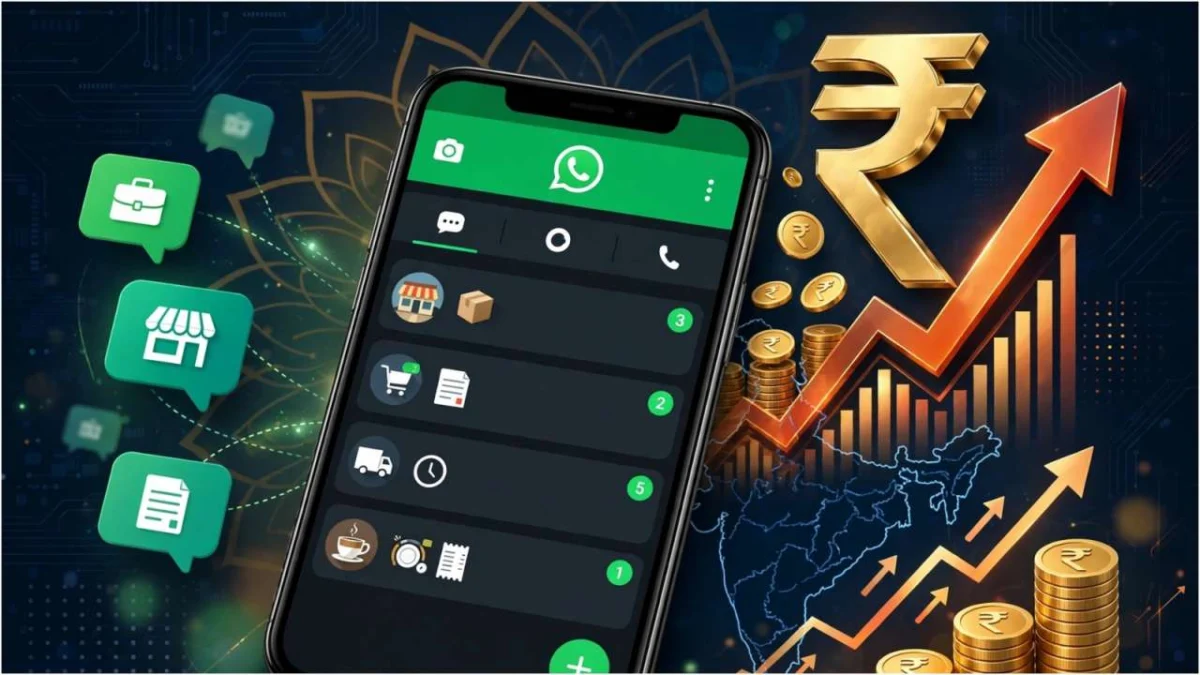
New Delhi, India – September 29, 2026 – Meta, the global technology giant, is poised to implement a significant overhaul of its WhatsApp Business Platform pricing structure in India, a move that will redefine how enterprises engage with their customers on the ubiquitous messaging service. Effective October 1, businesses leveraging the WhatsApp Business Platform will transition from a largely free model for certain customer interactions to a conversation-based charging system, marking a pivotal shift in Meta’s monetization strategy for its popular communication tool in one of its largest markets.
This impending change, while not affecting individual WhatsApp users or businesses employing the standard, free WhatsApp Business App, will have direct financial implications for medium to large enterprises that rely on the more robust WhatsApp Business Platform (API) for high-volume customer service, transactional alerts, and automated communications. The core alteration lies in the introduction of charges for "utility messages" sent within the previously free 24-hour customer service window, after a stipulated free limit.
The Evolution of WhatsApp Business in India
India, with its staggering half-billion WhatsApp users, represents a cornerstone market for Meta. Over the years, WhatsApp has transcended its role as a personal messaging app to become an indispensable tool for businesses of all sizes. Recognizing this potential, Meta introduced two distinct offerings:
- WhatsApp Business App: A free-to-use application designed for small businesses and sole proprietors, allowing them to create a business profile, use quick replies, and organize chats with labels. This app remains unaffected by the upcoming pricing changes.
- WhatsApp Business Platform (API): Tailored for larger enterprises, this API (Application Programming Interface) enables businesses to integrate WhatsApp messaging into their existing systems (CRMs, marketing platforms, customer service tools). It facilitates automated messaging, bulk notifications, and scalable customer support. It is this platform that is the focus of Meta’s revised pricing strategy.
Businesses across sectors – including e-commerce, banking, logistics, healthcare, and hospitality – have widely adopted the WhatsApp Business Platform due to its unparalleled reach, high engagement rates, and the perception of direct, personal communication with customers. From sending order confirmations and delivery updates to providing real-time support and personalized offers, the platform has become a critical component of digital customer engagement strategies.
)
A Paradigm Shift: Decoding the New Pricing Structure
The impending changes represent a strategic pivot for Meta, aligning its Indian pricing model more closely with its global monetization efforts for the Business Platform. Understanding the nuances of this shift is crucial for affected enterprises.
The Current Landscape (Pre-October 1)
Prior to October 1, businesses utilizing the WhatsApp Business Platform benefited from a relatively flexible pricing model for customer service interactions. Specifically, if a customer initiated a conversation with a business, the business could reply to that customer for free within a 24-hour window. This "customer service window" was a critical feature, allowing businesses to provide timely support, answer queries, and send essential transactional updates without incurring per-message costs.

Within this 24-hour window, various types of messages were considered "free," including:
- Utility messages: These encompass transactional notifications such as order confirmations, shipping updates, payment reminders, appointment confirmations, and delivery alerts. These messages are typically initiated by the business in response to a customer action or query.
- Customer support replies: Direct responses to customer questions or issues.
This model significantly reduced operational costs for businesses, encouraging proactive and extensive communication, which in turn enhanced customer satisfaction and loyalty. The ability to send free utility messages within the 24-hour window made the platform highly attractive for businesses with high volumes of transactional communication.
)
The October 1 Transition: What Changes?
From October 1, the definition of "free" within the 24-hour window undergoes a significant revision for businesses using the WhatsApp Business Platform. Meta will now begin charging for certain types of "utility messages" sent during this window, moving towards a conversation-based pricing model that distinguishes between different categories of interactions.
The key changes are as follows:
)
- Introduction of Chargeable Utility Messages: While replies to customer queries (e.g., a customer asking about product availability, and the business replying) will continue to remain free within the 24-hour window, utility messages initiated by the business (even if in response to an earlier customer interaction) will become chargeable after a free quota. This means transactional alerts like "Your order #123 has shipped" or "Your appointment is confirmed for Tuesday" will now incur a cost.
- Monthly Free Conversation Quota: Each unique business phone number registered on the WhatsApp Business Platform will be allocated 1,000 free service conversations per month. A "service conversation" is defined as any business-initiated message that falls under the new chargeable categories, or a customer-initiated conversation where the business replies. Once this quota is exhausted, subsequent service messages will be charged.
- Conversation-Based Pricing: Meta’s global model revolves around "conversation-based pricing," where businesses are charged per "conversation" rather than per message. A conversation is a 24-hour session of messaging between a business and a customer, starting when the first message from the business is delivered. Within this 24-hour window, multiple messages can be exchanged, but only one "conversation" charge applies. The new Indian pricing applies to "service replies" within this conversation.
This distinction is critical. If a customer sends a message and the business replies, that reply is still free. However, if the business then sends a utility message (e.g., an order update) within that same 24-hour window, that utility message will now count towards the chargeable quota or incur a direct charge if the quota is exceeded.
The Price Tag: A Deeper Dive into Costs
For businesses operating in the Indian market, Meta has stipulated a specific per-message charge for conversations exceeding the free limit.
)
Per-Message Charges and GST Impact
- Base Rate: The base rate for each delivered message that falls under the new chargeable category is Rs 0.115.
- GST Application: An additional 18% Goods and Services Tax (GST) will be applicable on this base rate. This means the final cost per message will be higher than the stated base rate.
To illustrate the financial impact, let’s break down some examples:
-
Scenario 1: Within the Free Limit
)
- If a business number sends 800 service messages (utility messages) in a month, these messages will fall within the 1,000 free service replies quota.
- Total Cost: Rs 0.
-
Scenario 2: Exceeding the Free Limit (Example from original article)
- If a business number sends 1,500 service replies in a month:
- 1,000 messages are free.
- The remaining 500 messages are chargeable.
- Cost for 500 messages (pre-GST): 500 * Rs 0.115 = Rs 57.50.
- GST (18% of Rs 57.50): Rs 10.35.
- Total Cost: Rs 57.50 + Rs 10.35 = Rs 67.85.
- If a business number sends 1,500 service replies in a month:
-
Scenario 3: High Volume Usage
)
- Consider a large e-commerce platform sending 10,000 service messages (e.g., order confirmations, shipping updates, delivery notifications) in a month:
- 1,000 messages are free.
- The remaining 9,000 messages are chargeable.
- Cost for 9,000 messages (pre-GST): 9,000 * Rs 0.115 = Rs 1,035.
- GST (18% of Rs 1,035): Rs 186.30.
- Total Cost: Rs 1,035 + Rs 186.30 = Rs 1,221.30.
- Consider a large e-commerce platform sending 10,000 service messages (e.g., order confirmations, shipping updates, delivery notifications) in a month:
These charges are calculated only if the service replies from a business number exceed the free limit. For businesses with very high message volumes, these costs can quickly accumulate, necessitating a careful review of their communication strategies.
Who is Exempt?
It is crucial to reiterate who remains unaffected by these changes to avoid confusion:
)
- Regular WhatsApp Users: Individuals using WhatsApp for personal communication will not experience any changes or charges. Sending messages to businesses will also remain free for normal users.
- Businesses Using the Standard WhatsApp Business App: Small businesses and entrepreneurs using the free WhatsApp Business App will continue to do so without incurring any new message-based charges. The changes are exclusively for enterprises integrated with the WhatsApp Business Platform (API).
Meta’s Strategic Imperative: Monetization and Sustainability
The decision to revise pricing for the WhatsApp Business Platform in India is not an isolated event but rather a component of Meta’s broader strategy to monetize its hugely popular messaging services. While WhatsApp has long been a user-growth engine for Meta, the company has increasingly focused on transforming it into a significant revenue stream, particularly through its business offerings.
Driving a Sustainable Business Model
Meta’s rationale for this pricing adjustment likely stems from several factors:
)
- Platform Sustainability: Operating a global messaging platform at WhatsApp’s scale involves substantial infrastructure, development, and maintenance costs. Monetizing the Business Platform is essential for ensuring its long-term viability and continued innovation.
- Value Proposition: Meta argues that the WhatsApp Business Platform offers immense value to enterprises by providing a direct, highly engaging, and trusted channel to connect with customers. The new pricing reflects this perceived value, moving towards a model where businesses pay for the tangible benefits they derive.
- Global Alignment: The conversation-based pricing model has been progressively rolled out in various markets worldwide. Bringing India’s pricing structure in line with global standards ensures consistency and optimizes revenue generation across its operational geographies.
- Encouraging Efficiency: By introducing charges, Meta subtly incentivizes businesses to optimize their messaging strategies, ensuring that every message sent is impactful and necessary, potentially reducing spam and improving the overall user experience.
This move underscores Meta’s intent to view WhatsApp Business not just as a service but as a robust, revenue-generating product within its ecosystem, alongside advertising on Facebook and Instagram.
Industry Echoes: Businesses React and Adapt
The revised pricing structure is expected to elicit a mixed response from the Indian business community. While larger enterprises might absorb the costs as part of their operational expenditure, smaller and medium-sized businesses heavily reliant on automated WhatsApp communication may need to re-evaluate their strategies.
)
Potential Challenges for Businesses
- Increased Operational Costs: For businesses with high volumes of transactional messages, the new pricing will directly translate into higher operational expenses. Sectors like e-commerce, logistics, travel, and financial services, which frequently send order updates, ticket confirmations, and payment reminders, will be particularly affected.
- Budget Reallocation: Companies will need to reallocate budgets to accommodate these new communication costs, potentially impacting other areas of their marketing or customer service spending.
- Impact on Profitability: For businesses operating on thin margins, particularly smaller players in competitive sectors, the increased cost per customer interaction could eat into profitability.
- Reduced Communication Volume: Some businesses might opt to reduce the frequency or types of messages sent to customers to minimize costs, potentially affecting customer engagement and information flow.
- Complexity in Cost Management: Tracking and managing message types (free replies vs. chargeable utility messages) and staying within the free quota will require more sophisticated analytics and system integrations.
Strategies for Adaptation
To mitigate the financial impact and maintain effective customer engagement, businesses will need to adopt proactive strategies:
- Optimizing Message Flows: Businesses will need to critically review their existing messaging templates and flows. This includes consolidating multiple messages into a single, comprehensive update, ensuring messages are concise and convey maximum information efficiently.
- Strategic Use of Free Messages: Leveraging the 1,000 free service conversations per month effectively will be paramount. This might involve prioritizing certain critical messages for WhatsApp and diverting less urgent or less impactful communications to other channels.
- Exploring Alternative Communication Channels: For non-critical updates or promotional messages, businesses might increase their reliance on alternative, potentially more cost-effective channels such as SMS, email, in-app notifications, or even direct website notifications.
- Investing in CRM and Automation: Enhanced CRM systems and advanced automation tools can help businesses intelligently manage conversations, distinguish between free and chargeable interactions, and avoid sending unnecessary messages that would incur costs.
- Analyzing ROI: Companies will need to conduct a thorough Return on Investment (ROI) analysis for their WhatsApp Business Platform usage. This will help them identify which types of conversations yield the highest value and where cost efficiencies can be achieved without compromising customer experience.
- Educating Customers: Businesses might need to educate their customers on what types of communication they can expect on WhatsApp versus other channels, managing expectations effectively.
Broader Ramifications for India’s Digital Economy
The revised WhatsApp Business Platform pricing has wider implications beyond individual businesses, touching upon customer experience, the competitive landscape, and the trajectory of India’s rapidly expanding digital economy.
)
Impact on Customer Experience
The most significant concern revolves around how this will influence the customer experience. If businesses scale back on proactive "utility messages" to save costs, customers might receive fewer real-time updates on their orders, deliveries, or appointments. This could lead to a less informed customer journey and potentially increased customer support inquiries through other channels, ironically shifting costs elsewhere or diminishing the very convenience WhatsApp provided.
Conversely, it could also lead to more thoughtful and targeted communication from businesses, reducing message fatigue for customers and ensuring that only truly valuable updates are sent via WhatsApp. The balance will be key.
)
Competitive Landscape
The pricing change might also stir the competitive waters in the enterprise communication space. While WhatsApp’s unparalleled user base in India gives it a significant advantage, increased costs could prompt businesses to explore or increase their usage of alternative platforms. These could include:
- Other Messaging Apps: While none currently rival WhatsApp’s penetration in India, business-focused features on apps like Telegram or even native app chat functionalities could see renewed interest.
- Traditional SMS: For purely transactional, one-way communication, SMS might experience a resurgence if its per-message cost proves more economical than WhatsApp for certain use cases.
- Email Marketing: For less time-sensitive information, email remains a cost-effective and established channel.
- Omnichannel Strategies: The impetus will be on businesses to develop robust omnichannel communication strategies, intelligently routing different types of messages through the most appropriate and cost-effective channels.
Regulatory and Economic Context
India’s digital economy is characterized by a massive and digitally-savvy population, combined with intense competition among technology providers. The government’s push for digital transformation and financial inclusion has further accelerated the adoption of digital communication channels. Meta’s pricing adjustment is a commercial decision, but its impact will ripple through this dynamic ecosystem, potentially influencing digital adoption patterns among businesses, especially in Tier 2 and Tier 3 cities where cost-sensitivity is often higher.
)
Looking Ahead: The Evolving Role of WhatsApp Business
As October 1 approaches, businesses across India are gearing up to recalibrate their digital communication strategies. The revisions to WhatsApp Business Platform pricing underscore a broader trend in the tech industry: the monetization of widely adopted platforms once they achieve critical mass.
While the new pricing model introduces an additional cost factor, WhatsApp’s intrinsic value – its unparalleled reach, high engagement, and direct customer connection – is likely to ensure its continued relevance as a core communication channel for businesses in India. The challenge for enterprises will be to evolve from a mindset of free messaging to one of strategic, value-driven communication, ensuring that every message sent via the WhatsApp Business Platform is justified by its impact and contribution to customer satisfaction and business objectives. The era of truly free, high-volume utility messaging on WhatsApp Business in India is drawing to a close, ushering in a new chapter of calculated and optimized digital engagement.
