

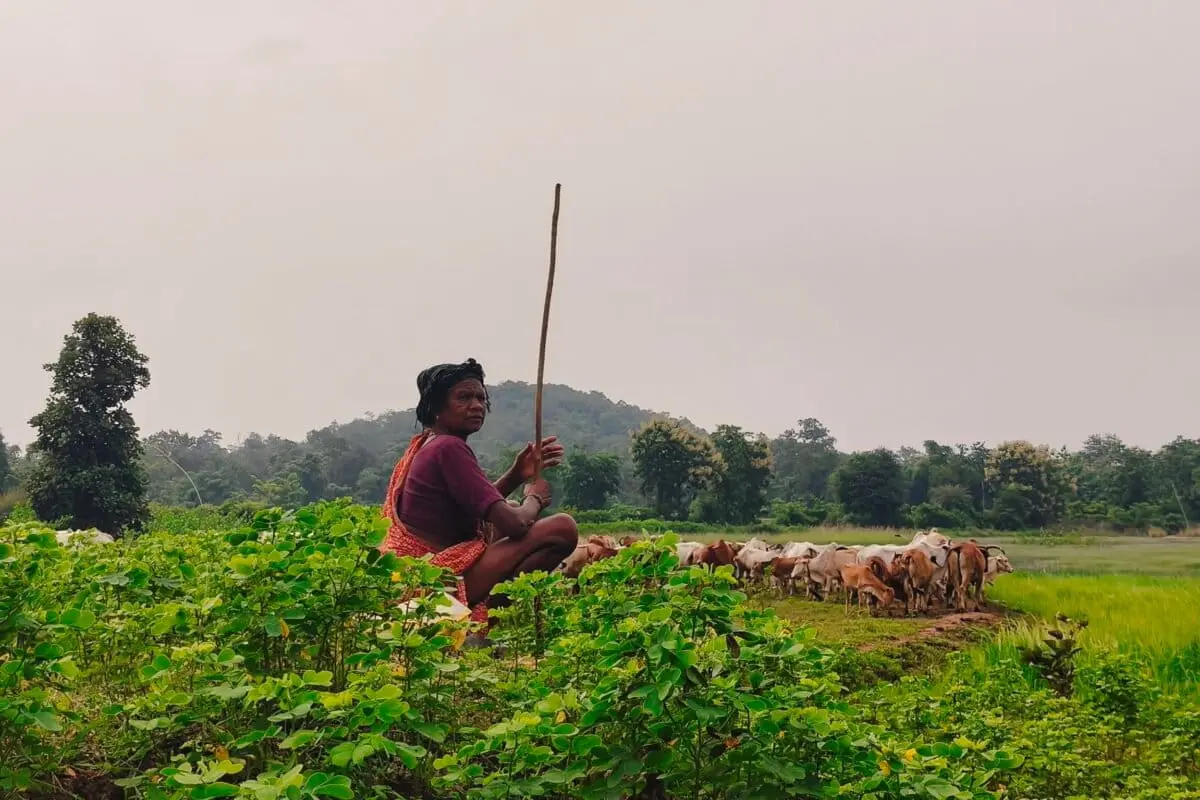
MUMBAI — On October 2, a date historically associated with the birth of Mahatma Gandhi and the values of rural self-reliance, the state of Maharashtra will embark on a transformative legislative journey. The state government is set to begin the formal issuance of Women Farmers Certificates (WFCs) under the newly enacted Women Farmer’s Empowerment Act 2026.
This legislative milestone represents a paradigm shift in Indian agricultural policy. For the first time, a state government is decoupling the legal identity of a "farmer" from the traditional requirement of land ownership. By doing so, Maharashtra is addressing a systemic gender bias that has, for decades, relegated millions of women to the status of "agricultural laborers" despite their role as the primary managers of India’s food systems.
Main Facts: Redefining the Identity of the Indian Farmer
The Women Farmer’s Empowerment Act 2026 is designed to provide formal recognition to women engaged in a broad spectrum of agricultural and allied activities. Under the provisions of this Act, the Women Farmers Certificate (WFC) will be issued to women involved in crop husbandry, animal husbandry, poultry, fisheries, agroforestry, vermiculture, and primary processing.
The significance of the WFC lies in its ability to unlock institutional doors that were previously bolted shut. Historically, access to government subsidies, institutional credit, and agricultural technology has been contingent upon presenting a 7/12 extract—a land record document that rarely bears a woman’s name. By providing a certificate that recognizes labor and expertise rather than just title deeds, the Act aims to bring "lakhs of women" into the formal fold of the agrarian economy.
![Maharashtra formally recognises women farmers regardless of land ownership [Commentary]](https://imgs.mongabay.com/wp-content/uploads/sites/30/2026/09/01002543/IMG_20260924_221913_Mahesh-Maske-1200x800.jpg)
Key Pillars of the Act:
- Broadened Definition: The Act adopts a holistic definition of a farmer, focusing on the work performed rather than assets owned.
- Institutional Support: The establishment of a Women Farmer Empowerment Cell at the state level to oversee policy integration.
- Monitoring and Data: The creation of a comprehensive Women Farmers’ Database to track progress and ensure targeted delivery of benefits.
- Localized Assistance: The appointment of Women Farmers’ Assistance Officers at the district and block levels to guide women through the certification process and entitlement applications.
Chronology: From Concept to Legislation in Ten Months
The trajectory of the Women Farmer’s Empowerment Act 2026 serves as a masterclass in swift, collaborative policymaking. The journey from a conceptual meeting to a passed law took less than a year, fueled by a rare alignment of political will and civil society expertise.
- September 2025: The process began with a high-level meeting between the M.S. Swaminathan Research Foundation (MSSRF) and Maharashtra’s leadership, including Devendra Fadnavis. A Memorandum of Understanding (MoU) was signed to formalize a partnership between the state and MSSRF.
- Late 2025: MSSRF established a technical advisory group. The Vidhi Centre for Legal Policy was brought on board as the legal drafting partner to ensure the Bill was constitutionally robust and practically enforceable.
- January 2026: The first round of state-wide consultations commenced in Mumbai.
- Spring 2026: Regional consultations were held in Pune, Chhatrapati Sambhajinagar, and Nagpur. These meetings included women farmers, SHG leaders, bankers, and government officials, ensuring that the "lived experience" of rural women informed the legal text.
- July 2, 2026: After being approved by the Cabinet, the Bill was tabled in the Legislative Assembly during the monsoon session. It passed unanimously in both the Legislative Assembly and the Legislative Council.
- October 2, 2026: The formal rollout and issuance of the first batch of certificates.
Supporting Data: The ‘Feminization’ of the Agrarian Crisis
The necessity for this Act is underscored by a stark statistical divide in rural India. Experts have long pointed to the "feminization of agriculture," a phenomenon where men migrate to urban centers for non-farm employment, leaving women to manage the homestead and the fields.
According to the Periodic Labour Force Survey (PLFS), women now constitute nearly 60% of the agricultural workforce across India. However, the distribution of assets remains drastically skewed; women hold less than 15% of land titles nationally.
In Maharashtra, the disparity is even more pronounced:
![Maharashtra formally recognises women farmers regardless of land ownership [Commentary]](https://imgs.mongabay.com/wp-content/uploads/sites/30/2026/09/26113827/Potato_harvest_in_Himachal_Pradesh_India_2011-768x512.jpg)
- 82% of the rural female workforce is engaged in agriculture.
- Only 15.5% of operational farmland is held by women.
This "ownership gap" has created a cycle of vulnerability. Without land titles, women are excluded from the Agristack (the national digital database for farmers), making them ineligible for the PM-KISAN Yojna cash transfers, which typically require a farmer ID linked to land records. Furthermore, women find it nearly impossible to secure Kisan Credit Cards (KCC) or subsidized irrigation equipment, as banks often demand land as collateral.
The MSSRF’s work in the Vidarbha region—notorious for high rates of agrarian distress and farmer suicides—provided the empirical basis for this law. In districts like Wardha and Yavatmal, initiatives like the Mahila Kisan Sashaktikaran Pariyojana (MKSP) proved that when women are recognized as farmers and given leadership training, they are quicker to adopt climate-resilient practices and more efficient at resource management.
Official Responses and Strategic Mechanisms
The Maharashtra government’s response has been one of proactive institutionalization. By creating a dedicated State Level Monitoring Committee, the government signals that the Act is not merely a symbolic gesture but a structural reform.
Dr. Soumya Swaminathan, Chair of the MSSRF, has emphasized that the Act’s success depends on the "interoperability" of the certificate. For the WFC to be effective, other departments—specifically Finance, Water Resources, and Cooperation—must recognize the certificate as a valid document for processing applications.
![Maharashtra formally recognises women farmers regardless of land ownership [Commentary]](https://imgs.mongabay.com/wp-content/uploads/sites/30/2026/09/01002851/IMG20260908140958-768x512.jpg)
Addressing the Feedback Loop
During the consultation phase, officials heard significant grievances regarding existing schemes:
- The Land Linkage: Women noted that even "women-centric" schemes under the Agricultural Technology Management Agency (ATMA) were still tethered to land ownership.
- Financial Barriers: Suggestions were made to lower interest rates for credit taken specifically in women’s names.
- The Lakshmi Mukti Yojna: There is a growing call to amend this existing scheme to further incentivize families to add women’s names to joint land records, providing a secondary layer of security beyond the WFC.
Government representatives have indicated that the Women Farmers’ Assistance Officers will act as "navigators," helping semi-literate or marginalized women overcome the bureaucratic hurdles that often prevent them from accessing entitlements even when they are legally eligible.
Implications: Beyond Recognition Toward Gender Justice
The implications of the Women Farmer’s Empowerment Act 2026 extend far beyond the borders of Maharashtra. It sets a precedent for how the Indian state can address the intersection of gender, climate change, and economic survival.
1. Climate Resilience and Adaptation
Women are often the first to feel the impact of drought, heatwaves, and crop failure due to their lack of a safety net. However, they are also the primary repositories of traditional ecological knowledge. By empowering women farmers, the state is effectively investing in climate adaptation. Recognized women farmers are more likely to receive training in seed conservation and eco-friendly farming, which are critical for the long-term sustainability of the Deccan plateau’s agriculture.
![Maharashtra formally recognises women farmers regardless of land ownership [Commentary]](https://imgs.mongabay.com/wp-content/uploads/sites/30/2026/10/01090819/IMG20260904113755_Mahesh-Maske-768x512.jpg)
2. Economic Independence and Market Access
Currently, agricultural markets (mandis) are male-dominated spaces. Women often face mobility issues and are forced into "distress sales" to middlemen at lower prices. The Act encourages the formation of Farmer Producer Organisations (FPOs) and cooperatives led by women. With the WFC in hand, these collectives will have better bargaining power and direct access to storage and processing facilities, ensuring a larger share of the value chain remains with the producer.
3. The Challenge of Land Governance
While the WFC is a revolutionary step in "delinking" identity from land, it is not a substitute for land ownership. Experts argue that for true gender justice, the next step must be gender-equitable land governance. Legal rights over land provide women with negotiating power within the household and security in the event of widowhood or divorce—factors that the WFC alone cannot address. The certificate is a "pathway," but joint land titling remains the "destination."
4. A Model for Other States
As the first state to pass such a comprehensive Act, Maharashtra is now a laboratory for agrarian reform. If the implementation proves successful in increasing credit flow to women and improving crop yields through better extension services, it is likely that other agrarian states—such as Punjab, Haryana, and Andhra Pradesh—will face pressure to adopt similar frameworks.
Conclusion
The rollout of the Women Farmers Certificate on October 2 marks the end of the "invisibility" of the woman farmer in Maharashtra. By acknowledging that a farmer is defined by their sweat and skill rather than a deed in a ledger, the state has taken a bold step toward rectifying a historical wrong.
![Maharashtra formally recognises women farmers regardless of land ownership [Commentary]](https://imgs.mongabay.com/wp-content/uploads/sites/30/2026/09/01003312/IMG20260909112911-e1790795014625-768x512.jpg)
The real test, however, lies in the months ahead. The transition from a legislative document to a functional tool for empowerment will require rigorous monitoring, the removal of bureaucratic friction, and a sustained effort to change the cultural perception of what a "farmer" looks like. If successful, Maharashtra will not only have empowered its women but will have strengthened the very backbone of its rural economy.
