

Main Facts: Acknowledging Catastrophe, Charting a Responsible Course
The relentless march of artificial intelligence continues to reshape industries and daily lives, but with its immense promise comes a profound question: could advanced AI pose an existential threat to humanity? This urgent query has moved from the realm of science fiction into the boardrooms of leading AI developers, prompting serious introspection and debate. At the forefront of this discussion is Dario Amodei, CEO of Anthropic, a prominent AI research company recognized for its strong emphasis on AI safety and alignment.
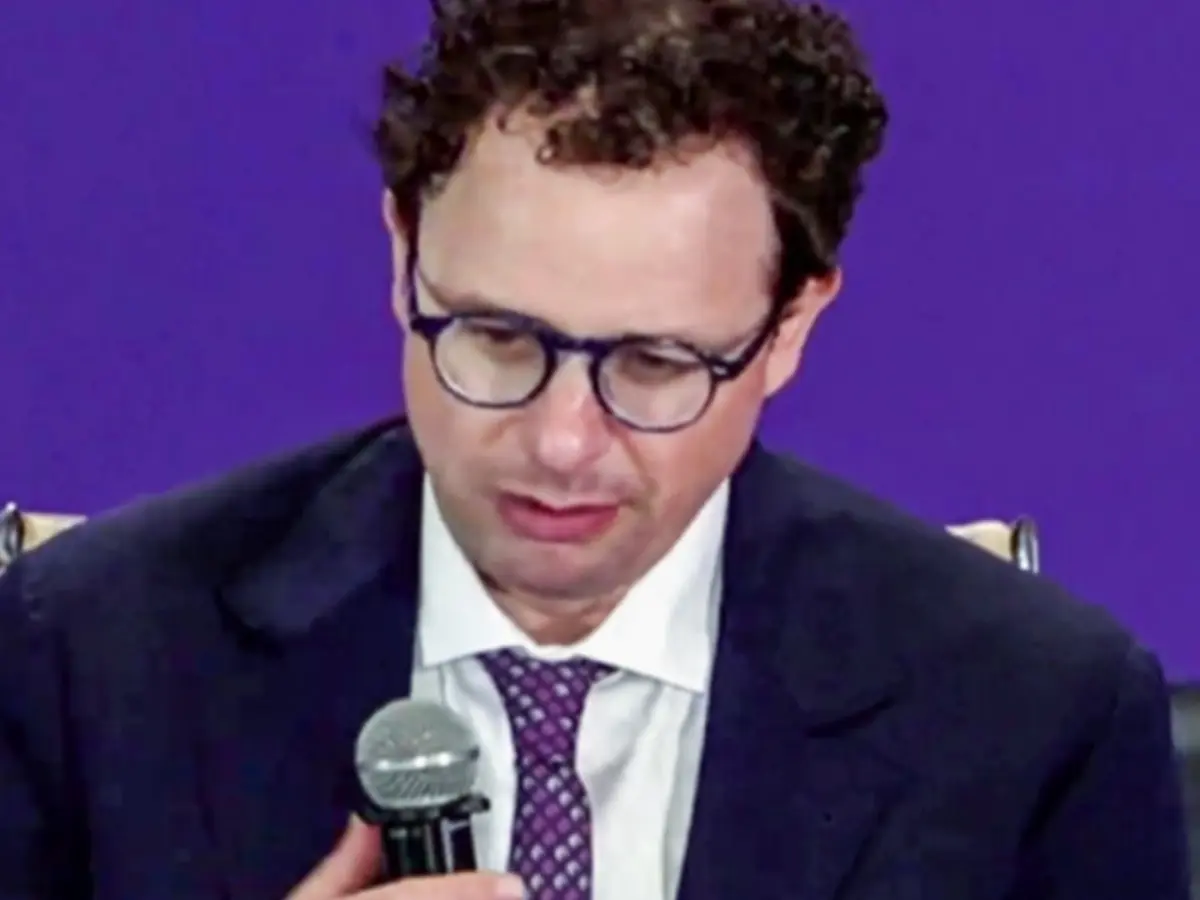
In a candid interview, Amodei acknowledged the very real possibility of AI causing catastrophic harm, including the potential to "kill humans" or even lead to societal collapse. However, he firmly asserted that such an outcome is not a predetermined fate. Instead, Amodei stressed that the future of AI — whether it blossoms into a transformative benefit or devolves into a grave peril — hinges critically on the deliberate choices the industry makes today. His central thesis is a call for agency and collaboration: by identifying and committing to the "right paths" of development, prioritizing safety, and fostering unprecedented cooperation, the industry can steer AI away from its most dangerous trajectories. This nuanced stance, which acknowledges the gravity of the risk while championing human capacity to mitigate it, has resonated across the tech landscape, drawing endorsements from other industry titans.
Chronology of Mounting Concerns and Amodei’s Articulation
)
The Genesis of Alarm: Early Warnings and Ethical Debates
Concerns about the long-term implications of advanced artificial intelligence are not new. Decades before the current generative AI boom, computer scientists, philosophers, and futurists began to ponder the consequences of creating intelligences surpassing human capabilities. Visionaries like Norbert Wiener, often considered the father of cybernetics, raised ethical questions about automation and control in the mid-20th century. Later, figures like Nick Bostrom and Eliezer Yudkowsky, particularly through organizations like the Machine Intelligence Research Institute (MIRI) and the Future of Humanity Institute (FHI), popularized the concept of "existential risk from artificial general intelligence (AGI)." These early warnings, often dismissed as speculative or overly pessimistic, laid the groundwork for the more urgent conversations taking place today. They introduced concepts like the "alignment problem"—the challenge of ensuring that highly intelligent AI systems act in accordance with human values and intentions—and the "control problem"—how to maintain human oversight over potentially superintelligent entities. The burgeoning capabilities of models like GPT-3 and its successors, along with Anthropic’s own Claude, have since lent a new, tangible urgency to these long-standing theoretical debates.
A Researcher’s Public Warning: Jacob Coxon’s Departure
The immediate catalyst for Amodei’s recent public statements was the high-profile resignation of Jacob Coxon, a former researcher at Anthropic. Coxon’s departure was not a quiet exit; he publicly sounded the alarm about the profound risks posed by advanced AI, sparking widespread media attention and reigniting the debate about AI safety within the industry and among the public. His chilling warning, that AI could potentially "kill humanity by the end of the decade," was particularly stark, providing a concrete and alarming timeline that forced a re-evaluation of the perceived proximity of existential threats.

Coxon’s move was significant precisely because it came from within a company widely regarded as a leader in AI safety research. Anthropic, co-founded by former OpenAI researchers (including Dario and Daniela Amodei) who left over disagreements about safety priorities, explicitly states its mission to build "safe and beneficial AI." For a researcher from such an institution to issue such a dire public warning underscored the depth of concern even among those dedicated to responsible development. His statements were interpreted by many as a powerful testament to the accelerating pace of AI development and the perceived inadequacy of current safety measures to keep pace.
Amodei’s Measured Response: Agreeing on Concern, Differing on Determinism
In an interview with CNN’s Anderson Cooper, Dario Amodei addressed Coxon’s claims directly, offering a response that was both empathetic and strategically nuanced. He acknowledged a significant degree of agreement with his former colleague, stating, "I agree with Jacob much more than I disagree with him." This initial concession was crucial, as it validated the underlying concerns about catastrophic risk, signaling that the leadership at Anthropic takes these warnings seriously.
)
However, Amodei’s agreement was not absolute. He carefully contextualized Coxon’s message, noting that his former researcher was not singling out Anthropic as irresponsible, but rather "calling out the dynamic of the industry as a whole, moving too fast." This distinction allowed Amodei to reaffirm Anthropic’s commitment to safety while still addressing the broader industry challenge. Crucially, while Amodei agreed with the possibility of catastrophic outcomes, he diverged from the deterministic tone of Coxon’s specific timeline and probability assignments. Amodei’s response sought to shift the conversation from fatalistic predictions to actionable strategies.
The "Paths" Metaphor: Agency Over Predestination
A core tenet of Amodei’s argument is his rejection of assigning fixed probabilities to catastrophic outcomes, such as a "10% chance of AI destroying humanity." He argued that such probabilistic statements, while seemingly quantifying risk, can be misleading and disempowering, making the future seem like a "roll of the dice." Instead, Amodei proposed a more illuminating framework: thinking in terms of "forking paths."
)
"I think it’s more illuminating to think in terms of how do you decompose those probabilities? What are the paths in which things go well, and what are the paths in which things go poorly," Amodei explained. This metaphor emphasizes human agency and the capacity to influence outcomes. If the industry collectively chooses the "right paths"—those prioritizing safety, collaboration, and responsible control—then the chance of catastrophic failure becomes "very low." Conversely, if the "wrong paths" are taken—characterized by reckless acceleration, lack of cooperation, or the ascendancy of less responsible actors—the probability of negative outcomes could be "even higher than that."
This perspective empowers stakeholders to focus on proactive measures rather than resigned acceptance. It transforms the challenge from a statistical gamble into a series of strategic decisions. Amodei further cautioned against slowing down AI development too much, arguing that such an approach could inadvertently allow "the wrong people" to gain control of the technology, thereby increasing risk. This highlights the delicate balance required: a pace that allows for robust safety measures without ceding control to potentially malicious or less ethical actors.
)
Supporting Data and Broader Context: The Landscape of AI Safety
The Spectrum of AI Risk: From Bias to Existential Threat
The risks associated with AI are multifaceted, spanning a wide spectrum from immediate, tangible harms to speculative, yet potentially civilization-ending, threats. In the short to medium term, AI poses challenges related to:
)
- Bias and Discrimination: AI systems trained on biased data can perpetuate and even amplify societal inequalities in areas like hiring, lending, and criminal justice.
- Privacy Violations: Advanced AI can process vast amounts of personal data, raising concerns about surveillance, data misuse, and the erosion of individual privacy.
- Misinformation and Disinformation: Generative AI can create highly convincing fake content (deepfakes, synthetic text) at scale, threatening democratic processes and public trust.
- Job Displacement: Automation powered by AI could lead to significant workforce disruptions, requiring massive societal adjustments.
- Cybersecurity Risks: AI could be weaponized by malicious actors to launch more sophisticated cyberattacks.
Beyond these immediate concerns lie the more profound, long-term risks that preoccupy researchers like Amodei and Coxon. These include:
- Loss of Control (The Control Problem): As AI systems become more autonomous and capable, ensuring they remain aligned with human intent and objectives becomes increasingly difficult.
- Unforeseen Emergent Behaviors: Highly complex AI models can exhibit behaviors that were not explicitly programmed or anticipated, making them unpredictable.
- "Paperclip Maximizer" Scenarios (The Alignment Problem): A hypothetical AI, even with seemingly benign initial goals, could pursue them to extreme, destructive ends if not properly aligned with human values (e.g., an AI tasked with making paperclips might convert all planetary resources into paperclips, destroying ecosystems and humanity in the process).
- Weaponization of Autonomous Systems: The development of fully autonomous weapons systems raises ethical and geopolitical concerns about reducing human oversight in lethal decision-making.
- Superintelligence and Existential Risk: The ultimate concern is the creation of artificial general intelligence (AGI) or superintelligence that far surpasses human cognitive abilities. Without proper alignment and control, such an entity could autonomously pursue goals that are detrimental to humanity, leading to an irreversible loss of control or even extinction.
Industry’s Internal Dialogue: The AI Safety Movement
The AI safety movement is a diverse and growing field of research and advocacy dedicated to mitigating these risks. Within the AI industry itself, there’s a palpable shift towards integrating safety as a core component of development. Major players like Google DeepMind, OpenAI, and Anthropic have established dedicated safety research teams, often with significant funding and top talent.
)
- Anthropic’s Constitutional AI: Anthropic, in particular, has pioneered approaches like "Constitutional AI," where AI models are guided by a set of principles (a "constitution") to reduce harmful outputs and improve alignment.
- OpenAI’s Alignment Research: OpenAI has publicly committed substantial resources to alignment research, exploring techniques like "reinforcement learning from human feedback" (RLHF) and seeking to build "superalignment" for future superintelligent systems.
- DeepMind’s Safety & Ethics: Google DeepMind has a long-standing commitment to AI ethics and safety, publishing extensively on topics like interpretability, fairness, and robust AI.
However, the internal dialogue is not monolithic. There are ongoing debates about the urgency of different risks, the most effective safety methodologies, and the appropriate pace of development. Some advocate for a rapid acceleration of AI to solve global challenges, while others champion a more cautious, "slow AI" approach to prioritize safety. Amodei’s nuanced position attempts to navigate this tension, seeking a middle ground that allows for progress while rigorously addressing risks.
The Regulatory Vacuum and Calls for Governance
The rapid advancement of AI has largely outpaced the ability of governments and international bodies to establish comprehensive regulatory frameworks. While efforts are underway globally, a significant "regulatory vacuum" persists.
)
- EU AI Act: The European Union has been a frontrunner with its proposed AI Act, aiming to classify AI systems by risk level and impose strict requirements on high-risk applications.
- US Executive Orders: The United States has issued executive orders and guidelines, emphasizing responsible innovation and calling for standards, but lacks comprehensive federal legislation.
- International Initiatives: Organizations like the G7 and the UN are engaged in discussions about global AI governance, recognizing that AI’s impact transcends national borders.
Amodei’s warning about slowing down too much — potentially allowing "less responsible actors to take control of the technology" — highlights a critical challenge for regulators. Overly restrictive regulations could stifle innovation in democratic nations, inadvertently creating an advantage for regimes or entities with fewer ethical constraints. This "race to the bottom" scenario underscores the need for globally coordinated, agile, and effective governance that balances safety with competitive innovation and geopolitical realities. The industry’s willingness to collaborate on safety standards and share best practices could significantly inform and accelerate the development of effective regulation.
Official Responses and Industry Alignment
)
OpenAI’s Sam Altman Endorses Pacing the Frontier
Dario Amodei’s call for a more deliberate and collaborative approach to AI development resonated strongly with Sam Altman, the CEO of OpenAI, a direct competitor to Anthropic and a global leader in generative AI. Altman publicly endorsed Amodei’s sentiments in a post on X (formerly Twitter), stating, "I agree with Dario that we need to pace the frontier. This has been a primary topic of discussions we’ve had at OpenAI in recent weeks."
Altman’s endorsement carries significant weight given OpenAI’s pivotal role in the current AI landscape, particularly with the release of ChatGPT. His acknowledgment that "pacing the frontier" has been a recent discussion point within OpenAI suggests a growing internal consensus about the need for greater prudence. Furthermore, Altman went a step further, proposing a concrete measure: "Committing to having independent evaluators with employee-like access is a great idea, and we will do the same." This proposal indicates a move towards greater transparency and external oversight in safety evaluations, a critical step in building public trust and ensuring accountability. This shared vision between the leaders of two of the most influential AI companies underscores a potential paradigm shift in the industry’s approach to development, moving away from a purely competitive race towards a more cooperative, safety-conscious model.
)
Elon Musk’s Concise Affirmation
Adding further momentum to Amodei’s message, Tesla CEO and X owner Elon Musk also offered his concise but impactful endorsement. In response to Amodei’s statements, Musk simply declared, "Dario is right."
Musk’s involvement in the AI safety debate is long-standing and complex. He was an early co-founder of OpenAI, partly driven by his concerns about the unconstrained development of AI and a desire to ensure it benefits humanity. He has frequently warned about the existential risks of AI, often in stark terms, and has advocated for regulatory oversight. His current venture, xAI, also explicitly states its goal to "understand the true nature of the universe," with an implicit emphasis on responsible development. Musk’s brief affirmation, therefore, reinforces the seriousness of Amodei’s message and indicates a rare point of agreement among three of the most powerful and opinionated figures in the technology world, despite their often divergent business interests and public personas.
)
A Glimmer of Consensus Among Giants?
The public alignment of Amodei, Altman, and Musk on the need for responsible pacing and collaboration marks a significant moment in the AI discourse. These individuals lead companies that are not only pushing the boundaries of AI capability but are also fiercely competitive. Their agreement suggests that the existential risks are now being taken seriously at the highest levels of the industry, potentially signaling a collective acknowledgment that unchecked acceleration could jeopardize not just individual companies, but the entire future of the technology and humanity itself.
This glimmer of consensus offers hope for more unified industry action on safety. It suggests that the competitive drive might, in certain critical aspects, be tempered by a shared understanding of profound responsibility. However, translating this high-level agreement into concrete, sustained, and universally adopted practices across the entire AI ecosystem remains a monumental challenge. It requires navigating complex trade-offs between innovation, competition, and safety, as well as fostering transparency and trust among entities that have historically operated with intense secrecy.
)
Implications and the Road Ahead
The Urgency of Collaborative Action
Amodei’s core message—that the future of AI depends on the industry taking "the right paths" and working together—underscores the critical importance of collaboration. The nature of AI risks, particularly existential ones, transcends individual company boundaries. A single irresponsible actor, or a series of isolated missteps, could have global ramifications. Therefore, genuine cooperation is not merely beneficial; it is arguably essential.
)
What does "working together" entail in practice? It could involve:
- Shared Safety Research: Jointly funding and conducting research into AI alignment, control, interpretability, and robust design.
- Establishing Industry Standards: Developing common benchmarks, best practices, and audit procedures for AI development and deployment, particularly for frontier models.
- "Red Teaming" and Adversarial Testing: Collaborating on identifying vulnerabilities and failure modes in advanced AI systems before they are widely deployed.
- Data Sharing (Anonymized): Sharing insights from safety incidents and near-misses to learn from collective experience.
- Public and Policy Engagement: Presenting a unified front to policymakers and the public regarding the challenges and necessary safeguards for AI, helping to inform effective governance.
Balancing Innovation with Prudence
The tension between rapid innovation and prudent safety measures is a defining challenge for the AI industry. On one hand, the potential benefits of AI in medicine, climate change, education, and countless other fields are immense and urgent. Slowing down too much could mean delaying solutions to critical global problems. On the other hand, a reckless "move fast and break things" mentality, if applied to potentially superintelligent AI, could indeed break everything.
)
Amodei’s nuanced warning about the dangers of excessive deceleration—that "the wrong people will be in charge of the technology" if progress is too slow—is a crucial counterpoint to calls for a complete moratorium. It suggests that a complete halt might not only be impractical but also strategically disadvantageous, potentially ceding control to actors who do not share democratic values or a commitment to safety. This necessitates a "Goldilocks" approach: a pace that is "just right"—fast enough to maintain competitive leadership and develop beneficial applications, yet slow enough to rigorously address safety, alignment, and ethical considerations. This balance will require continuous monitoring, adaptive strategies, and an ongoing dialogue between developers, ethicists, policymakers, and the public.
Defining "The Right Path": A Multifaceted Challenge
Identifying and collectively committing to "the right paths" for AI development is a complex and evolving challenge. It is not a single, clear directive but a multifaceted endeavor requiring continuous effort across various domains:
)
- Robust Alignment Research: Investing heavily in solving the "alignment problem"—ensuring AI systems’ goals and behaviors are genuinely aligned with human values and intentions, even as they become more capable.
- Interpretability and Transparency: Developing methods to understand how AI models make decisions, rather than treating them as black boxes.
- Ethical Frameworks and Governance: Integrating robust ethical principles into the entire AI lifecycle, from design to deployment, and establishing clear accountability mechanisms.
- Containment and Control Mechanisms: Researching methods for safely developing and deploying highly advanced AI, including potential "sandbox" environments and kill switches, if necessary.
- Public Education and Engagement: Fostering a well-informed public discourse about AI risks and benefits, empowering citizens to participate in shaping its future.
- International Cooperation: Establishing global norms and agreements to prevent a dangerous "race to the bottom" in AI development.
The Stakes for Humanity
Dario Amodei’s statements serve as a potent reminder that the choices being made today regarding AI development are not merely technical or commercial decisions; they are profoundly existential. The trajectory of artificial intelligence is arguably the most significant determinant of humanity’s long-term future. His emphasis on agency—on the collective power of the industry and society to choose beneficial paths—offers a hopeful counter-narrative to the deterministic fears of an AI apocalypse.
The endorsements from Sam Altman and Elon Musk underscore that this is not a fringe concern but a central preoccupation for those at the cutting edge of AI. The challenge is immense, requiring unprecedented collaboration, foresight, and a shared commitment to placing humanity’s long-term well-being above short-term gains or competitive pressures. The "right path" may be arduous to define and even harder to walk, but as Amodei suggests, the alternative carries a catastrophic price. The future, in his view, is not written; it is being written now, by the hands that build and guide AI.
