

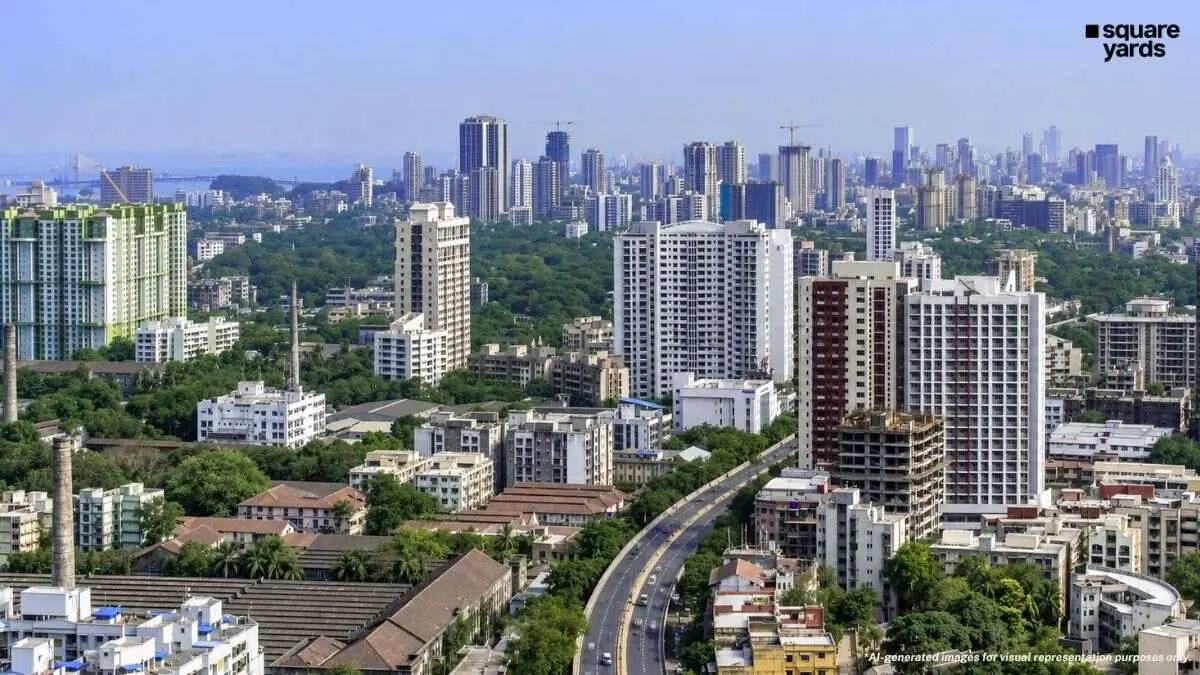
NEW DELHI — The Indian real estate sector has reached a historic milestone, shattering previous records to register its highest-ever quarterly investment. In the third quarter of 2026 (Q3 2026), the market attracted a staggering $9.5 billion in equity capital, according to the latest "India Market Monitor" report released by global real estate consultancy CBRE.
This surge represents a fundamental shift in investor appetite, moving beyond traditional residential plays into high-growth segments like data centers and institutional-grade office spaces. With total investments for the first nine months of 2026 reaching $18.6 billion, the year is on track to become a watershed moment for the nation’s property landscape.
1. Main Facts: A Quarter of Unprecedented Capital Inflow
The $9.5 billion infusion in Q3 2026 is not merely a numerical peak; it is a testament to the maturing of the Indian property market. The investment landscape was dominated by three primary pillars: Data Centers, Office Real Estate, and Strategic Land Acquisitions.
Key highlights from the quarter include:
- Total Equity Investment: $9.5 billion (Q3 2026).
- Dominant Sector: Data centers accounted for a massive 57% of the total investment share.
- Top Contributors: Mumbai, Delhi-NCR, and Chennai together commanded 53% of the total capital deployed.
- Office Leasing Momentum: A 9% year-on-year (YoY) increase, totaling 18.7 million square feet (msf).
- Residential Resilience: A 3% YoY growth in sales across the top seven cities, despite rising price points.
The capital inflow has been largely institutional, signaling a high level of confidence from global private equity funds, sovereign wealth funds, and domestic institutional investors. This influx is increasingly directed toward "development-ready" sites and specialized infrastructure, rather than just finished inventory.
2. Chronology: The Road to the $18.6 Billion Milestone
The trajectory of 2026 has been one of consistent acceleration. To understand the magnitude of the Q3 surge, one must look at the progression of the year:
- Q1 2026 (The Foundation): The year began with a steady interest in Grade-A office spaces and industrial warehousing. Investors remained cautious but optimistic, setting the stage with roughly $4 billion in capital flow.
- Q2 2026 (The Pivot to Tech-Infra): By the second quarter, the focus began shifting toward digital infrastructure. As India’s data consumption skyrocketed, investors began earmarking large sums for data center platforms.
- Q3 2026 (The Record-Breaking Peak): The culmination of several multi-billion dollar deals in the data center space, coupled with aggressive land banking by residential developers, led to the $9.5 billion record.
- Cumulative Performance: By the end of September 2026, the $18.6 billion total had already surpassed the full-year totals of many previous years, indicating that the final quarter of 2026 could push the annual figure toward the $25 billion mark.
3. Supporting Data: Sectoral Deep Dive
The Data Center Explosion
The most striking revelation of the Q3 report is the dominance of data centers. Accounting for 57% of the investment, this segment has transitioned from a niche "alternative" asset class to a mainstream powerhouse.
According to research by Square Yards, this boom is expected to have a massive secondary impact on the residential market. Estimates suggest that the expansion of data centers could generate demand for up to 195 million square feet (msf) of housing by 2030. While these facilities are not labor-intensive on-site, the "ecosystem effect"—involving logistics, maintenance, security, and administrative support—creates localized micro-economies. Markets such as Mumbai, Pune, Hyderabad, and Visakhapatnam are identified as the primary beneficiaries of this trend.
Office Leasing: The Delhi-NCR Phenomenon
While the national average for office leasing grew by a healthy 9% (18.7 msf), the performance of Delhi-NCR was nothing short of extraordinary. The region saw 3.3 msf leased in Q3 2026, effectively doubling the 1.6 msf recorded in the same period in 2025.
This demand is driving significant rental appreciation. In Gurugram, specifically on the high-profile Golf Course Road, office rents surged by 26% YoY to reach ₹100 per square foot (psf). This commercial heat is directly bleeding into the residential sector; home prices in the same vicinity reached ₹23,550 psf, a 10.2% increase from the previous quarter alone.
Regional Variations: A Tale of Two Tiers
The growth, however, is not uniform. While Delhi-NCR, Bengaluru, and Hyderabad saw robust office absorption, traditional heavyweights like Mumbai, Pune, and Chennai witnessed slight declines in leasing activity during the quarter. This divergence suggests that occupiers are increasingly prioritizing regions with better infrastructure-to-cost ratios and those offering larger contiguous floor plates for "Global Capability Centers" (GCCs).
4. Official Responses and Industry Sentiment
Industry leaders and analysts suggest that the current investment cycle is driven by a "flight to quality."
CBRE Insights: Analysts at CBRE noted that the 91% concentration of capital in built-up offices, land sites, and data centers indicates that investors are betting on the long-term structural growth of the Indian economy. The shift toward land acquisition suggests that institutional players are no longer content with buying existing assets; they want to control the development pipeline to ensure Grade-A specifications.
Square Yards Perspective: Data from Square Yards highlights the tightening of the residential market in high-growth corridors. For instance, in Noida’s Sector 150, average asking prices climbed from ₹11,950 psf in late 2025 to ₹12,300 psf by mid-2026. Their analysts point out that while "unsold inventory" remains a talking point, the demand for quality housing in well-connected hubs is actually outstripping supply, leading to the price hikes seen in Delhi-NCR and Mumbai.
Developer Outlook: Major developers are pivoting their strategies to align with these capital flows. The fact that 72% of land acquisition capital is earmarked for mixed-use or office-cum-residential projects shows that the "Work-Live-Play" model is becoming the standard for new urban developments.
5. Implications: What This Means for the Future
The record-breaking Q3 2026 investment data carries several long-term implications for stakeholders across the board.
For Homebuyers and Residents
The massive land acquisitions by developers will eventually translate into a surge of new launches. For the average homebuyer, this means more choices, but likely at higher price points in established hubs. However, the "data center effect" suggests that new residential frontiers will emerge. Areas within a 5-15 km radius of new data center hubs in cities like Navi Mumbai or Visakhapatnam could offer high capital appreciation for early movers.
For Commercial Tenants and Businesses
The sharp rise in office rents in prime locations like Gurugram (26% up) may push smaller enterprises toward peripheral business districts or co-working spaces. For large corporations, the focus will remain on securing long-term leases in Grade-A buildings to hedge against further rental spikes.
For Investors
The market is becoming increasingly institutionalized. Retail investors should look beyond just "buying an apartment" and consider the broader trends. The synergy between commercial growth and residential value is clearer than ever. As seen on Golf Course Road, commercial demand is a leading indicator of residential appreciation.
For Urban Planning
The concentration of 53% of investment in just three cities (Mumbai, Delhi-NCR, and Chennai) highlights a growing urban-rural divide. To sustain this growth, there will be immense pressure on state governments to upgrade infrastructure, particularly power grids for data centers and last-mile connectivity for the burgeoning residential clusters.
Conclusion: A Market in Transformation
India’s real estate sector in 2026 is no longer just about "buying and selling homes." It has evolved into a sophisticated asset class driven by the digital economy, global corporate requirements, and massive institutional capital.
While the $9.5 billion record in Q3 is a cause for celebration, the real story lies in the "pipeline." The billions of dollars currently being poured into land and data centers will shape the skylines of Indian cities for the next decade. For those navigating this market—whether as a first-time homebuyer or a global fund manager—the message is clear: the link between commercial infrastructure and residential value has never been stronger, and the regions that can successfully integrate the two will be the winners of the 2030 horizon.
