

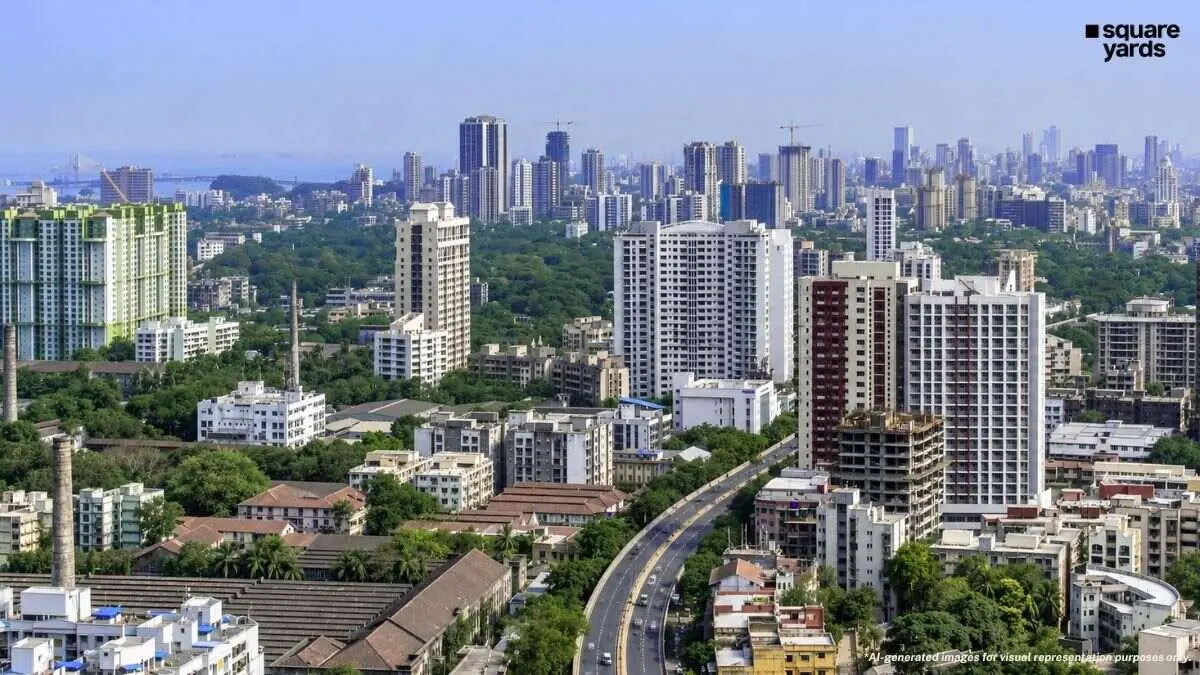
NEW DELHI — In a landmark moment for the Indian economy, the real estate sector has shattered previous records, attracting an unprecedented $9.5 billion in equity capital during the third quarter (Q3) of 2026. According to the latest comprehensive report by global real estate services firm CBRE, this surge represents the highest-ever quarterly investment recorded in the country’s history.
The influx of capital signals a robust shift in investor sentiment, moving beyond traditional residential bets into high-growth alternative segments—most notably data centers—and a revitalized commercial office market. With total investments for the first nine months of 2026 reaching a staggering $18.6 billion, the Indian property market is firmly positioned as a primary engine of national economic growth.
1. Main Facts: A Record-Breaking Quarter
The Q3 2026 investment landscape was characterized by a concentrated flow of capital into specialized infrastructure and strategic land acquisitions. The $9.5 billion figure is not merely a quantitative win but a qualitative shift in how institutional investors view the Indian subcontinent.
- Dominance of Data Centers: For the first time, data centers emerged as the apex predator of investment, accounting for a massive 57% of the total capital deployed in Q3.
- The Power Trio: Mumbai, Delhi-NCR, and Chennai remained the preferred destinations for institutional money, collectively capturing 53% of the quarter’s total investment.
- Office Resurgence: Despite global whispers of a "work-from-home" permanence, India’s office leasing market grew by 9% year-on-year, reaching 18.7 million square feet (msf).
- Residential Resilience: Housing sales across the top seven cities maintained a steady upward trajectory, growing 3% year-on-year, even as prices in premium corridors saw double-digit appreciation.
- Land Banking: Approximately 72% of capital deployed for land acquisitions was earmarked for future-ready office, residential, and data center developments, ensuring a robust pipeline for the 2027–2030 period.
2. Chronology: From Recovery to Hyper-Growth (2024–2026)
To understand the magnitude of the Q3 2026 figures, one must look at the trajectory of the market over the past 24 months.
- 2024–2025: The Stabilization Phase: Following the post-pandemic volatility, 2024 was marked by the stabilization of interest rates and a return to the physical office. Investors began diversifying portfolios, moving from pure-play residential projects to REIT-ready commercial assets.
- Late 2025: The Digital Infrastructure Pivot: As India’s 5G rollout matured and AI-driven demand for data processing spiked, global private equity firms began scouting for "hyperscale" data center sites.
- Early 2026: The Capital Influx: The first half of 2026 saw $9.1 billion in investment. The momentum built as regulatory clarity around land titles and the Digital Personal Data Protection (DPDP) Act implementation provided investors with the confidence to commit larger checks.
- Q3 2026: The Historic Peak: The convergence of high office absorption (especially in Delhi-NCR) and the massive $5.4 billion allocated specifically to data centers pushed the quarterly total to the record $9.5 billion mark.
3. Supporting Data: A Deep Dive into Key Segments
The record-breaking investment is supported by granular data across three primary pillars: Office, Data Centers, and Residential Land.
The Office Market: Delhi-NCR Leads the Charge
The office sector has proven its critics wrong. While global markets struggle with vacancies, India’s Grade-A office space is seeing a renaissance.
- Delhi-NCR Performance: The region saw leasing activity reach 3.3 msf in Q3 2026, more than double the 1.6 msf recorded in Q3 2025.
- The Gurugram Micro-Market: Golf Course Road has emerged as the "Manhattan of India." Office rents here skyrocketed by 26% year-on-year to reach ₹100 per square foot (psf). This commercial heat has bled into the residential sector, where average home prices hit ₹23,550 psf, a 10.2% jump from the previous quarter alone.
- Divergent Trends: While the north flourished, Mumbai, Pune, and Chennai saw slight declines in leasing activity, suggesting a shift in corporate preference toward the more expansive and infrastructure-heavy corridors of the National Capital Region and Hyderabad.
Data Centers: The New Backbone of Real Estate
Data centers are no longer just "industrial sheds"; they are high-yield real estate assets.
- Investment Concentration: Together with built-up offices and land for development, data centers represented 91% of all capital deployed this quarter.
- Future Housing Demand: Research from Square Yards suggests a fascinating secondary effect: the data center boom is expected to drive demand for 195 million square feet of housing by 2030.
- The Radius Effect: While data centers require fewer on-site staff than factories, they act as magnets for logistics, tech support, and specialized service providers. Areas within a 5–15 km radius of these hubs in Mumbai, Pune, and Visakhapatnam are being flagged as "high-growth zones" for mixed-use developments.
Residential Pricing and Supply
The investment in land is already reflecting in property values.
- Noida Sector 150: Once an emerging peripheral market, Sector 150 has seen asking prices rise from ₹11,950 psf in late 2025 to ₹12,300 psf by mid-2026.
- Inventory Dynamics: Despite the rise in prices, the market faces a paradox of high unsold inventory in some segments while premium "branded" developments sell out within days of launch.
4. Official Responses and Industry Sentiment
The record-breaking figures have prompted reactions from the industry’s most influential voices.
CBRE Insights:
Analysts at CBRE emphasize that the $9.5 billion investment is a "vote of confidence" in India’s structural reforms. "The sheer scale of capital flowing into development sites indicates that the industry is looking at a five-to-ten-year growth horizon, not just short-term gains," the report noted. The firm highlights that the concentration of capital in Mumbai, Delhi-NCR, and Chennai underscores the "safe haven" status of these Tier-1 markets.
Square Yards Perspective:
Market researchers at Square Yards point toward the symbiotic relationship between commercial and residential growth. "When we see office rents on Golf Course Road rising by 26%, it is a precursor to a residential boom. Employees want to live near these high-value business hubs, and investors are chasing the rental yields that follow," a spokesperson stated. They also noted that the data center expansion is a "silent giant" that will redefine urban planning in cities like Navi Mumbai and Chennai.
Developer Sentiment:
Leading developers in the Delhi-NCR region have expressed that the rise in land acquisition costs is being offset by the sheer volume of demand. Many are now pivoting toward "integrated townships" that combine data center facilities with residential blocks for the specialized workforce.
5. Implications: What This Means for the Future
The massive capital infusion of Q3 2026 will have far-reaching consequences for developers, homebuyers, and the broader economy.
For the Homebuyer: More Choice, Higher Stakes
The heavy investment in land acquisitions means a significant wave of new launches is expected by late 2027. For buyers, this translates to more options, particularly in the "luxury" and "smart home" categories. However, as land prices rise, the era of "affordable" housing in prime NCR or Mumbai zones may be coming to an end, pushing budget-conscious buyers further into the suburbs.
For the Investor: Diversification is Key
The Q3 data suggests that the highest returns are no longer found in traditional residential "buy-and-hold" strategies. Institutional investors are looking at:
- Fractional Ownership: Investing in data centers and Grade-A office spaces.
- Yield-Driven Assets: Commercial properties in high-demand corridors like Gurugram.
- Emerging Hubs: Cities like Visakhapatnam and Pune that are benefiting from the data center spillover.
For Urban Infrastructure: The Pressure to Perform
With $18.6 billion invested in nine months, the pressure is now on the government to provide the infrastructure—roads, power grids, and water management—to support these developments. Data centers, in particular, require immense power stability. The success of these investments will depend on whether local infrastructure can keep pace with private capital.
Market Risks and Competition
While the investment surge is positive, it brings the risk of oversupply in certain pockets. With unsold inventory already high in several metros, the addition of new projects could lead to a "developer’s war," where players are forced to offer flexible payment plans, subvention schemes, or "no-pre-EMI" offers to attract buyers in a crowded market.
Conclusion
The $9.5 billion invested in Q3 2026 marks a turning point where Indian real estate transitioned from a localized asset class to a global institutional powerhouse. Driven by the digital mandate of data centers and the resilient demand for physical office spaces, the sector is currently in a "Golden Era" of expansion. However, for the average participant, the message is clear: the market is becoming increasingly localized. Success will depend on identifying the specific 10-kilometer radius around the next big data hub or the next major office corridor. As 2026 draws to a close, all eyes remain on whether this momentum can be sustained into 2027.
