

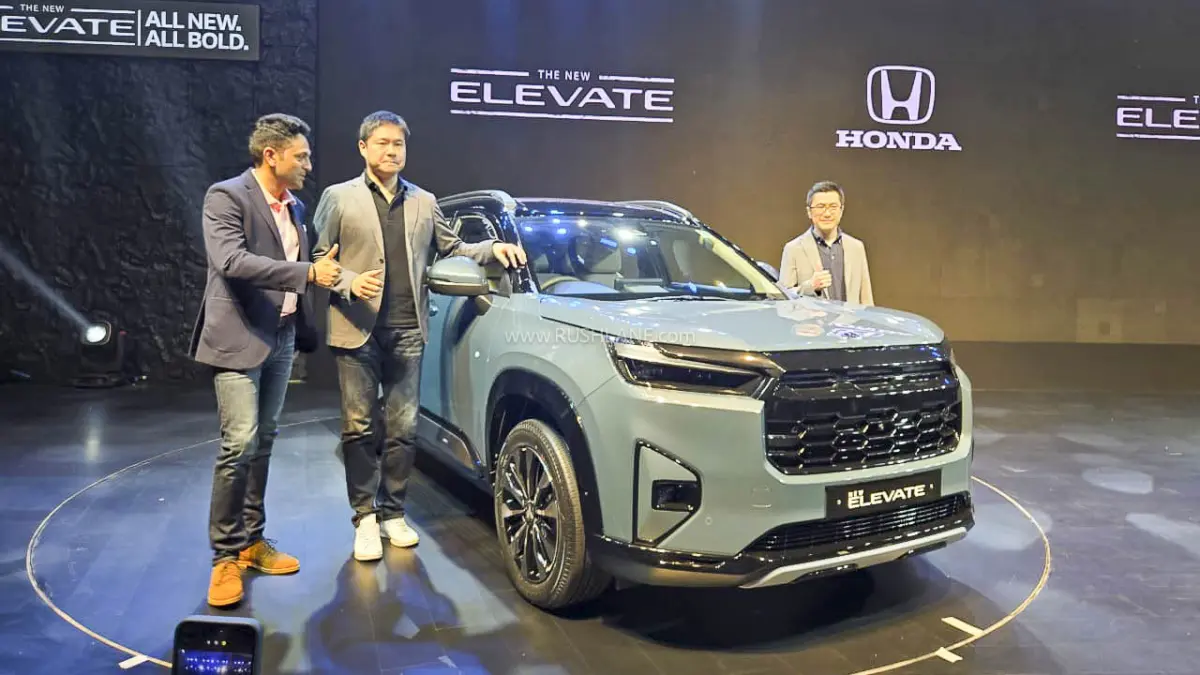
New Delhi, India – In a strategic move to fortify its position in the fiercely contested midsize SUV segment, Honda Cars India has officially launched the facelifted version of the Honda Elevate. This mid-cycle refresh arrives with a starting price of Rs 11.80 lakh (ex-showroom, Delhi), extending up to Rs 18.40 lakh for the range-topping variants. The update is far more than a cosmetic exercise; it represents a significant overhaul of the vehicle’s convenience suite, safety technology, and cabin refinement levels, aiming to address consumer feedback while setting new benchmarks in passenger comfort.

The updated Elevate lineup now introduces a new flagship trim, the ZX+, and a stylistically distinct ZX+ Black edition. These additions are designed to compete directly with high-spec rivals like the Hyundai Creta, Kia Seltos, and Maruti Suzuki Grand Vitara, offering features previously absent in the Honda stable, such as rear ventilated seats and enhanced ADAS (Advanced Driver Assistance Systems) capabilities.

1. The Main Facts: Pricing, Trims, and Key Specifications
The Honda Elevate facelift is structured across five primary trim levels: SV, V, VX, ZX, and the new ZX+. Recognizing the growing demand for "blacked-out" aesthetics, Honda has also introduced the ZX+ Black version, which carries a specific premium for its bespoke visual treatment.

Price Structure (Ex-Showroom, Delhi):
- SV (Manual): Rs 11.80 Lakh
- V (Manual): Rs 12.71 Lakh | V (CVT): Rs 13.79 Lakh
- VX (Manual): Rs 14.10 Lakh | VX (CVT): Rs 15.60 Lakh
- ZX (Manual): Rs 15.41 Lakh | ZX (CVT): Rs 16.91 Lakh
- ZX+ (Manual): Rs 16.80 Lakh | ZX+ (CVT): Rs 18.30 Lakh
- ZX+ Black (Manual): Rs 16.90 Lakh | ZX+ Black (CVT): Rs 18.40 Lakh
Note: Pearl and dual-tone exterior colors attract an additional charge, though the ZX+ Black pricing already accounts for the Crystal Black Pearl paint.

Mechanical Core
Under the hood, the Elevate remains committed to the proven 1.5-litre, four-cylinder, naturally aspirated i-VTEC petrol engine. This unit delivers a balanced 121 PS of power and 145 Nm of peak torque. Transmission duties are handled by either a 6-speed manual gearbox or a 7-step Continuously Variable Transmission (CVT).

Despite rumors of a hybrid powertrain, Honda has opted to stick with the internal combustion engine for this iteration, focusing instead on E20 compatibility and WLTP compliance. The fuel efficiency is rated at 15.31 km/l for the manual and 16.61 km/l for the CVT variants.

2. Chronology: The Evolution of the Elevate
The Honda Elevate originally made its global debut in India in September 2023. It was Honda’s long-awaited answer to the SUV boom, built on the same Global Small Car platform that underpins the Honda City. While the initial launch was met with strong sales, the rapidly evolving segment saw competitors introduce more "lifestyle" features like ventilated seats and 360-degree cameras.

By early 2026 (per the current timeline), Honda showcased the WR-V TrailSport HRC Concept at the Tokyo Auto Salon. This concept served as the visual blueprint for the Elevate facelift. The transition from concept to production took less than a year, culminating in this October launch. This quick turnaround highlights Honda’s agility in responding to market trends, particularly the demand for more aggressive styling and higher-density feature lists in the Rs 15–20 lakh price bracket.

3. Supporting Data: Design, Interior, and Technology Upgrades
Exterior: The TrailSport Influence
The most striking change is the redesigned front fascia. The facelift adopts a much larger, more intricate mesh grille that sits lower than the previous iteration. Above it, a new tri-bar LED lighting signature connects the sleek headlamps, giving the SUV a wider, more planted stance. The iconic Honda "H" badge has been repositioned to the leading edge of the bonnet for a more modern look.

Additional exterior highlights include:

- Gloss-black detailing on the grille surrounds and bumper inserts.
- Revised fog-lamp housings with contrasting accents.
- New 17-inch alloy wheel finishes, with the ZX+ Black variant receiving a full gloss-black treatment.
- Connected LED tail lamps that now span the width of the tailgate, available from the VX trim onwards.
Interior: A New Standard for Comfort
The cabin has undergone a significant "premiumization" process. The previous faux-wood dashboard inserts have been replaced with a sophisticated Ivory-and-Black theme.

The headline feature is undoubtedly the seating. While front ventilated seats are now standard on the ZX trim, the ZX+ introduces rear ventilated seats—a segment-first feature that addresses a major pain point for chauffeured owners in India’s tropical climate. Furthermore, the ZX+ trim adds an 8-way powered driver’s seat and a 4-way powered front passenger seat, significantly enhancing the ergonomic appeal.

Advanced Safety and Honda Sensing
Honda has upgraded its "Honda Sensing" ADAS suite. Most notably, the Adaptive Cruise Control now includes "Low-Speed Follow" for CVT variants, making bumper-to-bumper traffic significantly less taxing for the driver.

Other safety and tech additions include:

- 360-degree Surround View Camera: Introduced on the ZX+ trim to aid parking in tight spots.
- Front Parking Sensors: A critical addition for an SUV with a high bonnet line.
- Rear Disc Brakes: Now standard on CVT variants from the V trim onwards, alongside an Electric Parking Brake (EPB) with Auto Brake Hold.
- Six Airbags: Now standard across more variants to ensure a high safety rating.
4. Engineering Refinement: The Quest for Quietness
One of the most substantial, yet invisible, upgrades in the facelift is the work done on Noise, Vibration, and Harshness (NVH) levels. Honda engineers identified cabin noise as an area for improvement based on customer feedback from the 2023-2025 models.

To achieve a "library-quiet" cabin during cruising, Honda implemented:

- Thicker Instrument Panel Duct Insulation: To dampen engine roar.
- Higher-Density Acoustic Layers: Placed strategically throughout the floor pan.
- New Septum Layers: Added to the firewall to prevent sound leakage from the engine bay.
- Additional Fender Arch Insulation: To reduce road and tire noise on rough surfaces.
These measures, combined with the Elevate’s class-leading 220 mm ground clearance, make the facelifted model a more refined long-distance tourer than its predecessor.

5. Official Responses and Warranty
Honda Cars India executives emphasized that the Elevate facelift is a testament to the brand’s "Customer First" philosophy. By introducing rear ventilated seats and a 360-degree camera, Honda aims to provide a luxury-class experience within the midsize SUV price point.

To bolster consumer confidence, Honda continues to offer a robust service package:

- Standard Warranty: 3 years / Unlimited Kilometers.
- Extended Warranty: Options to extend up to 7 years.
- Anytime Warranty: A unique program allowing coverage up to 10 years or 1,20,000 km, providing one of the best long-term ownership security nets in the Indian market.
6. Market Implications and Strategic Outlook
The launch of the Elevate facelift comes at a critical juncture for Honda. With the departure of several sedan models in previous years, the Elevate is the primary volume driver for the brand in India.

Competitive Positioning
By pricing the base variant at Rs 11.80 lakh, Honda remains accessible to those moving up from sub-compact SUVs. However, the real battle lies at the top end. The ZX+ trim, priced at Rs 18.30 lakh (CVT), is positioned as a "sensible luxury" choice. It may lack a panoramic sunroof (retaining the standard electric sunroof) and a hybrid engine, but it counters with superior ground clearance, a proven naturally aspirated engine known for longevity, and now, a feature list that rivals the best in the business.

The Missing Hybrid
The decision to skip the "e:HEV" hybrid powertrain for the Elevate remains a point of contention among enthusiasts. While the Honda City Hybrid exists, bringing that tech to the Elevate would likely have pushed prices beyond the Rs 20 lakh mark, potentially alienating value-conscious buyers. Instead, by focusing on NVH and ventilated seats, Honda is betting that comfort and perceived quality will drive more sales than complex electrified drivetrains.

Conclusion
The 2026 Honda Elevate Facelift is a calculated, high-impact update. It successfully sheds the "utilitarian" tag that some critics associated with the early models, replacing it with a "premium and tech-forward" identity. With the addition of the ZX+ trim and the stylish Black Edition, Honda has ensured that the Elevate remains a top-of-mind contender in one of the world’s most competitive automotive segments. For the Indian car buyer, the result is an SUV that is quieter, more comfortable, and better equipped to handle the rigors of both urban commutes and highway adventures.
