

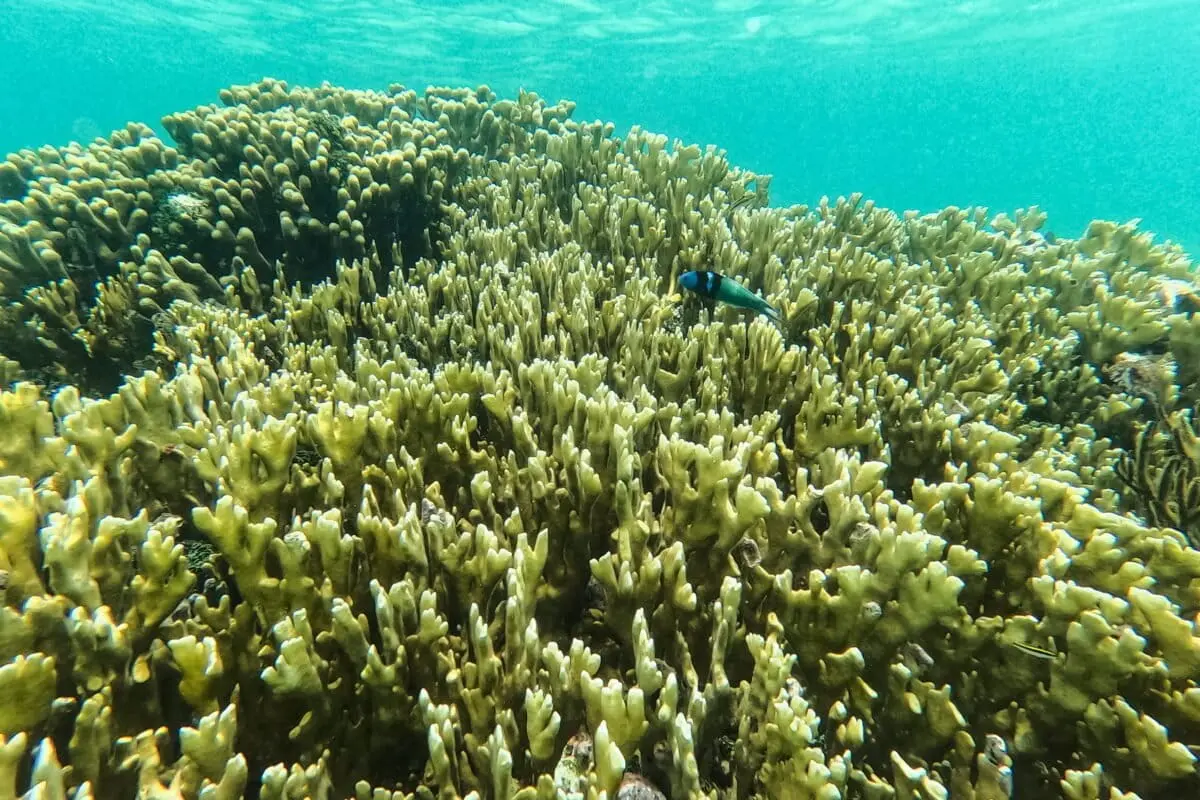
Executive Summary: The Main Facts
The world’s coral reefs, often described as the "rainforests of the sea," are currently facing an existential threat of unprecedented proportions. United Nations Secretary-General António Guterres has warned that the natural climate phenomenon known as El Niño is being "supersized" by a rapidly warming planet, creating a lethal combination for marine ecosystems. According to the UN Environment Programme (UNEP), coral reefs are now behaving like an "overmatched boxer," taking repeated, heavy blows from marine heatwaves before they have the chance to recover.
The central crisis lies in the narrowing window for recovery. Historically, coral reefs had decades to bounce back from major bleaching events. Today, that window has shrunk to a mere five or six years, and in many cases, even less. New findings from the Global Coral Reef Monitoring Network (GCRMN) and the International Coral Reef Initiative (ICRI) suggest that even if global warming is limited to 1.5°C—the ambitious target of the Paris Agreement—between 70% and 90% of the world’s warm-water coral reefs are expected to disappear. With the World Meteorological Organization (WMO) predicting that the current El Niño will persist and potentially peak through late 2026, the scientific community is sounding an urgent alarm: we are witnessing the potential collapse of a foundational pillar of global marine biodiversity.
A Chronology of Crisis: From 1982 to the Present
The history of mass coral bleaching is a relatively short but intensifying timeline that mirrors the trajectory of global industrial carbon emissions. To understand the current "supersized" threat, one must look at the sequence of Global Coral Bleaching Events (GCBEs).
The Harbinger: 1982-1983
The first large-scale mass coral bleaching was recorded in the eastern tropical Pacific during the then-record-breaking El Niño of 1982-83. This event served as a grim preview of the future. In the Galapagos Islands, Panama, and Costa Rica, coral mortality reached staggering levels of 95% to 99%. Entire reef systems were effectively eliminated from the southern Galapagos, demonstrating that even the most robust ecosystems have a thermal breaking point.

GCBE1: The 1998 Turning Point
The first official Global Coral Bleaching Event occurred in 1998. It was a watershed moment for marine biology, as it was the first time bleaching was observed on a truly global scale. An estimated 8% of the world’s total coral cover died in a single year. The Indian Ocean was particularly hard-hit, with some regions losing nearly 90% of their live coral.
GCBE2 and GCBE3: The Frequency Increases
The second global event (2010) and the third (2014-2017) showed a worrying trend: the intervals between crises were shortening. The third event was the longest and most damaging on record, impacting more reefs than any previous occurrence. During this period, approximately 15% of the world’s reefs experienced significant mortality.
GCBE4: The Current Unprecedented Heat
We are currently in the midst of the fourth Global Coral Bleaching Event (2023-2024), which has already seen global coral cover decline by nearly 9%. Unlike previous events, this one is occurring against a backdrop of record-high "baseline" ocean temperatures. As Derek Manzello, Coordinator of NOAA’s Coral Reef Watch, notes, the sea surface temperatures during recent La Niña conditions (the cooler phase of the cycle) were actually warmer than the temperatures during El Niño events just forty years ago.
Supporting Data: The Science of the "Recovery Window"
The biological impact of bleaching is not just about the heat itself, but the duration of the stress and the time allowed for regrowth. Coral bleaching occurs when corals, stressed by warm water, expel the symbiotic algae (zooxanthellae) living in their tissues, causing them to turn completely white. While corals can survive a bleaching event, they are under extreme stress and are subject to mortality if the heat persists.
The Six-Year Rule
A critical study by the Nature Conservation Foundation (NCF) and international collaborators has identified a "critical window" for reef survival. Data suggests that reefs require approximately six bleaching-free years to recover their structural integrity and ecological function.

"Coral reefs once had decades to recover. Today, they’re lucky to get five or six years," explains Manuel González Rivero, a reef expert at the Australian Institute of Marine Science. For reefs hit by the 2024 heatwaves, the current El Niño cycle means they may only have one year of "rest" before the next thermal onslaught begins.
The Indian Context: Lakshadweep and Beyond
India’s reefs serve as a microcosm of the global struggle. In the Lakshadweep archipelago, a 24-year study recorded a devastating decline in coral cover, falling from 37% in 1998 to under 20% today.
Recent nationwide collaborative research led by Wenzel Pinto of the NCF found that between 2023 and 2025, more than 80% of India’s tropical reefs experienced extreme heat stress. The data revealed a complex picture of vulnerability:
- Lakshadweep: The most severely impacted, with 37% of coral cover bleached or dead.
- Andaman Islands: Showed more resilience, with 11.5% mortality in the Mahatma Gandhi Marine National Park.
- Species Variation: In Palk Bay, the "tough" boulder-like Porites corals suffered 61.8% mortality, while the usually fragile Acropora corals fared better. This suggests that local oceanographic conditions can sometimes override general scientific expectations, offering "pockets of hope" or unexpected "zones of death."
Official Responses: Global Institutions Sound the Alarm
The severity of the situation has prompted unprecedented statements from international scientific and political bodies.
The WMO and NOAA
The World Meteorological Organization has confirmed that El Niño is now "firmly established." Their seasonal forecasts indicate a near 100% probability that these conditions will persist through late 2026. This is catastrophic for reefs already weakened by the 2023-2024 heatwaves. NOAA’s Coral Reef Watch has been forced to expand its bleaching alert levels to account for the extreme temperatures that are now being recorded.

The IPCC and UNEP
The Intergovernmental Panel on Climate Change (IPCC) has been blunt in its assessment: the majority of tropical reefs are unlikely to survive the century unless radical decarbonization occurs. UNEP’s comparison of reefs to an "overmatched boxer" highlights the cumulative nature of the damage. It is not just one "punch" (heatwave) that kills the reef, but the inability to get back on its feet before the next one lands.
The Call to Action in India
In response to these local and global trends, 188 ecologists and conservationists across India have signed a formal "Call to Action." This document seeks immediate funding for long-term monitoring and stronger research into the ecological impacts of the 2026-27 El Niño. The scientists argue that without consistent, year-round data, conservation efforts will be reactive rather than proactive.
Implications: Why Coral Loss Matters to Humanity
The disappearance of coral reefs is not merely an aesthetic or environmental tragedy; it is a socio-economic disaster with far-reaching consequences for human civilization.
1. Food Security and Livelihoods
Coral reefs occupy less than 1% of the ocean floor but support more than 25% of all marine life. They are the primary nurseries for global fish stocks. The collapse of these ecosystems threatens the protein source for over a billion people and the livelihoods of millions involved in artisanal and commercial fishing.
2. Coastal Protection
Reefs act as natural breakwaters, absorbing up to 97% of wave energy. As sea levels rise and "supersized" El Niños fuel more intense tropical storms, the loss of reefs leaves coastal communities—from the islands of Lakshadweep to the shores of Florida—vulnerable to catastrophic flooding and erosion.

3. Economic Impact
The global economic value of coral reefs is estimated in the trillions of dollars, encompassing tourism, fisheries, and pharmaceutical research. Many island nations depend almost entirely on reef-related tourism for their GDP. The death of the reefs is, in many ways, the death of these national economies.
4. The Path Forward: Adaptation and Resilience
While the outlook is stark, marine biologists emphasize that the future is not yet written. Tracking which reefs recover—and why—is the current priority. Some reefs exist in "marginal" systems at the edge of environmental tolerance; these "tough" corals may hold the genetic secrets to surviving a warmer world.
The goal for conservationists now is to reduce local stressors—such as overfishing and plastic pollution—to give corals the best possible chance to utilize their narrowing recovery windows. However, as the UN Secretary-General’s warnings make clear, local action must be matched by global climate stabilization. Without addressing the "supersized" heat driven by fossil fuel emissions, the "overmatched boxer" of the world’s coral reefs may soon face a final knockout.
