

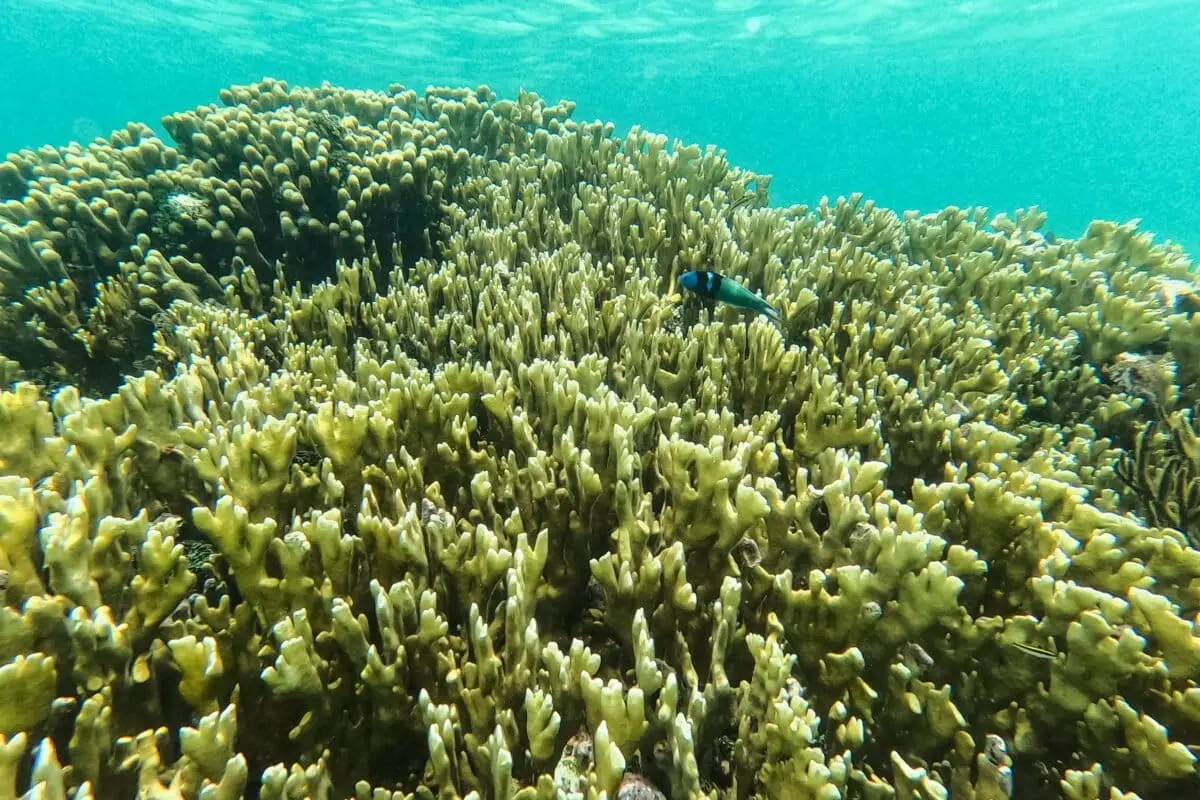
As the planet grapples with record-breaking temperatures, the world’s coral reefs—often described as the "rainforests of the sea"—are facing an existential crisis. UN Secretary-General António Guterres recently warned that the cyclical weather phenomenon known as El Niño is being "supersized" by a rapidly warming climate, creating a lethal combination for marine ecosystems. According to recent reports from the United Nations Environment Programme (UNEP) and the Global Coral Reef Monitoring Network (GCRMN), coral reefs are being subjected to a relentless barrage of marine heatwaves, leaving them with insufficient time to recover between bleaching events.
The prognosis is increasingly grim. Even if global warming is successfully constrained to 1.5°C above pre-industrial levels, the Intergovernmental Panel on Climate Change (IPCC) estimates that 70% to 90% of today’s tropical coral reefs will likely disappear. As the 2026-2027 El Niño cycle intensifies, scientists fear we are entering a new era of "permanent bleaching," where the recovery windows that once spanned decades have shrunk to mere months.
Main Facts: A System Under Siege
The current state of global coral health is defined by a narrowing window of resilience. Historically, coral reefs functioned like a resilient ecosystem that could bounce back from occasional heat stress. When water temperatures rise, corals expel the symbiotic algae (zooxanthellae) living in their tissues, which provide them with food and their vibrant colors. This process, known as bleaching, leaves the coral white and vulnerable. If temperatures return to normal quickly, the algae can return; if not, the coral starves and dies.
The UNEP has likened the world’s reefs to "an overmatched boxer" taking repeated blows without the chance to retreat to a corner and recover. The core findings of the GCRMN 2025 report highlight several critical facts:
- Shrinking Recovery Windows: Reefs once had 20 to 30 years to recover after a major bleaching event. Today, that window has collapsed to five or six years. For many reefs hit by the 2024 heatwaves, the 2026 El Niño means they will have had only one year of respite.
- The 1.5°C Threshold: The IPCC warns that the majority of warm-water reefs are doomed even under the most optimistic climate scenarios. At 2°C of warming, the survival rate drops to less than 1%.
- Global Mortality Trends: Since 1998, the world has lost a staggering percentage of its coral cover. Roughly 8% of the world’s corals died in the first Global Coral Bleaching Event (GCBE1) in 1998, with an additional 14% loss recorded between 2009 and 2018.
- Indian Vulnerability: India’s reefs, particularly in the Lakshadweep archipelago, have seen coral cover plummet from 37% to under 20% over the last 24 years due to repeated thermal stress.
Chronology: The History of Global Coral Bleaching Events
To understand the severity of the current crisis, one must look at the timeline of mass bleaching, which has accelerated in tandem with rising atmospheric CO2 levels.

1982-1983: The First Warning
The first large-scale mass coral bleaching was recorded in the eastern tropical Pacific during the record-breaking El Niño of 1982-83. This event was a harbinger of the future, causing 95% to 99% coral mortality in the southern Galapagos Islands. It proved that extreme El Niño events could effectively eliminate entire reef systems in a single season.
1998: The First Global Event (GCBE1)
The 1998 El Niño was a watershed moment for marine biology. It triggered the first recognized Global Coral Bleaching Event, affecting reefs from the Caribbean to the Indian Ocean. In a single year, approximately 16% of the world’s coral reefs were damaged or killed.
2010: The Second Global Event (GCBE2)
A shorter but intense El Niño led to a second global event. While less destructive than 1998 in some regions, it reinforced the pattern of increasing frequency.
2014-2017: The Third Global Event (GCBE3)
This was the longest, most widespread, and most damaging coral bleaching event on record. It lasted over 36 months and affected more than 70% of the world’s coral reefs. During this period, the Great Barrier Reef lost nearly 30% of its shallow-water corals in a single year (2016).
2023-Present: The Fourth Global Event (GCBE4)
In early 2024, the National Oceanic and Atmospheric Administration (NOAA) confirmed the fourth global mass bleaching event. Impacting at least 62 countries and territories, this event saw record-breaking sea surface temperatures even before the full onset of the "supersized" El Niño. Global coral cover declined by 8.9% during the 2023-2024 period alone.

Supporting Data: The Science of Thermal Stress
The link between El Niño and coral mortality is rooted in the "baseline shift" of ocean temperatures. As global warming raises the average temperature of the sea, the "peaks" created by El Niño are becoming high enough to cross the lethal threshold for most coral species.
The Six-Year Rule
A study by the Nature Conservation Foundation (NCF) in India, involving international collaborators, found that reefs require a minimum of six bleaching-free years to show meaningful recovery. When bleaching occurs every two or three years, the coral recruits (juveniles) do not have time to mature, and the structural integrity of the reef—essential for fish habitat—begins to crumble.
Marine Heatwave Intensity
Manuel González Rivero, a reef expert at the Australian Institute of Marine Science (AIMS), notes that the sea surface temperatures during recent La Niña conditions (the cooler phase of the cycle) are now warmer than they were during El Niño events four decades ago. This means there is no longer a "cool" period for corals; there is only "hot" and "extremely hot."
Regional Disparities in India
Data from a nationwide collaborative study led by Wenzel Pinto of the NCF reveals how local conditions dictate survival:
- Lakshadweep: Up to 37% of coral cover was lost or bleached between 2023 and 2025.
- Andaman Islands: The Mahatma Gandhi Marine National Park saw a lower impact, with 11.5% bleaching, likely due to local upwelling or shading.
- Species Vulnerability: In Palk Bay, the typically hardy Porites (boulder corals) suffered 61.8% mortality, while the sensitive Acropora (branching corals) surprisingly fared better in certain pockets. This suggests that the intensity of the heat is now overriding the natural resilience of even the toughest species.
Official Responses: Global and National Alarms
The international community has responded with a mixture of urgent monitoring and desperate calls for carbon mitigation.

The World Meteorological Organization (WMO):
The WMO has confirmed that El Niño is "firmly established" and predicts a near 100% probability that it will persist through the end of 2026. The agency has designated this an "emergency for the oceans," calling for enhanced early-warning systems for marine heatwaves.
NOAA’s Coral Reef Watch:
Derek Manzello, the coordinator for NOAA’s Coral Reef Watch, emphasizes that every strong El Niño since 1998 has been associated with a global bleaching event. NOAA is currently updating its satellite monitoring tools to provide more granular data to local reef managers, helping them identify "thermal refugia"—areas where deep water or currents might keep corals cool.
Indian Scientific Community:
In India, the response has been a massive mobilization of the scientific community. Recently, 188 ecologists and conservationists signed a "Call to Action" through the Zenodo platform. They are seeking a standardized, long-term monitoring protocol to track the ecological impacts of the 2026-27 El Niño. The goal is to move beyond "post-mortem" reports and into real-time management of reef health.
UN Environment Programme (UNEP):
The UNEP continues to push for the "30 by 30" goal—protecting 30% of the world’s oceans by 2030. However, officials admit that local protection (such as banning overfishing) is insufficient if the water itself becomes too hot for biological life.
Implications: A World Without Reefs
The potential disappearance of coral reefs is not merely an aesthetic or environmental loss; it is a socio-economic catastrophe in the making.

1. Ecological Collapse
Coral reefs support 25% of all marine life despite covering less than 1% of the ocean floor. Their collapse would lead to a "trophic cascade," where the loss of small reef fish impacts larger predators, eventually leading to a decline in open-ocean biodiversity.
2. Food Security and Livelihoods
Over half a billion people worldwide depend on reefs for food, income, and protection. In India alone, thousands of artisanal fishers rely on reef-associated species. Without these nurseries, coastal fisheries will likely collapse, leading to mass migration and economic instability in coastal communities.
3. Coastal Protection
Reefs act as natural breakwaters, absorbing up to 97% of wave energy. As sea levels rise and storms become more frequent due to climate change, the loss of reefs leaves coastal cities and villages vulnerable to devastating erosion and storm surges. The cost of building artificial sea walls to replace the protection provided by reefs would run into the trillions of dollars.
4. The Adaptation Paradox
While some reefs are showing signs of adaptation—such as the "heat-resilient" corals found in the Red Sea—scientists warn that the pace of climate change is far outstripping the pace of natural evolution. Human intervention, such as "coral gardening" or "assisted evolution," is being trialed, but these methods are difficult to scale to the size of the global ocean.
Conclusion
The "supersized" El Niño of 2026-2027 represents a tipping point. The findings from Lakshadweep to the Caribbean indicate that the window for recovery is closing. Without a radical and immediate reduction in global greenhouse gas emissions, the next decade may witness the final transition of these vibrant ecosystems into skeletal graveyards. As Amruth P. of CHRIST University suggests, the task now is to watch, learn, and fight for every remaining pocket of resilience, in the hope that some reefs can survive the "supersized" heat of a warming world.
