

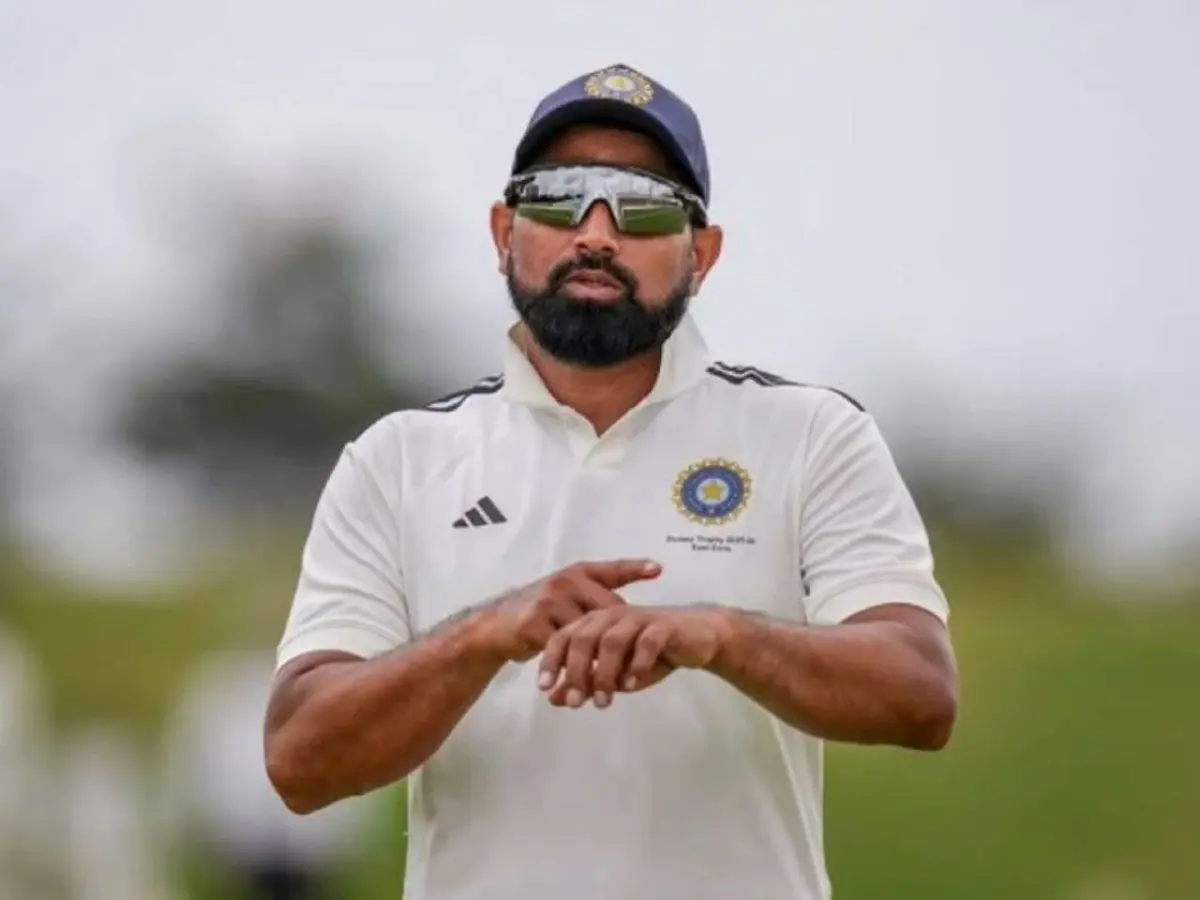
KALYANI, BENGAL – In a performance that reverberated through the Indian cricketing landscape, veteran pace spearhead Mohammed Shami delivered a spellbinding display for Bengal in the Ranji Trophy, snaring four crucial wickets for just 30 runs against Delhi. His sensational bowling on the opening day of their Group C encounter in Kalyani has not only given Bengal a commanding start but has also intensely amplified the clamor for his return to the national team, casting a significant spotlight on the Indian selection committee.
Shami’s impeccable control, searing pace, and cunning seam movement dismantled Delhi’s batting lineup, providing a stark reminder of his enduring class and match-winning capabilities. Coming at a time when the Board of Control for Cricket in India (BCCI) is navigating a transitional phase within its selection panel, Shami’s heroics have injected a compelling narrative into the ongoing debate surrounding the inclusion of experienced campaigners in the national squad. This formidable performance serves as a powerful statement, making it increasingly difficult for selectors to overlook a bowler of his caliber and proven track record.
Chronology of Day One Dominance: Bengal’s Astute Decision
The Ranji Trophy clash between Bengal and Delhi commenced on a Sunday morning in Kalyani, with the home side, Bengal, making a crucial tactical decision at the toss. Electing to bowl first on a pitch that promised assistance for the seamers, captain Abhimanyu Easwaran’s astute judgment immediately paid dividends as his pace battery, spearheaded by Mohammed Shami, capitalized on the favorable conditions from the outset.
Early Breakthroughs and Shami’s Spellbinding Performance
The morning session was dominated by Bengal’s bowlers, who exploited the early moisture and swing on offer. Delhi’s top order found themselves under relentless pressure, struggling to cope with the movement and precision. It was Mohammed Shami, however, who truly stole the show, showcasing why he remains one of India’s most feared fast bowlers. From his very first over, Shami exhibited immaculate control over line and length, consistently challenging the outside edge and forcing the Delhi batsmen into uncomfortable positions.
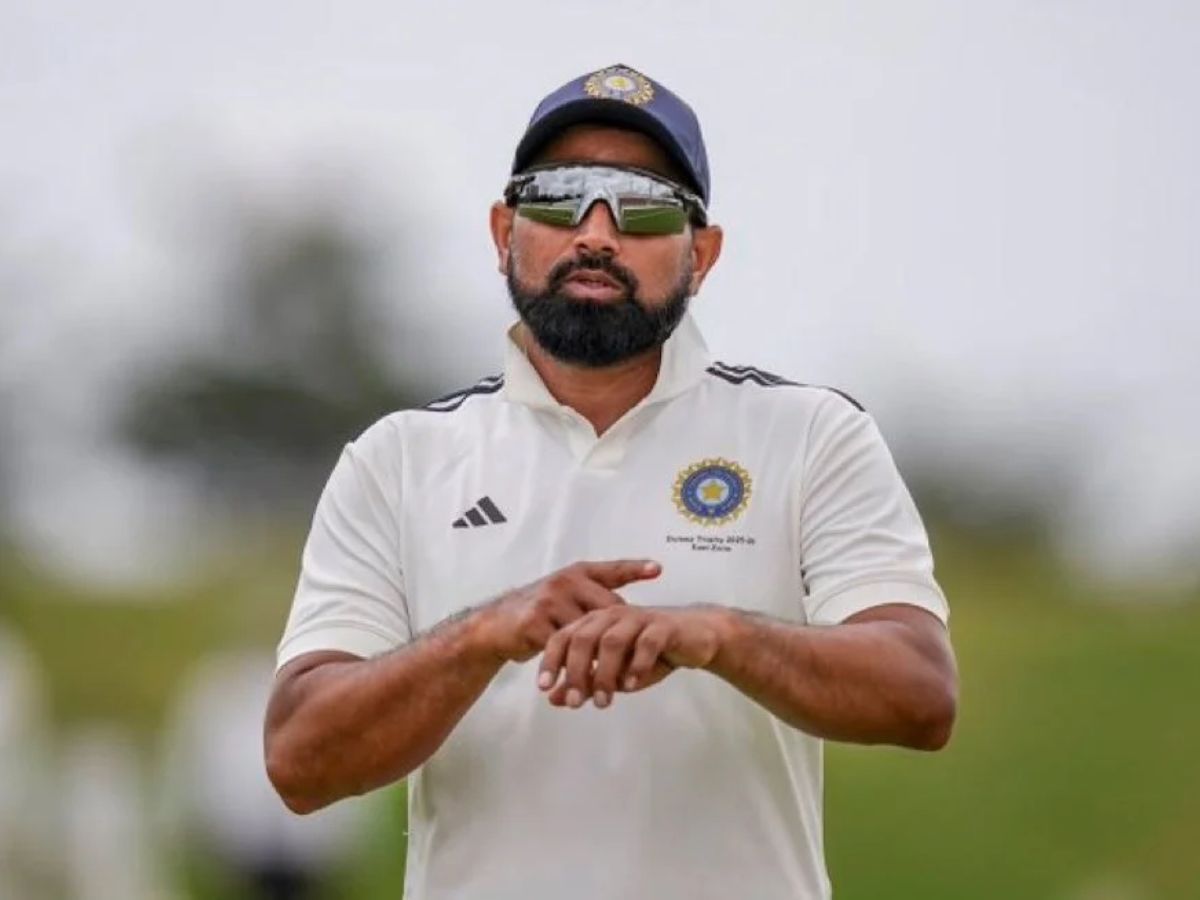)
His opening spell was a masterclass in pace bowling. Shami’s first victim was the highly-rated Yash Dhull, whom he dismissed with a delivery that nipped back sharply, catching the batsman off guard. This early breakthrough set the tone for Bengal. Shami then returned to haunt Delhi further, trapping Ayush Doseja plumb in front with a full, inswinging delivery that left the batsman with no doubt. Doseja, who had shown some promise with a resilient 45 runs, found his innings cut short by Shami’s precision.
The veteran pacer continued to apply pressure throughout his spells, returning later in the innings to mop up the tail. He accounted for Hrithik Shokeen, who had valiantly led Delhi’s batting effort with a top score of 56 from 98 balls. Shami’s delivery to Shokeen was a testament to his ability to find the right length even against set batsmen, inducing an edge that was safely pouched. His final wicket, that of Divij Mehra, completed his four-wicket haul, effectively sealing Delhi’s collapse. Each wicket was a testament to Shami’s experience, his understanding of the conditions, and his unwavering commitment to attacking the stumps and the corridor of uncertainty. His figures of 4/30 from his allotted overs were not just economical but devastatingly effective, preventing Delhi from building any significant partnerships.

Collective Effort: Bengal’s Potent Bowling Attack
While Shami’s individual brilliance was the highlight, Bengal’s success on Day One was also a result of a cohesive bowling performance. The pace attack was ably supported by the spin department, ensuring that Delhi’s batsmen never found respite. Akash Deep, another promising fast bowler for Bengal, contributed significantly, chipping in with two crucial wickets for 74 runs. His raw pace and ability to extract bounce complemented Shami’s swing and seam movement, creating a formidable opening partnership.
Mukesh Kumar, known for his disciplined line and length, added one wicket for 43 runs, maintaining tight control from his end and building pressure that often led to breakthroughs for his bowling partners. However, it was the off-spinner Amir Ghani who played a pivotal supporting role, particularly as the pitch started to offer some turn. Ghani made the most of the developing conditions, finishing with an impressive haul of 3/45. His ability to pick up wickets in the middle overs ensured that Delhi’s attempted recovery was consistently thwarted, preventing them from reaching a respectable total. The collective effort saw Delhi bundled out for a modest 240 runs in 77.3 overs, a testament to Bengal’s strategic bowling and excellent fielding.
)
Delhi’s Resistance and Eventual Collapse
Despite the challenging conditions and Bengal’s relentless attack, Delhi’s batsmen did show moments of resilience. Hrithik Shokeen emerged as the top scorer, crafting a patient 56 runs from 98 balls, showcasing a gritty determination against a high-quality bowling attack. Ayush Doseja also made a valuable contribution with 45 runs. However, these individual efforts were not enough to counter the consistent pressure applied by Bengal. The loss of wickets at regular intervals prevented Delhi from establishing any substantial partnerships, which is crucial for building a competitive first-innings total in first-class cricket. The lower order offered minimal resistance, ultimately leading to their collapse in the final session of the day.
Supporting Data: Shami’s Pedigree and Ranji’s Significance
Mohammed Shami’s performance is not an isolated incident but rather a continuation of a career marked by consistent excellence, particularly in the longer format of the game. His ability to perform under pressure and deliver match-winning spells is well-documented, making his current Ranji Trophy heroics all the more significant.
)
Shami’s Form, History, and Statistical Prowess
Shami’s domestic record for Bengal in the Ranji Trophy has always been stellar, often serving as a launchpad or a reaffirmation of his skills before international assignments. He has consistently been among the leading wicket-takers whenever he has participated, demonstrating his commitment to his state side. This latest 4/30 spell is another feather in his cap, highlighting his fitness and form.
Internationally, Shami boasts an enviable record across formats, though he is primarily revered for his Test cricket prowess. With over 200 Test wickets, he is one of India’s most successful fast bowlers in the red-ball format. His ability to swing the ball both ways, hit precise lengths, and generate disconcerting seam movement makes him a potent weapon in any conditions. While his ODI and T20I numbers are also respectable, his Ranji performance primarily serves as a reminder of his Test match pedigree. Any concerns regarding his fitness or ability to sustain long spells have been emphatically quashed by this commanding display, showcasing his readiness for the rigors of international cricket. He remains a bowler who can single-handedly turn the tide of a match, a quality that selectors covet.
)
Ranji Trophy: The Crucible of Indian Cricket
The Ranji Trophy holds immense significance in the Indian cricketing ecosystem. It is the premier first-class competition, serving as the ultimate proving ground for aspiring national cricketers and a vital platform for established players to maintain form and push for selection. Performances in the Ranji Trophy are meticulously scrutinized by the national selection committee, who view consistent excellence in this demanding competition as a strong indicator of a player’s readiness for international cricket.
For a veteran like Shami, a strong Ranji showing is not just about taking wickets; it’s about demonstrating sustained fitness, leadership, and the ability to dominate domestic opposition, sending a clear message to the selectors about his availability and current form. It reinforces the idea that even seasoned international players must prove their mettle at the domestic level to earn their spot back in the national squad. The tournament provides a competitive environment that mimics the pressures of international cricket, making strong performances here highly valuable.
)
Detailed Scorecard Snippets
Delhi – 1st Innings (All Out – 240 runs in 77.3 overs)
- Hrithik Shokeen: 56 runs (98 balls)
- Ayush Doseja: 45 runs
- Yash Dhull: Early dismissal
- Divij Mehra: Lower order contribution
Bengal – Bowling Figures:
)
- Mohammed Shami: 15 overs, 4 maidens, 30 runs, 4 wickets (Economy: 2.00)
- Amir Ghani: 18 overs, 5 maidens, 45 runs, 3 wickets (Economy: 2.50)
- Akash Deep: 19 overs, 3 maidens, 74 runs, 2 wickets (Economy: 3.89)
- Mukesh Kumar: 16.3 overs, 4 maidens, 43 runs, 1 wicket (Economy: 2.60)
These figures underscore the collective dominance of Bengal’s bowling attack, with Shami leading the charge with remarkable efficiency and impact.
Official Responses and Selection Implications: The Unfolding Drama
Mohammed Shami’s scintillating performance arrives amidst a fascinating and somewhat tumultuous period for the Indian selection committee, intensifying the debate over player selection policies and the future direction of the national team.
)
The Unfolding Selection Drama: A Committee in Transition
The BCCI’s selection panel is currently undergoing a significant transition. The recent departure of chief selector Ajit Agarkar has left a void at the helm, with South Zone selector Pragyan Ojha reportedly overseeing the committee’s operations in an interim capacity. The search for Agarkar’s replacement is ongoing, adding an element of uncertainty and potential shifts in selection philosophy.
Recent reports have indicated that Agarkar, during his tenure, held a firm stance against recalling veteran players who had previously been dropped from the national squad, advocating instead for a focus on youth and future-proofing the team. This philosophy created a challenging environment for experienced players seeking a comeback. However, Agarkar’s exit appears to have opened the door for a re-evaluation of this policy. North Zone selector RP Singh, for instance, has reportedly been instrumental in successfully advocating for the comeback of experienced fast bowler Bhuvneshwar Kumar, setting a precedent that veteran players with proven track records and current form could indeed find their way back into the national setup. This shift in internal dynamics within the selection committee could be highly beneficial for a player like Shami.
)
Shami’s Stance and the Selectors’ Dilemma
Mohammed Shami, known for his calm demeanor and focus, has consistently maintained a pragmatic approach to national selection. His oft-quoted stance that "missing out on India selection wouldn’t be detrimental to him" speaks volumes about his mental fortitude and self-assurance. It implies a player who is confident in his abilities, dedicated to his craft, and understands that his value extends beyond immediate national team inclusion. This perspective, while admirable, also subtly pressures the selectors. It suggests that Shami is not desperate, but rather an elite performer who, if selected, will undoubtedly contribute, and if not, will continue to excel at the domestic level.
The current situation presents a significant dilemma for the selectors. On one hand, there is a clear push towards nurturing younger talent and building a team for the future. On the other hand, the experience, skill, and match-winning ability of a player like Shami are undeniable, especially in the Test format where his prowess is paramount. With crucial international series on the horizon, including challenging overseas tours, the need for seasoned performers who can adapt to various conditions becomes critical.
)
The selectors will have to weigh the immediate needs of the team against their long-term vision. Do they prioritize proven excellence and experience, especially in Test cricket where Shami has few peers in India, or do they stick to a more stringent policy of blooding new talent? Shami’s performance has made this decision significantly harder, as ignoring such a dominant display from a world-class bowler would be a contentious choice. His case is particularly strong for Test cricket, where India could benefit from his ability to provide breakthroughs with the new and old ball.
Expert Opinions and Media Buzz
The cricketing fraternity and media have been quick to react to Shami’s performance. Former cricketers and pundits have widely lauded his ability to extract movement and generate pace even on unresponsive pitches, often citing his meticulous preparation and deep understanding of the game. Many believe that a strong Ranji showing is precisely what Shami needed to reaffirm his credentials and remind the selectors of his unwavering quality.
)
"Mohammed Shami is a bowler who thrives on rhythm, and this Ranji performance shows he’s found it," commented a prominent cricket analyst on a sports channel. "You simply cannot ignore a bowler of his caliber, especially when he’s performing at such an elite level domestically. India needs that kind of experience and wicket-taking ability, particularly in Test matches."
Social media has also been abuzz, with fans and experts calling for his immediate recall, especially given the ongoing search for consistent pace options in various formats. The narrative building around Shami is that he is too good to be left out, and his current form makes a compelling case that transcends any previous selection policies or perceived age barriers. The media pressure on the selection committee will undoubtedly intensify as long as Shami continues to deliver such impactful performances.
)
Implications: A Glimpse into the Future
Mohammed Shami’s Ranji Trophy heroics carry significant implications, not just for his personal career but for Bengal’s aspirations, the broader landscape of Indian fast bowling, and the role of domestic cricket in shaping national fortunes.
Impact on Bengal’s Ranji Campaign
For Bengal, Shami’s performance has provided an electrifying start to their Ranji Trophy campaign. Dismissing a strong Delhi side for 240 runs on the first day puts them in a commanding position, allowing their batsmen to build a substantial lead. This strong opening performance sets a positive tone for the entire season, boosting team morale and confidence. Bengal, a perennial contender in the Ranji Trophy, will be looking to capitalize on this momentum and push for the title. Shami’s presence, even if for a limited number of matches, provides invaluable experience and leadership to the younger members of the squad, teaching them the nuances of first-class cricket and how to dominate proceedings. His contributions will be crucial for their immediate success.
)
Future of Indian Fast Bowling: Shami’s Role
Shami’s potential return to the national squad would significantly bolster India’s fast bowling reserves, particularly in Test cricket. India boasts a strong contingent of pacers, including Jasprit Bumrah, Mohammed Siraj, and the likes of Umesh Yadav and Ishant Sharma (though their Test careers seem to be winding down). However, Shami brings a unique blend of experience, wicket-taking ability, and control that few can match. His ability to consistently land the ball in the right areas and extract movement makes him a threat in all conditions.
Furthermore, Shami could play a crucial mentorship role for the younger generation of Indian pacers. Sharing the dressing room and the field with a bowler of his stature offers invaluable learning opportunities for emerging talents. His disciplined approach, tactical acumen, and relentless work ethic serve as a perfect example for those aspiring to play for India. His presence would add depth, experience, and a competitive edge to the Indian pace battery, which is essential for sustained success across formats, especially in demanding Test match environments.
)
Shami’s Personal Journey and Legacy
For Mohammed Shami, a potential return to the national team would be a testament to his unwavering dedication, resilience, and sheer love for the game. Throughout his career, Shami has faced various challenges, including injuries and periods out of the national squad. Yet, each time, he has returned stronger, proving his mettle through sheer hard work and consistent performances. This Ranji Trophy display is another chapter in his remarkable journey, reaffirming his status as one of India’s premier fast bowlers.
A comeback would further solidify his legacy as a cricketer who never gives up, always puts in the effort, and delivers when it matters most. It would inspire countless aspiring cricketers, demonstrating that age and temporary setbacks are merely hurdles to be overcome with determination and skill.
)
Broader Ranji Trophy Landscape
While Shami’s performance grabbed headlines, the Ranji Trophy continued to unfold across various venues, showcasing the depth of talent in Indian domestic cricket. In other Group C matches, centuries abounded, underscoring the competitive nature of the tournament.
In Jamshedpur, Jharkhand’s Shikhar Mohan smashed an impressive 143 off 196 balls, including 18 fours and two sixes, to propel his team to 289/5 against Kerala. He was ably supported by Utkarsh Singh, who contributed 71 off 147 deliveries. Kerala’s bowlers, Vaisakh Chandran (3/71) and Jalaj Saxena (2/80), toiled hard but faced a formidable batting display.
)
Meanwhile, in New Delhi, Maharashtra’s Ankit Bawne remained unbeaten on a resilient 105 off 232 balls, guiding his team to 287/5 against Services. Captain Prithvi Shaw provided an explosive start with a quickfire 70 off 73 deliveries, demonstrating his aggressive batting style. Services’ Arjun Sharma (3/74) and Raj Bahadur (2/49) were the pick of the bowlers.
These performances highlight the ongoing importance of the Ranji Trophy as a breeding ground for future international stars and a platform for established players to hone their skills. The competition not only unearths new talent but also keeps the veterans sharp, ensuring a healthy competitive environment that ultimately benefits Indian cricket at all levels. Shami’s standout performance is a stark reminder of the quality that exists within India’s domestic structure, reinforcing the tournament’s crucial role in shaping the nation’s cricketing future.
