

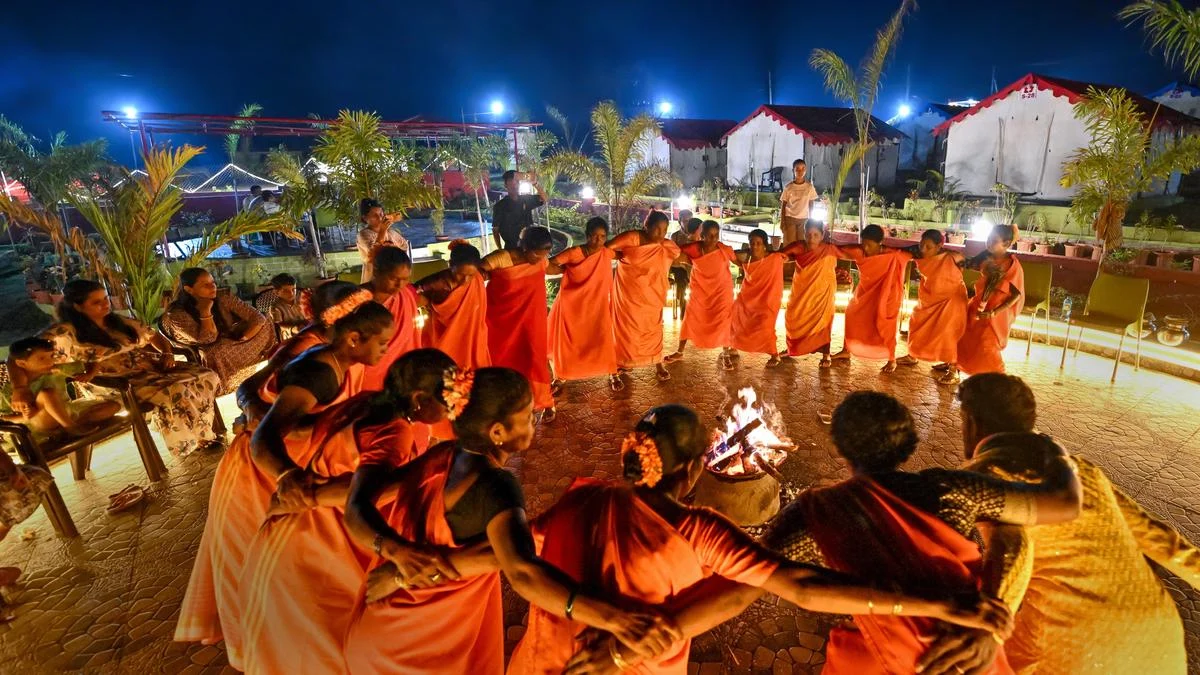
ARAKU VALLEY – As the sun dips below the jagged peaks of the Eastern Ghats, a transformation occurs in the quiet village of Bosubeda. The mist, characteristic of the Araku highlands, begins to roll over the Madagada viewpoint road, but the silence is soon broken by the rhythmic thrum of the mori (trumpet) and the steady beat of tribal drums. At the Araku MountainView Camping Resort (AMCR), the evening does not signal the end of the day, but rather the beginning of a cultural immersion that is reshaping the tourism landscape of Andhra Pradesh.
For decades, Araku Valley has been a staple for "stop-over" tourists—travelers who visit the Borra Caves, take a quick selfie at a coffee plantation, and return to the plains of Visakhapatnam by nightfall. However, a new wave of experiential tourism, spearheaded by visionaries like Colonel Y. Siva Sankara Rao, is encouraging visitors to slow down, stay overnight, and engage deeply with the indigenous heritage of the region.
Main Facts: A Fusion of Military Precision and Tribal Heritage
The Araku MountainView Camping Resort is not merely a lodging facility; it is a curated cultural gateway. Founded by Colonel Y. Siva Sankara Rao, a distinguished veteran and recipient of the Presidential Sena Medal Award, the resort reflects a marriage between nature-oriented discipline and the warmth of tribal hospitality.
Situated approximately 110 kilometers from the port city of Visakhapatnam, the campsite occupies a strategic and scenic vantage point near Bosubeda. The core philosophy of the establishment revolves around "authentic immersion." Unlike the concrete resorts that have begun to dot the valley, AMCR utilizes low-impact tented accommodations to ensure that the ecological footprint remains minimal while the experiential value remains high.
The Accommodation Model
The resort offers a bifurcated camping experience designed to cater to different segments of the modern traveler:
- Swiss Camps: These are luxury-oriented structures featuring attached washrooms, sturdy beds, and weather-protected layering. They are designed for families and travelers who seek the aesthetic of the wilderness without sacrificing the comforts of modern plumbing and insulation.
- American-Style Tents: Targeted at the "rugged" traveler, these tents offer a more traditional camping feel. While they provide basic comforts, they are intended for those who wish to feel closer to the earth and the elements, appealing largely to backpackers and younger adventure seekers.
Chronology: From Military Service to Cultural Preservation
The journey of AMCR began with Colonel Rao’s vision to give back to the landscape of his home state after years of decorated military service. The transition from the battlefield to the serene heights of Araku was driven by a desire to showcase the "invisible" side of the Eastern Ghats.
- Inception (Pre-2024): The concept was birthed from the observation that while Araku’s natural beauty was well-documented, its cultural heartbeat—the tribal communities—remained a peripheral attraction for most tourists.
- Launch and Stabilization: Upon opening, the resort focused on the "stargazing and camping" niche, capitalizing on the clear, unpolluted skies of the high-altitude valley.
- The Cultural Pivot (Current Phase): Recognizing that guests were seeking more than just a place to sleep, the resort integrated the Dhimsa dance and local culinary experiences into the nightly itinerary.
- The Living Cultural Zone (Upcoming): Currently, work is underway on an ambitious expansion—a "tribal life setup." This project aims to move beyond performance and into the realm of a living museum where the daily patterns of indigenous life are recreated for educational and experiential purposes.
Supporting Data: The Economics of Experience
The shift toward experiential stays in Araku is backed by changing travel demographics in India. According to regional tourism operators, there has been a 35% increase in demand for "homestays" and "tented camps" over traditional luxury hotels in the Visakhapatnam agency area over the last three years.
The Dhimsa Factor
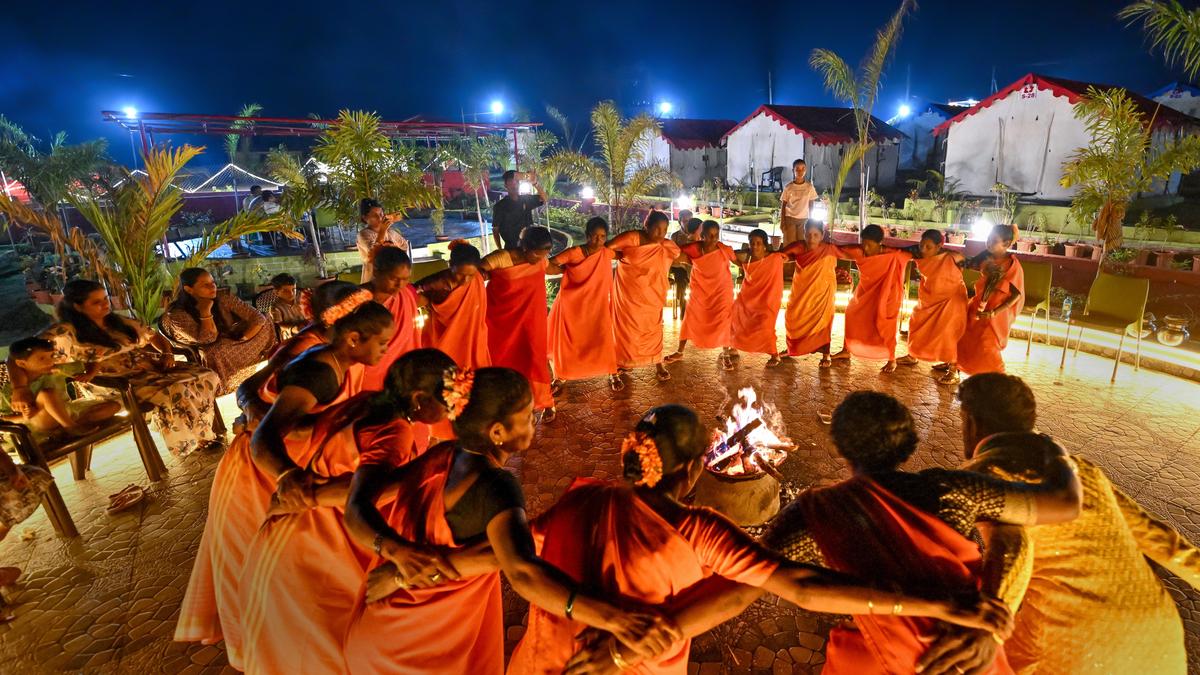
The Dhimsa dance is the centerpiece of the AMCR experience. Traditionally performed by the Porja caste of the tribal population, it is a chain dance involving 15 to 20 women dressed in traditional attire and ornaments. By hosting these performances nightly, the resort provides a consistent revenue stream for local artists.
- Livelihood Generation: The resort currently supports dozens of tribal families through direct employment in hospitality and indirect employment via dance troupes and artisanal supply chains.
- Logistics: Located on the way to the main Araku Valley, Bosubeda serves as a perfect transit point that is high enough to offer the "mountain feel" (approx. 900-1000 meters above sea level) while remaining accessible to the main road network.
Environmental Stewardship
Camping, by its nature, allows for a more sustainable interaction with the land. AMCR emphasizes the use of natural materials. The upcoming "tribal life setup" is being constructed using indigenous housing techniques—mud, thatch, and bamboo—which are naturally climate-resilient and have a near-zero carbon footprint compared to concrete structures.
Official Responses: A Vision for Sustainable Growth
Colonel Y. Siva Sankara Rao, the driving force behind the initiative, views the project as a social enterprise as much as a tourism venture.
“We wanted visitors to experience the traditions and warmth of the people who belong to these hills,” Colonel Rao stated during a recent media briefing. He emphasized that the goal is to bridge the gap between the urban traveler and the indigenous resident. “Visitors will be able to walk through recreated tribal living spaces, understand the use of natural materials in housing, and get introduced to traditional food prepared using locally-sourced ingredients.”
Local tourism officials have noted that AMCR’s model aligns with the state’s broader goals of promoting "Eco-Tourism" and "Ethno-Tourism." By moving the focus away from crowded spots like Borra Caves and toward decentralized, community-based stays, the pressure on the valley’s infrastructure is reduced, and the economic benefits are more widely distributed among the rural populace.
Implications: The Future of Araku and the Eastern Ghats
The success of the Araku MountainView Camping Resort carries significant implications for the future of the Eastern Ghats as a tourism destination.
1. The Death of the "Selfie-Point" Culture
For years, the "Borra-Araku-Vizag" circuit was a checklist-style trip. The rise of AMCR suggests a shift toward "Slow Travel." When travelers spend time stargazing or learning how to cook with forest produce, they develop a psychological stake in the preservation of the region. This shift is vital for the long-term conservation of the Eastern Ghats’ biodiversity.

2. Cultural Preservation through Economic Viability
One of the greatest threats to tribal culture is the migration of the younger generation to cities in search of work, which often leads to the abandonment of traditional arts like Dhimsa. By turning these cultural practices into a premium tourist experience, the resort makes it economically viable for the youth to stay in their villages and keep their heritage alive. The "Living Cultural Zone" will take this a step further by showcasing indigenous cooking practices and forest-based agriculture, potentially creating a market for tribal products like organic honey, millets, and coffee.
3. Setting a Benchmark for Private-Community Partnerships
Colonel Rao’s model demonstrates how private investment, guided by a sense of social responsibility, can coexist with indigenous rights. Instead of displacing the local culture, the resort amplifies it. This could serve as a blueprint for other sensitive ecological zones in India, such as the Western Ghats or the Northeast, where the balance between development and preservation is often precarious.
4. Educational Tourism
With the inclusion of stargazing sessions and open-air movie screenings, the resort is tapping into the educational tourism market. It offers a "classroom without walls" where urban children can learn about astronomy, geology, and anthropology in a single evening.
Conclusion: A New Dawn for the Valley
As the bonfire at Bosubeda flickers and the dancers move in perfect unison, it is clear that Araku is no longer just a scenic backdrop for a weekend getaway. Through the efforts of AMCR and the vision of Colonel Siva Sankara Rao, it is becoming a place of dialogue—where the ancient rhythms of the tribal heartland meet the curiosity of the modern world.
For the traveler, the implication is simple: the next time you head to the hills, don’t just look at the mountains—live within them. The future of Araku lies not in its hotels, but in its heritage, and resorts like AMCR are ensuring that this heritage is not just remembered, but vibrantly practiced.
Traveler’s Note: Bosubeda is located approximately 110 kilometers from Visakhapatnam. Travelers can reach the site via the scenic Ghat road. For those interested in the full experiential package, including the Dhimsa performances and the upcoming tribal living zone, more information can be found at the resort’s official portal, www.amcr.in.
