

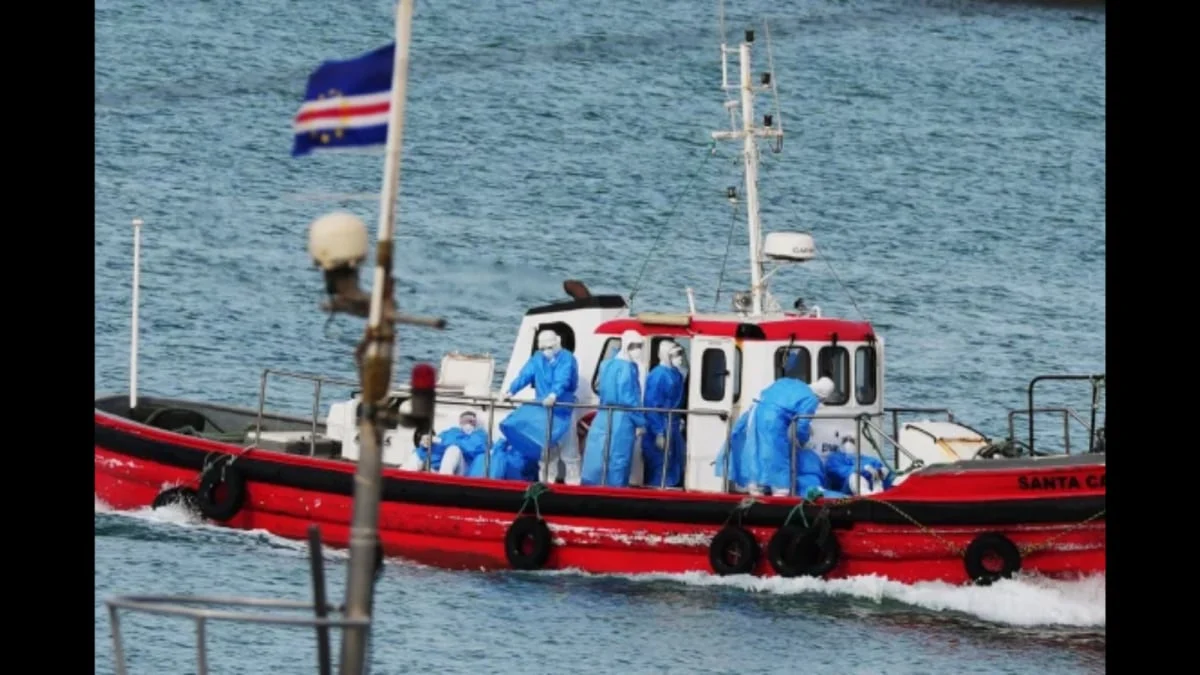
A rare and potentially lethal hantavirus outbreak has emerged aboard the Dutch expedition cruise ship MV Hondius, raising international health concerns and prompting a complex web of contact tracing and medical response. As of May 8, 2026, eight cases of hantavirus infection have been confirmed, resulting in three fatalities, with investigations pointing to a birdwatching excursion in Argentina as a possible origin point.
The unfolding situation aboard the MV Hondius, a vessel carrying over 140 passengers and crew on a journey through South America and Antarctica, has underscored the unpredictable nature of infectious diseases and the critical importance of rapid international cooperation. Health authorities across multiple nations are now meticulously tracking individuals who disembarked the ship before the full extent of the outbreak became apparent, monitoring contacts in over a dozen countries.
The first known death, a 70-year-old Dutch passenger, occurred on board on April 11. Tragically, his wife, who later disembarked and traveled to South Africa, also succumbed to the virus. A third victim, a German woman, died on May 2. Further complicating the situation, a British passenger evacuated to South Africa has been confirmed as a hantavirus patient and remains in intensive care. Two Indian crew members are among the 149 individuals currently aboard the vessel.
The Enigmatic Emergence: Tracing the Origin of the Outbreak
Investigations by Argentinian authorities are focusing on a birdwatching excursion in Ushuaia, a picturesque city at the southern tip of South America, as a potential epicenter for the initial infections. Hantaviruses are zoonotic viruses, primarily transmitted to humans through contact with infected rodents, their excreta, or respiratory aerosols generated from dried droppings. While direct human-to-human transmission is rare, the possibility of secondary infections following initial exposure is a significant concern for public health officials.
The earliest reported illness began around April 6, with a Dutch passenger experiencing mild symptoms such as fever and fatigue. At the time, these early signs were not indicative of the rare zoonotic virus, leading to initial underestimation of the situation’s severity. However, the rapid deterioration of the passenger’s health, culminating in his death on April 11 from severe respiratory distress, marked the first known fatality. This initial death, with its unclear cause at the time, set in motion a chain of events that would soon reveal a more sinister threat.
As the MV Hondius continued its voyage, a disturbing pattern began to emerge. The deceased passenger’s wife and other individuals on board started exhibiting similar symptoms, often progressing from mild to critically severe with alarming speed. Between April 6 and April 28, multiple cases appeared, raising significant alarm among the ship’s medical staff and prompting urgent investigations.
A Global Shadow: The Spread and Response
The escalating situation aboard the MV Hondius quickly drew the attention of international health organizations. The World Health Organization (WHO) confirmed eight cases, including the three deaths, by May 8, 2026. Of these, five have been definitively identified as hantavirus infections.
The gravity of the outbreak led to significant logistical and diplomatic challenges. As concerns grew over the poorly understood epidemic, Cape Verde denied the MV Hondius permission to dock, forcing passengers to remain isolated in their cabins while medical teams conducted testing and evacuated infected individuals offshore. Evacuations began at isolated stops like Saint Helena and Ascension Island in late April, with critically ill passengers flown out for emergency care. The British passenger’s transfer to South Africa for intensive care highlights the critical nature of some cases and the complex international medical evacuations required.
Official Responses and Public Health Assessments
The World Health Organization has been at the forefront of coordinating the international response and assessing the public health risk. WHO Director-General Dr. Tedros Adhanom Ghebreyesus stated on Thursday, May 8, that while the incident is serious, "WHO assesses the public health risk as low." However, he also cautioned that "given the incubation period, it’s possible that more cases may be reported." This statement underscores the ongoing vigilance required in monitoring the situation.
In India, the National Institute of Virology (NIV) has assured that the country possesses adequate laboratory capacity to identify suspected hantavirus infections. Dr. Naveen Kumar, Director of the ICMR’s National Institute of Virology, confirmed that India has the necessary diagnostic capabilities through the ICMR-NIV and its extensive Viral Research and Diagnostic Laboratory (VRDL) network. He also emphasized that the two Indian nationals reportedly infected are believed to be isolated cases, and there is "no immediate public health threat" to India. Dr. Kumar further clarified that hantavirus does not spread as easily from person to person as COVID-19, mitigating fears of widespread community transmission in India.
Dutch authorities are actively investigating a potential secondary exposure involving a KLM airline crew member in Amsterdam. This individual had contact with the 69-year-old Dutch woman who died in South Africa after traveling on the ship. Her test results are eagerly awaited as investigations delve into the possibility of further transmission pathways.
Cruise operator Oceanwide Expeditions confirmed the transfer of three passengers connected to the outbreak to the Netherlands for medical treatment. These include the British passenger, a 65-year-old German national, and a 41-year-old Dutch crew member. While two of these individuals are reportedly in serious condition, the third remains under observation despite showing no symptoms, highlighting a precautionary approach to potential infections.
Understanding Hantavirus: A Public Health Primer
Hantaviruses are a group of viruses that can cause severe illness and death in humans, according to the U.S. Centers for Disease Control and Prevention (CDC). The primary mode of transmission is through rodents, particularly via contact with their urine, saliva, or droppings. Humans typically contract the infection by inhaling contaminated particles that become airborne, often when cleaning enclosed or poorly ventilated spaces where rodent droppings are present. Common exposure sites include cabins, sheds, homes, or storage areas.
The symptoms of hantavirus infection can vary but often begin with flu-like symptoms such as fever, fatigue, muscle aches, and headaches. In more severe cases, these can progress to pulmonary syndrome, characterized by shortness of breath, coughing, and fluid in the lungs, which can be life-threatening. Another form, hemorrhagic fever with renal syndrome, presents with fever, rash, and kidney problems.
The incubation period for hantavirus can range from one to eight weeks, making early detection and tracking challenging. This extended incubation period means that individuals who were on the MV Hondius may develop symptoms even after disembarking, necessitating a broad and sustained contact tracing effort.
The Road Ahead: Vigilance and Preparedness
The hantavirus outbreak on the MV Hondius serves as a stark reminder of the ongoing threat posed by emerging infectious diseases. The swift and coordinated response from international health organizations, national health agencies, and the cruise operator has been crucial in managing the crisis.
The focus now shifts to continued rigorous contact tracing, robust medical monitoring of exposed individuals, and thorough epidemiological investigations to fully understand the transmission dynamics of this particular outbreak. As the WHO rightly points out, the possibility of further cases remains, underscoring the need for sustained vigilance.
The case also highlights the importance of preparedness in the travel and tourism industry, particularly for expedition voyages in remote or ecologically sensitive areas where encounters with wildlife are part of the experience. Robust health protocols, including pre-voyage health screenings and comprehensive onboard medical facilities, are essential.
For the passengers and crew of the MV Hondius, the ordeal has been harrowing. The ongoing efforts to provide medical care and support, coupled with the complex process of repatriating individuals and managing the aftermath, will continue for some time. The international community will be closely watching for further developments as this unusual and concerning outbreak unfolds.
Stay tuned to News18 for continuous and live updates on the hantavirus outbreak and its global implications.
