


By Senior Literary Correspondent
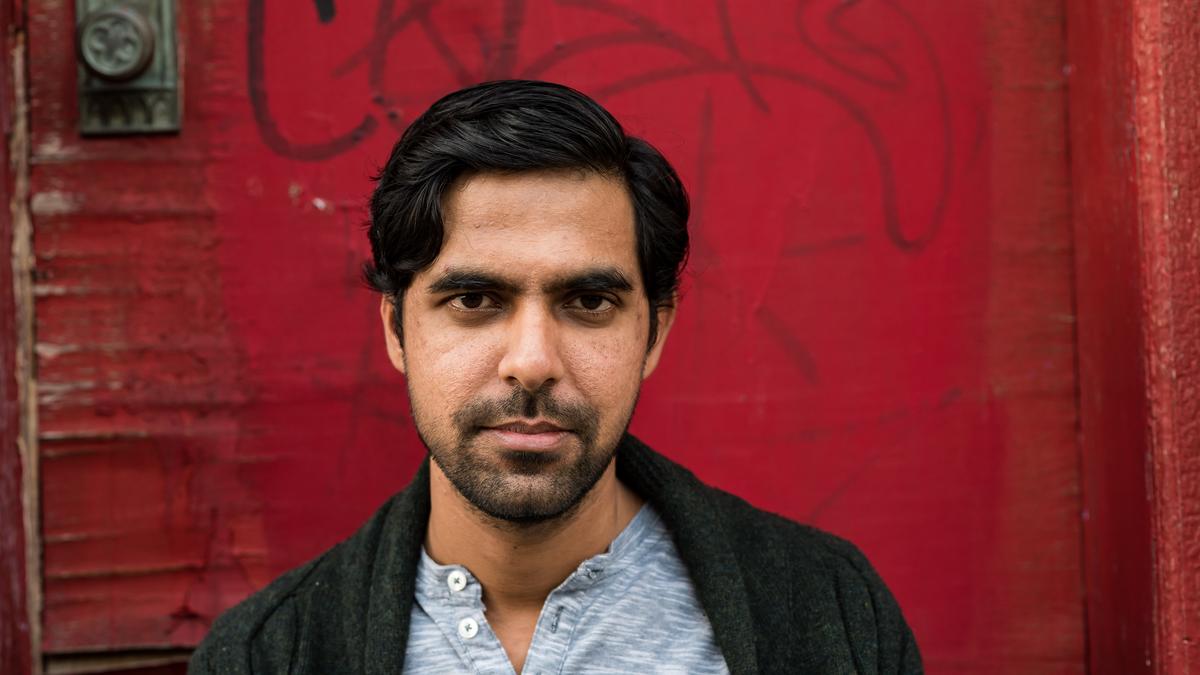
The landscape of contemporary Indian literature in English has often sought to reconcile the vast, sweeping movements of history with the claustrophobic, intimate realities of the domestic sphere. Few writers, however, have navigated this intersection with as much clinical precision and emotional resonance as Karan Mahajan. Following the global success of The Association of Small Bombs—which was named one of the ‘10 Best Books of 2016’ by The New York Times—Mahajan has returned with The Complex (HarperCollins).
This latest work is more than a family saga; it is a forensic examination of a post-Partition Punjabi joint family navigating the seismic shifts of the 1980s and 90s. Through the lens of the Chopra family, Mahajan explores the Mandal Commission protests, the ascent of Hindutva politics, and the enduring shadows of patriarchy. In doing so, he presents a narrative where the personal is not merely influenced by the political—it is the political.
The Microcosm of the Complex: A Family in Churn
The novel is anchored in a specific architectural and social phenomenon of Delhi: the housing complex. For Mahajan, who grew up in the city before moving to the United States, these structures were more than just residences; they were pressure cookers of intimacy and surveillance.
At the heart of the story is the patriarch, S.P. Chopra, a man whose identity is forged in the fires of Partition. His children and grandchildren, however, represent a different kind of struggle—one of identity, upward mobility, and moral compromise. We meet Gita and Sachin Chopra, immigrants to the U.S. who exist in a state of perpetual suspension, and Laxman Chopra, an opportunistic figure whose trajectory from familial "loser" to right-wing political operative serves as a chilling commentary on the modern Indian state.
Mahajan’s narrative strategy is "prismatic." He suggests that memory does not work in a straight line; rather, it refracts. By jumping between the consciousness of different characters—often within the same paragraph—he captures the "double consciousness" required to survive in a society as layered as India’s. It is a world where one must be a different person in a corporate boardroom than one is at a family dinner, and where the trauma of the past is constantly being repurposed to serve the ambitions of the present.
A Chronology of Upheaval: 1980–1995
To understand The Complex, one must understand the era it chronicles. The late 20th century was a period of radical transformation for India, moving away from the Nehruvian socialist consensus toward a more volatile, identity-driven landscape.
The Mandal Commission and the Crisis of Privilege
In 1990, the V.P. Singh government’s decision to implement the Mandal Commission recommendations—which reserved 27% of central government jobs for Other Backward Classes (OBCs)—ignited a firestorm. For the upper-caste urban middle class, exemplified by families like the Chopras, this was perceived as an existential threat.
Mahajan, who was a child during the protests, recalls the era with a mix of curiosity and retrospective critique. Through his research, he discovered that many of the student protesters—who would later become liberal intellectuals—viewed the demonstrations at the time with a "college party" atmosphere. They were often unaware of their own caste privilege. In the novel, this event serves as a catalyst, pushing the younger generation of the Chopra family toward a more defensive, and eventually aggressive, form of identity politics.
The Rise of Hindutva
Parallel to the caste agitations was the Ram Janmabhoomi movement. The late 80s and early 90s saw the mobilization of a new religious consciousness that sought to redefine Indian secularism. Mahajan traces how this macro-political shift finds a home within the "complex." Characters who feel marginalized within the family hierarchy find a sense of "greatness" and belonging in right-wing ideologies. This transition is portrayed not as a sudden radicalization, but as a slow, seductive creep fueled by personal insecurities and a desire for patriarchal control.

Supporting Data: The Immigrant’s Suspension
A significant portion of the novel deals with the Indian diaspora, specifically the wave of migration to the U.S. in the late 1970s and 80s. Mahajan draws on his own experience as an immigrant to craft the character of Gita Chopra.
Data from the U.S. Census and various sociological studies of the era show that Indian immigrants of this period often lived in a "liminal state." They were physically in America but mentally and emotionally tethered to an India that was rapidly changing in their absence.
In The Complex, Gita’s story is a tragic exploration of this suspension. She is in denial about her life in the U.S., constantly looking back toward Delhi as a site of safety and meaning. However, upon returning to India, she is sexually assaulted by a relative—a brutal revelation that the "home" she romanticized is a site of patriarchal violence. This dual displacement leaves her "at home nowhere," a condition Mahajan identifies as central to the immigrant experience.
Official Responses and Critical Interpretations
While the novel is a work of fiction, its portrayal of historical events and social dynamics has invited comparisons to the works of Salman Rushdie and Rohinton Mistry. However, Mahajan’s tone is distinct—more journalistic and less magical-realist.
The Link Between Masculinity and Power
One of the most provocative aspects of the novel is the character of Laxman, who embodies the intersection of sexual predation and right-wing politics. Mahajan argues that this conjunction is "not a coincidence."

"Right-wing movements strongly support the idea of patriarchy. Sexual control and sexual violence are by-products of that," Mahajan noted in a recent discussion. He draws a direct line between the personal failings of a "loser" in a joint family and the public persona of a political strongman. By referencing global figures like Donald Trump, Mahajan suggests that for certain movements, a leader’s willingness to exert "masculine power and privilege"—even through abusive means—is viewed by supporters as a "feature, not a bug."
The Journalistic Novel
Critics have praised Mahajan’s "journalistic" approach to fiction. He spent years interviewing Delhi residents who lived through the 1990 protests, reading archives, and studying the specific slang and social mores of the era. This attention to detail allows the novel to function as a historical record as much as a narrative. The "official response" from the literary community has been one of acclaim for his ability to enter historical events "sideways," avoiding the dry tone of a textbook in favor of the messy, lived reality of his characters.
Implications: The Past as a Mirror to the Present
The release of The Complex comes at a time when India is once again grappling with questions of identity, caste, and the role of the state. The novel’s implications are clear: the tensions we see today—the polarization, the rise of religious nationalism, and the debates over reservation—are not new. They are the "consequences of a nation in churn" that began decades ago.
The Erosion of the Joint Family
The novel also signals the end of an era for the traditional Indian joint family. As the Chopras fragment across continents and ideologies, the "complex" that once held them together begins to crumble. This reflects a broader sociological shift in urban India toward nuclear families and gated communities, where the "prismatic" intimacy of the past is replaced by a more isolated, individualistic existence.
The Persistence of Memory
Ultimately, Mahajan’s work suggests that we cannot escape our history. The "prismatic" nature of memory means that even as we try to move forward, the past continues to refract through our present actions. For the Chopra family, and for India itself, the upheavals of the 80s and 90s are not just memories; they are the foundation upon which the current reality is built.

In The Complex, Karan Mahajan has provided a roadmap for understanding how a family—and a nation—can be both the cause and the consequence of its own history. It is a sobering, masterful achievement that confirms his status as one of the most vital voices in contemporary literature.
About the Author: Karan Mahajan is the author of ‘Family Planning’ and ‘The Association of Small Bombs’. He currently lives in the United States, where he teaches creative writing.
Publication Details: ‘The Complex’ is published by HarperCollins India and is available in bookstores nationwide.
