

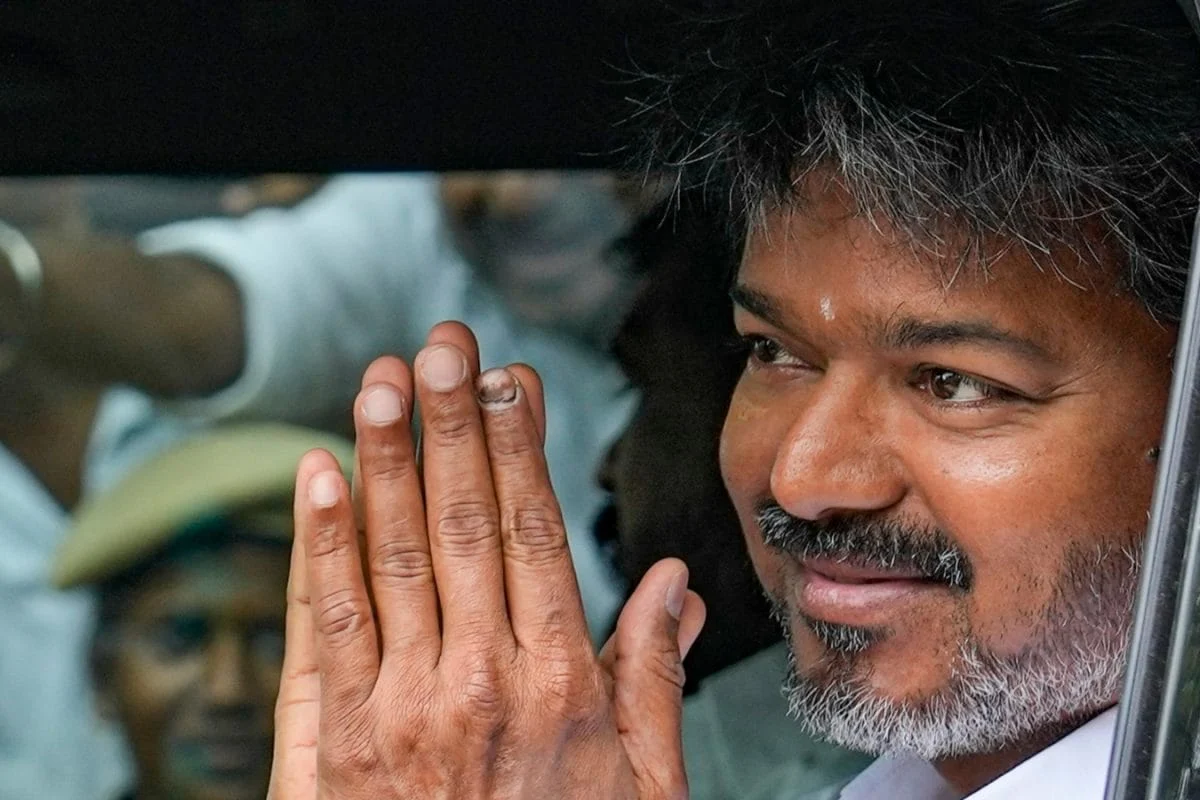
Actor-Politician’s TVK Forms Coalition, Ending Week-Long Deadlock Ahead of May 10 Deadline
New Delhi, India – May 9, 2026: In a political spectacle that captivated a nation and gripped the southern state of Tamil Nadu for a tumultuous week, actor-politician Vijay has successfully navigated the treacherous currents of coalition politics to secure the mathematical mandate required to form the next government. The dramatic breakthrough arrived on Saturday afternoon, just hours before a critical constitutional deadline, when the Viduthalai Chiruthaigal Katchi (VCK) formally pledged its support, pushing the Tamilaga Vettri Kazhagam (TVK)-led alliance past the coveted majority threshold.
With reports quickly following that the influential Indian Union Muslim League (IUML) had also extended its crucial backing to the "Thalapathy" camp, the political paralysis that had descended upon Chennai since the declaration of election results was finally broken. This culmination of intense negotiations, strategic defections, and a desperate race against the clock not only paves the way for a new administration but also marks a significant turning point in Tamil Nadu’s political history: for the first time in nearly five decades, the state is poised to be governed by a coalition model where the leading party does not hold a simple majority on its own. The constitutional clock, set to expire at midnight on May 10, loomed large over these deliberations, making Vijay’s success a true victory against time and the potential imposition of President’s Rule.
Main Facts: A New Dawn for Tamil Nadu Politics
The political landscape of Tamil Nadu has been irrevocably altered by the 2026 Assembly elections, culminating in a government formation that defies decades of precedent. The immediate aftermath of the vote saw a deeply fragmented mandate, with no single party achieving a clear majority, setting the stage for a week of high-stakes political maneuvering.
The Breakthrough: A Coalition Forged
The resolution came with the formal submission of a letter of support from the Viduthalai Chiruthaigal Katchi (VCK) to the Lok Bhavan, the administrative heart of the state government. This act, described by many as the "kingmaker’s move," was the final piece of the puzzle that elevated Vijay’s TVK-led front beyond the 118-seat majority mark in the 234-member house. The VCK’s decision, after days of speculation and intense pressure from both the TVK and the incumbent Dravida Munnetra Kazhagam (DMK), signaled a clear shift in political loyalties and priorities within the state. Their declaration was quickly followed by news of the Indian Union Muslim League (IUML) also joining the new alliance, further solidifying Vijay’s position and providing a comfortable buffer against potential future instability. This multi-party coalition now stands ready to usher in an era of governance that Vijay has consistently promised would be "inclusive" and representative of diverse voices.
The Numbers Game: How Majority Was Achieved
Vijay’s Tamilaga Vettri Kazhagam emerged from the elections as the single largest party, securing an impressive 107 seats. While a formidable debut for a new political entity, it left the party tantalizingly short of the 118-seat simple majority required to form a government independently. The path to power therefore hinged entirely on successful coalition arithmetic. The initial breach in the DMK-led Secular Progressive Alliance came when the Congress, with its crucial 5 legislators, and the Left parties (CPI and CPI-M), holding 4 seats collectively, defected to the TVK camp. These initial gains brought the TVK’s tally to 116. The VCK’s support, though the exact number of its seats was not immediately specified in the public domain, was sufficient to push the coalition past 118. With the IUML’s reported backing, the new front is now estimated to command a strength of 119 to 120 MLAs, providing a narrow but workable majority. This intricate web of alliances underscores the complex, yet ultimately successful, strategy employed by Vijay and his party to navigate the post-election deadlock.
Historical Significance: Breaking a Five-Decade Trend
Beyond the immediate relief of government formation, the constitution of this new coalition government carries profound historical weight. For nearly five decades, Tamil Nadu politics has been largely dominated by two monolithic Dravidian parties – the DMK and the AIADMK – each capable of securing a simple majority on its own, thereby ruling without the immediate necessity of formal coalition partners. The 2026 election results, and the subsequent formation of the TVK-led alliance, represent a decisive break from this entrenched two-party hegemony. This marks the first instance in modern Tamil Nadu electoral history where the chief minister-designate’s party does not hold an outright majority, compelling a multi-party coalition for governance. This shift could herald a new era of collaborative politics, power-sharing, and potentially more diverse representation, but also one fraught with the inherent challenges of managing varied political interests and aspirations within a coalition framework. The "People’s Coronation" as termed by TVK cadres, thus symbolizes not just a new leader, but potentially a new paradigm for governance in the state.
Chronology: The High-Stakes Path to Power
The journey to forming the government was a week-long saga of political brinkmanship, marked by intense negotiations and an unwavering focus on the looming constitutional deadline.
Election Aftermath: The Initial Deadlock
The 2026 Tamil Nadu Assembly election results, declared a week prior, presented an unprecedented scenario. While Vijay’s TVK emerged as the single largest party with 107 seats, it fell short of the 118-seat simple majority. The incumbent DMK, along with its erstwhile allies, also failed to secure enough seats to form a government, leading to a hung assembly. This immediately plunged the state into political uncertainty, triggering a flurry of back-channel discussions and public posturing. The initial days were characterized by both major blocs attempting to woo smaller parties and independent MLAs, each claiming to be in a position to form a stable government. The air in Chennai was thick with speculation, as various permutations and combinations were floated in media reports and political circles.
Shifting Sands: Congress and Left Join TVK
The first significant cracks in the erstwhile Secular Progressive Alliance (SPA) – the coalition led by the DMK – appeared early in the week. The Congress, with its five crucial legislators, and the Left parties (CPI and CPI-M), holding four seats, were among the first to "jump ship" from the DMK camp. Their decision to align with Vijay’s TVK was a major coup for the fledgling party, immediately boosting its numbers and signaling a potential weakening of the DMK’s hold over its traditional allies. Sources close to the negotiations indicated that these parties were swayed by a combination of factors, including a perception of the TVK’s rising popularity, a desire for fresh political leadership, and potentially more favorable power-sharing arrangements than what the DMK was perceived to be offering. This early shift dramatically altered the arithmetic and intensified the pressure on the remaining undecided parties.
The Kingmaker’s Move: VCK’s Pivotal Decision
With Congress and the Left on board, the focus squarely shifted to Thol. Thirumavalavan’s Viduthalai Chiruthaigal Katchi (VCK). The VCK, a prominent voice for Dalit rights and social justice, found itself in the unenviable position of being the "kingmaker." Throughout the week, the party faced intense pressure from both sides. The incumbent DMK made fervent appeals to the VCK to maintain the old alliance, citing ideological camaraderie and shared history. However, the VCK leadership, after much deliberation and internal debate, ultimately opted to back Vijay. This decision was reportedly driven by a "shared commitment to social justice" – a cornerstone of both parties’ manifestos – and, crucially, a desire for a "power-sharing arrangement" in the cabinet. Thirumavalavan’s statement emphasized the need for a new political direction in the state and the potential for greater influence in a new coalition where their voice would be pivotal, rather than supplementary. This move single-handedly propelled the TVK-led front past the majority mark, ending days of nail-biting suspense.
The Eleventh Hour: Securing the Final Pieces
Even after the VCK’s declaration, the TVK camp continued to consolidate its position. Reports emerged quickly that the Indian Union Muslim League (IUML), another key constituent in previous alliances, had also extended its support to Vijay. While the IUML’s exact seat count was not the determining factor for the majority, their inclusion significantly bolstered the secular credentials of the new front. This strategic alignment aimed to present a broad-based, inclusive government, capable of representing diverse communities across Tamil Nadu. The continuous efforts to secure every possible ally demonstrated the TVK’s understanding of the delicate balance required in coalition politics, ensuring not just a bare majority but a stable one.
Saturday’s Climax: A Race to the Finish Line
The urgency behind these rapid negotiations was paramount, driven by a strict constitutional deadline. The term of the current 16th Tamil Nadu Legislative Assembly was set to expire at midnight on May 10. This meant that a new government had to be formed and sworn in before the clock struck twelve on Sunday night, failing which the state would face a constitutional vacuum. Saturday, May 9, therefore became the critical day. The breakthrough with VCK and IUML on Saturday afternoon transformed the political landscape from one of uncertainty to a clear path forward. This swift resolution on Saturday successfully preempted the potential imposition of President’s Rule, ensuring a democratic and timely transition of power, a testament to the TVK’s effective last-minute negotiations.
Supporting Data: Dissecting the Mandate and Coalition Dynamics
The formation of the new government is not merely a numerical achievement but a reflection of evolving voter sentiment and strategic political maneuvering.
The 2026 Verdict: Factors Behind TVK’s Rise
The 2026 Tamil Nadu Assembly election results, which saw TVK secure 107 seats, represent a remarkable political debut for Vijay’s party. Several factors likely contributed to this impressive performance. Foremost among them is Vijay’s immense popularity as a superstar, which translated into a significant fan base that eagerly converted into a political cadre. His carefully crafted image as a leader committed to "inclusive governance" and "social justice" resonated with a populace seeking alternatives to the traditional Dravidian parties, which had faced varying degrees of anti-incumbency sentiment. The TVK’s campaign focused on fresh promises, youth engagement, and a clean political slate, effectively tapping into a desire for change among a significant segment of the electorate. Furthermore, a perceived stagnation or internal strife within the traditional opposition parties might have inadvertently aided the TVK’s meteoric rise, allowing them to capture a substantial share of the protest vote.
Anatomy of the New Alliance: Strengths and Vulnerabilities
The newly formed coalition is a mosaic of political ideologies and regional strengths. It includes the TVK (centre-left, social justice focus), Congress (centrist), Left parties (communist/socialist), VCK (Dalit rights, social justice), and IUML (minority rights, secularism).
Strengths:
- Broad Representation: The coalition represents a diverse cross-section of Tamil Nadu’s society, encompassing various caste groups, religious minorities, and ideological leanings. This broad appeal could lend legitimacy and stability to the government.
- Shared Ideals: The common thread of "social justice" and "secularism," highlighted by VCK and IUML leaders, provides an ideological glue that can bind the coalition partners together.
- Fresh Mandate: The new government comes with a mandate for change, potentially fostering greater public support in its initial phase.
Vulnerabilities:
- Narrow Majority: With a count of 119-120 MLAs in a 234-member house, the majority is slim. Any significant internal dissent or defection could jeopardize the government’s stability.
- Coalition Management: Managing the diverse aspirations and demands of five distinct political parties will be Vijay’s paramount challenge. Disagreements over policy, portfolio allocation, or regional interests could lead to friction.
- Policy Cohesion: Reconciling the varied manifestos and ideological stances of the partners to form a coherent policy agenda will require constant negotiation and compromise.
A Historical Lens: Tamil Nadu’s Coalition Past
While the current situation is unprecedented in its specific form, Tamil Nadu has witnessed periods of coalition or alliance-based governance, particularly in the initial decades after India’s independence and before the consolidation of Dravidian parties. However, since the late 1960s, the state has predominantly seen single-party majority governments, often led by either the DMK or AIADMK. The present scenario is distinct because the lead party itself, TVK, does not hold a simple majority. This departure from the norm indicates a maturing or fragmenting electorate, where voters are increasingly willing to distribute their support across multiple parties, rather than consolidating behind a single dominant force. This shift could usher in a more dynamic and potentially more representative political landscape, moving away from the binary electoral contests that have defined the state for generations.
Constitutional Imperative: The Spectre of President’s Rule
The constitutional deadline of May 10 was not a mere administrative formality; it was a potent legal imperative that threatened to plunge Tamil Nadu into a period of central rule. Article 172(1) of the Indian Constitution clearly states that an assembly exists for exactly five years from the date appointed for its first meeting, unless dissolved sooner. If a new government had not been sworn in or a clear majority established before the midnight deadline on Sunday, May 10, the state would have entered a constitutional vacuum. In such an extraordinary scenario, Governor Rajendra Arlekar would have been compelled to recommend the imposition of President’s Rule under Article 356. This constitutional provision allows the Union Government to take direct control of the state’s administration through the Governor, effectively suspending the elected state government.
The implications of President’s Rule would have been severe: a direct blow to the TVK’s mandate, a suspension of democratic processes, and potentially a prolonged period of political instability. Such a move would have been widely perceived as an affront to the popular mandate and could have triggered widespread protests. Furthermore, it would have delayed the swearing-in of a new government by weeks or even months, depending on the political situation and the Centre’s intentions. By successfully clinching the deal on Saturday, Vijay has not only secured his path to chief ministership but also heroically averted a major constitutional crisis, ensuring a seamless and democratic transition of power.
Official Responses: Voices from the Political Arena
The immediate aftermath of the coalition’s formation saw a flurry of statements and reactions from all corners of the political spectrum.
Vijay’s Vision: "Inclusive Governance" Takes Center Stage
While a formal press conference from Vijay was yet to be held, sources within the TVK headquarters in Panaiyur indicated that the actor-politician was preparing a statement that would reiterate his commitment to "inclusive governance." This central tenet of his campaign, now more pertinent than ever in a coalition setup, is expected to define his initial approach to leadership. TVK cadres, already in celebratory mode, have dubbed the upcoming swearing-in the "People’s Coronation," signifying their belief in Vijay’s populist appeal and his promise to prioritize the common citizen. His messaging is expected to focus on unity, collaboration with allies, and a rapid implementation of his party’s key welfare and development promises, demonstrating a departure from the traditional singular dominance.
Allies Speak: Rationale Behind Their Support
Leaders of the coalition partners were quick to articulate their reasons for backing Vijay. Thol. Thirumavalavan of the VCK, the pivotal "kingmaker," emphasized a "shared commitment to social justice" as the primary driver behind their decision. He also hinted at a more equitable "power-sharing arrangement" within the cabinet, suggesting that the VCK would play a significant role in policy formulation. Leaders from the Congress and Left parties, having been among the first to switch allegiance, spoke of a desire for a "fresh political alternative" and an opportunity to contribute to a "progressive government." The IUML’s statement reportedly highlighted the TVK’s secular outlook and its potential to safeguard minority interests, further solidifying the narrative of a broad-based, inclusive alliance. These statements collectively aim to legitimize the coalition, framing it as a conscious choice for a new political direction rather than a mere opportunistic alignment.
The Opposition’s Stance: DMK Vows Vigilance
The incumbent DMK, having faced the double blow of electoral defeat and the defection of key allies, reacted with a mixture of disappointment and resolve. While acknowledging the democratic process, party spokespersons indicated that the DMK would serve as a strong and vigilant opposition. Statements from DMK leaders suggested that they would scrutinize the new government’s every move, particularly its ability to manage the diverse demands of its coalition partners and deliver on its promises. There was also an underlying tone of criticism regarding the defections, implicitly questioning the ideological consistency of parties that had previously aligned with the DMK. The DMK’s strategy moving forward is expected to be one of relentless oversight, aiming to highlight any internal discord or policy missteps within the new coalition government.
Governor’s Role: Expediting the Transition
Governor Rajendra Arlekar, who played a crucial behind-the-scenes role in ensuring constitutional propriety during the deadlock, is now expected to issue a formal invitation to Vijay to form the government. Sources within the Lok Bhavan indicated that the Governor, despite a previously scheduled visit to Thiruvananthapuram, was prepared to expedite the process. There is a strong possibility of a late-night swearing-in ceremony on Saturday or an early morning event on Sunday, likely at the Nehru Indoor Stadium, to ensure that the new government is officially in place before the May 10 midnight deadline. This swift action by the Governor’s office underscores the constitutional urgency and the collective commitment to a smooth transfer of power.
Implications: Charting Tamil Nadu’s Future Course
The formation of this new coalition government under Vijay’s leadership signals a fundamental shift in Tamil Nadu’s political landscape, carrying significant implications for governance, future elections, and the very fabric of state politics.
Governing in Coalition: Challenges and Opportunities
Vijay’s first challenge as Chief Minister will be the delicate art of coalition management. While the current euphoria of victory is high, the inherent complexities of balancing the demands of five distinct coalition partners – each with its own agenda, voter base, and aspirations – will soon emerge. Portfolio allocation, policy disagreements, and regional interests could become sources of friction. Vijay will need to demonstrate exceptional leadership, negotiation skills, and a willingness to compromise to ensure the stability and longevity of his government.
However, this coalition model also presents unique opportunities. It could foster a more consultative and inclusive style of governance, where decisions are made after broader deliberation, potentially leading to more robust and widely accepted policies. The diverse perspectives within the alliance could lead to innovative solutions for the state’s pressing issues, from economic development to social welfare. The success or failure of this experiment in coalition governance will undoubtedly set a precedent for future political formations in Tamil Nadu.
Reshaping the Political Landscape
The 2026 elections and the subsequent government formation have irrevocably altered Tamil Nadu’s political topography. The decades-long dominance of the DMK and AIADMK has been challenged, not by another single powerful entity, but by a multi-party alliance led by a relatively new force. This could signify a permanent fragmentation of the electorate and a move towards a more multi-polar political system. Future elections may see more complex alliance formations, with parties needing to build broader consensus rather than relying on a strong single leader or established party structure. The rise of Vijay and the TVK also indicates a growing preference for fresh faces and alternative narratives, potentially inspiring other new political movements in the state. The traditional Dravidian parties will now be forced to introspect and adapt to this new reality, potentially revisiting their strategies for alliance building and voter engagement.
Public Expectations and the Road Ahead
The "People’s Coronation" is more than a slogan; it encapsulates the immense public expectation placed upon Vijay and his new government. Voters have entrusted him with a mandate for change, hoping for an administration that is responsive, transparent, and effective. Key promises made during the campaign, spanning economic growth, social welfare, infrastructure development, and good governance, will be under immediate scrutiny. The public will keenly observe how the coalition navigates its internal dynamics while simultaneously delivering on these commitments. The initial period will be crucial for establishing credibility and demonstrating the viability of this new model of governance. The road ahead for Vijay and his coalition is undoubtedly challenging, but it is also paved with the opportunity to redefine Tamil Nadu’s political future and usher in an era of collaborative, inclusive progress.
