

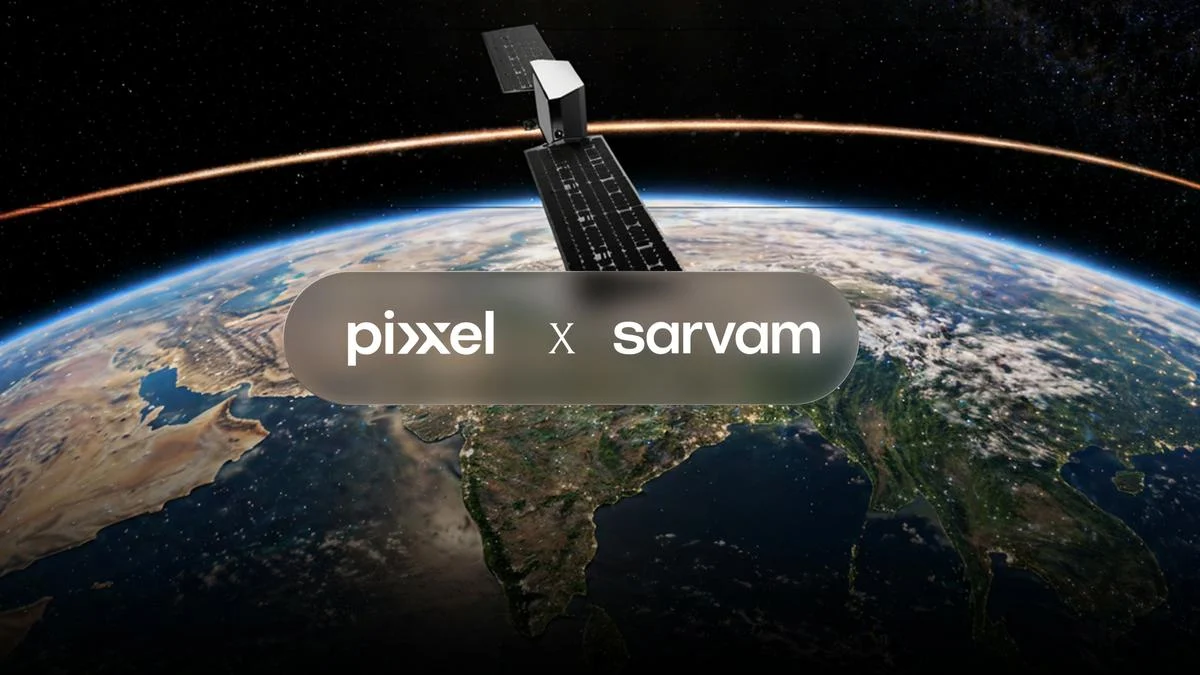
Bengaluru, India – May 7, 2024 – In a move that promises to redefine the intersection of artificial intelligence and space technology, Bengaluru-based imaging satellite company Pixxel has announced a groundbreaking partnership with Indian AI firm Sarvam. The collaboration will culminate in the launch of "Pathfinder," described as India’s inaugural ‘orbital data centre’ satellite. This ambitious 200 kg class satellite, slated for deployment by the fourth quarter of 2026, is set to carry advanced datacentre-class Graphics Processing Units (GPUs) alongside Pixxel’s signature hyperspectral imaging camera. The initiative signals a bold step into a future where complex AI computations are no longer tethered solely to terrestrial infrastructure, but instead conducted in the vacuum of space.
The Pathfinder mission represents a critical demonstrator, aiming to validate the feasibility of operating high-performance computing hardware in the harsh environment of low Earth orbit (LEO). By bringing AI processing directly to the source of data generation – Earth observation satellites – Pixxel and Sarvam envision a dramatic reduction in data transmission bottlenecks and a significant acceleration of insights derived from space. This partnership not only highlights India’s growing prowess in both space technology and artificial intelligence but also positions the nation at the forefront of a global race to establish the next generation of computing infrastructure.
The Dawn of Orbital Data Centres: What Exactly Are They?
At its core, an orbital data centre is a revolutionary concept: a constellation of satellites equipped with the same powerful GPUs found in traditional ground-based data centres. Unlike conventional satellites that primarily relay raw data to Earth for processing, these advanced orbital platforms are designed to train and execute sophisticated AI models directly in space. This paradigm shift enables satellites to perform demanding computational tasks, moving far beyond the low-power "edge" processors typically used for basic functions like signal compression.
Defining a Paradigm Shift
The term "edge computing" on Earth refers to the practice of processing data closer to its source, rather than sending it to a distant, centralised cloud. This same logic, applied to the vast expanse of space, forms the fundamental premise of an orbital data centre. By embedding high-performance computing capabilities into satellites, data can be analyzed, interpreted, and even refined hundreds of kilometres above the Earth’s surface. This eliminates the latency and bandwidth constraints associated with downlinking massive volumes of raw data, allowing for near real-time insights from critical Earth observation missions.
The Pathfinder satellite, as explained by Pixxel CEO Awais Ahmed, is envisioned as a single-satellite demonstrator. Its primary objective will be to rigorously test the resilience and reliability of ground-grade hardware – particularly these powerful GPUs – when exposed to the unique challenges of the low Earth orbit environment. "It will start off as being one satellite, obviously, that we will try to launch before the end of this year," Ahmed told The Hindu, underscoring the iterative, demonstrator-first approach to this ambitious undertaking. Success in this initial phase will pave the way for a broader constellation, gradually scaling up the computational capacity available in orbit.
Beyond Terrestrial Constraints: The Vision
The long-term vision for orbital data centres extends beyond mere data processing. Proponents foresee a future where these space-based infrastructures could offer cloud computing services, enabling a new class of applications that leverage continuous solar power and bypass terrestrial regulatory and physical limitations. Imagine AI models constantly learning and evolving from global datasets, unimpeded by geographical boundaries or energy grids. This vision, while still nascent, underpins the intense interest and investment from both established space players and emerging tech giants.
A Timeline of Innovation: Pixxel’s Journey and the Global Race
The announcement of Pathfinder is not an isolated event but rather a significant milestone in Pixxel’s rapidly evolving journey and part of a broader global push into space-based computing.
Pixxel’s Ascent in Earth Observation
Founded in 2019 by Awais Ahmed and Kshitij Khandelwal, Pixxel quickly established itself as a frontrunner in the private Indian space sector, specialising in hyperspectral imaging satellites. Their constellation aims to provide detailed spectral information across hundreds of bands, far exceeding traditional multispectral imagery. This data has vast applications, from monitoring agricultural health and detecting mineral deposits to tracking environmental changes and urban planning. Pixxel has already successfully launched several demonstrator satellites, showcasing their technological capabilities and attracting significant investment. The company’s expertise in designing, building, and operating advanced Earth observation satellites forms the bedrock upon which the orbital data centre concept is being built. Their existing infrastructure and operational experience lend credibility to the ambitious Pathfinder mission.
The Pathfinder Announcement: A New Frontier
The official announcement on May 4, 2024, of the partnership with Sarvam and the Pathfinder satellite, marks a strategic pivot for Pixxel. While hyperspectral imaging remains their "bread-and-butter business," integrating high-performance AI processing directly onto the satellite fundamentally transforms the value proposition. Instead of merely collecting data, the satellite itself becomes an intelligent agent, capable of discerning patterns, identifying anomalies, and delivering actionable intelligence directly to users. This leap from data collection to in-orbit analysis represents a significant technological and operational evolution. The selection of Sarvam, an Indian AI firm known for its full-stack language models, further underscores the domestic innovation driving this project, aiming to create an end-to-end Indian solution for space-based AI.
The Global Space Computing Arms Race
Pixxel and Sarvam are not alone in their pursuit of orbital computing. The past two years have witnessed a surge of interest from major global technology firms, signaling a nascent but rapidly intensifying "space computing arms race."
- SpaceX: Elon Musk, CEO of SpaceX, publicly articulated his vision for in-orbit computing as early as 2025 (as cited in the original article, likely referring to a future projection or typo and meaning 2023-2024 statements). He suggested that "simply scaling up Starlink V3 satellites, which have high-speed laser links, would work. SpaceX will be doing this." Furthermore, Musk posited that the company’s powerful Starship rocket "could deliver 100GW/year to high Earth orbit within four to five years if we can solve the other parts of the equation," hinting at the immense power potential for space-based infrastructure. SpaceX’s Starlink constellation, with its inter-satellite laser links, inherently possesses a network backbone that could be leveraged for distributed orbital computing.
- Amazon’s Blue Origin: Jeff Bezos’s space venture, Blue Origin, alongside Amazon’s cloud computing arm, AWS (Amazon Web Services), has also shown significant interest in extending cloud services to space. While specific orbital data centre deployments are not yet at a commercial scale, their focus on robust launch capabilities and satellite internet (Project Kuiper) provides a foundation for future computational ventures.
- Microsoft’s Azure Space: Microsoft has been actively developing Azure Space, an initiative to bring the power of its cloud computing platform to the space industry. This includes partnerships with satellite operators and the development of technologies for ground station as a service, in-orbit processing, and secure satellite communications. Their pilot deployments, often in collaboration with space companies, indicate a clear strategic direction towards space-based data processing.
- Lonestar Data Holdings: This company specifically focuses on providing data storage and processing services in space, including potential lunar data centres. Their efforts demonstrate a broader industry trend towards leveraging off-Earth locations for critical data infrastructure, driven by security, resilience, and unique environmental advantages.
While these giants have initiated pilot deployments and articulated ambitious visions, none have yet achieved a commercial-scale orbital data centre. This leaves a significant window of opportunity for nimble innovators like Pixxel to make substantial inroads, particularly with a focused, application-driven approach like the Pathfinder mission.
Unpacking the Drivers: Why the Sudden Gravitation Towards Space?
The current surge in interest in orbital data centres is not a random phenomenon but the result of a confluence of three powerful factors that have converged over the past two years, pushing large tech companies and innovative startups to actively pursue this futuristic concept.
Terrestrial Data Centre Dilemmas
On Earth, conventional data centres are facing escalating constraints. The insatiable demand for computing power, particularly driven by the exponential growth of Artificial Intelligence, has amplified existing pressures:
- Energy Availability: Data centres are massive energy consumers. Finding reliable, affordable, and green energy sources for expanding operations is becoming increasingly challenging, straining local grids and contributing to carbon footprints.
- Land Scarcity: Large land parcels with suitable infrastructure are becoming scarce and expensive, especially in urban or semi-urban areas where connectivity is optimal.
- Water Consumption: Many data centres rely heavily on water for cooling, leading to significant environmental concerns and competition for resources in drought-prone regions.
- Local Regulation and NIMBYism: Communities are increasingly resistant to the construction of new data centres due to their energy, water, and land demands, leading to complex permitting processes and regulatory hurdles.
These terrestrial limitations are pushing innovators to look beyond the planet for solutions that can offer scalability and sustainability.
The Lure of Sustainable Power
One of the most compelling arguments for moving computation to space is the promise of effectively continuous and free electricity from solar power. In the right orbit, satellites can enjoy near-uninterrupted exposure to sunlight, generating power that is clean, abundant, and eliminates the need for grid connections or fossil fuel reliance. This offers a potentially transformative solution to the energy woes plaguing ground-based data centres. While power storage for eclipse periods remains a design challenge, the sheer availability of solar energy in orbit is a powerful incentive, promising a path towards truly sustainable, hyper-scale computing.
Optimizing Earth Observation Data
Earth observation satellites, Pixxel’s core business, generate incredibly detailed and heavy image files. Downlinking these massive datasets to ground stations is both expensive and time-consuming, creating a significant bottleneck in the data pipeline. The current model involves capturing terabytes of raw imagery, transmitting it to Earth, and then processing it using powerful ground-based supercomputers.
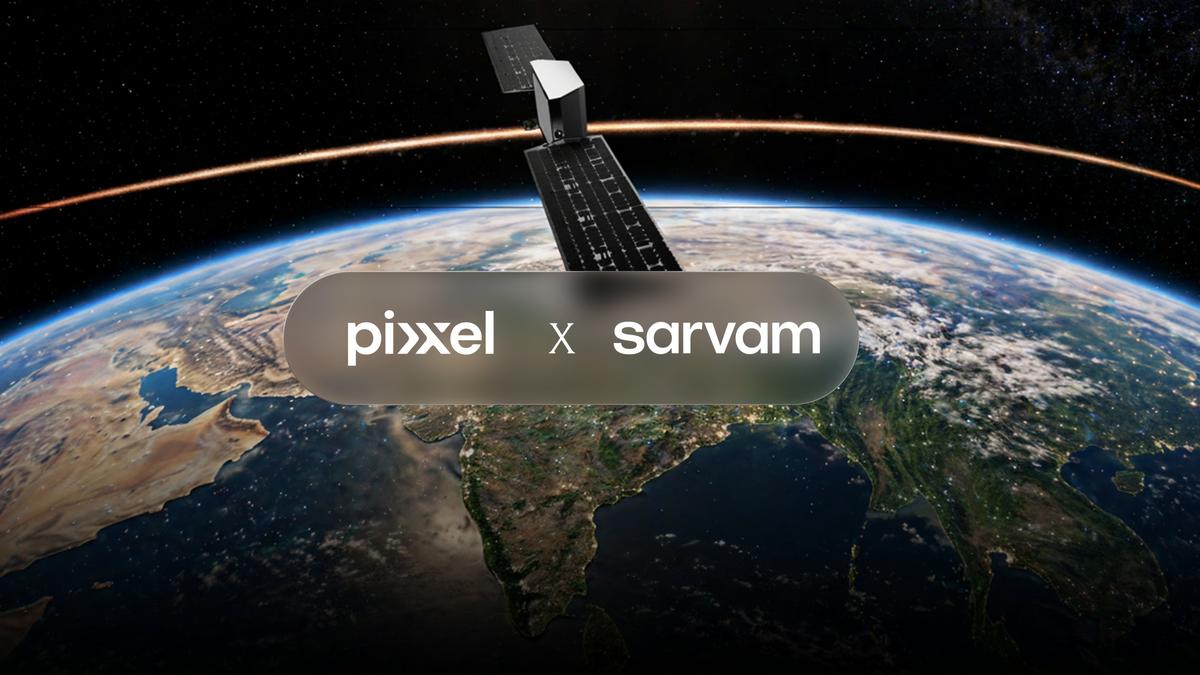
By processing this data in orbit – analyzing the raw imagery and beaming down only the conclusions, insights, or compressed analytical outputs – the operational efficiency can be dramatically improved. This "data reduction at source" approach not only eases the downlink bottleneck but also reduces the cost and time required to derive actionable intelligence from satellite imagery, making Earth observation more responsive and impactful for applications ranging from disaster response to climate monitoring.
Strategic Imperatives and Competitive Edge
Beyond the practical constraints and technical advantages, there’s a strong strategic and competitive element driving the interest in orbital data centres. Companies like SpaceX, Amazon, and Microsoft are vying for leadership in the burgeoning space economy and the next generation of cloud services. Establishing early dominance in space-based computing could provide a significant competitive advantage, opening up new markets and cementing their positions as pioneers in frontier technologies. For nations like India, represented by Pixxel and Sarvam, this represents an opportunity to secure a strategic foothold in a critical emerging technological domain, fostering national capabilities and potentially offering sovereign solutions for data processing and AI.
The Pathfinder Mission: A Deep Dive into the Pixxel-Sarvam Synergy
The Pathfinder satellite is more than just a piece of hardware; it’s a carefully orchestrated mission designed to validate a revolutionary concept through a synergistic partnership.
The Architecture of an Orbital Brain
The Pathfinder satellite will be designed, built, launched, and operated by Pixxel, leveraging their established expertise in satellite engineering and mission management. The 200 kg class satellite will be a robust platform capable of housing datacentre-class GPUs. These GPUs are the heart of the orbital data centre, providing the raw computational power necessary to run complex AI models. Integrating such powerful processors into a satellite environment presents significant engineering challenges, particularly concerning power consumption, thermal management, and radiation hardening – issues Pixxel’s team, with its ISRO-experienced experts, is well-equipped to tackle. The satellite will also carry Pixxel’s advanced hyperspectral imaging camera, ensuring an immediate and practical application for the on-board processing capabilities.
Sarvam’s AI Backbone
Sarvam, an Indian AI firm, will provide the crucial "AI backbone" for the Pathfinder mission. This involves developing and deploying full-stack language models and other AI algorithms specifically optimised to run on the satellite’s GPU layer. The models will be designed for both training and inference directly in orbit. This means the satellite won’t just apply pre-trained models; it could potentially update and refine its AI intelligence based on the data it continuously collects. Sarvam’s role is pivotal, transforming the satellite from a mere computing platform into an intelligent, autonomous entity capable of sophisticated data analysis and decision-making. The partnership with an Indian AI firm further solidifies the indigenous capabilities being developed for this cutting-edge technology.
Immediate Applications: Hyperspectral Analysis In-Orbit
The immediate and most compelling use case for Pathfinder is the in-orbit analysis of hyperspectral imagery. Instead of downlinking vast amounts of raw spectral data – which can be several gigabytes per capture – the satellite’s on-board GPUs will process this imagery to extract specific insights. For example, AI models could:
- Identify crop diseases: Detect subtle changes in vegetation health by analysing spectral signatures, sending only alerts or aggregated health maps to Earth.
- Monitor environmental pollution: Pinpoint sources and types of pollutants in water bodies or air, providing near real-time actionable intelligence.
- Classify geological features: Identify mineral deposits or geological formations without extensive ground-based processing.
- Track urban development: Monitor changes in infrastructure, population density, and land use patterns with greater efficiency.
By transmitting only the "conclusions" or highly compressed analytical results, the mission significantly reduces bandwidth requirements, accelerates the delivery of critical information, and lowers operational costs. Awais Ahmed declined to disclose specific details regarding costs, the exact number of GPUs, or the launch provider, citing ongoing decision-making between ISRO and SpaceX based on slot availability. However, the involvement of experts with ISRO experience in thermal management is a strong indicator of the engineering rigor being applied.
Operational Details and Future Trajectories
The Pathfinder mission, while a demonstrator, is designed with future scalability in mind. Successful validation of the hardware and software in orbit will pave the way for launching multiple such satellites, eventually forming a constellation of orbital data centres. This phased approach allows for continuous learning and refinement of the technology, mitigating the inherent risks of pioneering such a complex system. The choice of launch provider, whether India’s ISRO or SpaceX, will depend on factors like cost, launch window availability, and specific orbital requirements, underscoring the dynamic nature of space logistics.
Navigating the Cosmic Gauntlet: Significant Challenges Ahead
While the promise of orbital data centres is immense, the challenges are equally formidable. Operating high-performance computing hardware in the unforgiving environment of space requires overcoming several critical engineering hurdles that have historically defined spaceflight design.
The Thermal Conundrum: Battling the Vacuum
One of the most counterintuitive challenges is managing the heat generated by powerful GPU chips. While space is often perceived as cold, its vacuum eliminates convection – the primary mechanism by which warm air normally carries heat away from terrestrial servers. In orbit, a hot GPU chip is effectively an oven, unable to fan away its own waste energy because there’s no air to transfer it to.
The only viable solution is radiation. This necessitates complex thermal management systems where heat is pumped through ammonia-filled loops to deployable panels, which then radiate the excess energy as infrared light into the cold vacuum of space. The history of crewed spaceflight, with its intricate radiator designs and meticulous thermal control, is replete with reminders of how unforgiving this regime can be. Designing such a system for a relatively small satellite, capable of dissipating the significant heat from multiple high-performance GPUs, is a monumental engineering task requiring innovative materials and precise thermal modelling.
Radiation’s Relentless Assault
Radiation damage is the second major problem, and one that has fundamentally shaped the design of every long-duration space mission. Cosmic rays and high-energy particles constantly bombard satellites, leading to two primary issues for electronics:
- Bit Flips: These are transient events where bits and bytes in computer memory or processing units randomly change state (e.g., a 0 becomes a 1, or vice versa). While some systems can tolerate occasional bit flips, in high-performance computing, such errors can lead to system crashes, data corruption, or incorrect computations.
- Long-term Semiconductor Degradation: Over time, cumulative radiation exposure can permanently damage semiconductor components, leading to reduced performance, increased power consumption, or outright failure.
To mitigate this, most space hardware traditionally relies on "radiation-hardened" chips. However, these chips typically lag commercial GPUs by years, if not decades, in terms of performance and technological advancement. Using ground-grade, high-performance GPUs, as Pathfinder intends, means accepting a higher risk of radiation-induced failures or developing novel shielding and error-correction techniques that can compensate for the lack of inherent radiation hardness. This is a critical area of research and development for the mission.
Power Management and Redundancy Imperatives
Power generation from solar panels is continuous only when the satellite is in sunlight. For periods when the satellite passes through Earth’s shadow (eclipse periods), stored power is essential. This requires robust battery systems capable of storing significant amounts of energy and delivering it reliably to the power-hungry GPUs. The design must account for the degradation of batteries over the mission’s lifespan due to radiation and thermal cycling.
Furthermore, given the impossibility of direct human intervention or repair, redundancy must be meticulously designed into the system from the outset. Critical components, including GPUs, power systems, and communication links, often need to have backups or failover mechanisms to ensure continued operation even if one element fails. This adds to the complexity, weight, and cost of the satellite.
The Maintenance Maze
Unlike terrestrial data centres where faulty components can be quickly swapped out by technicians, maintenance in orbit is effectively impossible without advanced robotic servicing capabilities – a technology still in its infancy. This "set it and forget it" nature of space hardware means every component must be designed for extreme reliability and longevity, often exceeding the standards for terrestrial counterparts. Any single point of failure can render an entire subsystem, or even the whole satellite, inoperable, underscoring the criticality of robust design, thorough testing, and built-in redundancy.

The Economics of Orbit: Can Space Computing Outcompete Earth?
Despite the exciting technological prospects, the fundamental question remains: can data crunching in space ever be cheaper or more efficient than on the ground? On the available evidence, the answer is "not yet, and not for some time."
The Current Cost Landscape
Awais Ahmed conceded that, at present, "a single satellite carrying a given number of GPUs is more expensive than the same hardware on Earth." This higher initial capital outlay is driven by several factors:
- Specialised Hardware: Even if ground-grade GPUs are used, other satellite components (power systems, thermal control, communication systems, structural elements) are highly specialised, low-volume, and thus expensive.
- Launch Costs: Getting hardware into orbit remains a significant expense, though declining.
- R&D Investment: Pioneering new technologies like orbital data centres requires substantial investment in research and development, which is amortised over the initial missions.
- Risk Premium: The inherent risks of space missions (launch failure, on-orbit malfunction) add to the overall cost.
Therefore, for the foreseeable future, a direct, like-for-like cost comparison heavily favours terrestrial data centres, which benefit from economies of scale, established supply chains, and easier maintenance.
Future Projections: A Vision of Parity
The argument for eventual cost parity, and even superiority, of space-based computing is built on three key assumptions, according to proponents like Ahmed:
- Constellation Scaling: The vision is not for single satellites but for vast constellations comprising tens of thousands of satellites. As the number of units increases, manufacturing costs for individual satellites are expected to drop significantly due to mass production.
- Reduced Launch Costs: The operationalisation of super-heavy-lift rockets like SpaceX’s Starship is expected to drastically reduce the cost per kilogram to orbit. If Starship can deliver on its promise of highly reusable, low-cost launches, it would fundamentally alter the economic equation for deploying large orbital infrastructure.
- Offsetting Operational Expenses: The absence of cooling and grid-power expenses in orbit (leveraging continuous solar power and radiative cooling) is projected to eventually offset the higher initial capital outlay. Terrestrial data centres incur substantial ongoing operational expenses for electricity, cooling, land leases, and maintenance. If these costs can be effectively eliminated or drastically reduced in space, the long-term total cost of ownership could become competitive.
Awais Ahmed optimistically set the horizon for this economic parity at "5-10 years." He stated, "It would take about 100-500 satellites to replace a data centre in India and if someone were to pay for it, we could launch them even in 24 months," highlighting the potential for rapid deployment if the economics align and demand materialises.
Independent Assessments and Realistic Timelines
Independent assessments from academic institutions, space agencies, and industry analysts have tended to be markedly more cautious than the timelines offered by ambitious startups like Pixxel and its peers.
- Near-term Viability for Edge Processing: There is broad consensus that edge processing on satellites, where basic data filtering and compression occur, is viable and economically beneficial in the near term. This aligns with Pathfinder’s immediate use case of in-orbit hyperspectral analysis.
- Long-term Proposition for Wholesale Replacement: However, a wholesale replacement of terrestrial cloud infrastructure with space-based data centres is generally treated as a much longer-term proposition, typically falling within a "10-to-30-year" timeframe. This more conservative outlook accounts for the immense technical challenges, the need for significant infrastructure development (beyond just the satellites themselves, including ground links and space-to-space communications), and the maturation of regulatory frameworks.
The journey to economically competitive orbital data centres will therefore be a gradual one, likely progressing from specialised edge computing applications to more general-purpose cloud services as technology advances and costs decline.
Implications and the Road Ahead: Reshaping the Future of AI and Space
The Pixxel-Sarvam partnership and the Pathfinder mission carry profound implications, not just for the companies involved, but for the broader landscape of AI, space exploration, and global infrastructure.
Transforming Earth Observation
The most immediate and tangible impact will be on Earth observation. By enabling in-orbit analysis of hyperspectral data, Pathfinder promises to:
- Accelerate Insights: Drastically reduce the time from data collection to actionable intelligence, critical for time-sensitive applications like disaster monitoring, rapid environmental assessment, and real-time security surveillance.
- Improve Data Utility: Make satellite data more accessible and usable for a wider range of non-specialist users by delivering processed conclusions rather than raw, complex imagery.
- Enhance Responsiveness: Allow for more dynamic and adaptive satellite operations, where AI can identify areas of interest and focus data collection or processing resources in real-time.
This will fundamentally change how industries, governments, and researchers interact with and benefit from space-derived information.
Democratizing Space Data and AI
As orbital data centres scale, they could play a role in democratizing access to high-performance computing and advanced AI. By potentially reducing the need for massive ground infrastructure and offering services directly from orbit, smaller nations, research institutions, and even individual developers could gain access to powerful analytical capabilities without prohibitive upfront investments. This could foster innovation globally, allowing more diverse voices to leverage the power of space data and AI for solving local and global challenges.
Broader Societal and Economic Impact
The long-term implications are even more expansive:
- New Industries: The emergence of space-based computing could spur the creation of entirely new industries and services, from orbital cloud providers to developers of space-optimised AI applications.
- Enhanced Resilience: A distributed network of orbital data centres could offer unprecedented resilience against terrestrial disruptions, natural disasters, or cyberattacks, providing a critical backup for global data infrastructure.
- Sustainable Computing: If the promise of continuous solar power can be fully realised, space-based computing could offer a truly sustainable path for meeting the ever-growing demand for processing power, reducing the environmental footprint of global data operations.
- Deep Space Missions: The technology developed for LEO orbital data centres could eventually be extended to support lunar or Martian missions, providing autonomous computing capabilities far from Earth.
The Unfolding Saga of Space-Based Intelligence
The Pixxel-Sarvam Pathfinder mission is a pioneering step in what is likely to be a decades-long journey. It represents India’s proactive engagement in shaping the future of space technology, moving beyond being a launch provider or satellite operator to becoming a significant player in space-based intelligence and infrastructure. The success of Pathfinder will not only validate a bold technological vision but also pave the way for a future where the boundless expanse of space becomes an active participant in Earth’s computational ecosystem, constantly learning, analyzing, and informing from its unique vantage point. The unfolding saga of space-based intelligence has just begun, and India is firmly in the pilot’s seat.
Conclusion
The partnership between Pixxel and Sarvam to launch India’s first orbital data centre satellite, Pathfinder, marks a pivotal moment in the convergence of space technology and artificial intelligence. While fraught with significant engineering and economic challenges, the promise of continuous solar power, reduced data bottlenecks, and strategic competitive advantage is driving a global race towards this futuristic vision. Pathfinder, as a crucial demonstrator, will test the very limits of operating terrestrial-grade GPUs in the harsh cosmic environment, laying the groundwork for a future where AI models are trained and run hundreds of kilometres above Earth. As this ambitious project moves from concept to reality, it not only showcases India’s innovative spirit but also heralds a new era of space-based intelligence that could fundamentally reshape our digital future.
