

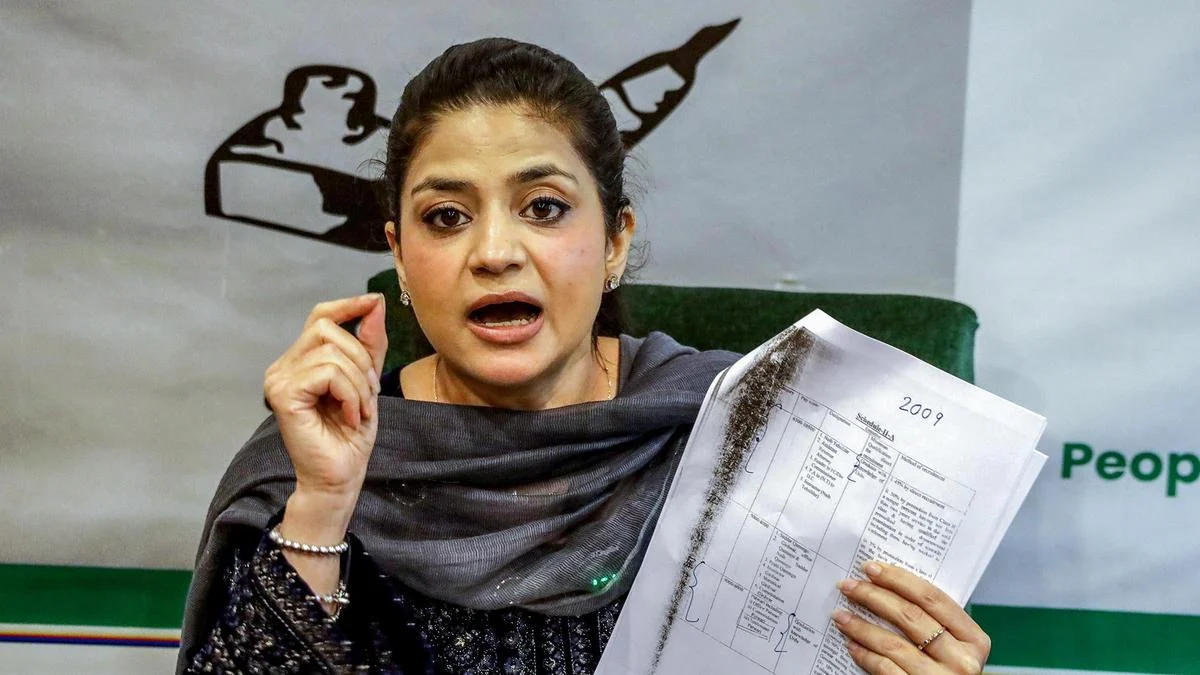
Srinagar, Jammu & Kashmir – Peoples Democratic Party (PDP) leader Iltija Mufti, daughter of former Jammu & Kashmir Chief Minister Mehbooba Mufti, has announced her intention to pursue legal action against Meta, the parent company of Facebook, and potentially X (formerly Twitter), after her social media accounts were withheld without prior notice. The move, which effectively silenced her prominent online presence, has ignited a fresh debate over freedom of speech, digital rights, and the perceived suppression of dissenting voices in the sensitive region of Jammu & Kashmir.
Mufti, known for her outspoken commentary on human rights and governance issues, particularly her criticisms of the current administration, described the action as part of a larger pattern to "silence bold voices in Kashmir." Her accounts, which boast a combined following of approximately 50,000, were reportedly withheld on Tuesday, May 12, 2026, leaving her unable to access the platforms or communicate with her significant online audience. The incident follows a recent controversy involving a video she posted of late separatist leader Syed Ali Shah Geelani, which subsequently led to a police FIR against unidentified individuals.
"I was not served any notice before the accounts were withheld," Mufti stated emphatically, expressing profound frustration. "I am yet to know why my social media handles have been withheld by Twitter and Facebook. I am not even able to reach Meta to resolve the issue, as the interface is inaccessible. It seems the legal course is the only way to restore my handles." She further linked the withholding of her accounts to a recent press conference where she critiqued Chief Minister Omar Abdullah’s remarks on a liquor ban, suggesting a politically motivated crackdown.
Main Facts
Iltija Mufti, a prominent leader of the Peoples Democratic Party (PDP) and daughter of former Chief Minister Mehbooba Mufti, has had her social media accounts on X (formerly Twitter) and Facebook withheld by Meta. This abrupt cessation of her online presence, which she uses as a crucial platform for political discourse and public engagement, occurred on May 12, 2026. Mufti explicitly stated her intention to initiate legal proceedings against Meta, citing a complete lack of official notification or explanation for the action. She believes this move is part of a broader, systemic effort to suppress critical voices within Jammu & Kashmir, particularly linking it to her recent public criticism of Chief Minister Omar Abdullah. The withholding of her accounts comes on the heels of a controversy stemming from a video she posted on X on April 29, 2026, featuring the late separatist leader Syed Ali Shah Geelani, which subsequently led to a police FIR against unspecified individuals for promoting content prejudicial to national peace and sovereignty. Mufti, who amassed a considerable online following of around 50,000, views this action as a direct assault on democratic principles and her ability to perform her duties as a public representative.
Chronology of Events
The events leading up to the withholding of Iltija Mufti’s social media accounts unfold as a sequence of actions and reactions, highlighting the delicate interplay between political commentary, social media platforms, and law enforcement in a sensitive region.
April 29, 2026: The Geelani Video Post
The genesis of the current controversy traces back to April 29, 2026, when Iltija Mufti posted a video on her X (then Twitter) account featuring the late Syed Ali Shah Geelani. Geelani, a formidable and often polarizing figure in Kashmir politics, was a staunch advocate for self-determination and a key leader of the All Parties Hurriyat Conference. The video, an old clip, showed Geelani emphasizing the importance of the Urdu language. Mufti’s accompanying caption read: "May not concur with Geelani Sahab’s ideology but this old video of him stressing the importance of Urdu very well makes sense in addition to other reasons. Worth a watch." This post quickly gained traction, garnering approximately 1,57,000 views and over 168 reposts, indicating its significant reach and the immediate public interest it generated. While Mufti’s caption attempted to contextualize her sharing of the video as an appreciation for a cultural aspect rather than an endorsement of Geelani’s broader political ideology, the mere act of sharing content featuring such a figure proved to be highly contentious in the prevailing political climate.
Early May 2026: Police FIR Filed
Following the viral circulation of Mufti’s post, law enforcement authorities in Jammu & Kashmir initiated action. A First Information Report (FIR) was filed against unidentified individuals. The police statement indicated that the FIR was registered based on "credible inputs regarding circulation and dissemination of content (videos) across digital and social media platforms, promoting separatist ideology and propagating false information, with an intent to incite unlawful activities prejudicial to the peace, sovereignty and integrity of India." While Iltija Mufti was not explicitly named in the FIR, the timing strongly suggested a connection to her post, which had become a focal point of discussion and debate. Mufti, for her part, maintained that she had not been mentioned in any FIR but affirmed her readiness to cooperate and "clear my position if asked to do so."
May 11, 2026: Press Conference and Political Criticism
In the days leading up to the suspension of her accounts, Iltija Mufti held a press conference. During this public address, she delivered sharp criticism against Chief Minister Omar Abdullah regarding his administration’s stance on a liquor ban. This public confrontation with a leading figure of the rival National Conference (NC) party underscored Mufti’s role as an active and critical voice within the political landscape of Jammu & Kashmir. The timing of this press conference would later become a crucial point in Mufti’s narrative, as she suggested a direct link between her vocal criticism and the subsequent action taken against her social media accounts.
May 12, 2026: Social Media Accounts Withheld
On Tuesday, May 12, 2026, Iltija Mufti discovered that her Twitter (X) and Facebook accounts had been withheld. This action effectively removed her from two of the most influential digital communication platforms, significantly curtailing her ability to engage in political discourse, disseminate information, and connect with her constituents. The absence of any prior notification or explanation from Meta or X was a primary point of contention for Mufti, leading to her immediate decision to explore legal avenues.
May 12, 2026 (Later): Announcement of Legal Recourse
Later on the same day, a defiant Iltija Mufti publicly announced her intention to pursue legal recourse against Meta. She expressed profound frustration at the lack of transparency and due process, highlighting the inaccessibility of Meta’s interface for resolving such issues. Mufti articulated her belief that such actions, particularly "ever since Elon Musk took over," have become increasingly common, hinting at a broader trend of arbitrary content moderation and account suspensions on social media platforms. Her announcement set the stage for a potential high-profile legal battle, bringing into sharp focus the challenges faced by political figures in navigating digital spaces amidst evolving content policies and governmental pressures.
Supporting Data and Context
The withholding of Iltija Mufti’s social media accounts is not an isolated incident but rather indicative of broader trends and tensions surrounding digital speech, political activism, and content moderation in India, particularly in the sensitive region of Jammu & Kashmir. To fully understand the ramifications, it’s crucial to examine Mufti’s political profile, the specific controversy, and the larger ecosystem of social media regulation.
Iltija Mufti’s Political Profile and Online Presence:
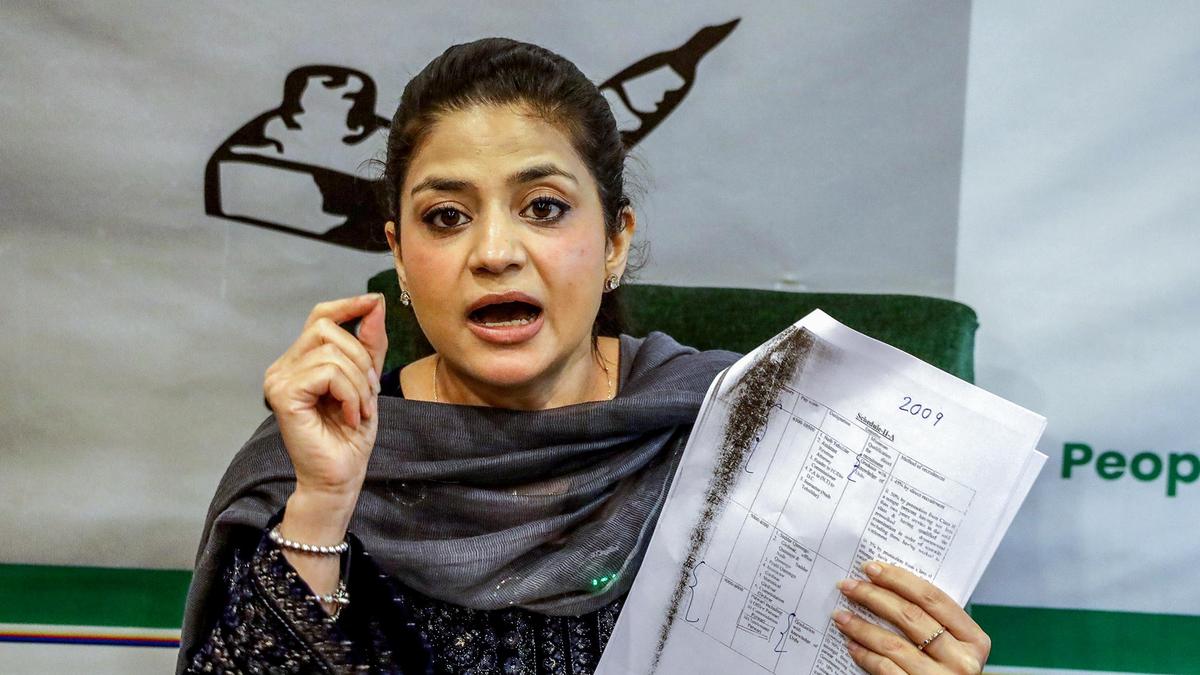
Iltija Mufti is more than just the daughter of a prominent political figure; she has carved out her own niche as a discernible voice in Jammu & Kashmir’s political discourse. As the daughter of former Chief Minister and PDP President Mehbooba Mufti, she carries a significant political legacy. However, her emergence as a "bold voice" on social media has been largely independent, characterized by her consistent engagement on rights issues and her often trenchant criticism of the established political order, including the government led by Omar Abdullah. With approximately 50,000 followers across her primary platforms, X and Facebook, Mufti leveraged these channels not merely for political announcements but for direct engagement, public awareness campaigns, and articulating dissenting viewpoints that often found limited space in traditional media. Her foray into electoral politics in 2024, though unsuccessful against an NC candidate, further underscored her commitment to public service, making her social media presence an indispensable tool for outreach, particularly after a direct electoral setback. For a politician operating in a region with historically constrained public spaces for dissent, social media platforms are not just supplementary tools but fundamental avenues for political communication and mobilization.
The Geelani Video Controversy: A Deeper Dive:
The video of Syed Ali Shah Geelani, a revered and reviled figure depending on one’s political stance, is at the heart of the immediate controversy. Geelani, who passed away in September 2021, was a hardline separatist leader who advocated for Kashmir’s accession to Pakistan. His ideology and pronouncements were often viewed as deeply antithetical to India’s sovereignty. Mufti’s decision to share an old video of him, even with the explicit disclaimer that she did "not concur with Geelani Sahab’s ideology" and was merely highlighting his views on the "importance of Urdu," was fraught with peril. In a region where historical narratives and figures are intensely politicized, sharing any content associated with a separatist icon can easily be misconstrued or deliberately interpreted as an endorsement of their broader agenda. The police FIR, citing "promoting separatist ideology" and "inciting unlawful activities," demonstrates the heightened sensitivity and the zero-tolerance approach of the state towards anything perceived as challenging India’s territorial integrity, even if the original intent was different. The rapid virality of the video also suggests that it resonated with a segment of the audience, potentially reinforcing the authorities’ concerns.
Broader Context of Social Media Censorship in Kashmir and India:
Mufti’s assertion of a "pattern to silence bold voices in Kashmir" resonates with observations from various human rights organizations and digital rights activists. The region has frequently been subjected to internet shutdowns, restrictions on communication, and increased scrutiny of online content, especially since the abrogation of Article 370 in August 2019. Journalists, civil society members, and political activists have reported account suspensions, content takedowns, and even legal action for their social media posts. This environment creates a chilling effect, where individuals self-censor to avoid repercussions.
Furthermore, the Indian government has increasingly asserted its authority over social media platforms. The Information Technology (Intermediary Guidelines and Digital Media Ethics Code) Rules, 2021 (IT Rules 2021), grant the government significant powers to demand content removal and identify "first originators" of messages, often citing national security, public order, or incitement to violence. While platforms are legally obligated to comply with lawful government orders, the process often lacks transparency, leading to accusations of overreach and suppression of legitimate dissent. Meta and X, operating in India, must navigate a complex regulatory landscape, balancing their global commitment to free speech with local laws and government demands.
Mufti’s comment that "ever since Elon Musk took over, such actions have become very common" also points to broader shifts in how X operates. Under Musk’s ownership, X has seen significant changes in its content moderation policies, staffing, and transparency. While Musk has often championed "free speech absolutism," the platform has also faced criticism for inconsistent enforcement, rapid changes in policy, and a perceived increase in compliance with government demands from various countries, leading to a sense of unpredictability and reduced safeguards for users. The lack of an accessible interface to resolve issues, as highlighted by Mufti, further compounds the problem, making it difficult for users to appeal decisions or even understand the basis of account actions.
Freedom of Speech vs. National Security:
The underlying tension in this entire episode is the perennial conflict between freedom of speech, a fundamental democratic right, and the state’s imperative to maintain national security and public order. In Kashmir, this tension is particularly acute, given the long-standing conflict and the sensitivity surrounding political discourse. While the police cite concerns about content "promoting separatist ideology" and "inciting unlawful activities," critics argue that such broad interpretations can stifle legitimate political expression and critical analysis. The challenge lies in drawing a clear line between incitement to violence or unlawful activity and the expression of unpopular or dissenting political views, especially when platforms act as intermediaries without transparent due process.
Political Implications: PDP vs. NC:
Beyond the immediate censorship issue, the incident also highlights the intense political rivalry within Jammu & Kashmir. Mufti’s criticism of Chief Minister Omar Abdullah on the liquor ban issue underscores the ongoing contestation between the PDP and the NC. Her belief that there is a "link between the two events" – her press conference and the account withholding – suggests a perception of political retribution. This episode could further polarize the political landscape, with each party potentially using the incident to bolster its narrative among the electorate.
Official Responses
The current situation surrounding Iltija Mufti’s social media accounts is characterized by a significant lack of direct and specific official responses from key stakeholders, contributing to the opaqueness and frustration expressed by Mufti.
Meta/X (formerly Twitter):
As of the latest reports, neither Meta nor X has issued any public statement specifically addressing the withholding of Iltija Mufti’s accounts. This silence is consistent with their general policy of not commenting on individual user accounts due to privacy concerns, unless mandated by legal processes or significant public pressure. However, their standard operating procedures (SOPs) typically involve suspending or withholding accounts that are deemed to violate their community standards, which prohibit hate speech, incitement to violence, promotion of terrorism, and content that breaches local laws.
Platforms like Meta and X are also legally bound to comply with lawful government requests for content removal or account withholding, particularly under Section 69A of India’s Information Technology Act, 2000, and the IT Rules, 2021. These rules empower the government to issue blocking orders in the interest of national security, public order, and sovereignty. While platforms usually conduct their own review against their policies before complying, the legal framework often places them in a difficult position, balancing user rights with legal obligations in the jurisdiction they operate. Mufti’s complaint about being unable to reach Meta through an "inaccessible interface" highlights a persistent challenge for users, particularly those seeking immediate resolution or clarification on account actions, underscoring a systemic issue in platform-user communication. The general shift in X’s content moderation approach since Elon Musk’s takeover has also been cited by Mufti, suggesting a perceived increase in such actions, though concrete data linking these actions directly to Musk’s policies in the Indian context would require further analysis.
Police:
The police response, articulated in the context of the FIR filed after the Geelani video went viral, centers on maintaining peace, sovereignty, and integrity. Police officials confirmed acting upon "credible inputs regarding circulation and dissemination of content (videos) across digital and social media platforms, promoting separatist ideology and propagating false information, with an intent to incite unlawful activities prejudicial to the peace, sovereignty and integrity of India." It is crucial to note that the FIR was filed against "unidentified individuals," and Mufti has explicitly stated she was not named. While the police’s rationale for the FIR is clear – addressing content perceived as a threat to national security – there has been no direct official statement from the police explicitly linking their FIR to the subsequent withholding of Mufti’s social media accounts by Meta/X, nor confirming if they issued a direct blocking order against her accounts specifically related to the Geelani video. Their general stance, however, indicates a vigilant approach to online content that could be interpreted as disruptive or anti-national in Kashmir.

Government of India / Jammu & Kashmir Administration:
There has been no direct official statement from either the central government or the Jammu & Kashmir administration specifically on the withholding of Iltija Mufti’s accounts. However, the broader government stance, particularly concerning social media regulation and content moderation in J&K, is well-documented. The government has consistently emphasized the need to curb misinformation, hate speech, and content that incites radicalization or threatens national security, especially in a region prone to cross-border influences and separatist narratives. The IT Rules, 2021, and the provisions of Section 69A of the IT Act, empower the government to direct intermediaries to block access to information. While the government maintains these powers are exercised judiciously and in the public interest, critics often argue they can be weaponized to suppress legitimate political dissent and criticism.
Iltija Mufti’s Detailed Response and Legal Strategy:
Iltija Mufti’s response has been one of defiance and determination. She unequivocally rejects any notion that her actions promote separatism, stating, "May not concur with Geelani Sahab’s ideology." Her primary grievance is the lack of due process – no prior notice, no explanation, and no accessible recourse. She firmly believes there is a "link between the two events," referring to her critical press conference against CM Omar Abdullah and the subsequent withholding of her accounts, suggesting political motivation behind the action.
Her intention to pursue "legal recourse" implies exploring various avenues. This could include:
- Writ Petition: Filing a writ petition in a High Court (e.g., the Jammu & Kashmir and Ladakh High Court) or the Supreme Court of India, challenging the action as a violation of her fundamental right to freedom of speech and expression (Article 19(1)(a) of the Indian Constitution) and potentially the right to due process. She could argue that the platforms acted arbitrarily, without following established legal procedures, and that the state might have exerted undue influence.
- Civil Suit for Damages/Restoration: Initiating a civil suit against Meta/X for damages, arguing that the unwarranted withholding of her accounts has caused professional and reputational harm, and demanding the restoration of her access.
- Representations to Regulatory Bodies: Lodging formal complaints with relevant regulatory bodies or parliamentary committees overseeing IT and social media.
Mufti frames the issue as an attack on democratic values: "It’s the job of politicians to raise public awareness on an issue. Social media is a power tool in a democracy to ensure people’s concerns are highlighted and a meaningful conversation takes place. Banning accounts of politicians is an attack on the democratic ecosystem." This framing elevates her personal grievance to a broader concern about the health of India’s democracy and the role of digital platforms within it.
Implications
The withholding of Iltija Mufti’s social media accounts carries far-reaching implications, impacting her political career, the broader landscape of digital rights and freedom of speech in India, and the delicate political dynamics of Jammu & Kashmir.
For Iltija Mufti and the PDP:
For Iltija Mufti personally, the immediate impact is a significant curtailment of her political efficacy. With her X and Facebook accounts, which she had meticulously built into powerful tools for communication and outreach, now inaccessible, her ability to "raise issues of public importance and reach out to people over misgovernance" is severely hampered. In contemporary politics, especially for a figure like Mufti who relies heavily on direct engagement and critical commentary, social media platforms are indispensable for mobilizing support, disseminating information, and shaping public opinion. This digital disenfranchisement could weaken her voice and reduce her visibility, particularly after losing her first Assembly elections in 2024, where social media would have been crucial for rebuilding her political base.
For the Peoples Democratic Party (PDP), of which she is a prominent leader, the incident could be a double-edged sword. On one hand, it allows the party to champion her as a victim of state suppression and an advocate for democratic rights, potentially galvanizing public sympathy and strengthening its narrative against the ruling establishment. On the other hand, the controversy surrounding the Geelani video, regardless of Mufti’s disclaimers, might be exploited by political rivals to paint her and the PDP as sympathetic to separatist narratives, potentially alienating a segment of the electorate. The impending legal battle will also consume significant resources and attention, diverting from other political priorities.
For Freedom of Speech and Digital Rights in India/Kashmir:
This incident sends a chilling message to other critical voices, journalists, and activists in Kashmir and across India. The lack of prior notice, clear explanation, and accessible recourse for account holders, as highlighted by Mufti, sets a dangerous precedent for arbitrary censorship. It reinforces concerns about the transparency and accountability of social media platforms in their content moderation practices, especially when dealing with potentially sensitive political content or alleged government directives. If a prominent political leader can be silenced without due process, it raises serious questions about the safeguards available to ordinary citizens.
The episode fuels the ongoing debate about the balance between freedom of speech (guaranteed under Article 19(1)(a) of the Indian Constitution) and reasonable restrictions imposed by the state (under Article 19(2) for reasons like national security, public order, and incitement). Digital rights advocates will view this as another instance where state power, potentially wielded through intermediary platforms, encroaches upon fundamental rights, fostering an environment of self-censorship and fear. It also puts the spotlight back on the controversial IT Rules, 2021, and Section 69A of the IT Act, which grant the government extensive powers to block content and demand information, often with limited judicial oversight.
For Social Media Companies (Meta/X):
For Meta and X, the incident underscores the immense pressure they face in navigating complex geopolitical landscapes and complying with diverse national laws, particularly in countries like India with vast user bases and stringent content regulations. They are caught between their global commitments to free expression and the imperative to adhere to local legal frameworks. The legal challenge initiated by Mufti will test their content moderation policies, their transparency mechanisms, and their responsiveness to user grievances. A high-profile case could force them to re-evaluate their processes for handling government requests, their internal review mechanisms, and the accessibility of their appeals processes, potentially leading to greater transparency or, conversely, a more cautious and compliant approach to avoid legal entanglements and operational risks in critical markets. The perception of arbitrary action could also erode user trust and damage their reputation.
For the Political Landscape of Jammu & Kashmir:
The incident further complicates the already intricate political landscape of Jammu & Kashmir. The public discourse around the Geelani video and the subsequent account withholding will inevitably be framed through existing political fault lines. It could exacerbate polarization, with mainstream parties accusing each other of either being overly repressive or covertly sympathetic to separatist sentiments. For mainstream political parties in J&K, who are often treading a fine line between advocating for local concerns and affirming national integration, such incidents make political expression even more precarious. It could discourage open debate on sensitive historical figures or issues, pushing legitimate political grievances further underground or into less visible channels. Ultimately, the episode serves as a stark reminder of the challenges to democratic expression and the fragility of digital freedoms in a region grappling with its unique political history and ongoing tensions. The outcome of Mufti’s legal challenge could set a significant precedent for how political discourse is managed and contested in India’s digital public squares.
