

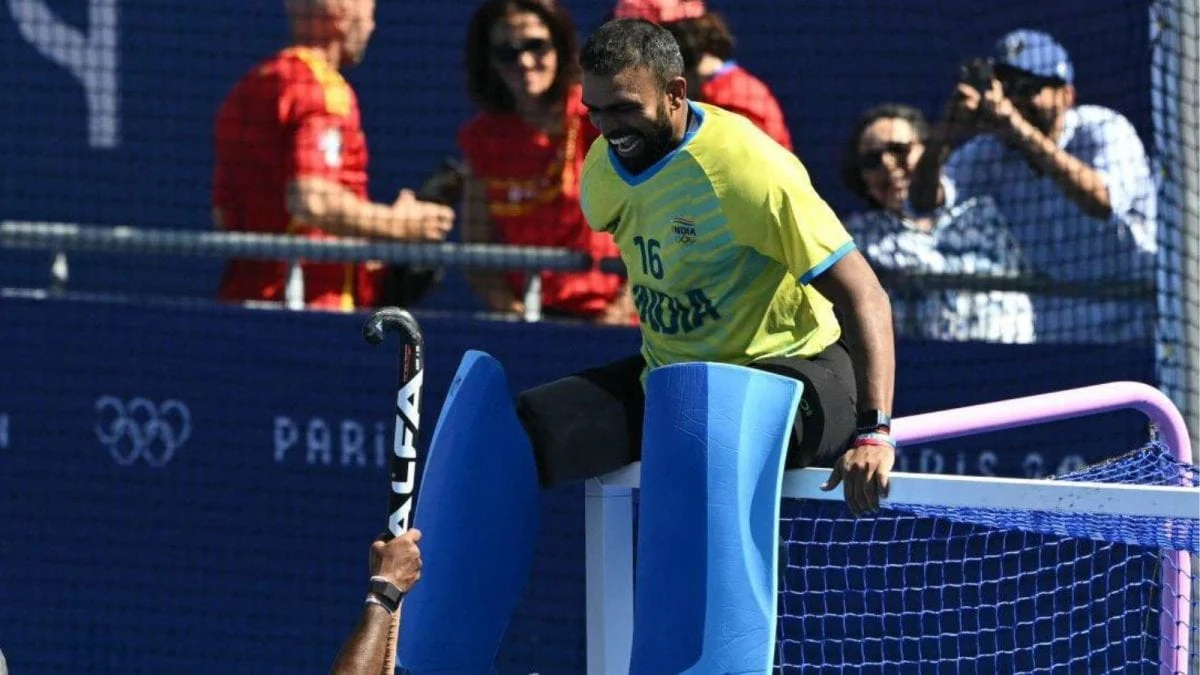
New Delhi, India – May 13, 2026 – In a move that has sent ripples through the Indian hockey fraternity, legendary goalkeeper PR Sreejesh has been unceremoniously removed from his coaching position with the young Indian national unit. The decision, aimed at paving the way for an overseas coach, has sparked a contentious debate about the governing body’s perceived preference for foreign expertise over homegrown talent, even in the face of demonstrable success.
Sreejesh, a towering figure in Indian hockey whose playing career saw him lead the nation to back-to-back Olympic medals, expressed profound disappointment and bewilderment at his removal. The 38-year-old had helmed the junior team for a year and a half, guiding them to an impressive five podium finishes in as many tournaments, including a crucial bronze medal at the Junior World Cup. His abrupt dismissal, he contends, highlights a systemic issue within Hockey India (HI) regarding its trust in indigenous coaches.
The Unceremonious Exit of a Legend
The news broke on May 13, 2026, when PR Sreejesh, revered for his acrobatic saves and unwavering leadership, took to social media to announce the abrupt end of his coaching tenure. His statement was not just a personal lament but a direct challenge to the philosophy underpinning Hockey India’s coaching appointments.
"It seems like my coaching career comes to an end after 1.5 years, during which we played 5 tournaments and secured 5 podium finishes, including a Junior World Cup bronze medal," Sreejesh posted, his words echoing a sense of betrayal. "I have heard about coaches getting fired after bad performances. But this is the first time I am experiencing being removed to make way for a foreign coach."
This immediate revelation set the stage for a broader discussion. Sreejesh, whose illustrious playing career spanned decades and included numerous accolades, had transitioned into coaching with an evident passion and an immediate impact. His leadership, both on and off the field, had been instrumental in shaping a generation of Indian hockey players. To see such a figure, with a proven track record in a relatively short coaching stint, be sidelined for an unnamed foreign replacement has ignited a fervent discussion about the future direction of Indian hockey and the role of its former greats.
The decision comes at a critical juncture for Indian sports, with a clear national focus on long-term development towards ambitious goals like the 2036 Olympic Games. The question now is whether the path chosen by Hockey India truly aligns with this overarching vision of nurturing and empowering Indian talent at all levels.
A Distinguished Career Cut Short: Sreejesh’s Coaching Journey
PR Sreejesh’s journey from an iconic player to a promising coach began roughly 18 months prior to this announcement. After a stellar playing career that saw him become one of the most decorated goalkeepers in the world, renowned for his calm demeanor under pressure and his ability to pull off match-winning saves, Sreejesh decided to impart his vast knowledge and experience to the next generation. His appointment to lead the young Indian unit, particularly the junior national team, was met with widespread optimism. It was seen as a natural progression for a player who had not only excelled individually but had also been a crucial architect of India’s resurgence on the international hockey stage, including their historic Olympic bronze medal in Tokyo and other significant triumphs.
His coaching philosophy, steeped in the nuances of Indian hockey culture while incorporating modern tactical approaches, quickly bore fruit. Under his guidance, the "fledgling unit" demonstrated remarkable consistency and competitive spirit. In the 1.5 years he served as coach, the team participated in five major tournaments, achieving a podium finish in every single one. This impressive streak culminated in a hard-fought bronze medal at the Junior World Cup, a testament to his strategic acumen and ability to motivate young players. For many, this performance underscored the potential of Indian coaches to deliver results at the highest level.
Sreejesh’s public statement did not mince words, directly challenging the rationale behind his removal. He detailed the explanation provided by Hockey India, quoting the President: "The Hockey India President stated that the chief coach of the senior men’s team prefers a foreign head coach for the junior team, believing it will help develop Indian hockey from the junior level through to the senior level. Hence, the continued preference for foreign coaches."
He then posed the fundamental question that resonates with many in the Indian sporting landscape: "Can’t Indian coaches develop Indian hockey?" This rhetorical question encapsulates the frustration of a national hero who, despite proving his capabilities, finds himself deemed secondary to a foreign counterpart based on what appears to be a systemic bias rather than performance.
The Core of the Controversy: Trust in Foreign Expertise
The decision to replace PR Sreejesh with a foreign coach reignites a long-standing and often contentious debate within Indian sports: the perennial preference for overseas expertise over homegrown talent. This is not a new phenomenon in Indian hockey; indeed, the sport has seen a parade of foreign coaches at the helm of its senior men’s and women’s teams over the past few decades. From Ric Charlesworth and Michael Nobbs to Roelant Oltmans and Graham Reid, foreign coaches have been brought in with the promise of instilling professional structures, introducing modern tactics, and elevating India’s standing on the global stage.
The rationale often cited for this preference includes:
- Bringing global best practices: Foreign coaches are believed to bring advanced tactical knowledge, fitness regimes, and strategic insights from top hockey-playing nations.
- Unbiased perspective: An outsider might offer a fresh, unbiased perspective on player selection and team dynamics, free from local politics or personal allegiances.
- Professionalism: They are often credited with instilling a higher level of professionalism in terms of training, discipline, and preparation.
- Seamless integration: As articulated by Hockey India (as reported by Sreejesh), the idea is to create a uniform coaching philosophy from the junior to the senior level, often dictated by the senior team’s foreign chief coach.
However, the counter-arguments, powerfully articulated by Sreejesh, are equally compelling. Indian coaches, particularly those who have achieved legendary status as players, possess an invaluable understanding of the local talent pool, the cultural nuances of Indian athletes, and the unique challenges and opportunities within the Indian sporting ecosystem. They can communicate effectively in local languages, connect with players on a deeper cultural level, and potentially inspire a greater sense of national pride and commitment. Moreover, empowering Indian coaches is crucial for developing a sustainable and self-reliant sports infrastructure.
Sreejesh’s success with the junior team serves as potent "supporting data" against the blanket assumption that foreign coaches are inherently superior. His tenure produced consistent results, demonstrating that a well-qualified, dedicated Indian coach can indeed nurture and develop talent effectively. His question, "Can’t Indian coaches develop Indian hockey?" is not merely an expression of personal pique but a profound inquiry into Hockey India’s long-term vision and its faith in its own resources. The implication is that if even a coach with Sreejesh’s credentials and results cannot secure his position, what message does that send to other aspiring Indian coaches?
The Broader Landscape: Indian Coaches vs. Foreign Imports
The debate surrounding PR Sreejesh’s removal transcends the confines of hockey, reflecting a recurring dilemma across various Indian sports. For decades, Indian federations have grappled with the balance between harnessing indigenous talent and importing foreign expertise.
A Recurring Debate in Indian Sports
In cricket, football, athletics, and even badminton, the narrative often remains the same. Proponents of foreign coaches argue they inject global methodologies, introduce cutting-edge sports science, and elevate the overall professional standard. They point to instances where foreign coaches have indeed brought about significant transformations, such as Bob Houghton in Indian football or Graham Reid in men’s hockey.
Conversely, advocates for Indian coaches highlight their inherent advantages:
- Understanding Grassroots: Indian coaches often have a deeper understanding of the grassroots structure, the challenges faced by young athletes, and the cultural context in which they grow.
- Cultural Sensitivity: They can navigate cultural nuances, linguistic barriers, and familial expectations more effectively, fostering stronger bonds with players.
- Cost-Effectiveness: Indian coaches are generally more cost-effective, freeing up resources for other developmental activities.
- Sustainable Ecosystem: Nurturing Indian coaches is vital for building a sustainable sports ecosystem, creating a clear career path for former athletes and experts, and reducing reliance on external resources.
The constant churn of foreign coaches, some argue, can also lead to a lack of long-term continuity and a failure to embed a consistent philosophy within the system. Each new foreign coach often brings their own system, which may not always align with what was previously taught, leading to confusion and inconsistent development.
The "2036 Vision" and Conflicting Signals
Adding another layer of complexity to this issue are the explicit directives and stated visions from the highest echelons of Indian sports administration. Sreejesh himself referenced a pivotal meeting with the Hon’ble Sports Minister Shri Mansukh Mandaviya on March 7, 2026. During this meeting, Sreejesh recounted, he was told: "Sreejesh, we need coaches like you to step up and lead our country as we prepare for 2036."
This statement from the Sports Minister underscores a clear government policy and ambition: to empower Indian coaches as integral components of the nation’s long-term sporting strategy, particularly with the 2036 Olympics in mind. The vision for 2036 is not just about producing medal-winning athletes, but also about building a robust, self-reliant sporting infrastructure, which necessarily includes a strong cadre of homegrown coaches.
However, Hockey India’s decision to remove Sreejesh to make way for a foreign coach appears to be in direct contradiction to this stated governmental intent. It creates a disconcerting disconnect between the national sports policy advocating for Indian leadership and the specific actions of a prominent national sports federation. This raises critical questions about alignment, communication, and the autonomy of sports bodies versus the broader national sporting agenda. Is Hockey India prioritizing short-term tactical advantages, as perceived by its senior coach, over the long-term strategic goal of developing a strong Indian coaching pipeline for the next decade? The conflicting signals are stark and leave many wondering about the true commitment to nurturing indigenous talent.
Hockey India’s Stance and Future Implications
While PR Sreejesh has openly shared the rationale he was given for his removal, Hockey India has yet to issue a formal, public statement directly addressing his claims or providing further details on the appointment of the new foreign coach. This silence, or at least the lack of a comprehensive official response after Sreejesh’s tweet, only amplifies the controversy and leaves room for speculation.
From Hockey India’s perspective, the stated reason (as relayed by Sreejesh) revolves around the desire for a unified coaching philosophy from the junior to the senior level, ostensibly under the guidance of the senior men’s team’s chief coach. This approach is not uncommon in international sports, where federations often aim for seamless integration and a consistent playing style across different age groups, believing it facilitates player transition and tactical familiarity. The assumption here is that a foreign head coach for the junior team, aligned with the senior team’s foreign coach, would better achieve this coherence.
However, this rationale is being heavily scrutinized given Sreejesh’s undeniable success. The vacuum left by Sreejesh’s departure is significant. Not only does the junior team lose a highly successful coach, but the Indian coaching fraternity loses a prominent figure who was actively demonstrating the capabilities of homegrown talent. The identity of the new foreign coach remains undisclosed in the immediate aftermath of this news, adding to the uncertainty. The immediate impact on the junior team, which had found stability and success under Sreejesh, will be closely watched. Any dip in performance, or even a period of adjustment, will inevitably be linked back to this controversial decision.
Potential Ramifications for Indian Coaching Talent
The removal of a figure like Sreejesh, especially given his results, sends a potentially disheartening message to other former Indian players considering a career in coaching. It could deter them from investing their time and effort if they perceive that success alone is not enough to secure their position against a systemic preference for foreign personnel. This could stifle the growth of a robust Indian coaching pipeline, which is essential for the long-term health of the sport.
Moreover, it raises questions about the transparency and criteria for coaching appointments within Hockey India. A clear, well-defined policy that balances the need for international exposure with the imperative to nurture local talent is crucial. Without it, decisions like these risk alienating valuable human resources and undermining the morale of the entire Indian hockey coaching fraternity. The lack of clarity can lead to an environment where deserving Indian coaches feel undervalued and overlooked, potentially leading to a brain drain of talent away from the coaching ranks.
Looking Ahead: The Road to 2036
As India sets its sights on hosting and excelling at the 2036 Olympic Games, every decision made by its sports federations carries immense weight. The removal of PR Sreejesh, a revered figure and a successful coach, from the junior national team’s helm represents more than just a personnel change; it’s a critical moment that forces a re-evaluation of India’s long-term strategy for hockey.
The implications of this decision are far-reaching. While the immediate focus might be on securing the best possible coaching for the junior team, the broader question revolves around building a sustainable hockey ecosystem. Does this decision move India closer to or further away from its goal of self-reliance in sports? Is the emphasis solely on immediate results, or is there a genuine commitment to developing both players and coaches from within?
There is an undeniable need for dialogue and greater transparency from governing bodies like Hockey India. Explaining the rationale behind such significant decisions, especially when they involve national legends and contradict stated national sporting goals, is paramount. Balancing the desire for international best practices with the imperative to empower indigenous talent is a delicate act, requiring thoughtful strategy rather than perceived knee-jerk reactions.
PR Sreejesh’s legacy as a player is etched in the annals of Indian hockey. His brief, but impactful, coaching tenure also demonstrated his immense potential beyond the playing field. As the debate continues, the ultimate test will be whether Hockey India’s chosen path truly leads to sustained success for Indian hockey on the global stage, while also fostering an environment where its own legends feel valued and empowered to contribute to the sport’s future, rather than feeling like expendable parts of a larger foreign-led machine. The road to 2036 demands not just athletic prowess, but also a coherent, transparent, and inclusive vision for developing every facet of Indian sports.
