

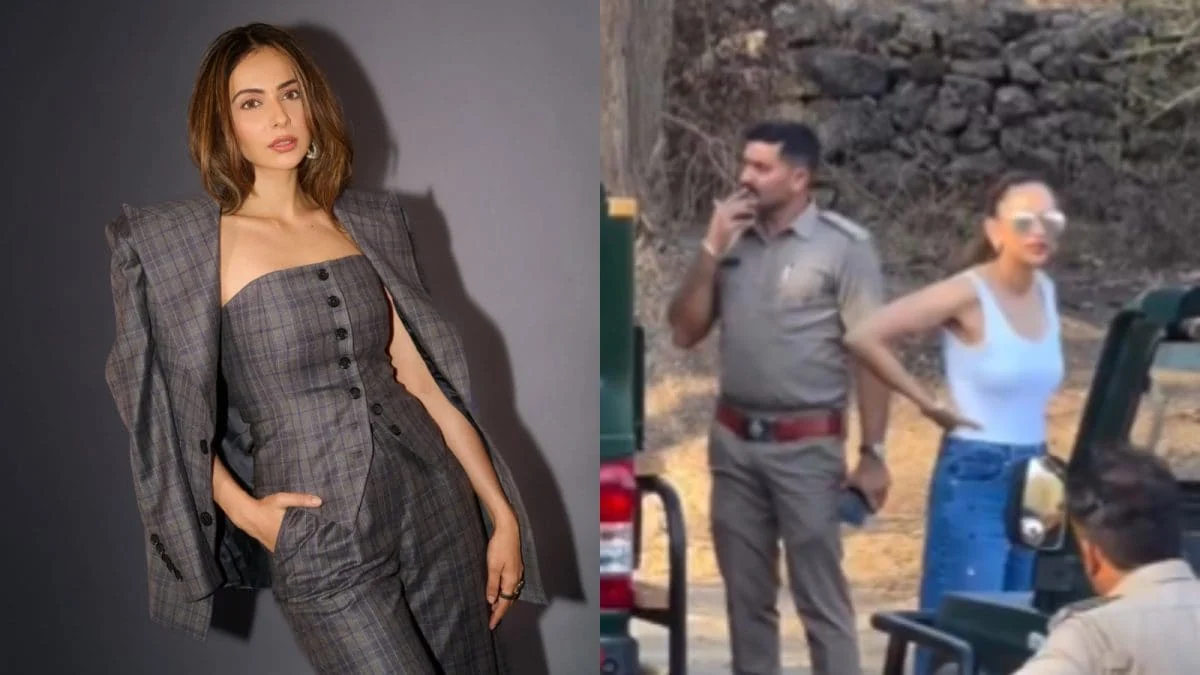
Mumbai, India – A video featuring Bollywood actress Rakul Preet Singh seemingly walking outside a safari jeep within the protected confines of Gir National Park has ignited a significant online debate. The footage, which circulated widely on social media platforms, prompted accusations of potential rule violations and calls for equal enforcement of regulations for celebrities. In response to the burgeoning controversy, Gir National Park authorities have issued a detailed clarification, asserting that the video was filmed outside the restricted area and that no wildlife protection protocols were compromised.
The incident unfolded in the lead-up to the release of the upcoming comedy-drama "Pati Patni Aur Woh Do." Rakul Preet Singh, alongside co-stars Ayushmann Khurrana and Wamiqa Gabbi, had visited the renowned Gir National Park in Gujarat for a promotional jungle safari. Shortly after their visit, a short video clip emerged, showing Singh disembarking from a safari vehicle and walking in close proximity to the jungle’s perimeter. This visual immediately triggered concern among environmental enthusiasts and social media users, many of whom questioned how an individual, particularly a celebrity, was permitted to exit a vehicle within a designated restricted zone, a practice strictly prohibited to safeguard both visitors and wildlife.
The ensuing online discourse quickly escalated, with many expressing outrage and demanding accountability. Hashtags related to the incident trended, with users highlighting the importance of preserving natural habitats and questioning whether the allure of celebrity status exempted individuals from adhering to stringent park regulations. The crux of the debate revolved around the perceived disparity in how rules are applied, with critics arguing that no one, regardless of their profession or fame, should be allowed to breach the sanctity of a protected national park.
Chronology of Events and Public Reaction
The timeline of events, as pieced together from social media and official statements, paints a clear picture of the controversy’s progression. The visit by the cast of "Pati Patni Aur Woh Do" to Gir National Park appears to have been a planned promotional activity. Following this visit, a video clip featuring Rakul Preet Singh surfaced online. The exact date of the video’s circulation and the initial posting remains subject to scrutiny, but it gained significant traction on or around May 9, 2026, as indicated by a widely shared tweet from user @choga_don.
This tweet, which accompanied the viral video, directly questioned the actress’s actions, stating: "Rakul Preet Singh is walking inside the restricted National park as if she is on a morning walk? How come they are allowed to get out of the vehicle? Isn’t it a violation of forest rules? There should not be separate rules for celebrities." The sentiment expressed in this tweet resonated with a large segment of the online community, fueling further discussion and criticism.
The public reaction was swift and multifaceted. While some defended the actress, suggesting the video might be misleading or taken out of context, a significant portion of netizens expressed concern over the potential for wildlife endangerment and the erosion of conservation principles. Environmental activists and concerned citizens flooded social media platforms with comments, urging the forest department to investigate the matter thoroughly and take appropriate action. The incident underscored a broader societal concern about the impact of tourism, especially celebrity-driven tourism, on fragile ecosystems.
Official Response and Clarification
In light of the escalating debate and the potential for misinformation, the authorities managing Gir National Park moved swiftly to address the concerns. Through their official Twitter handle and subsequent official statements, they provided a detailed clarification designed to dispel the prevailing doubts.
The primary assertion from the park officials is that the video in question was recorded outside the designated restricted area of the Sasan Sanctuary. They emphasized that every sanctuary has a clearly defined entry point for visitors who intend to enter the protected zone. The viral video, according to the authorities, was captured in the vicinity of this entry point, prior to Singh and her entourage officially entering the core sanctuary.
A key point of clarification was the rule prohibiting visitors from alighting from their safari vehicles once they are inside the sanctuary. The statement explicitly reiterated this rule: "Every sanctuary has a designated entry point for visitors entering the protected area. The viral video was shot outside that point. Therefore, we clarified that the incident did not take place inside the restricted zone."
Furthermore, the officials elaborated on the circumstances surrounding Singh’s presence at the entry point. It was revealed that Rakul Preet Singh and her team had arrived for a planned sanctuary visit. However, prior to entering the protected area, she experienced a medical issue. This unforeseen circumstance necessitated her team to escort her away from the park. The statement clarified, "Rakul Preet Singh had come with her team for a planned sanctuary visit. However, before entering the sanctuary, she experienced a medical issue. Due to this, her team took her back, and she did not enter the sanctuary premises." This explanation directly addresses the notion that she was inside the restricted zone and disembarked, providing a narrative of an aborted visit due to a personal health concern.
The official statement concluded with a firm reiteration that no rules were violated, as the restricted zone commences only after the sanctuary entry point. "Our restricted zone begins only after the sanctuary entry point. No rules were violated. We have already clarified this through our official Twitter handle," the statement affirmed. This comprehensive response aimed to provide factual information and quell the burgeoning controversy.
Supporting Data and Precedents
While this specific incident has brought Gir National Park into the spotlight, the broader issue of celebrity behavior in protected areas is not new. Numerous instances across India and globally have highlighted the challenges faced by park authorities in balancing tourism, promotional activities, and strict conservation mandates.
Gir National Park, renowned as the sole home of the Asiatic lion, is a critically important conservation area. The park’s management adheres to stringent protocols designed to minimize human impact on its delicate ecosystem. These protocols include mandatory guidelines for safari operations, such as staying within designated routes, maintaining a safe distance from wildlife, and, crucially, prohibiting visitors from exiting their vehicles within the restricted zones. The rationale behind these rules is multifaceted: to prevent disturbing wildlife behavior, to avoid accidental encounters that could endanger both animals and humans, and to maintain the pristine nature of the environment.
The presence of celebrities in such locations, while often a boon for promotional activities and raising awareness, can also inadvertently create a perception of leniency. This is precisely what the online debate surrounding Rakul Preet Singh’s video underscored. The user’s tweet, "There should not be separate rules for celebrities," articulates a widely held sentiment that conservation laws must be applied universally.
In other cases, celebrities have faced criticism for activities deemed inappropriate within natural reserves, ranging from leaving litter to engaging in prolonged or disruptive interactions with wildlife. These incidents often lead to public outcry and calls for stricter enforcement. The Gir National Park authorities’ proactive clarification in this instance can be seen as an effort to preempt further escalation and to reinforce their commitment to conservation principles. The emphasis on the video being shot "outside the entry point" is a critical distinction, highlighting that the alleged transgression did not occur within the protected habitat itself.
Implications and Future Considerations
The incident involving Rakul Preet Singh and Gir National Park carries several important implications for the future of celebrity engagement with wildlife tourism and conservation efforts.
Firstly, it underscores the paramount importance of transparency and clear communication from park authorities. The swift and detailed clarification issued by the Gir National Park officials played a crucial role in mitigating the controversy. Had the authorities remained silent, the speculation and potential misinformation could have continued to erode public trust and potentially misrepresent the park’s conservation efforts.
Secondly, the debate highlights the need for enhanced public awareness campaigns regarding the rules and regulations governing visits to national parks and wildlife sanctuaries. While many are aware of general conservation principles, specific guidelines for protected areas might not be universally understood. Clearer signage, pre-visit briefings, and consistent enforcement are essential to ensure that all visitors, regardless of their background, understand and respect the rules.
Thirdly, the incident raises questions about the nature of celebrity-led promotional activities in sensitive ecological zones. While such partnerships can be beneficial, it is crucial for them to be meticulously planned and executed in full compliance with all environmental regulations. This includes ensuring that the celebrities themselves are fully briefed on the rules and that their actions are beyond reproach. The focus should always remain on raising awareness and promoting responsible tourism, rather than creating an impression of privileged access or disregard for established protocols.
Finally, the controversy serves as a reminder that public scrutiny of celebrity actions, especially concerning environmental issues, is likely to intensify. In an era of ubiquitous social media, any perceived infraction can quickly gain traction and spark widespread debate. This heightened visibility can be a double-edged sword: it can lead to accountability and positive change, but it also necessitates greater diligence and responsibility from public figures.
The clarification from Gir National Park authorities has, for now, addressed the immediate concerns surrounding the viral video. However, the incident serves as a valuable case study, prompting a broader conversation about how to best manage the intersection of celebrity culture, tourism, and the critical need for wildlife conservation in India’s precious natural heritage sites. The focus must remain on safeguarding these invaluable ecosystems, ensuring that promotional activities enhance, rather than detract from, their protection.
