

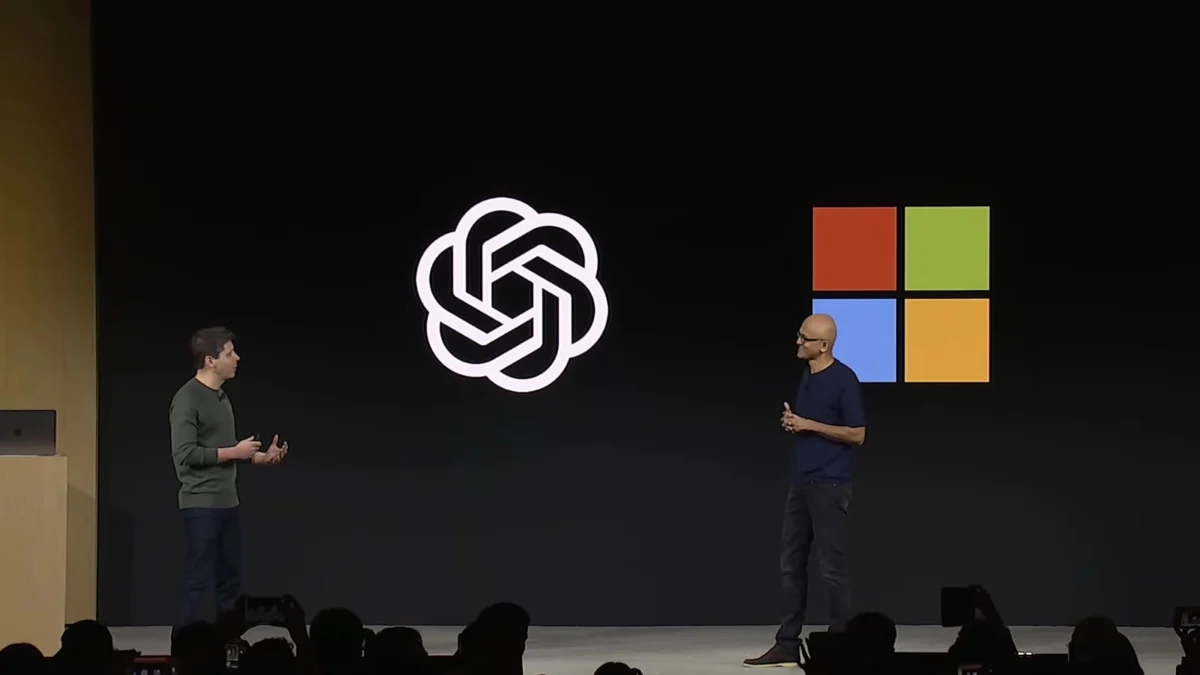
Oakland, California – Microsoft is widely celebrated today as the prescient giant that recognized the transformative potential of OpenAI years before ChatGPT detonated generative AI onto the global stage, igniting a fierce technological arms race. Its early, multi-billion-dollar investment is frequently cited as a masterstroke, positioning the Windows-maker at the vanguard of the AI revolution. Yet, behind the public narrative of visionary foresight, a recent legal battle has peeled back the curtain, revealing a far more nuanced, and at times, skeptical internal dialogue within Microsoft’s executive ranks.
Court documents unsealed as part of the ongoing civil trial between Elon Musk and OpenAI in a U.S. federal courthouse in Oakland, California, offer an unprecedented glimpse into the nascent stages of this now-pivotal partnership. These private communications expose significant doubts among Microsoft’s top brass, including CEO Satya Nadella, regarding the wisdom of pouring vast sums into the then-fledgling AI startup. The prevailing sentiment wasn’t one of unwavering conviction in OpenAI’s immediate breakthrough potential, but rather a strategic calculation heavily influenced by a formidable competitive threat: the prospect of OpenAI, with its burgeoning credibility, "storming off to Amazon."
This extraordinary revelation challenges the established narrative, suggesting that while the long-term vision for AI was certainly present, the immediate impetus for Microsoft’s deeper commitment was less about a clear return on investment or imminent Artificial General Intelligence (AGI) breakthroughs, and more about preventing a formidable asset from falling into the hands of its fiercest cloud rival, Amazon Web Services (AWS). The trial, stemming from Musk’s lawsuit accusing OpenAI of abandoning its "original nonprofit mission to develop AGI for the benefit of humanity" by transitioning to a for-profit structure, has inadvertently illuminated the complex interplay of ambition, skepticism, and intense market competition that defined one of the most significant tech partnerships of our era.
The Genesis of a Partnership: Early Seeds and Skepticism
OpenAI, co-founded by Elon Musk and Sam Altman, among others, began with an ambitious, idealistic mission: to ensure AGI benefits all humanity, not just a select few. Its initial structure as a non-profit organization underscored this lofty goal. Microsoft’s involvement began modestly, predating the widespread excitement around generative AI.
2016: The Dota 2 Gambit
The first significant collaboration materialized in 2016, centered around OpenAI’s ambitious project to develop an AI bot capable of defeating professional players in the complex multiplayer online battle arena (MOBA) game, Dota 2. This endeavor, while seemingly niche, was a significant technical challenge, requiring immense computational power and sophisticated machine learning algorithms. Recognizing its potential, Microsoft offered OpenAI a substantial discount on its Azure cloud computing services. OpenAI paid a mere $10 million for what amounted to $60 million worth of Azure compute, signaling an early, albeit cautious, investment by Microsoft in the startup’s research capabilities.
2017: A Milestone and a Call for More
The partnership bore fruit in 2017 when OpenAI’s bot achieved a major milestone, decisively beating a professional Dota 2 player in a one-on-one match. This achievement garnered significant attention within the AI community, showcasing OpenAI’s technical prowess and validating its research approach. Following this success, OpenAI CEO Sam Altman reached out to Satya Nadella, proposing a substantial escalation of Microsoft’s investment to fund the next phase of their AI research. The ambition was now to expand the Dota 2 project to tackle the even more complex challenge of a full five-on-five team match.
Altman’s email to Nadella laid out the scale of the required resources: "I think it will lead to major new breakthroughs in AI but will require huge amounts of compute, probably something like $300MM at Azure list prices. We could figure out how to fund some of it but not that much." This request, far exceeding the initial discount, triggered a wave of internal scrutiny and apprehension within Microsoft’s senior leadership.
Behind the Scenes: A Symphony of Doubts
The email thread from 2017, involving Nadella, CFO Amy Hood, and a host of other influential Microsoft executives, reveals a palpable skepticism regarding the proposed investment. The primary concerns revolved around the nebulous nature of OpenAI’s research, the lack of a clear return on investment (ROI) for Microsoft, and the elusive definition of "breakthroughs" beyond the gaming domain.
The Elusive Promise of AGI and ROI
Satya Nadella, despite his eventual embrace of OpenAI, expressed his own reservations. He wrote, "Overall I can’t tell what research they are doing and how if shared with us it could help us get ahead. From what Elon is telling everyone… he feels Open AI is at verge of some big AGI breakthroughs. I know they are working to push some NPU designs etc. They clearly are pushing AI at a level none of our first party or third parties are." While acknowledging OpenAI’s advanced efforts, Nadella’s statement subtly questioned the tangible benefits for Microsoft’s core business, especially in the absence of clear AGI progress. The mention of Elon Musk’s pronouncements further highlights the external pressures and differing perceptions surrounding OpenAI’s trajectory.
Other executives were even more direct in their skepticism. Microsoft CTO Kevin Scott, who would later become a staunch advocate, initially voiced strong doubts, stating he was "not sure what Microsoft was going to get out of [the deal]" and how the Dota 2 efforts would directly benefit the company’s broader objectives. Harry Shum, another prominent Microsoft executive, echoed this sentiment, noting, "I visited Open AI about a year ago, and was not able to see any immediate breakthrough in AGI."
The financial implications were also a major point of contention. Jason Zander, then Microsoft’s Azure chief, calculated the required revenue generation to justify such an investment: "For those numbers to make sense we’d have to be generating significant incremental revenue directly due to the deal ($500 million+) that couldn’t be gained in a more efficient way." This underscores the fundamental business dilemma: how to justify a massive capital outlay for speculative research without a clear pathway to commercialization or strategic advantage.
In response to this internal pushback, Altman offered an alternative proposal to Microsoft, suggesting a partnership with Xbox around gaming, and an open offer to share their technology and intellectual property (IP) in exchange for expanded sponsorship for their Dota research. This move by Altman indicated his awareness of Microsoft’s reservations and his willingness to explore alternative avenues to secure funding, even if it meant linking their cutting-edge AI research to more conventional business units.
The Amazon Factor: A Strategic Imperative
If Microsoft’s leadership was largely skeptical of the immediate value proposition, what then shifted the internal calculus from doubt to a multi-billion-dollar commitment? The answer, as the court documents powerfully reveal, was the specter of Amazon. The intense rivalry in the burgeoning cloud computing market between Microsoft Azure and Amazon Web Services (AWS) proved to be the decisive factor, transforming a risky research investment into a critical strategic maneuver.
The Threat of Defection
Kevin Scott, despite his initial doubts about OpenAI’s direct benefit to Microsoft, became a key voice highlighting the competitive danger. In a January 2018 email, he articulated a critical concern that would ultimately sway the decision: "I guess the other thing to think about here is the PR downside of us not funding them, and having them storm off to Amazon in a huff and shit-talk us and Azure on the way out." This quote vividly captures the strategic fear: losing a promising, high-profile AI startup to a direct competitor, not just in terms of technology, but also in terms of public perception and industry influence.
Scott further elaborated on OpenAI’s growing influence: "They are building credibility in the AI community very fast, recruiting well, and are going to be an influential voice. All things equal, I’d love to have them be a Microsoft and Azure net promoter. Not sure that alone is worth what they’re asking." This statement highlights the dual concern: the tangible loss of a potential technological partner and the intangible, yet powerful, impact of a negative narrative propagated by a respected entity in the AI community. The "net promoter" concept underscores Microsoft’s desire to control the narrative and leverage OpenAI’s reputation to its own advantage in the fiercely competitive cloud market.
Eric Horvitz, another Microsoft executive, echoed this sentiment, painting a stark "worst case scenario": "My worst case scenario is having them ditch Azure for AWS, as Kevin [Scott] says bad-mouth then land with some big new innovation that is shared with our competition." This fear wasn’t just about losing a customer; it was about empowering a rival with cutting-edge innovation and suffering a public relations blow. The possibility of OpenAI developing "big new innovation" and sharing it with AWS was a clear red line for Microsoft.
A Change of Heart and a Billion-Dollar Bet
The strategic imperative to prevent OpenAI from bolstering Amazon’s cloud offerings ultimately outweighed the internal doubts about immediate AGI breakthroughs or direct ROI. The fear of empowering a rival, coupled with the recognition of OpenAI’s rapidly growing influence in the nascent AI field, forced Microsoft’s hand.
By 2019, Kevin Scott, who had initially been "highly dismissive" of AI efforts at OpenAI and Google DeepMind, admitted in an email to Nadella and Microsoft co-founder Bill Gates that his perspective had shifted significantly. He acknowledged his previous oversight in focusing too narrowly on "game-playing stunts" rather than the broader implications of their foundational AI research. This admission signaled a critical turning point within Microsoft’s leadership.
Just a month after Scott’s revised assessment, Microsoft announced a landmark $1 billion investment in OpenAI, solidifying their partnership and securing OpenAI’s commitment to utilize Azure as its exclusive cloud provider. This investment, driven more by strategic competitive positioning than immediate technological conviction, proved to be an exceptionally shrewd move. Following OpenAI’s release of ChatGPT in November 2022, a generative AI model that captivated the world, Microsoft would go on to invest billions more, integrating OpenAI’s technologies deeply into its product ecosystem and reaping immense strategic benefits.
The Evolving Partnership: Friction and Diversification
The legal battle between Musk and OpenAI has not only revealed historical doubts but has also coincided with a noticeable shift in the dynamics of the Microsoft-OpenAI partnership. What began as a defensive strategic alliance has evolved into a more complex relationship, reflecting OpenAI’s increasing power and desire for diversification.
A Renegotiated Pact and Cloud Diversification
In April of this year, both companies announced a renegotiated pact that notably grants OpenAI greater flexibility to engage with Microsoft’s cloud rivals, specifically Amazon Web Services (AWS) and Google Cloud. This significant development, coming just days before the unsealed court documents, underscores OpenAI’s growing leverage and its intent to avoid over-reliance on a single cloud provider.
The very next day, OpenAI announced a direct deal with AWS to bring its AI models, including the Codex assistant, and other tools to the cloud giant. This move, which would have been an executive’s "worst-case scenario" just a few years prior, now reflects a mature, yet increasingly independent, OpenAI. Sam Altman confirmed that the company would continue licensing its AI technology to Microsoft through 2032, while their revenue-sharing arrangement would remain in place until 2030, suggesting a long-term but more diversified future.
The Omission of the AGI Clause
Another critical detail in the new partnership agreement is the omission of the AGI clause. Previously, Microsoft’s substantial revenue share from OpenAI was contingent on an "independent expert panel" declaring the achievement of AGI. This clause was a testament to the original vision of OpenAI and Microsoft’s early hopes for groundbreaking AGI development. Its removal signals a pragmatic shift, acknowledging the complexities of defining and achieving AGI, and allowing both companies to move forward with a more conventional, commercially focused partnership model.
Implications: A Glimpse into High-Stakes Tech Strategy
The revelations from the Elon Musk-OpenAI trial offer profound insights into the high-stakes world of technology investment and strategic partnerships.
For Microsoft: The initial skepticism within Microsoft underscores the inherent risks and uncertainties in funding nascent, ambitious technologies. While the eventual outcome has been overwhelmingly positive, positioning Microsoft as a leader in AI, the journey was far from a clear path. It highlights how competitive pressures can override immediate ROI concerns, leading to visionary, albeit initially reluctant, investments. It also demonstrates the challenge of managing powerful partners who, once successful, seek greater autonomy.
For OpenAI: The documents illuminate OpenAI’s strategic brilliance in leveraging its early research achievements and the intense cloud rivalry to secure critical funding. It also showcases the delicate balance it has navigated between its original non-profit, AGI-for-humanity mission and the commercial realities of developing and deploying cutting-edge AI. The recent diversification of cloud partners indicates a maturing organization, keen to maximize its reach and minimize single-vendor dependency.
For the AI Industry: This saga exemplifies the cutthroat nature of the AI arms race. The fear of a rival gaining an advantage can drive monumental investments, even in the face of internal doubts. It also sheds light on the evolving relationship between foundational AI research entities and the large tech companies that provide the immense computational resources required for development. The legal challenges, such as Musk’s lawsuit, further highlight the ethical, financial, and philosophical complexities emerging as AI rapidly advances.
Ultimately, the unsealed emails serve as a powerful historical document, demonstrating that even the most celebrated strategic decisions in Silicon Valley are rarely born from pure, unadulterated foresight. Instead, they are often the product of a complex interplay of vision, skepticism, calculated risk, and the relentless pressure of competition, all playing out behind closed doors. Microsoft’s bet on OpenAI, initially hedged by fear of Amazon, has undeniably paid off, but the journey to that success was far more intricate than the popular narrative suggests.
