

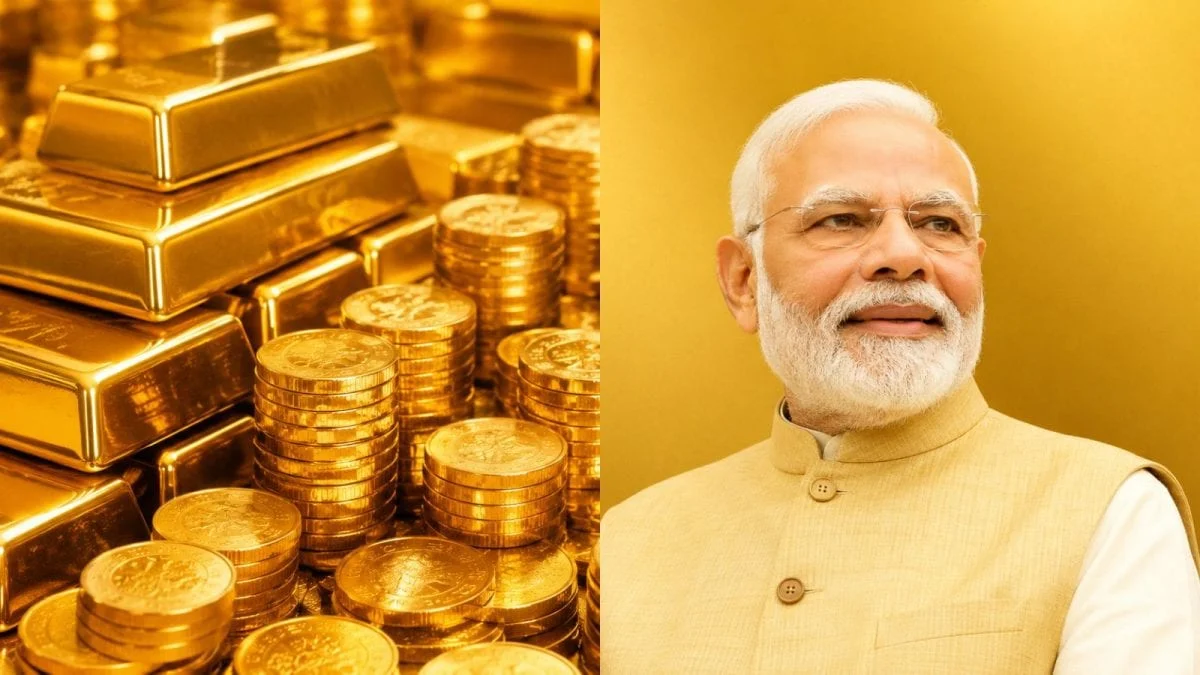
New Delhi, India – May 11, 2026 – India’s prominent jewellery associations are slated to hold a high-stakes meeting with officials from the Prime Minister’s Office (PMO) on Tuesday, May 12, as reported by CNBC-TV18. This urgent dialogue comes in the immediate aftermath of Prime Minister Narendra Modi’s impassioned appeal to Indian citizens to voluntarily suspend gold purchases for a year, a plea made amidst mounting concerns over the nation’s foreign exchange reserves and its persistent vulnerability to global commodity price fluctuations.
The Prime Minister’s call, delivered during a public rally in Hyderabad on Sunday, May 10, underscored a broader national economic strategy aimed at fostering self-reliance and shoring up the country’s financial stability. The move has sent ripples across the multi-billion dollar Indian gold market, an industry deeply intertwined with the nation’s cultural fabric and economic health. As stakeholders prepare for the pivotal discussions, the industry grapples with the potential ramifications of such a significant shift in consumer behaviour, while the government seeks to address critical macroeconomic challenges.
I. Crucial Dialogue Looms for India’s Gold Sector
The impending meeting between representatives of India’s jewellery industry and high-ranking PMO officials marks a critical juncture for a sector that is not only a significant contributor to the national economy but also a repository of deeply ingrained cultural practices. The core of the discussion will undoubtedly revolve around Prime Minister Narendra Modi’s recent appeal for citizens to temporarily halt gold acquisitions, a recommendation that, while voluntary, carries considerable weight given its source.
This unprecedented call from the nation’s leader highlights the government’s serious concerns regarding India’s burgeoning gold import bill and its direct impact on the country’s foreign exchange reserves. Gold, revered as a symbol of wealth, status, and an essential component of religious and social ceremonies, particularly weddings and festivals, holds an almost unparalleled position in the Indian psyche. For centuries, it has served as a primary form of savings and investment for millions, especially in rural areas where access to formal financial instruments may be limited. The industry, comprising a vast network of artisans, manufacturers, retailers, and exporters, supports millions of livelihoods directly and indirectly. Therefore, any significant policy shift or even a strong public appeal concerning gold consumption has profound implications for this intricate ecosystem.
The government’s immediate objective appears to be mitigating external economic pressures that have seen India’s forex reserves decline. By urging a pause in gold buying, the administration aims to reduce the outflow of foreign currency, thereby strengthening the rupee and bolstering the nation’s economic resilience against global uncertainties. The jewellery associations, on their part, will likely present the industry’s perspective, articulating the potential economic hardships, job losses, and disruption to an established trade if consumer demand significantly wanes. This dialogue is expected to be a delicate balance between national economic imperatives and the sustainability of a vital domestic industry. The outcome of this meeting could set the tone for future policy directions and determine the extent to which the government is prepared to intervene in traditional consumption patterns to achieve its macroeconomic goals.
II. A Timeline of Policy and Public Appeal
The events leading up to Tuesday’s critical PMO meeting unfolded rapidly, beginning with a significant address by Prime Minister Modi, which has since become the focal point of national economic discourse.
The Prime Minister’s Hyderabad Address
On Sunday, May 10, 2026, Prime Minister Narendra Modi, while addressing a large public rally in Hyderabad, delivered a comprehensive appeal to the nation regarding economic prudence and self-reliance. His speech, broadcast widely, urged citizens to adopt a more conservative approach to consumption and discretionary spending. Specifically, he called upon Indians to "reduce unnecessary consumption," "postpone discretionary spending such as gold purchases and foreign travel for a year," "adopt energy-saving measures," and "promote domestic products." This multi-faceted message was framed within the context of strengthening India’s economic foundations and navigating a challenging global economic landscape.
The Prime Minister’s emphasis on deferring gold purchases was particularly striking, given its deep cultural roots and economic significance. While his appeal was framed as a voluntary measure, it carried the weight of a national call to action, signaling the government’s serious concerns about the macroeconomic implications of continued high gold imports. The address was interpreted by economic analysts as a clear signal that the government views excessive non-essential imports, particularly gold, as a drain on national resources that could be better utilized for productive investments or to cushion against external shocks. The timing of the appeal, just days before the scheduled PMO meeting, suggests a strategic move to set the agenda and underscore the urgency of the situation to both the industry and the public.
Immediate Industry Response and Scheduled Meeting
The Prime Minister’s appeal did not go unnoticed by the Indian jewellery sector. Almost immediately, industry stakeholders, representing various associations of jewellers, manufacturers, and traders, began to assess the potential impact of such a directive on their businesses and the broader market. Concerns quickly mounted regarding the implications for sales during upcoming festive seasons and wedding cycles, which are traditionally peak periods for gold demand. The industry, which had just recorded a substantial increase in imports, now faced the prospect of a sudden and sharp decline in consumer interest.
Sources close to the industry confirmed that a meeting with officials from the Prime Minister’s Office (PMO) was swiftly arranged for Tuesday, May 12, 2026. This rapid response underscores the seriousness with which both the government and the industry perceive the situation. Jewellery associations are expected to use this crucial platform to seek further clarification on the government’s stance, understand the underlying economic rationale in greater detail, and present a comprehensive overview of the industry’s concerns. Their agenda will likely include highlighting the potential economic fallout, such as job losses among skilled artisans and retail staff, the impact on small and medium-sized enterprises (SMEs) within the sector, and the overall disruption to a well-established supply chain. The industry will also likely advocate for alternative solutions or support mechanisms that could help them navigate this challenging period while still contributing to the nation’s economic stability. The dialogue is anticipated to be a rigorous exchange of perspectives, with both sides aiming to find a sustainable path forward that aligns national economic interests with the realities of a vital domestic industry.
III. Unpacking India’s Gold Dependence and Economic Vulnerabilities
The Prime Minister’s call to curb gold purchases is rooted in a clear and present economic challenge facing India: the strain on its foreign exchange reserves, exacerbated by a heavy reliance on imports for critical commodities and non-essential goods like gold. Understanding these underlying economic vulnerabilities is key to grasping the government’s proactive stance.
The Forex Reserve Imperative
Foreign exchange reserves are a nation’s buffer against external economic shocks, providing liquidity and stability to its currency. A healthy reserve position allows a country to manage its international payments, import essential goods, service foreign debt, and intervene in currency markets to stabilize the rupee. India’s forex reserves have recently come under significant pressure. During the week ended May 1, 2026, the country’s reserves witnessed a notable drop of $7.794 billion, settling at $690.693 billion. This decline is attributed to several global factors, primarily "elevated global commodity prices" and "growing uncertainty in international supply chains."
When global prices for essential imports like crude oil, edible oils, and fertilizers rise, India has to spend more foreign currency to acquire the same quantity of goods. This increased outflow, coupled with potential capital outflows from foreign investors seeking safer havens amidst global uncertainty, directly depletes the forex reserves. The government’s concern is that a continuous draw on these reserves could weaken the rupee, making imports even more expensive and potentially leading to inflationary pressures, thereby impacting the common citizen. Therefore, any measure that can conserve foreign currency, such as reducing non-essential imports, becomes a strategic priority for economic stability.
India’s Voracious Appetite for Gold
India holds the distinction of being one of the world’s largest consumers of gold, a fact deeply embedded in its cultural and social fabric. The country’s annual gold consumption typically ranges between 700-800 tonnes. However, domestic gold production is negligible, barely reaching 1-2 tonnes per year. This stark disparity means that India depends on imports for more than 90 percent of its gold requirement. The demand for gold is perennial, driven by deep-rooted traditions. Gold is not merely an ornament; it is considered an auspicious metal, an essential part of weddings, religious festivals like Diwali and Akshaya Tritiya, and a preferred gift for significant life events. Beyond its ceremonial value, gold serves as a critical investment vehicle, especially in rural India where it is seen as a hedge against inflation, a store of value, and a readily liquid asset in times of need, often bypassing formal banking channels.
This unwavering demand, combined with minimal domestic supply, creates a significant and constant drain on the nation’s foreign exchange. While gold serves as a traditional savings instrument, its import primarily facilitates consumption rather than contributing substantially to industrial production or high-value exports that would generate foreign currency in return. This makes it a unique challenge in the country’s trade balance equation.
The Import Bill Burden
The financial year 2025-26 witnessed a record surge in India’s gold imports, reaching an staggering $72 billion. This represented a substantial 24 percent jump compared to the $58 billion recorded in the preceding financial year, FY25. Such a massive increase underscores the persistent and growing demand for the yellow metal. Consequently, gold now accounts for nearly 9 percent of India’s total import bill, positioning it as one of the country’s largest import categories, second only to crude oil.
The sheer volume of foreign currency required to finance these imports places immense pressure on the trade deficit and, by extension, on the nation’s forex reserves. While the government currently imposes an effective import tax of approximately 6 percent, which includes customs duty and other levies, this measure has evidently not been a sufficient deterrent to curb the soaring demand. The cultural impetus and the perception of gold as a secure asset often outweigh the additional cost imposed by import duties. The government’s appeal, therefore, seeks to address the issue at a more fundamental level: influencing consumer behaviour to reduce the demand for imports at the source, rather than solely relying on fiscal measures that have shown limited effectiveness in the face of strong cultural and investment drivers. The objective is to stem the outflow of precious foreign currency that could otherwise be utilized for productive investments, infrastructure development, or bolstering the nation’s economic stability in an unpredictable global environment.
Broader Import Dependencies
While gold holds a unique position due to its cultural significance, it is part of a larger import dependency challenge facing India. The nation remains heavily reliant on imports for several other critical commodities, including crude oil, edible oils, and fertilisers. This broad dependency makes the Indian economy particularly vulnerable to global commodity price shocks and currency pressures, especially during periods of geopolitical instability or supply chain disruptions.
Crude oil, for instance, typically constitutes the largest portion of India’s import bill, directly impacting energy costs across all sectors. Edible oils are essential for daily consumption, and their import volatility can directly affect household budgets. Fertilisers are crucial for agricultural productivity, and their cost directly impacts food security and farmer incomes. When global prices for these commodities spike, India’s import bill swells, leading to a significant outflow of foreign currency and a widening trade deficit. This interconnectedness means that a strain on forex reserves due to one commodity can quickly cascade and impact the nation’s ability to manage other essential imports. The Prime Minister’s appeal, therefore, is not an isolated measure but rather a component of a broader strategy to foster economic self-reliance, reduce external vulnerabilities, and manage the country’s precious foreign exchange resources more prudently across all sectors.
IV. Government’s Stance and Future Policy Signals
The Prime Minister’s direct appeal and the swift scheduling of a PMO meeting with jewellery associations signal a determined stance from the government to address the escalating gold import issue. This indicates a high-level concern that transcends mere economic statistics, touching upon national economic security and self-reliance.
The PMO’s Role and Mandate
The involvement of the Prime Minister’s Office in this matter underscores the strategic importance the government places on curbing gold imports. The PMO’s direct engagement signifies that this is not merely a sectoral issue but a national economic priority. Typically, the PMO becomes involved in matters that require coordination across multiple ministries, strategic policy formulation, or direct intervention to achieve the Prime Minister’s vision. In this context, the PMO’s mandate will likely be multi-fold: to communicate the severity of the economic situation to industry leaders, seek their cooperation in achieving the national objective, and potentially explore collaborative solutions that can mitigate the impact on the industry while still addressing the macroeconomic challenge.
The government is likely seeking more than just a temporary reduction in demand; it aims for a shift in public mindset regarding non-essential consumption. The PMO meeting will be crucial for gauging the industry’s capacity and willingness to align with this national agenda. It also provides a platform for the government to articulate potential policy directions, whether in the form of continued public appeals, stricter import regulations, or incentives for domestic value addition within the gold sector. The very act of the PMO engaging directly indicates that the government is prepared to take significant steps if the current appeal does not yield the desired results.
Historical Precedents and Economic Nationalism
India has a history of implementing measures to manage gold imports, particularly during periods of economic strain. In the past, governments have resorted to hiking import duties, introducing schemes like the Gold Monetisation Scheme (GMS) to mobilize idle household gold, and even imposing quantitative restrictions on imports. These measures, while varied in their effectiveness, highlight a consistent policy objective: to reduce the drain on foreign exchange caused by gold.
Prime Minister Modi’s current appeal can also be viewed through the lens of economic nationalism and the "Make in India" initiative. His broader message, encompassing "reduce unnecessary consumption," "postpone discretionary spending," and "promote domestic products," aligns perfectly with a vision of a self-reliant India. By encouraging citizens to pause gold purchases, the government is subtly promoting a shift in investment patterns towards more productive domestic assets or encouraging savings that can be channeled into national development. This approach leverages public sentiment and patriotism, aiming for a collective effort to strengthen the nation’s economic resilience. It signifies a move beyond purely fiscal or monetary tools, venturing into the realm of behavioural economics and nationalistic appeals to achieve economic goals.
The Appeal vs. Mandate Dilemma
A key aspect of the current situation is the distinction between the Prime Minister’s "appeal" and a formal government mandate or policy directive. An appeal, by its very nature, relies on voluntary compliance and public cooperation. This approach avoids the immediate legal and economic complexities that outright bans or severe restrictions might entail, such as potential backlash from the industry, the risk of a thriving grey market, or challenges in international trade agreements.
However, the effectiveness of an appeal hinges on public perception, cultural inertia, and the perceived urgency of the situation. While many citizens may respond positively to a national call from the Prime Minister, the deeply ingrained cultural significance of gold and its role as a traditional savings instrument could make widespread voluntary compliance challenging. The government’s options, should the appeal prove insufficient, are varied. These could include intensifying public awareness campaigns, introducing further import duty hikes, implementing non-tariff barriers, or even exploring innovative financial instruments that offer attractive alternatives to physical gold. The PMO meeting will likely serve as a sounding board to assess the industry’s capacity to support the appeal and to consider the feasibility of stronger policy interventions if the voluntary approach falls short of the desired macroeconomic outcomes. The government’s ultimate goal is to find a balance that addresses its forex concerns without unduly disrupting a culturally significant industry or alienating a large segment of the population.
V. Navigating the Golden Challenge: Sectoral and Consumer Impact
The Prime Minister’s appeal, irrespective of its voluntary nature, has significant implications that ripple through the Indian jewellery sector and reshape consumer behaviour, potentially impacting the broader macroeconomic landscape.
Industry’s Immediate Concerns
For the Indian jewellery industry, the Prime Minister’s appeal represents a formidable challenge. The immediate concern is a potential sharp decline in sales, particularly during the upcoming festive and wedding seasons, which are traditionally the busiest and most lucrative periods for jewellers. A significant drop in demand would lead to a build-up of inventory, impacting liquidity and profitability for retailers, wholesalers, and manufacturers alike. The industry, which heavily relies on a skilled workforce of artisans, karigars, and designers, faces the threat of job losses and business closures, especially for smaller players and family-run establishments that operate on tighter margins.
The industry associations meeting with the PMO will undoubtedly articulate these fears, emphasizing the extensive ecosystem that gold jewellery supports – from mining (albeit limited domestically) and refining to design, manufacturing, and retail. They will likely seek government support in the form of tax breaks, credit facilities, or initiatives to promote value-added exports of jewellery, thereby offsetting the potential domestic demand slump. The industry also has a vested interest in finding solutions that maintain consumer confidence in gold as an asset, even if physical purchases are paused, to prevent a long-term shift away from the metal.
Consumer Behaviour Shifts
The success of the Prime Minister’s appeal largely hinges on whether Indian citizens heed his call. This involves a complex interplay of cultural factors, economic patriotism, and individual financial considerations. For many, gold is not just an ornament; it is a vital form of financial security, an heirloom, and a cultural necessity. Convincing millions to pause purchases for a year, particularly for life events like weddings, will be a significant test of national resolve and the government’s persuasive power.
Should the appeal gain traction, it could lead to several shifts. Consumers might explore alternative investment avenues like equities, mutual funds, or government bonds, potentially boosting domestic capital markets. However, a less desirable outcome could be the emergence of a robust grey market for gold, where illicit imports or unregistered sales circumvent formal channels and duties, thus defeating the government’s purpose of conserving foreign exchange. There is also the possibility of a two-tiered market developing, where those who can afford it continue to buy, while others defer, creating social and economic stratification. The long-term impact on gold as a traditional savings instrument could also be profound, potentially accelerating a move towards more formalized financial planning, especially among younger generations.
Macroeconomic Outlook
If the Prime Minister’s appeal is successful in significantly curbing gold imports, the macroeconomic benefits could be substantial. A reduction in gold imports could save billions of dollars in foreign exchange, directly contributing to a stronger rupee and alleviating pressure on the trade deficit. A more stable rupee would, in turn, make essential imports cheaper, potentially helping to control inflation and ease the burden on consumers and businesses.
The conservation of foreign exchange reserves would bolster India’s economic resilience, providing a stronger buffer against global economic volatility and enhancing investor confidence in the Indian economy. This would signal to international markets that India is proactively managing its economic vulnerabilities and is committed to sustainable growth. However, the exact extent of these benefits will depend on the degree of public compliance and whether the saved foreign exchange is channeled into productive investments or simply offsets other import expenditures. The long-term implications could see a structural shift in India’s import composition and a more diversified investment landscape for its citizens.
A Path Forward? Collaboration and Innovation
Navigating this "golden challenge" will require significant collaboration between the government and the jewellery industry. The PMO meeting on May 12 is a crucial first step in fostering this dialogue. The industry, while facing immediate headwinds, also has an opportunity to innovate. This could involve exploring new designs that use less gold, promoting ethically sourced gold, or focusing on value-added exports to generate foreign currency. There’s also potential for the government to support the industry in developing new, attractive financial instruments that offer a viable alternative to physical gold for investment purposes, thereby diverting savings into more productive channels.
Ultimately, the situation underscores the delicate balance between cultural traditions, economic necessities, and national policy. The outcome of the PMO discussions and the public’s response to the Prime Minister’s appeal will not only determine the immediate future of India’s gold sector but also provide a significant test case for how a nation can collectively adapt its consumption patterns to strengthen its economic foundations in an increasingly uncertain global environment. The coming weeks will reveal whether India can truly forge a new, less gold-dependent path to prosperity.
