

The Jaipur Literature Festival (JLF) has long served as a global stage for the intersection of history, mythology, and contemporary scholarship. In its 2022 edition, one of the most compelling sessions delved into a phenomenon that remains a blind spot for many in the Indian subcontinent: the profound and enduring influence of the Ramayana in Indonesia.
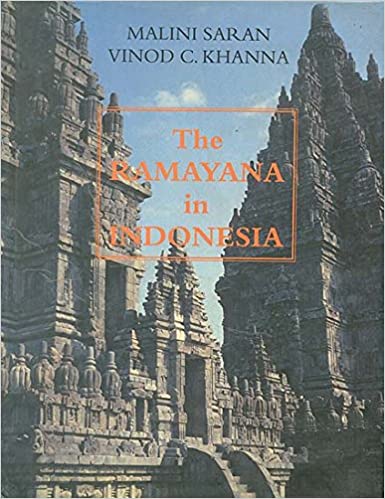
While the tale of Prince Rama is foundational to Indian identity, its "transcreation" in the Indonesian archipelago represents one of the most sophisticated literary and cultural migrations in human history. During a panel titled after their seminal book, The Ramayana in Indonesia, authors Malini Saran and Vinod C. Khanna, in conversation with renowned historian William Dalrymple, explored how an ancient Sanskrit epic crossed the Indian Ocean to become the heartbeat of Javanese and Balinese culture.
Main Facts: A Tale of Two Civilizations
The core of the discussion centered on the premise that the Ramayana is not merely an "exported" Indian story, but a narrative that was radically re-imagined and indigenized by Indonesian artists and scholars over a millennium ago.
The JLF Discourse
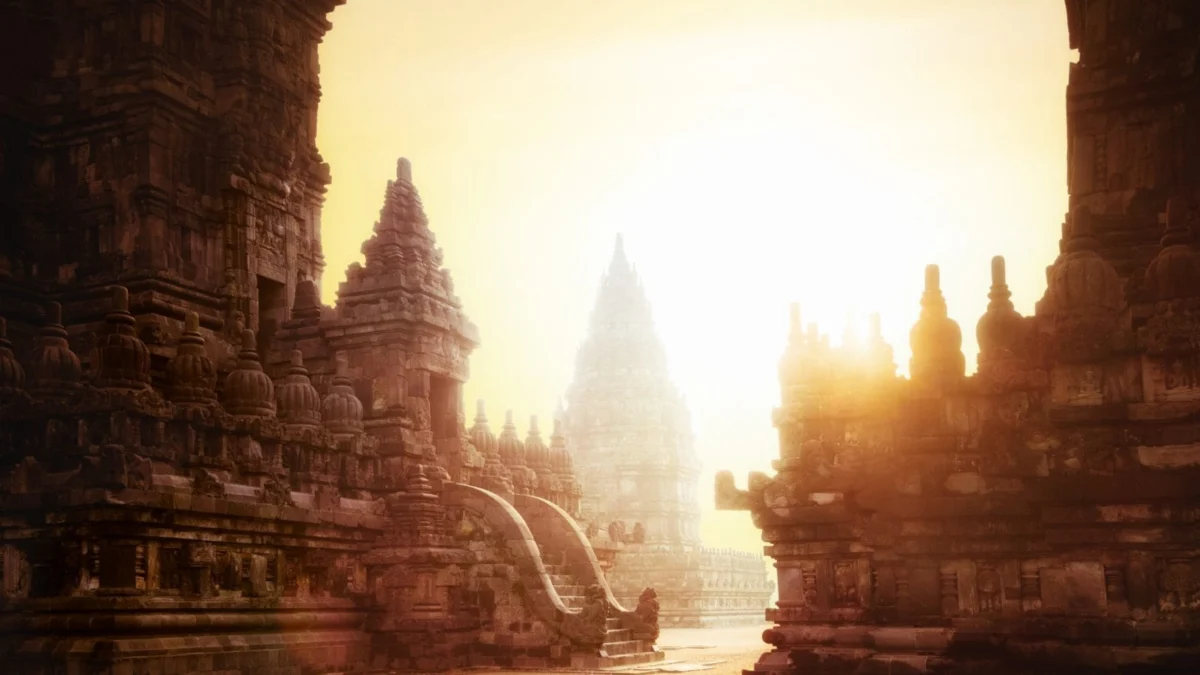
On the fourth day of the festival, the panel highlighted that the Indonesian version of the Ramayana—specifically the Kakawin Ramayana—is not a literal translation of Valmiki’s classic. Instead, it is a "transcreation" that reflects the aesthetic, linguistic, and moral sensibilities of the Indonesian people. William Dalrymple noted the irony that while many Indians are focused on the epic’s domestic roots, some of the world’s most magnificent Hindu and Buddhist monuments, such as Prambanan and Borobudur, stand thousands of miles away in Southeast Asia.
The Source Material: Beyond Valmiki
A pivotal revelation during the session was the literary lineage of the Javanese Ramayana. Unlike many Indian regional versions that draw directly from Valmiki, the Old Javanese version (the Kakawin) traces its primary inspiration to the Bhattikavya, a 6th-7th century Sanskrit poem by the poet Bhatti. This version was originally designed to illustrate the rules of Sanskrit grammar while telling the Rama story, yet in the hands of Javanese poets, it became a masterpiece of independent literary merit.
Cultural Syncretism
The authors emphasized that the Ramayana in Indonesia survived and thrived because of its "malleability." It was adapted into local shadow puppetry (Wayang Kulit), classical dance dramas (Sendratari), and temple reliefs, allowing it to remain relevant even as Indonesia transitioned from Hindu-Buddhist kingdoms to a predominantly Islamic nation.
Chronology: The Migration of a Mythos
The timeline of the Ramayana’s journey into the heart of the Indonesian archipelago is a testament to the "Golden Age" of maritime trade and cultural exchange between the 1st and 14th centuries.
1st – 5th Century: The Early Seeds
The initial transmission of Indian epics occurred through maritime trade routes. Merchants, priests, and scholars traveling from the Coromandel Coast of India brought with them the Sanskrit language and the foundational stories of the Ramayana and Mahabharata.
9th Century: The Javanese Renaissance
This period marks the "Golden Era" for the epic in Indonesia. Under the Mataram Kingdom in Central Java, two monumental retellings appeared:
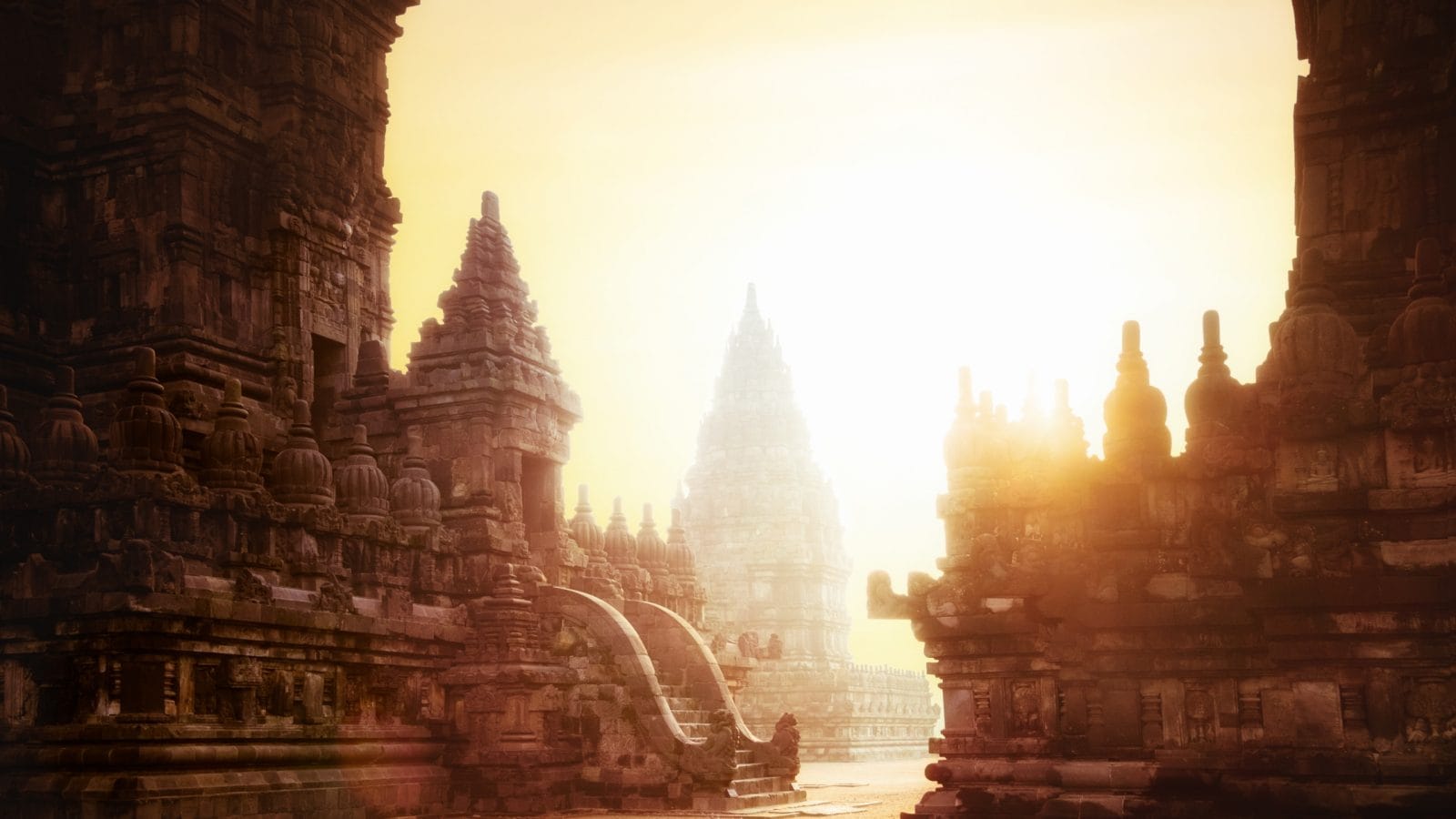
- The Visual Retelling: The construction of the Prambanan temple complex (Candi Prambanan) featured extensive bas-reliefs depicting the Ramayana. These carvings are considered among the most detailed and artistic renderings of the epic in the world.
- The Literary Retelling: The Kakawin Ramayana was composed in Old Javanese (Kawi). While the author remains officially unknown, Balinese tradition attributes the work to a sage named Yogeshwara.
10th – 16th Century: Expansion to Bali and Beyond
As Islam began to spread in Java, the Hindu-Javanese aristocracy and clergy migrated to Bali, carrying their manuscripts and artistic traditions with them. This ensured the survival of the Ramayana in its ritualistic form, preserved on Lontar (palm-leaf) manuscripts.
20th Century – Present: National Iconography
In modern Indonesia, the Ramayana has been elevated to a national cultural symbol. The Ramayana Ballet at Prambanan, performed against the backdrop of the 9th-century temples, has been staged regularly since 1961, symbolizing the epic’s status as a living heritage that transcends religious boundaries.
Supporting Data: Literary and Artistic Divergences
To understand the "Indonesian-ness" of their Ramayana, one must look at the specific data points where it deviates from the Indian standard.
The Omission of Uttara Kanda
One of the most significant differences cited by Vinod C. Khanna is the structural ending of the Kakawin Ramayana. In Valmiki’s version, the Uttara Kanda (the final book) contains the tragic exile of Sita and the eventual departure of Rama from the mortal world.
- The Javanese Choice: The Javanese version follows the Bhattikavya in dropping the Uttara Kanda entirely.
- The Result: The epic concludes on a triumphant note with Rama and Sita returning to Ayodhya to rule in harmony. This preference for a "happy ending" reflects a Javanese aesthetic that values balance (Rukun) and the restoration of cosmic order without the lingering tragedy of Sita’s second ordeal.
Linguistic Sophistication
The Kakawin Ramayana is written in Old Javanese, yet it is saturated with Sanskrit vocabulary. Research indicates that nearly 25% to 30% of the words in the Kakawin are of Sanskrit origin, yet the grammatical structure remains Austronesian. This linguistic hybridity created a "high courtly" language that elevated the status of Javanese literature to be on par with Sanskrit classics.
The Role of the Punokawan
In Indonesian shadow puppetry (Wayang), the story introduces characters entirely absent from the Indian original: the Punokawan or clown-servants (Semar, Petruk, Gareng, and Bagong). These characters act as intermediaries between the divine heroes and the common audience, providing comic relief and philosophical commentary, further grounding the epic in local Javanese life.
Official Responses: Perspectives from the Experts
The JLF session provided a platform for three distinct scholarly voices to weigh in on the importance of this cross-cultural phenomenon.
William Dalrymple: The "Indosphere"
Dalrymple, a historian known for his work on the intersection of cultures, argued that the Indian public is often unaware of the "Indosphere"—the vast region of Southeast Asia that was deeply influenced by Indian culture. "It is a remarkable thing that most Indians are unaware of," he stated, pointing out that the sophistication of Indonesian monuments often exceeds those found in India from the same period. He framed the Ramayana as a bridge that once united a massive geographical expanse through shared aesthetics and philosophy.
Vinod C. Khanna: The Scholar-Diplomat’s View
Khanna, a former diplomat, focused on the literary merit of the Kakawin. He challenged the notion that the Javanese version is a "derivative" work. "It is a work of most impressive transcreation," Khanna remarked. He highlighted the "drama" inherent in the Javanese version and the meticulousness with which the Balinese people have preserved these texts on palm-leaf manuscripts for centuries, ensuring that the Kakawin did not vanish like many ancient texts in India.
Malini Saran: The Arts as a Living Archive
Saran delved into the visual and performing arts, explaining that the Ramayana survived because it was not confined to books. "It was through their portrayal in the robust and visual performing arts of Java and Bali that the stories of Ram, Sita, Ravan, and Hanuman lived on," she explained. Saran noted that the "inherent qualities" of the epic—to entertain, instruct, and edify—allowed it to flourish in diverse settings, from the royal courts of the Sultans to the smallest village courtyards.
Implications: A Model for Cultural Pluralism
The endurance of the Ramayana in Indonesia carries significant implications for modern cultural diplomacy and the study of religious syncretism.
1. Cultural Identity in a Globalized World
The Indonesian Ramayana serves as a prime example of how a culture can adopt foreign influences without losing its soul. Indonesia did not simply "copy" India; it "interpreted" India. This process of indigenization allowed the Ramayana to become a Javanese story, proving that cultural heritage is not a static relic but a fluid, living entity.
2. Religious Harmony and Secularism
Indonesia’s ability to embrace the Ramayana as a "national cultural treasure" despite being a Muslim-majority nation offers a powerful lesson in pluralism. In Indonesia, the Ramayana is viewed through a cultural and ethical lens rather than a purely sectarian one. This allows a Muslim performer to play the role of Rama or Hanuman with deep reverence for the artistic tradition, separating theological belief from cultural heritage.
3. The Future of Indo-Pacific Relations
As India looks to strengthen its "Act East" policy, the shared heritage of the Ramayana provides a potent tool for "soft power" diplomacy. Recognizing and celebrating the Indonesian version of the epic can foster deeper bilateral ties based on mutual respect for each other’s unique interpretations of shared history.
4. Preservation of Endangered Literature
The session at JLF 2022 also highlighted the fragility of this heritage. The reliance on palm-leaf manuscripts in Bali underscores the need for digital preservation efforts. As the authors noted, the "laborious copying and recopying" by generations of Balinese is the only reason these 9th-century stories are available today.
In conclusion, the discussion at the Jaipur Literature Festival reaffirmed that the Ramayana is a global epic. In the hands of the Javanese and Balinese, it became a mirror reflecting their own values, flora, fauna, and social structures. As Malini Saran aptly summarized, the "malleability" of the story gave local artists the freedom to make the material their own, creating a legacy that continues to leave an indelible impression on the sands of time across the Indian Ocean.
