

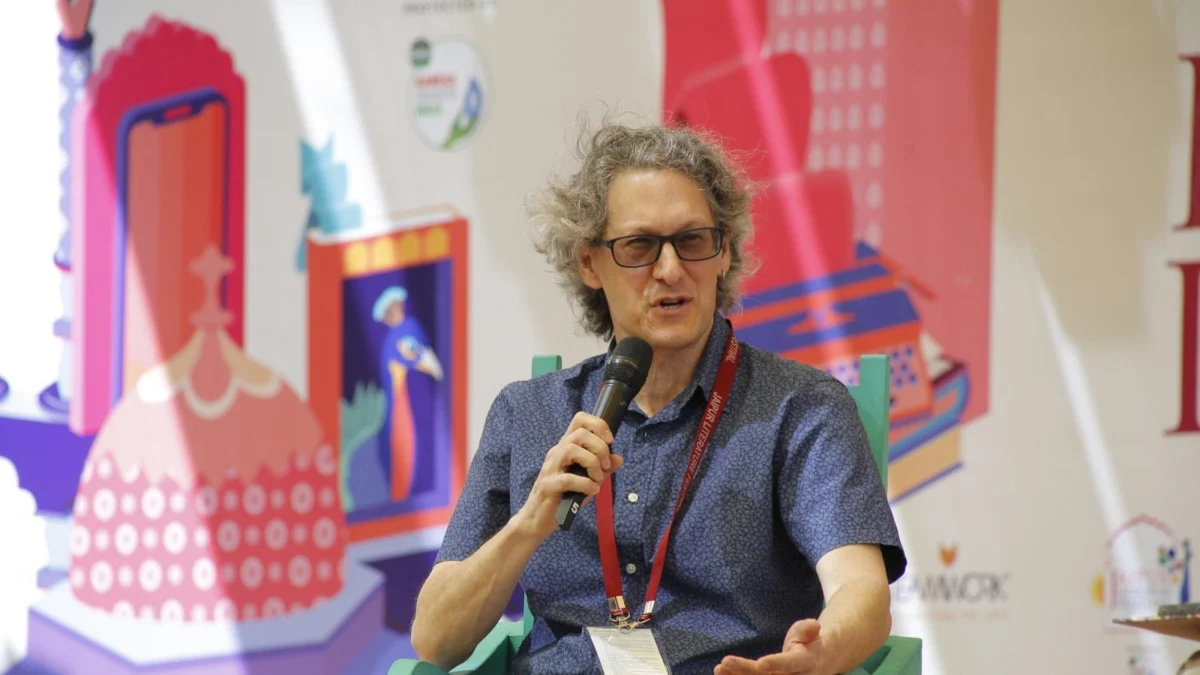
The intersection of history and modern politics has become one of the most volatile battlegrounds of the 21st century. As nations grapple with shifting identities and global standing, the past is frequently resurrected, sanitized, and repurposed to serve contemporary agendas. At the forefront of this intellectual discourse is Marc David Baer, a renowned historian and author whose work challenges long-held perceptions of the Ottoman Empire and its place in global history.
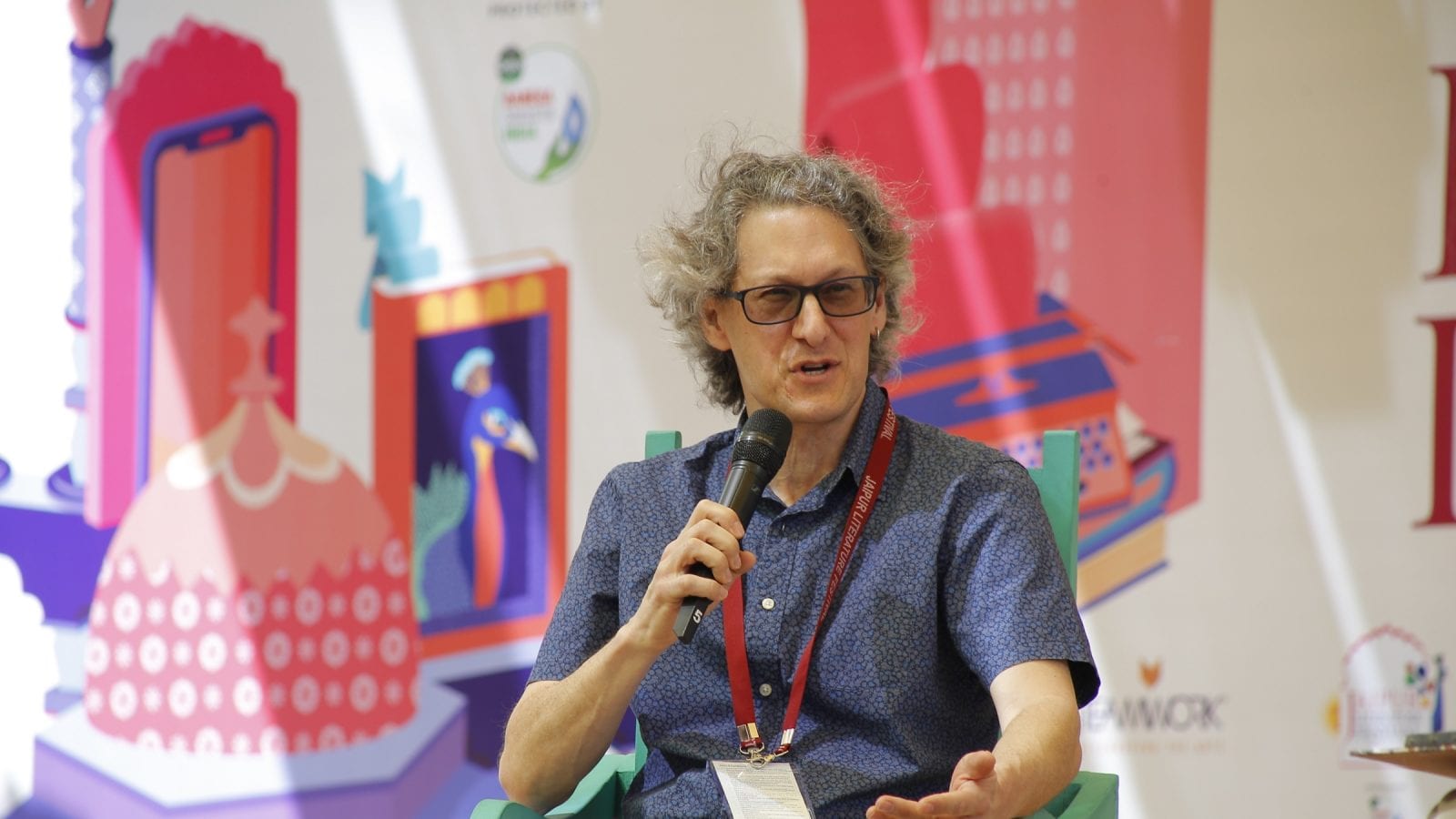
During his appearance at the Jaipur Literature Festival, Baer delved into the themes of his latest work, The Ottomans: Khans, Caesars and Caliphs. His insights provide a window into why the "culture wars" are currently being won by those who romanticize the past, and how imperialist ideals continue to resonate in places as diverse as the United Kingdom and Pakistan.
Main Facts: The Revisionist View of the Ottoman Empire
Marc David Baer’s scholarship seeks to dismantle the "decline thesis"—the historical narrative suggesting that the Ottoman Empire began a slow, inevitable decay following the death of Suleiman the Magnificent in the 16th century. Baer argues that this perspective is not only reductive but also rooted in a Western-centric view that ignores the empire’s continued adaptability and influence well into the modern era.
In his discussions, Baer highlights several key facts:
- The Persistence of Power: The Ottoman Empire remained a sophisticated, evolving global power long after the 16th century, navigating complex European and Asian geopolitics.
- History as a Tool: Political leaders have historically used—and continue to use—the past to bolster their legitimacy. Baer points to Sultan Abdul Hamid II as a prime example of a ruler who "refurbished" history to secure popular support.
- The Culture War Dilemma: Baer posits that liberal or "left-leaning" thinkers struggle in culture wars because they approach history with a critical, often self-reflective lens, whereas the "right" uses history to build a sense of pride and national cohesion, regardless of historical nuance.
Chronology: From the Rise of the Ottomans to Modern Appropriation
To understand Baer’s arguments, one must look at the timeline of Ottoman history and its subsequent reinterpretation in the 20th and 21st centuries.
The Era of Expansion and Adaptation (1300–1800)
The Ottoman state began as a small principality (beylik) in Anatolia and evolved into a massive empire spanning three continents. Contrary to the idea of a stagnant state, the Ottomans were constantly innovating, incorporating Byzantine administrative structures and European military technologies.
The 19th Century: The Invention of Tradition
As the empire faced internal and external pressures in the 1800s, Sultan Abdul Hamid II recognized the power of symbolic history. He famously refurbished the tombs of the empire’s founders, Osman and Orhan, to create a tangible link between the 13th and 19th centuries. This was not merely an act of preservation but a calculated political move to foster "Pan-Islamism" and consolidate his role as the Caliph of the Muslim world.
The 20th Century: The Fall and the Narrative of Decline
Following World War I and the rise of the Turkish Republic under Mustafa Kemal Atatürk, the Ottoman past was largely sidelined in favor of a secular, nationalist Turkish identity. However, the Western "decline thesis" persisted, characterizing the late Ottoman period as that of the "Sick Man of Europe."
The 21st Century: The Neo-Ottoman Revival
In recent decades, particularly under the leadership of Recep Tayyip Erdoğan in Turkey, there has been a resurgence of "Neo-Ottomanism." This period is characterized by the popularization of Ottoman history through media and the use of imperial imagery to project power on the global stage.
Supporting Data: Imperial Nostalgia in the UK and Pakistan
Baer’s analysis extends beyond the borders of Turkey, examining how "imperialist ideals" find fertile ground in nations navigating their place in a post-colonial world.
The Case of the United Kingdom
Baer observes that in England, historical figures like Winston Churchill are treated as untouchable icons. While critical historians point to Churchill’s documented racism and his role in the Bengal Famine of 1943, the political right views such critiques as an attack on national identity.
- The Psychological Factor: As the UK’s global influence has diminished post-Brexit, there is a measurable trend of looking back to the "glory days" of the British Empire.
- The Conflict: Critical history vs. Celebratory history. Baer argues that when the left analyzes the flaws of empire, it is seen as "unpatriotic," making it difficult to win the narrative battle against a right-wing platform that offers a sense of lost grandeur.
The Case of Pakistan and Dirilis: Ertugrul
One of the most fascinating modern phenomena is the popularity of the Turkish television series Dirilis: Ertugrul in Pakistan. The show, which depicts the life of the father of the Ottoman Empire’s founder, became a cultural sensation, endorsed by Pakistan’s top political leadership.
- Identity Seeking: Baer suggests that Pakistanis, living in a "middle-sized" country with various internal challenges, find solace in the "dream" of a time when Muslims ruled East and West.
- Transnational Solidarity: The show provides a template for an Islamic imperial identity that transcends modern borders, offering a sense of belonging to a powerful, historical civilization.
Official Responses and Expert Analysis: Ottomans vs. Mughals
The debate over imperial history often leads to comparisons between the great Islamic empires. Baer offers a comparative analysis of the Ottomans and the Mughals, particularly regarding their methods of integration and religious conversion.
The Eclecticism of the Mughals
In the context of the current political climate in India, where the Mughal legacy is often under scrutiny, Baer provides a nuanced perspective. He notes that the Mughals were exceptionally eclectic. Despite being a minority Muslim ruling class, they integrated Hindus and Shias into the highest levels of the imperial administration. Baer suggests that, in some respects, the Mughals were more inclusive of the majority population than the Ottomans were of theirs.
The Ottoman Conversion Rate
While the Ottomans also ruled over a diverse population—largely Christian for many centuries in the Balkans—Baer points out that they were more successful in converting populations to Islam than the Mughals were in India. This difference in "eclecticism" and conversion rates provides a complex picture of how these empires maintained control and legitimacy.
The Role of Critical History
Experts in the field of Ottoman studies have largely moved toward Baer’s perspective, acknowledging that the empire was a "dynamic" rather than a "declining" entity. However, the challenge remains in translating this academic nuance into the public sphere, where "invader" and "influencer" are often used as binary, politically charged labels.
Implications: The Future of the Past
The weaponization of history, as described by Marc David Baer, has profound implications for the future of global politics and social cohesion.
1. The Polarization of National Identity
When history is used as a tool for culture wars, it creates a binary society. On one side are those who view history as a source of unalloyed pride, and on the other are those who view it as a site of trauma and oppression. This polarization makes it nearly impossible to have a balanced national conversation about the past.
2. The Rise of "Alternative" Histories
As political leaders realize the power of narrative, we may see an increase in state-sponsored historical projects that prioritize myth-making over factual accuracy. The "refurbishing" of history seen in the 19th century is now happening through high-budget television dramas and social media campaigns.
3. The Challenge for Educators and Historians
For historians like Baer, the task is becoming increasingly difficult. In an era where "feeling" powerful through history is often preferred over "understanding" the complexities of the past, the critical historian is frequently cast as the villain.
4. Geopolitical Realignments
The shared "imperial nostalgia" between countries like Turkey and Pakistan could lead to new geopolitical blocs based on historical and religious identity rather than traditional economic or democratic ties.
In conclusion, Marc David Baer’s work serves as a warning and a guide. It warns of the dangers of using history as a political cudgel and guides us toward a more sophisticated understanding of the empires that shaped our modern world. Whether it is the legacy of Churchill in London, the Mughals in Delhi, or the Ottomans in Istanbul, the past is never truly dead; it is being rewritten every day to fit the needs of the present. The challenge for modern society is to look at these histories with both eyes open—recognizing the grandeur of their achievements without ignoring the weight of their shadows.
