

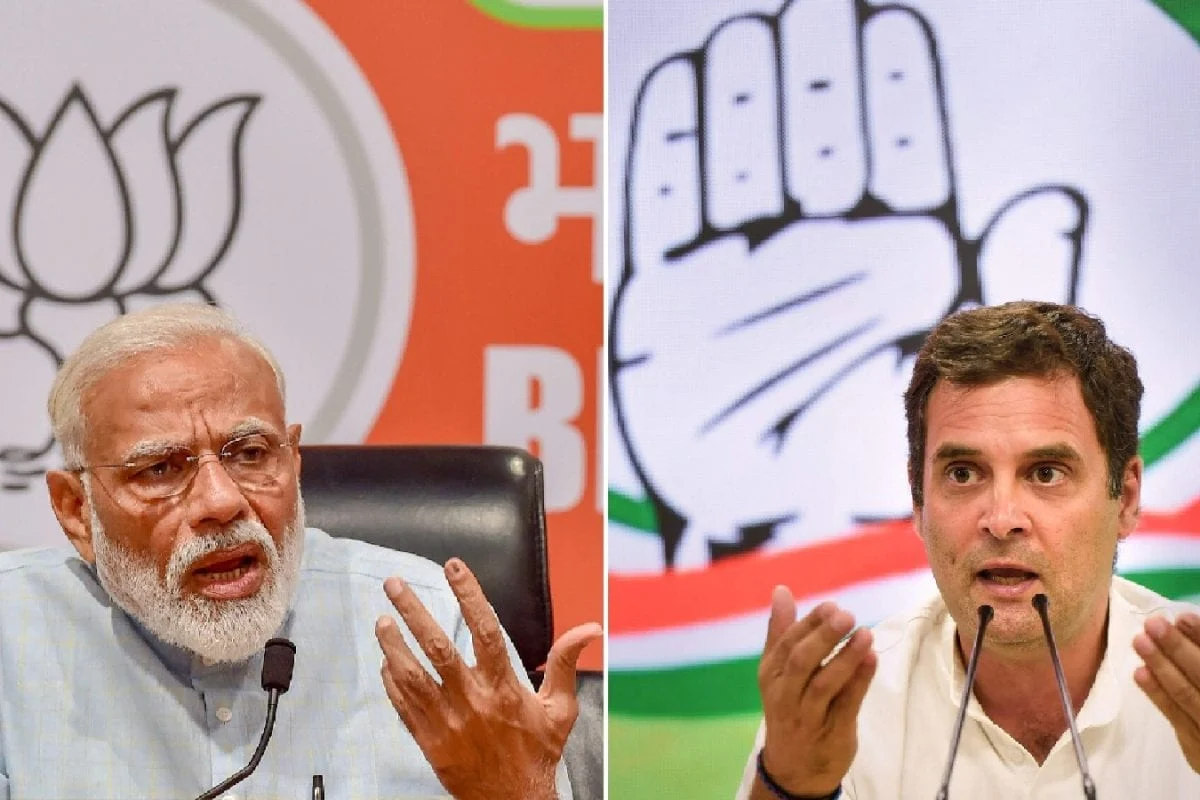
New Delhi, India – May 12, 2026 – In a move that has ignited a fresh political controversy, Leader of Opposition in the Lok Sabha, Rahul Gandhi, on Tuesday lodged a vehement dissent note during the high-stakes Prime Minister-led selection committee meeting tasked with appointing the next Director of the Central Bureau of Investigation (CBI). Gandhi’s protest, articulated in a sharply worded letter addressed to Prime Minister Narendra Modi, accused the government of reducing the critical selection process to a "mere formality" by denying him access to crucial candidate assessment reports, thereby undermining the integrity of the institution.
Gandhi’s dissent underscores persistent concerns regarding transparency and fairness in the appointment of heads to India’s premier investigative agency, an institution often at the nexus of political scrutiny and public trust. He alleged that the refusal to provide comprehensive "360-degree assessment reports" of eligible candidates was a deliberate tactic to ensure the selection of a "pre-decided candidate," effectively sidelining the constitutional role of the Leader of Opposition in the selection process.
Main Facts: A Challenge to Institutional Integrity
Rahul Gandhi’s formal dissent, recorded during the pivotal committee meeting, marks a significant moment in the ongoing discourse about the autonomy and impartiality of India’s key investigative agencies. The crux of his objection rests on what he describes as a systematic denial of a meaningful role in the selection exercise, which he contends is essential for upholding democratic checks and balances.
In his letter to Prime Minister Modi, who chairs the three-member committee (comprising the Prime Minister, the Leader of Opposition, and the Chief Justice of India or his nominee), Gandhi stated unequivocally, "I dissent in the strongest terms from the proceedings of the panel constituted to recommend the next Director of the Central Bureau of Investigation (CBI)." This strong language reflects the gravity with which the opposition views the alleged procedural lapses.
The primary allegation is that despite repeated written requests, Gandhi was not furnished with the self-appraisal reports and, more critically, the comprehensive 360-degree assessment reports of eligible candidates prior to the meeting. He contended that he was expected to review the appraisal records of as many as 69 candidates for the first time during the committee meeting itself, an impossible task for a thorough evaluation. The 360-degree reports, which provide a holistic view of a candidate’s performance, integrity, and leadership qualities from multiple sources, were "denied outright," according to Gandhi.
He further argued that withholding such vital documents, without any stated legal basis, directly compromises the impartiality and transparency that should be the hallmark of such a crucial appointment. For Gandhi, this procedural opacity inevitably leads to a predetermined outcome, stripping the selection committee of its legitimate function and transforming the Leader of Opposition into nothing more than a "rubber stamp." "The Leader of Opposition is not a rubber stamp. I cannot abdicate my constitutional duty by participating in this biased exercise," Gandhi asserted in his letter, encapsulating his firm stance against what he perceives as a subversion of due process.
Chronology of Disputed Proceedings
The recent dissent by Rahul Gandhi is not an isolated incident but rather the culmination of a series of earlier objections and attempts by the Leader of Opposition to ensure a transparent selection process for the CBI Director. The timeline reveals a pattern of communication and concerns raised by Gandhi that, according to him, have gone unaddressed by the government.
-
May 5, 2025: This date marks an earlier instance where Rahul Gandhi recorded a dissent note during a previous meeting concerning the CBI Director selection process. While the specifics of that dissent are not detailed in the current communication, its mention highlights a long-standing concern regarding the procedural integrity of these appointments. This earlier protest suggests that the issues raised on May 12, 2026, are not new but rather recurring challenges in the committee’s functioning.
-
October 21, 2025: Following his initial dissent, Gandhi took a more proactive step by writing directly to Prime Minister Narendra Modi. In this letter, he reportedly suggested specific measures aimed at fostering a "fair and transparent process" for the selection of the CBI chief. The lack of any discernible response to this communication, as alleged by Gandhi, further fueled his concerns about the government’s commitment to procedural fairness. This unanswered letter served as a critical precursor to his latest, more emphatic dissent.
-
May 12, 2026: The immediate context for the current controversy. On this day, the selection committee convened to finalize the recommendation for the next CBI Director. It was during this meeting that Rahul Gandhi formally recorded his dissent "in the strongest terms," reiterating his long-standing grievances regarding the non-provision of essential candidate assessment reports and the perceived pre-determination of the selection outcome. His letter to the Prime Minister, penned on the same day, meticulously detailed his objections and refusal to endorse what he called a "biased exercise."
This chronology paints a picture of a consistent effort by the Leader of Opposition to advocate for greater transparency and accountability in the appointment process, efforts that he claims have been systematically ignored or undermined, leading to the latest confrontation.
Supporting Data and Context: The CBI’s Critical Role and Transparency Debates
To fully grasp the implications of Rahul Gandhi’s dissent, it is essential to understand the pivotal role of the CBI, the statutory framework of its leadership selection, and the broader historical context of debates surrounding its autonomy and political independence.
The Central Bureau of Investigation: India’s Premier Investigative Agency
The CBI is India’s primary investigative agency, tasked with probing a wide array of criminal cases, including economic offenses, special crimes, cases of corruption, and matters of national and international ramifications. Its mandate is vast, encompassing investigations into serious criminal activities that often involve high-profile individuals, government officials, and sensitive political matters.
Given its immense powers and jurisdiction, the independence and impartiality of the CBI are paramount for maintaining public trust in the rule of law and the criminal justice system. A Director at its helm must be perceived as incorruptible, non-partisan, and free from any political influence. Any doubt cast on the integrity of the Director’s selection process inevitably erodes public confidence in the agency itself, potentially leading to questions about the credibility of its investigations and prosecutions.
The Selection Committee’s Mandate and the LoP’s Role
The Director of the CBI is appointed by the Central Government on the recommendation of a high-powered committee. This committee, as per the Delhi Special Police Establishment Act, 1946 (which governs the CBI), amended by the Lokpal and Lokayuktas Act, 2013, is comprised of:
- The Prime Minister (as Chairperson)
- The Leader of Opposition in the Lok Sabha
- The Chief Justice of India or a Judge of the Supreme Court nominated by him
The inclusion of the Leader of Opposition and the Chief Justice of India (or his nominee) is a crucial legislative safeguard designed to ensure that the appointment is not solely at the discretion of the executive. It aims to introduce an element of consensus, impartiality, and bipartisan scrutiny, thereby insulating the CBI Director from potential political pressures. The Leader of Opposition’s role is particularly significant as it represents the voice of parliamentary opposition and serves as a critical check against potential executive overreach in an appointment so vital to democratic accountability. By participating, the LoP is meant to ensure that the selected individual possesses impeccable credentials and is acceptable across the political spectrum, reinforcing the agency’s perceived neutrality.
The Significance of "360-Degree Assessment Reports"
Gandhi’s insistence on access to "360-degree assessment reports" is not merely a procedural demand but a substantive one. These reports are comprehensive evaluations that typically compile feedback from multiple sources, including superiors, peers, subordinates, and external stakeholders, providing a multi-dimensional view of a candidate’s performance, leadership style, ethical conduct, integrity, and suitability for a high-level position.
In the context of selecting the CBI Director, such reports are invaluable. They move beyond mere service records or self-appraisals to offer a more nuanced and objective understanding of a candidate’s character and capabilities. Denying access to these documents effectively limits the committee members, particularly the LoP, to a superficial review, making it challenging to identify potential biases, conflicts of interest, or past conduct issues that might compromise the integrity of the CBI. Without this comprehensive data, the selection process risks becoming a rubber-stamping exercise, as Gandhi alleges, rather than a rigorous evaluation.
Historical Allegations of CBI Misuse
Rahul Gandhi’s letter also makes a broader allegation that the Centre has "repeatedly misused" the CBI to target political opponents, journalists, and critics. This claim resonates with a long-standing narrative in Indian politics, where the CBI has often been dubbed a "caged parrot" or a "handmaiden" of the ruling party. Successive governments, across different political affiliations, have faced accusations of using the agency to pursue politically motivated investigations or to shield their allies from scrutiny.
These historical allegations underscore why the transparency and impartiality of the CBI Director’s appointment are so fiercely debated. When the head of such a powerful agency is perceived to be appointed through a non-transparent or politically manipulated process, it exacerbates existing fears about the agency’s independence and its potential for partisan deployment. Gandhi’s reference to these concerns highlights the deeper institutional implications of the current dispute.
Official Responses and the Government’s Stance
As of the latest reports, there has been no immediate official response from the Prime Minister’s Office (PMO) or the government regarding Rahul Gandhi’s dissent note. This silence is often characteristic of high-stakes governmental appointments, where the administration typically prefers to let the process unfold without engaging in public debates during sensitive selection phases.
In previous instances of dissent or criticism regarding such appointments, governments have generally maintained that due process is followed, that confidentiality is paramount for the integrity of the selection, and that all necessary information is provided to committee members in accordance with established norms. It is highly probable that the government’s eventual response, if any, would emphasize adherence to legal procedures and confidentiality protocols, perhaps suggesting that the LoP was provided with sufficient information deemed necessary for the deliberation, even if not all requested documents were made available. They might also argue that providing highly sensitive 360-degree assessment reports to all members might compromise the confidentiality of the sources or the candidates themselves.
However, the lack of a public rebuttal to Gandhi’s specific allegations – particularly the claim of outright denial of 360-degree reports and the assertion that previous letters went unanswered – will likely be interpreted by the opposition as an implicit acknowledgment of procedural gaps or a dismissive attitude towards legitimate concerns. The selection committee, despite the dissent, is expected to proceed with its recommendation, and the appointment of the next CBI Director will likely be announced soon.
Implications: Erosion of Trust and Political Fallout
Rahul Gandhi’s strong dissent over the CBI Director’s selection carries significant implications, extending beyond the immediate appointment to touch upon institutional integrity, political dynamics, and public trust in governance.
Erosion of Institutional Credibility
The most immediate and profound implication is the potential erosion of the CBI’s credibility. When the appointment of its highest-ranking officer is marred by allegations of a rigged process and lack of transparency from a key constitutional stakeholder like the Leader of Opposition, it inevitably casts a shadow over the agency itself. Public perception of the CBI’s autonomy, already fragile due to historical controversies, could further deteriorate. This distrust can hamper the agency’s effectiveness, as its investigations may be viewed with suspicion, regardless of their merits. For an agency whose authority relies heavily on public confidence in its impartiality, such disputes are deeply damaging.
Widening Political Rift
The dissent further exacerbates the already strained relationship between the ruling dispensation and the opposition. Rahul Gandhi’s allegations about a "pre-decided candidate" and the "misuse" of the CBI will undoubtedly be leveraged by the opposition to intensify their critique of the government’s approach to democratic institutions. This fuels the narrative that the government is centralizing power, undermining independent bodies, and stifling dissenting voices. The incident is likely to become another flashpoint in parliamentary debates and public discourse, deepening the political divide.
Precedent for Future Appointments
This episode could set a worrying precedent for future high-level appointments to critical independent bodies. If the Leader of Opposition’s role in statutory selection committees is perceived as being systematically undermined through the denial of crucial information, it weakens the institutional checks and balances designed to prevent executive overreach. It could embolden governments to adopt similar approaches in other key appointments, leading to a broader erosion of democratic oversight mechanisms.
Calls for Procedural Reforms
The controversy might reignite demands for more robust and explicit procedural guidelines for the selection of heads of independent agencies. There could be renewed calls from civil society, legal experts, and the opposition for legislative amendments to ensure mandatory provision of all relevant assessment reports to committee members, clear timelines for information dissemination, and perhaps even public disclosure of selection criteria and reasons for choices, wherever feasible without compromising national security or individual privacy. The current dispute highlights ambiguities or lacunae in the existing process that allow for such contentions.
Impact on Governance and Accountability
Ultimately, the dispute raises fundamental questions about governance and accountability in a democratic setup. The CBI, as a crucial instrument of justice, must operate beyond reproach. Any perception of political interference in its leadership selection undermines the very principles of fair governance. It suggests a system where appointments are driven by political expediency rather than merit and transparency, potentially impacting the ability of the agency to hold powerful individuals accountable without fear or favour.
In conclusion, Rahul Gandhi’s "strongest terms" dissent is more than a political statement; it is a serious challenge to the transparency and integrity of a vital institutional process. As the nation awaits the announcement of the next CBI Director, the controversy underscores the persistent struggle to safeguard the independence of India’s premier investigative agency against the shadow of political influence and procedural opacity.
