

Introduction: A Reshaping of the Political Landscape
In a dramatic turn of events that has profoundly reshaped India’s political landscape, recent Assembly elections have delivered a powerful message of public yearning for change. Days after the Bharatiya Janata Party (BJP) orchestrated a historic triumph, breaching the formidable fortress of the Mamata Banerjee-led Trinamool Congress (TMC) in West Bengal, Suvendu Adhikari ascended to power as the Chief Minister, inaugurating the BJP’s inaugural government in the state. Concurrently, in the southern bastion of Tamil Nadu, cinematic luminary-turned-politician Vijay embarked on his gubernatorial journey, having steered his nascent Tamizhaga Vetri Kazhagam (TVK) to an extraordinary electoral victory. These monumental outcomes, coupled with significant results in Kerala, collectively underscored a resonant theme across the nation: a discernible public appetite for fresh leadership and transformative governance.
As the dust settled on these pivotal elections, Urdu dailies across the country meticulously observed these shifting political sands in key states. Their analyses consistently highlighted the formidable tasks confronting the newly elected victors, emphasizing the imperative to translate electoral promises into tangible progress and fulfill the burgeoning aspirations of a populace weary of the status quo. The mandate, while diverse in its regional manifestations, pointed towards a collective desire for improved governance, economic stability, and a more inclusive political discourse. This article delves into the intricate details of these electoral shifts, the analyses presented by prominent Urdu newspapers, and the far-reaching implications for India’s democratic future.
West Bengal: The BJP’s Historic Breakthrough and a Call for Inclusivity
The Siasat Editorial’s Perspective on a Dream Realized
The Hyderabad-based Siasat, in its May 10 editorial, provided a keen insight into the stunning West Bengal election outcome. The daily meticulously highlighted the BJP’s unprecedented success in trouncing the TMC, thereby coming to power for the very first time in the state’s history. This victory, as articulated by Siasat, marked the realization of a long-cherished dream for the BJP: the successful penetration and capture of what it described as the Opposition’s "last citadel in east India." For decades, West Bengal had been a stronghold first of the Left Front and then the Trinamool Congress, seemingly impervious to the BJP’s national surge. The party’s persistent efforts, often characterized by high-stakes campaigns and intense political rhetoric, finally bore fruit, ushering in a new political era.
Suvendu Adhikari’s Ascent and PM Modi’s Mandate
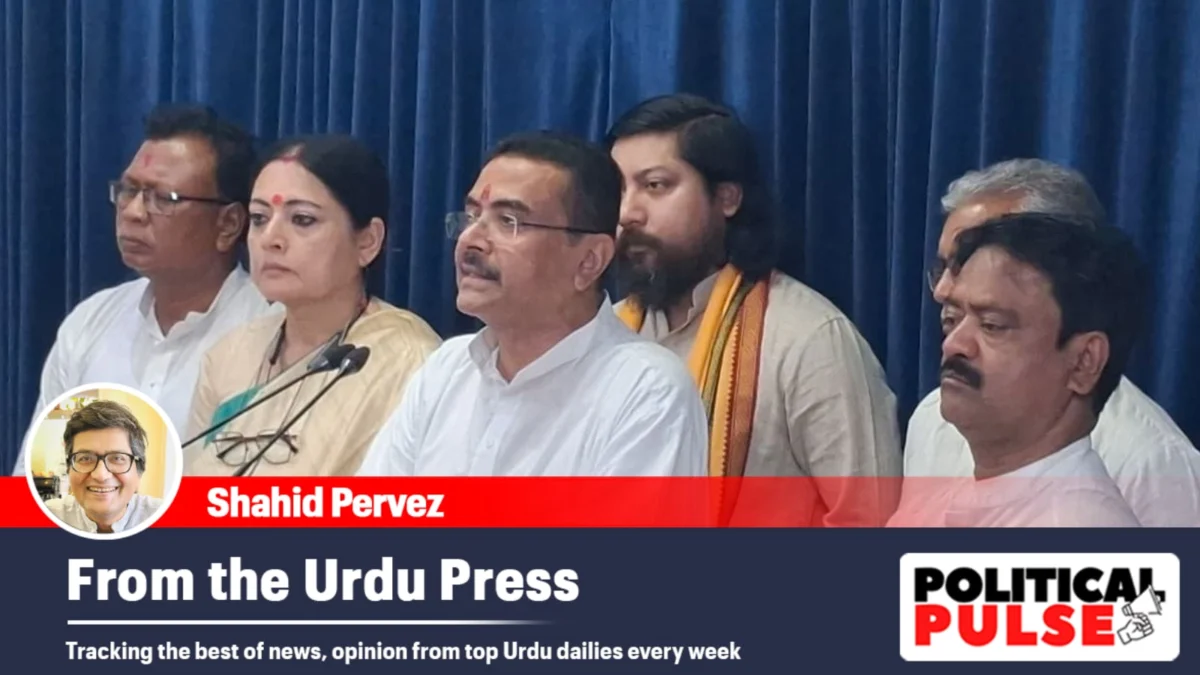
The editorial noted the significant moment of Suvendu Adhikari taking the helm as the state’s first BJP Chief Minister. Adhikari, a former stalwart of the TMC who had defected to the BJP, became a symbol of the party’s strategic recruitment and aggressive expansion. His elevation to the top executive post carried immense symbolic weight, signaling a definitive rupture with the state’s recent political past. Following the victory, Prime Minister Narendra Modi, hailing his party’s achievement, issued a profound call for a paradigm shift in state politics: "There should be change now from badla (retribution) to badlav (change)." This statement, emphasized by Siasat, was not merely a congratulatory message but a clear directive. The editorial underscored that the newly formed Adhikari government was morally and politically bound to adhere to this transformative vision set forth by the Prime Minister. It implored the new administration to move beyond the often-rancorous politics that had characterized Bengal’s electoral battles and embrace a more constructive and forward-looking approach to governance.
Post-Poll Concerns and Governance Imperatives
However, the euphoria of victory was quickly tempered by serious concerns. Siasat’s editorial did not shy away from addressing the eruption of post-poll violence in several parts of the state. This disturbing phenomenon triggered widespread alarm, as numerous TMC offices reportedly came under attack, and the minority community faced intimidation. The imagery of "bulldozers seen on the streets" evoked fears of state-sanctioned retribution and further exacerbated communal tensions. These events cast a shadow over the democratic process and raised urgent questions about law and order in the post-election phase.
Adding another layer of complexity, the editorial referred to allegations of large-scale electoral irregularities, particularly concerning the Election Commission’s (EC) controversial Special Intensive Revision (SIR) of electoral rolls and voter deletions. While acknowledging that "the election process has run its course, culminating in the formation of a new government," Siasat stressed the paramount responsibility now resting with the BJP government. "Now, it is incumbent on the BJP government to ensure peace and amity while upholding law and order across the state," the editorial asserted. It further urged the Adhikari administration to promptly initiate measures to fulfill its ambitious poll pledges, emphasizing the necessity of rolling out initiatives for "the progress and welfare of all people regardless of whether they voted for the BJP or not." This was a direct appeal for inclusive governance, moving beyond partisan divides and focusing on the collective good of all citizens.
Upholding Constitutional Values: A Blueprint for Governance
Siasat’s editorial eloquently articulated a fundamental principle of democracy: "Democracy is not about running a partisan government meant for any particular community." The daily firmly stated that any form of discrimination based on religion, caste, or class is "anathema to our Constitution," and that every government is constitutionally obligated to uphold these foundational tenets. This statement served as a crucial reminder of the secular and inclusive fabric of Indian democracy, particularly pertinent in a state with a significant minority population and a history of diverse cultural syncretism.
The editorial acknowledged the BJP’s sustained and often aggressive attempts to "clinch Bengal for a long time," noting that the party "also resorted to polarisation to achieve its objective." However, it drew a clear line between electoral strategy and responsible governance. Upon assuming the Chief Minister’s office, Adhikari was urged to "turn over a new leaf." Siasat unequivocally stated that his "past divisive remarks could not be the roadmap for his government." Instead, the editorial implored the new administration to align itself with "Bengal’s enduring culture and traditions," advocating for a governance model that "must take everyone along and move forward." This powerful call for unity and adherence to constitutional principles underscored the profound responsibilities inherent in governing a diverse and complex state like West Bengal, especially after a highly polarizing election. The challenge for Suvendu Adhikari and the BJP would be to transition from a campaign of opposition and mobilization to one of inclusive development and reconciliation.
Tamil Nadu: Vijay’s Stupendous Debut and a New Political Alignment
Siasat’s Analysis of TVK’s Victory and the Shattering of Dravidian Hegemony
In the southern state of Tamil Nadu, the electoral outcome proved equally seismic, heralding the arrival of a new political force. Siasat, in its May 9 editorial, meticulously detailed the remarkable success of C. Joseph Vijay, popularly known as ‘Vijay,’ in mustering the requisite numbers to secure a majority in the 234-member Tamil Nadu Assembly. The actor-turned-politician’s nascent party, the Tamizhaga Vetri Kazhagam (TVK), achieved an astonishing feat, securing 108 seats in its very first electoral outing. To cross the magical majority mark, TVK garnered crucial support from the Left parties, the Viduthalai Chiruthaigal Katchi (VCK), and significantly, the Congress party.
The editorial lauded the mandate received by Vijay and his TVK as "stunning," especially considering it was the party’s debut election. Siasat observed that Vijay’s meticulously crafted poll campaign and a populist manifesto resonated deeply with the masses. This widespread resonance enabled his party to galvanize support and rally people behind him, critically "distancing from both the Dravidian majors – the incumbent DMK and the principal Opposition AIADMK." For decades, Tamil Nadu politics had been dominated by these two regional behemoths, with power oscillating between them. Vijay’s meteoric rise represented a profound challenge to this entrenched Dravidian hegemony, signaling a potential new era in the state’s political narrative. His ability to connect with voters, despite his relatively recent entry into formal politics, underscored a desire among the electorate for alternatives to the traditional political establishments.
Political Realignment and 2029 Lok Sabha Implications
Vijay’s popularity among the masses was further highlighted by the speed of his ascent: "barely two years after founding the TVK he led it to power." This rapid trajectory not only established him as a formidable political leader but also caused a significant "churn in state politics." The most striking manifestation of this realignment was the Congress party’s decision to break its long-standing alliance with the DMK to join hands with Vijay’s TVK. This strategic pivot by the national party sent shockwaves through the political establishment. An "upset DMK" reacted by reportedly seeking a separate seating arrangement for its Members of Parliament (MPs) in the Lok Sabha, reflecting the bitterness of the split and the immediate impact on national alliances.
Siasat’s editorial astutely analyzed the broader implications of this political realignment, particularly for the upcoming 2029 Lok Sabha polls. It suggested that "the Congress’s move is aimed at boosting its future prospects in the state," indicating a calculated long-term strategy to gain a stronger foothold in Tamil Nadu by aligning with a rising star. The editorial further elaborated on the complex interplay of power and strategy, noting that Vijay’s success had reportedly prompted the "arch rivals DMK and AIADMK to come together in an attempt to keep him away from power." While these reported attempts ultimately "could not make much headway," they underscored the perceived threat posed by Vijay to the established order. The Congress’s decision to ally with Vijay was also framed as a "political compulsion… in order to keep the BJP at bay," highlighting the intricate national dynamics influencing state-level alliances. The political landscape of Tamil Nadu, long considered a bastion of regional parties, was now demonstrably more fluid and subject to wider national considerations.
Coalition Dynamics and Future Governance
The daily pointed out that the performance of the Vijay government and the trajectory of his popularity graph in the coming months would be crucial in shaping the electoral landscape leading up to 2029. The expectations from his government are exceptionally high, given his outsider status and the mandate for change. The editorial drew a parallel with Uttar Pradesh, "the country’s most politically-crucial state," where "arch rivals BSP and SP had aligned in the 2019 Lok Sabha polls to take on the BJP, but their bid had come a cropper." This historical context served as a cautionary tale, emphasizing that alliances, however strategic, do not guarantee success without strong performance.
In contrast, Siasat observed that "this time, the Congress sensed Tamil Nadu’s post-poll scenario quickly to make its move." This swift decision-making by the Congress, driven by both state-specific aspirations and national anti-BJP sentiment, demonstrated a newfound agility. The editorial concluded with a hopeful note, stating, "There are now high hopes that CM Vijay will leave no stone unturned to fulfil his pledges for the welfare of people." The coming years will test Vijay’s administrative capabilities and his ability to navigate the complexities of governance, manage coalition dynamics, and deliver on the aspirations that propelled him to power. His performance will not only determine his political future but also significantly influence the political trajectory of Tamil Nadu for years to come.
Economic Jitters: PM Modi’s Appeal and Public Worry
Urdu Times on Modi’s Call for Austerity
Beyond the realm of electoral politics, another significant development captured the attention of Urdu dailies: Prime Minister Narendra Modi’s unexpected appeal to the nation regarding economic prudence. The Mumbai-based Urdu Times, in its May 12 leader, meticulously reported on the Prime Minister’s public exhortation for citizens to reduce petrol and diesel consumption, increase the use of public transport, avoid non-essential foreign travel and gold purchases for a year, and even revert to "Covid-time habits" like work from home to save foreign exchange. This direct appeal from the highest office, aimed at fostering a sense of national austerity, understandably "caused worry among sections of the markets and the people." The editorial specifically noted the heightened anxiety among "Jewellery shop owners," particularly because "a wedding season is currently underway," a period typically marked by significant gold purchases. The timing of the appeal, therefore, had immediate and palpable economic repercussions.
Geopolitical Undercurrents and Economic Fallout
The Urdu Times editorial contextualized the Prime Minister’s appeal within a broader geopolitical crisis. It noted that the call for austerity came "in the backdrop of a crisis in West Asia following the United States-Israel’s war against Iran." This conflict, the editorial explained, had severely "choked shipping lines along the Strait of Hormuz, a critical conduit for global energy supplies." India, being a major importer of crude oil, is highly susceptible to disruptions in this vital waterway and global energy price volatility. Earlier, the editorial recalled, PM Modi had addressed Parliament, exhorting people to "remain prepared to face the long-term impact of the West Asia war." This earlier warning, coupled with the latest appeal, had already created a sense of unease. "This had then also caused fears among people as they recalled the Covid-era distress and lockdown trauma which had forced many people to return to their villages," the edit stated. The memory of the economic hardship and uncertainty from the pandemic era amplified the public’s anxiety regarding a potential new wave of economic challenges.
Opposition Scrutiny and Government Accountability
The Prime Minister’s appeal, while framed as a call for collective national effort, did not escape the scrutiny of the Opposition. The Urdu Times highlighted that the daily states that Modi’s pitch had created a palpable "sense of uncertainty for many people." The Opposition swiftly criticized the government, alleging that it had "failed to safeguard people’s interests on various fronts amid a drifting economy and falling rupee." This criticism pointed to deeper structural issues within the Indian economy, suggesting that the government’s policies might be contributing to the very problems it was now asking citizens to mitigate.
Furthermore, the Opposition "flagged the timing of Modi’s appeal, asking him why he did not issue it earlier when he was engrossed in election campaigning." This line of attack questioned the sincerity and urgency of the Prime Minister’s economic concerns, implying that political considerations had overshadowed national economic imperatives. The Opposition’s critique underscored a growing demand for greater government accountability and proactive measures to address economic challenges, rather than relying solely on public appeals for austerity. The debate surrounding this appeal highlighted the delicate balance between national interest, public sentiment, and political strategy in managing India’s complex economy.
Broader Economic Implications
The Prime Minister’s call for austerity, while perhaps intended to instill a sense of shared responsibility, inadvertently created a ripple effect of uncertainty across various sectors. The immediate worry among jewelers was just one example. Such appeals can often lead to a slowdown in consumer spending, impacting demand and potentially dampening economic growth. For an economy that relies significantly on domestic consumption, any significant reduction in spending, even if voluntary, could have broader consequences. Moreover, the emphasis on reducing non-essential foreign travel and gold imports, while aimed at conserving foreign exchange reserves, also signals underlying concerns about the nation’s economic resilience in the face of global shocks. The Opposition’s criticism about a "drifting economy and falling rupee" further compounded these concerns, pushing the narrative towards questioning the government’s overall economic management rather than just the immediate crisis response. The discourse around this appeal, therefore, extended beyond merely saving foreign exchange to a broader evaluation of India’s economic health and policy direction.
The Underlying Message: Public Yearning for Change
The narratives emanating from West Bengal, Tamil Nadu, and implicitly, Kerala, coalesce into a singular, powerful message: the Indian electorate is increasingly dynamic, discerning, and unafraid to challenge established political orders. The "public yearning for change," as articulated by the Urdu dailies, is not merely a desire for new faces but a deeper demand for responsive governance, accountability, and the fulfillment of promises.
Kerala’s Role in the Narrative of Change
While the original article does not detail the specific outcome in Kerala, its inclusion alongside West Bengal and Tamil Nadu signifies that the results there also contributed to this overarching theme of change. Whether it was a decisive mandate for an incumbent based on perceived performance, or a shift towards new political configurations, Kerala’s voters, much like their counterparts elsewhere, demonstrated a clear intent to shape their political future actively. This collective sentiment across diverse states underscores a maturation of the Indian electorate, where performance, progress, and effective leadership are increasingly prioritized over traditional loyalties. The results reflect a nation where voters are actively seeking solutions to contemporary challenges, from economic stability to social harmony, and are willing to experiment with new leadership to achieve these goals.
A Mandate for Performance and Inclusivity
In essence, these elections represent a robust mandate for performance-oriented and inclusive governance. In West Bengal, the BJP government under Suvendu Adhikari faces the formidable task of delivering on its development agenda while simultaneously fostering peace and unity in a politically charged environment. The Siasat editorial’s stern reminder to uphold constitutional values and move beyond divisive rhetoric will be a critical benchmark for his administration. Similarly, in Tamil Nadu, CM Vijay and his TVK, supported by a novel coalition, bear the immense responsibility of translating their widespread popularity into tangible welfare measures and sustained progress. His ability to navigate the complexities of state administration and fulfill his debut promises will define not only his political legacy but also the future trajectory of Tamil Nadu politics, potentially inspiring similar challenges to established powers elsewhere.
The economic discourse triggered by PM Modi’s appeal further illustrates the public’s heightened expectations from their leaders. Citizens are not just looking for electoral victories; they are demanding economic stability, protection against external shocks, and transparent governance that prioritizes their welfare. The criticism from the Opposition regarding the timing and efficacy of the government’s economic policies reflects a growing demand for proactive measures and accountability in managing national resources and safeguarding livelihoods.
Conclusion: A New Era of Indian Democracy
The recent Assembly elections and the subsequent political and economic discussions, as captured by the insightful analyses of Urdu dailies, mark a significant juncture in India’s democratic journey. They highlight a dynamic political landscape where traditional strongholds can be breached, new political stars can emerge rapidly, and economic anxieties can quickly translate into public dissatisfaction. The victors in these elections, from Suvendu Adhikari in West Bengal to C. Joseph Vijay in Tamil Nadu, have been entrusted with a clear, albeit challenging, mandate. Their success will hinge not only on their ability to deliver on electoral promises but also on their commitment to fostering inclusive governance, upholding constitutional principles, and addressing the diverse aspirations of their constituents.
The theme of "public yearning for change" resonates deeply across these diverse states, signaling a new era where voters are increasingly empowered and demanding. The implications for future elections, including the pivotal 2029 Lok Sabha polls, are profound. Political realignments, the rise of new leadership, and an intensified focus on governance and economic performance are likely to shape India’s political narrative for years to come. As the nation navigates these shifts, the imperative for political leaders to move beyond rhetoric and towards substantive action remains paramount, ensuring that the promise of change translates into tangible progress for all.
