

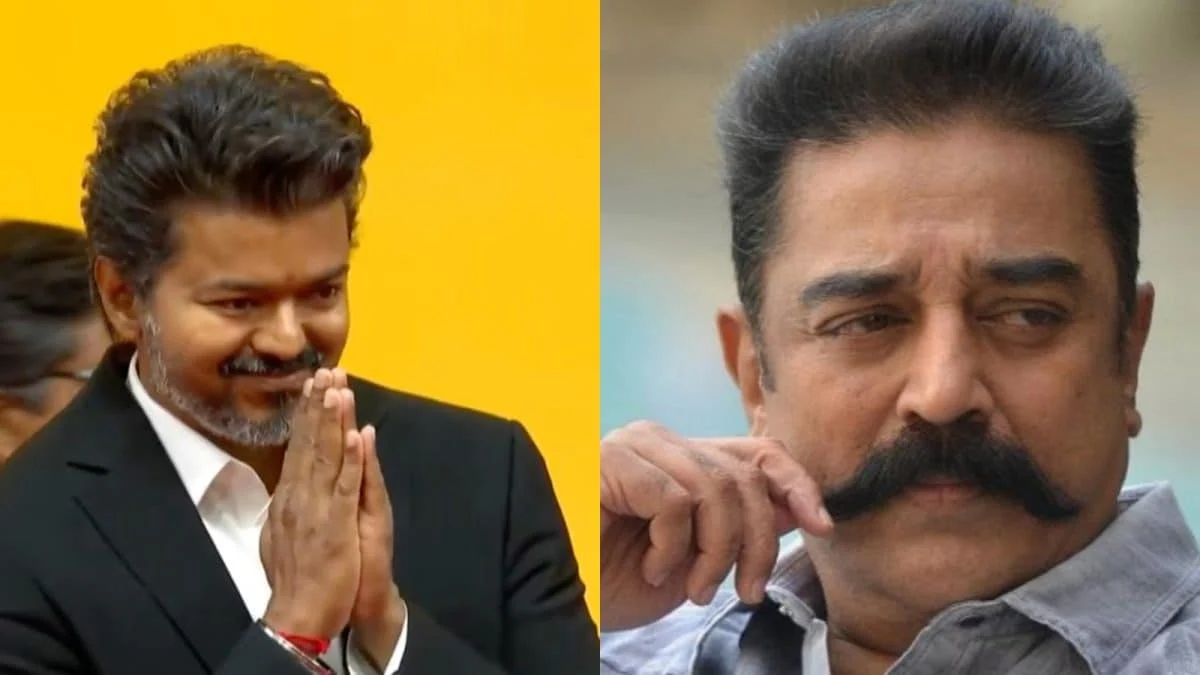
Chennai, India – May 13, 2026 – A significant political milestone was achieved in Tamil Nadu today as the newly formed Tamil Nadu Victory League (TVK) government, led by Chief Minister Thalapathy Vijay, successfully secured a crucial trust vote in the state assembly. The victory, a testament to Chief Minister Vijay’s nascent leadership, has been met with widespread acclaim, most notably from veteran actor and politician Kamal Haasan. Haasan, a prominent figure in Tamil cinema and the founder of Makkal Needhi Maiam, extended his heartfelt congratulations to Chief Minister Vijay, emphasizing the significance of a public figure transitioning into governance and the progressive nature of the new government’s initial policy decisions.
The trust vote, held amidst a politically charged atmosphere, saw the TVK government garner the support of 25 rebel AIADMK MLAs, comfortably surpassing the required majority. The opposition DMK staged a walkout, citing allegations of horse-trading, claims which were vehemently denied by Chief Minister Vijay. This early legislative success marks a critical step in solidifying the TVK’s mandate and paving the way for their ambitious agenda.
Kamal Haasan, speaking to the media outside Chennai airport, articulated his admiration for Chief Minister Vijay’s entry into politics and his immediate focus on public welfare. "My congratulations to the new government of Tamil Nadu," Haasan stated. "The closure of 717 liquor shops is a welcome move. It has been discussed for a long time and has now been implemented. It is appreciable."
Haasan’s remarks underscored a broader sentiment that transcends the traditional boundaries of entertainment and politics. He urged the public and the media alike to look beyond Chief Minister Vijay’s celebrated status as a film star. "We should not just see Vijay as a film star," Haasan emphasized. "He has other responsibilities as well. Anyone can come to politics from any field. It is a matter of pride that Vijay has come to power from our industry." This statement carries significant weight, coming from an actor who himself transitioned into active politics, understanding firsthand the challenges and opportunities that lie within such a shift.
A Government’s First Bold Move: Tackling Alcohol Sales
Chief Minister Vijay’s government wasted no time in demonstrating its commitment to social reform. One of the most significant early actions taken by the administration was the directive to close over 700 liquor shops situated in close proximity to educational institutions and places of worship across the state. This decision, lauded by Kamal Haasan as a "welcome move," addresses a long-standing public concern and reflects a progressive approach to governance.
Kamal Haasan, in a detailed post on his X handle (formerly Twitter), elaborated on his appreciation for this policy. He highlighted that the closure of these 717 liquor shops was a direct response to the expectations of Tamil families. "Even as the expectation of Tamil families was that liquor retail shops near places of worship, educational institutions, and bus stands should be removed, Hon’ble Tamil Nadu Chief Minister, Brother Vijay @TVKVijayHQ has taken this action immediately upon assuming office," Haasan wrote.
He further articulated a vision for alcohol policy in Tamil Nadu, suggesting that liquor sales should not be a primary revenue driver for the government. "Liquor sales should never be a function of the government; the government must take responsibility for regulating the flow of alcohol," he stated. "The Tamil Nadu government must move towards this position. Today, it has begun by closing 717 liquor shops. This number must be increased. This action must be continued. Congratulations."
This stance from Haasan suggests a deeper philosophical alignment with Chief Minister Vijay’s reformist agenda. It signals a potential shift in the state’s approach to revenue generation and public health, prioritizing societal well-being over immediate financial gains from alcohol sales. The call to "increase this number" and "continue this action" indicates a desire for a more comprehensive and sustained effort to curb the influence of alcohol in public life.
Chronology of Key Events: From Swearing-In to Trust Vote
The political landscape in Tamil Nadu has been dynamic in recent weeks, culminating in the current government’s ascent and subsequent affirmation of power.
-
Early May 2026: Following a period of political maneuvering and speculation, Thalapathy Vijay was sworn in as the Chief Minister of Tamil Nadu, leading the Tamil Nadu Victory League (TVK) party. His swearing-in ceremony marked a new chapter in the state’s political history, with many anticipating the direction his government would take.
-
May 10, 2026 (Approximate): Prior to the trust vote, news emerged of Chief Minister Vijay’s decision to order the closure of over 700 liquor shops near educational institutions and temples. This early executive action immediately garnered attention and praise from various quarters, including the film fraternity.
-
May 11, 2026: Kamal Haasan publicly acknowledged and commended Chief Minister Vijay’s decision regarding the liquor shops, expressing his support through his X handle. This marked an early endorsement of the new government’s policy initiatives.
-
May 13, 2026 (Morning): The Tamil Nadu Legislative Assembly convened for a crucial trust vote. The TVK government faced its first major test of legislative strength.
-
May 13, 2026 (Afternoon): The TVK government comfortably secured the trust vote with the support of 25 rebel AIADMK MLAs. The DMK opposition walked out during the proceedings.
-
May 13, 2026 (Evening): Shortly after the trust vote victory, Kamal Haasan was seen speaking to the media outside Chennai airport, offering congratulations to Chief Minister Vijay for the trust vote win and reiterating his praise for the government’s decisive action on liquor shops.
This chronological overview highlights the swiftness with which Chief Minister Vijay’s government has acted and the significant political backing it has managed to secure in its initial days.
Supporting Data and Context: The Liquor Policy Landscape
The decision to close 717 liquor shops near educational institutions and temples is not an isolated incident but reflects a broader societal discourse in Tamil Nadu regarding alcohol consumption and its impact. For years, various social organizations and political groups have advocated for stricter regulations and a reduction in the availability of alcohol, citing concerns about public health, road safety, and social harmony.
Tamil Nadu has historically been a significant market for alcohol sales, with the state exchequer heavily reliant on excise duties. However, this reliance has also led to public criticism and calls for diversification of revenue streams. The current government’s move can be interpreted as a step towards addressing these criticisms and prioritizing public welfare.
The number 717 represents a substantial portion of the liquor retail outlets in the state. While specific data on the exact number of liquor shops in Tamil Nadu is not readily available in the provided text, the scale of this closure indicates a significant policy shift. The prompt closure of shops near sensitive areas like schools and temples demonstrates a commitment to immediate impact and a proactive approach to governance.
Furthermore, Kamal Haasan’s mention of the need to "increase this number" suggests that the initial 717 shops are perhaps a starting point, and the government might be considering further restrictions or a phased withdrawal from alcohol retail in the future. This aligns with the broader societal demand for a more responsible approach to alcohol policy.
Official Responses and Political Implications
The trust vote victory has solidified Chief Minister Vijay’s position and provided his government with a crucial mandate to implement its agenda. The support from the rebel AIADMK MLAs, while potentially controversial, has been instrumental in the TVK government’s early success.
The DMK’s walkout and allegations of horse-trading, though rejected by the government, highlight the intense political scrutiny and competition that the new administration is likely to face. The stability of the government will depend on its ability to maintain the support of its allies and navigate the political opposition effectively.
Kamal Haasan’s public endorsements carry considerable weight. His acknowledgment of Vijay as a leader beyond his cinematic persona and his praise for the government’s policy decisions lend legitimacy and support to the new administration. As a prominent voice in Tamil Nadu, Haasan’s approval can influence public perception and garner broader acceptance for the TVK government’s initiatives.
The implications of this early success are significant:
- Strengthened Mandate: The trust vote provides Chief Minister Vijay with the necessary legislative backing to pursue his policy objectives.
- Social Reform Focus: The decisive action on liquor shops signals a government prioritizing social welfare and public health.
- Cross-Industry Appeal: Kamal Haasan’s endorsement highlights the potential for broader appeal and acceptance of a leader transitioning from the entertainment industry to politics.
- Political Stability: While facing opposition, the government has demonstrated its ability to secure legislative support, suggesting a period of relative stability.
- Future Policy Direction: The government’s initial actions indicate a progressive and reform-oriented approach, setting the tone for future policy decisions.
The transition of a popular film star into the highest office of a state is a rare phenomenon, and Chief Minister Vijay’s early moves, coupled with the support of influential figures like Kamal Haasan, suggest a potentially transformative period for Tamil Nadu politics. The coming months will be crucial in observing how the TVK government builds on this momentum and addresses the myriad challenges and opportunities that lie ahead. The success of its progressive policies, like the reduction of liquor outlets, will be closely watched as indicators of its commitment to a more equitable and healthier society.
