

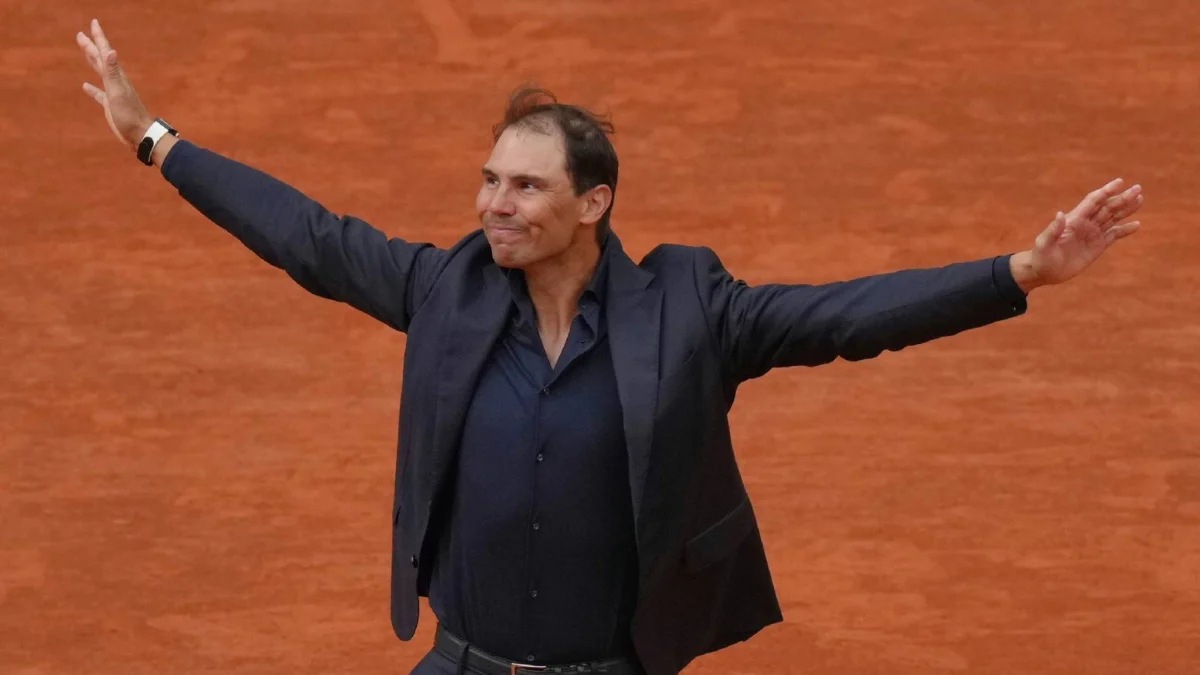
Madrid, Spain – May 14, 2026 – In a development that sent ripples through both the tennis and football worlds, legendary athlete Rafael Nadal has definitively quashed burgeoning speculation linking him to the presidency of Spanish football giants Real Madrid. The 22-time Grand Slam champion, a fervent supporter and honorary member of the illustrious club, took to social media to clarify his position, just hours after current incumbent Florentino Perez announced snap elections for the coveted role.
Nadal’s unambiguous denial comes at a pivotal moment for Real Madrid, a club navigating a rare period of sporting disappointment and facing an electoral challenge from its long-serving president. The confluence of Nadal’s iconic status and the high-stakes political landscape at the Santiago Bernabéu had fueled widespread conjecture, making his statement a crucial intervention in an unfolding drama.
"I have read reports that link me as a possible candidate for the Real Madrid presidency," Nadal wrote on his social media platforms, his message quickly reverberating across global news outlets. "I would like to clarify that these reports are not true." The succinct statement left no room for ambiguity, putting an immediate end to the fervent whispers that had begun to circulate among fans and sports media alike.
This clarification not only steadies the immediate political waters surrounding the upcoming Real Madrid elections but also reinforces Nadal’s current focus, likely on his ongoing transition from a storied playing career and his commitment to his personal and professional ventures outside the cutthroat world of football administration.
1. Main Facts: The Denials and the Electoral Call
The core of this unfolding narrative lies in two significant, yet distinct, pronouncements. Firstly, the unequivocal denial from Rafael Nadal regarding any immediate aspirations for the Real Madrid presidency. A global icon revered for his integrity and dedication, Nadal’s words carry immense weight. His statement directly addresses a flurry of media reports and public conjecture that had gained considerable traction, particularly given his well-documented and deeply passionate affiliation with the club.
Secondly, this denial arrives on the heels of an unexpected and highly charged announcement from Florentino Perez, the powerful and long-serving president of Real Madrid. Perez, who has helmed the club through two transformative eras (2000-2006 and 2009-present), declared that elections would be held, effectively throwing down a gauntlet to any potential challengers. This declaration, delivered amidst a backdrop of rare sporting struggles for the club – specifically, a second consecutive season without a major trophy – injected an immediate sense of political urgency and intrigue into the club’s administrative future.
Nadal’s connection to Real Madrid transcends mere fandom; he is an honorary member, a figure often seen in the VIP boxes, and a vocal proponent of the club’s values and successes. This deep-seated allegiance, coupled with his universally respected leadership qualities and global appeal, made him a seemingly plausible, albeit highly unconventional, candidate in the minds of many. His denial, therefore, serves not just as a personal clarification but as a significant piece of the puzzle in understanding the immediate dynamics of the forthcoming presidential race, potentially leaving the field clearer for established political figures or new, perhaps less celebrated, contenders. The intersection of these two colossal figures – Nadal, the sporting legend, and Perez, the football titan – underscores the immense public and political interest in Real Madrid’s leadership.
2. A Timeline of Speculation and Statements
The journey from a casual aspiration to a firm denial has been a nuanced one for Rafael Nadal, intertwined with the evolving fortunes and leadership dynamics of Real Madrid.
The Seeds of Speculation: Nadal’s 2023 Interview
The initial spark of speculation regarding Nadal’s potential presidential ambitions can be traced back to an illuminating interview he gave to Movistar in 2023. At a point in his career where discussions about his post-retirement life were becoming more frequent, Nadal offered a candid, yet carefully worded, response when asked about potentially succeeding Florentino Perez. "Would I like to be [president]? I think so," he confessed, acknowledging a nascent interest in the role.
However, even then, Nadal was quick to temper expectations and display his characteristic humility and respect. He immediately followed up by stating, "But there are a lot of things. Right now there’s nothing to say because we have the best possible president [Pérez]." He further elaborated on the complexities and demands of such a position, adding, "What I think today, I might not think tomorrow. There are lots of twists and turns in life. You have to know if you’re qualified to do this kind of thing. I’m quite realistic. I know my limitations. I don’t know if I’d be capable or not. Time will tell." These remarks, while expressing a long-term, hypothetical interest, clearly indicated a deep respect for the incumbent and a realistic assessment of the immense responsibilities involved, far from a concrete plan or immediate ambition.
A Club in Flux: Real Madrid’s Recent Challenges
Fast forward to early 2026, and the context surrounding Real Madrid had shifted significantly. The club, accustomed to perennial success and silverware, found itself in an uncharacteristic predicament: a second consecutive season concluded without securing a major trophy. This drought, an anomaly for a club of Real Madrid’s stature and ambition, inevitably led to heightened scrutiny and pressure on the coaching staff, players, and, crucially, the presidential leadership.
Historically, periods of sporting underperformance at Real Madrid often coincide with increased internal political machinations and external calls for change. The club’s demanding fanbase and media environment expect nothing less than excellence, and any prolonged absence from the winner’s podium invariably triggers questions about direction and leadership. It was against this backdrop of palpable dissatisfaction and a yearning for renewed glory that the presidential elections were announced.
Perez’s Explosive Announcement (May 2026)
The catalyst for the current electoral saga was an explosive press conference delivered by Florentino Perez. Far from a routine announcement, Perez’s address was characterized by defiance and a clear challenge to any potential contenders. Visibly agitated, the 79-year-old president dismissed any notions of stepping down and aggressively confronted what he perceived as "shadowy figures" and critical media.
"Good afternoon, I regret to inform you that I’m not going to resign," Perez declared, his words resonating with his long-standing reputation for unwavering resolve. He then directly challenged any would-be opponents: "If someone does want to stand for election, this is your opportunity. But don’t move in the shadows with publications, news outlets. And I’m not in bed, unwell. I have to come out and sit here because as Real Madrid president, I can’t allow journalists to do what they do." This public display of strength and a readiness to fight underscored the intense political environment within the club and Perez’s determination to maintain his grip on power. It was a clear signal that any challenge would be met head-on.
Nadal’s Swift Clarification (May 13, 2026)
Following Perez’s combative announcement, and perhaps fueled by the renewed media frenzy and public speculation, the reports linking Nadal to a potential candidacy intensified. Given his prior, albeit qualified, expressions of interest, it was perhaps an understandable leap for some to make. However, Nadal evidently felt the need to draw a clear line.
On May 13, 2026, the tennis legend utilized his social media platform to issue his concise and unambiguous denial. The directness of his statement – "I would like to clarify that these reports are not true" – left no room for interpretation. It was a decisive move to distance himself from the immediate political fray, ensuring that his public image and focus remained unblemished by the internal power struggles of Real Madrid. This swift clarification effectively closed the chapter on immediate speculation, at least concerning Nadal’s direct involvement in the current electoral cycle.
3. Supporting Data: The Weight of Two Legacies
The narrative surrounding Rafael Nadal and Real Madrid’s presidency is compelling precisely because it involves two entities of colossal global stature, each embodying excellence and a unique legacy.
Rafael Nadal: Beyond the Clay Courts
Rafael Nadal Parera is not merely a tennis player; he is a global sporting phenomenon, an embodiment of relentless effort, mental fortitude, and unwavering humility. His record of 22 Grand Slam singles titles, including an unprecedented 14 French Open crowns – earning him the moniker "King of Clay" – places him among the greatest athletes of all time. Beyond the statistics, Nadal’s public image is one of unimpeachable integrity, sportsmanship, and an almost monastic dedication to his craft. He is celebrated for his down-to-earth demeanor, his fierce competitiveness on court, and his graciousness in victory and defeat.
As he transitions from an active playing career, Nadal’s future endeavors are naturally a subject of immense interest. His establishment of the Rafa Nadal Academy, his philanthropic work, and his continued presence as a global ambassador for sport demonstrate a capacity for leadership and management beyond the tennis court. These qualities, combined with his immense popularity and universal respect, make him an appealing figure to imagine in a high-profile leadership role like the Real Madrid presidency. His brand transcends sport, symbolizing resilience and success, traits highly valued in any leadership position, especially one overseeing a global institution.
Real Madrid: A Global Institution and its Presidency
Real Madrid Club de Fútbol is arguably the most recognizable and successful football club in history. With a record 14 UEFA Champions League titles, numerous La Liga crowns, and an estimated global fanbase running into hundreds of millions, the club is a sporting, cultural, and economic powerhouse. Its motto, "¡Hala Madrid! Y nada más," encapsulates its relentless pursuit of glory.
The presidency of Real Madrid is unlike almost any other leadership role in professional sports. It is an elected position, chosen by the club’s socios (members), who are genuine owners and stakeholders. This democratic structure imbues the role with immense political weight and accountability. Prospective candidates must meet stringent financial criteria, often involving personal guarantees of hundreds of millions of euros, to ensure the club’s stability. The president is not merely a figurehead; they are the chief executive, the primary spokesperson, the ultimate decision-maker on sporting and financial policy, and the guardian of the club’s institutional legacy. The role demands not only business acumen and charisma but also a deep understanding of football, a strong connection to the club’s history, and the ability to navigate complex media and political landscapes. The sheer scale of the club – its global brand, its multi-billion-euro revenues, and its demanding fanbase – means the presidency is one of the most powerful and scrutinized positions in world sport.
Florentino Perez: Architect of Modern Madrid
Florentino Perez Rodríguez has been the undeniable architect of Real Madrid’s modern era. His presidency spans two distinct, yet equally impactful, periods: 2000-2006 and 2009 to the present. In his first tenure, Perez launched the "Galacticos" era, bringing global superstars like Zinedine Zidane, Luis Figo, Ronaldo, and David Beckham to the Bernabéu, transforming the club into a marketing juggernaut. He stabilized the club’s finances, notably through the controversial sale of the club’s training ground, which funded the acquisition of its new Valdebebas training complex.
His second, and current, spell has been even more dominant. Under his leadership, Real Madrid has achieved unprecedented success in the Champions League, securing five titles in a nine-year span (2014-2022), a feat unparalleled in the modern era. Beyond sporting triumphs, Perez has overseen massive infrastructure projects, most notably the ambitious €1 billion renovation of the Santiago Bernabéu stadium, designed to make it a state-of-the-art multi-purpose venue.
However, Perez’s tenure has not been without controversy. His authoritarian leadership style, his high-profile disagreements with coaches and players, and his central role in the ill-fated European Super League project have drawn criticism. Yet, his unwavering vision, his shrewd business sense, and his ability to consistently deliver top-tier talent and financial stability have solidified his formidable electoral record. He has largely faced no credible opposition in recent elections, often running unopposed, a testament to his power and influence within the club’s socio structure. His current challenge, therefore, comes at a fascinating juncture, with the club’s sporting performance dipping, yet his personal resolve remaining unshaken.
4. Official Responses and Underlying Motives
The clarity of Rafael Nadal’s denial and the combative nature of Florentino Perez’s electoral announcement provide significant insight into the motivations and strategies of both figures.
Nadal’s Unambiguous Stance
Rafael Nadal’s social media post was not just a denial; it was a strategic move to unequivocally distance himself from the immediate political fray at Real Madrid. His decision to issue such a direct statement, rather than allowing the rumors to linger or offering a more nuanced, "never say never" response, speaks volumes.
The underlying motives for this swift clarification are likely multi-faceted. Firstly, Nadal is in a crucial phase of his career transition. While his professional tennis journey might be winding down, he is still an active public figure, managing his legacy, his academy, and various personal commitments. Engaging in the intense and often politically charged world of Real Madrid’s presidency would undoubtedly be a massive distraction, potentially overshadowing his ongoing contributions to tennis and his carefully cultivated public image. By denying the reports, he protects his focus and avoids being drawn into partisan politics that could alienate portions of his vast global fanbase.
Secondly, there is an element of respect for the incumbent, Florentino Perez. Nadal’s 2023 comments, while acknowledging a distant interest, were always couched in praise for Perez, whom he called "the best possible president." To actively pursue the presidency now, especially after Perez’s defiant announcement, could be perceived as disrespectful or opportunistic. Nadal, known for his decorum and adherence to traditional values, would likely want to avoid such an impression. His denial allows him to maintain a harmonious relationship with the club and its current leadership, a relationship built on decades of loyalty and mutual admiration. It distinguishes between a hypothetical, long-term aspiration and an immediate, confrontational political challenge.
Perez’s Gauntlet Thrown
Florentino Perez’s press conference was a masterclass in political maneuvering and a clear statement of intent. His public challenge to any potential contenders, delivered with palpable intensity, served multiple strategic purposes.
Firstly, it was a show of strength. By declaring he would not resign and daring anyone to stand against him, Perez aimed to project an image of unwavering leadership and confidence, even in the face of recent sporting setbacks. This aggressive stance is characteristic of Perez, who has rarely shied away from confrontation throughout his career. It serves as a deterrent to weaker or less committed candidates, signaling that any challenge would be met with a fierce and robust campaign.
Secondly, his criticism of "shadowy figures" and "publications" hints at ongoing internal politicking and media leaks that may have contributed to the calls for his resignation or the generation of alternative candidate rumors. By addressing these directly and publicly, Perez attempts to control the narrative and discredit his unnamed detractors. His announcement also reasserts his authority and dominance within the club’s political structure. Given his history of running unopposed in recent elections, this proactive call for elections, rather than waiting for external pressure, allows him to dictate the terms of the contest and rally his loyal support base. The motive is clear: to solidify his position, quell dissent, and reassert his undisputed leadership of Real Madrid.
5. Implications: A Future Unwritten
The current developments, particularly Nadal’s denial and Perez’s assertive stance, carry significant implications for all parties involved and for the broader landscape of Real Madrid’s future.
For Rafael Nadal: Preserving a Pristine Legacy
By unequivocally dismissing the Real Madrid presidency rumors, Rafael Nadal safeguards his meticulously built legacy. His career has been defined by singular focus, intense discipline, and a profound respect for his sport and opponents. Venturing into the tempestuous world of football club politics at this juncture could easily dilute that image.
Firstly, it allows Nadal to concentrate on his post-tennis life on his own terms. This period is often dedicated to family, philanthropic endeavors, and the expansion of his tennis academy, all of which align with his personal values and contribute to his long-term impact on sports. Taking on the presidency of Real Madrid would demand an all-consuming commitment, diverting his energy and attention from these established priorities.
Secondly, it helps Nadal maintain his widespread appeal. As a global icon, he enjoys adoration across all sporting and national boundaries. Becoming the president of a football club, especially one with such intense rivalries and political undercurrents, would inevitably place him in a partisan role, potentially alienating fans of opposing teams or those who disagree with the club’s direction. By staying out of the immediate political fray, Nadal preserves his universal respect and avoids the immediate cut-and-thrust of football administration, ensuring his reputation for integrity remains unblemished as he transitions into the next chapter of his life.
For Real Madrid: The Path Forward Under Perez (for now)
Nadal’s withdrawal from the immediate presidential conversation simplifies, in some ways, the electoral landscape for Real Madrid. While other potential candidates may still emerge, Florentino Perez’s dominant position appears largely unchallenged. His aggressive posture in announcing the elections, coupled with the lack of a high-profile, universally appealing alternative like Nadal, suggests that Perez is likely to secure another term.
This implies a continuity of vision for the club. Perez’s strategic direction – characterized by a focus on financial prudence, ambitious infrastructure projects (like the Bernabéu renovation), a pursuit of elite talent, and a strong emphasis on the club’s global brand – will almost certainly continue. The club’s transfer policies, coaching appointments, and long-term strategic planning will remain under his firm guidance. While a second consecutive trophy-less season might suggest a need for a sporting overhaul, Perez’s history indicates he will address these challenges within his established framework.
However, the long-term question of succession post-Perez still looms large. The current situation merely defers the inevitable challenge of finding a leader capable of filling the shoes of one of the most impactful presidents in the club’s history. The electoral system, requiring massive financial guarantees, inherently limits the pool of candidates, often favoring established figures or those with immense personal wealth. The club will eventually need to identify a successor who can maintain its financial stability, global prestige, and, crucially, its sporting dominance in an increasingly competitive footballing world.
The Broader Intersection of Sport and Leadership
The brief, intense speculation around Nadal’s candidacy highlights a broader phenomenon: the public’s tendency to view elite athletes as potential leaders in other high-profile fields. This stems from the transferable skills demonstrated at the highest levels of sport: discipline, resilience, strategic thinking, leadership under pressure, and the ability to inspire. Athletes like Nadal embody values that are highly prized in any leadership role.
However, the situation also underscores the stark differences between individual sporting excellence and complex organizational management. Running a global football club like Real Madrid involves navigating intricate financial models, intricate player contracts, volatile fan expectations, intense media scrutiny, and a deeply political internal environment. While Nadal possesses many admirable leadership qualities, the specific demands of a football club presidency are unique and require a distinct set of experiences and expertise. The speculation, therefore, serves as a fascinating case study in how celebrity and perceived leadership qualities can sometimes blur the lines between different professional domains.
Conclusion
Rafael Nadal’s decisive rejection of Real Madrid presidential aspirations has brought a swift end to one chapter of speculation, yet it simultaneously underscores the intense political climate surrounding one of the world’s most powerful football clubs. As Florentino Perez prepares for what appears to be a strong electoral bid, the focus remains firmly on the future direction of Real Madrid. While Nadal may not be at the helm, his enduring connection to the club and the brief moment of possibility he represented serve as a powerful reminder of the unique confluence of sport, celebrity, and power that defines the Real Madrid presidency. The search for the club’s future leader, beyond Perez, remains an unwritten, yet compelling, saga.
