

The opening lines of Frank O’Hara’s "Having a Coke With You" manage a feat few poets achieve: they capture the totality of a moment so specific it becomes universal. There is a delicate sleight of hand in O’Hara’s verse—a movement from the mundane act of sharing a beverage to a grand confession of love that bypasses the traditional critiques of art and history. It is a poem about the "post-facto rationalization" of events, where the end point is always, inevitably, love.
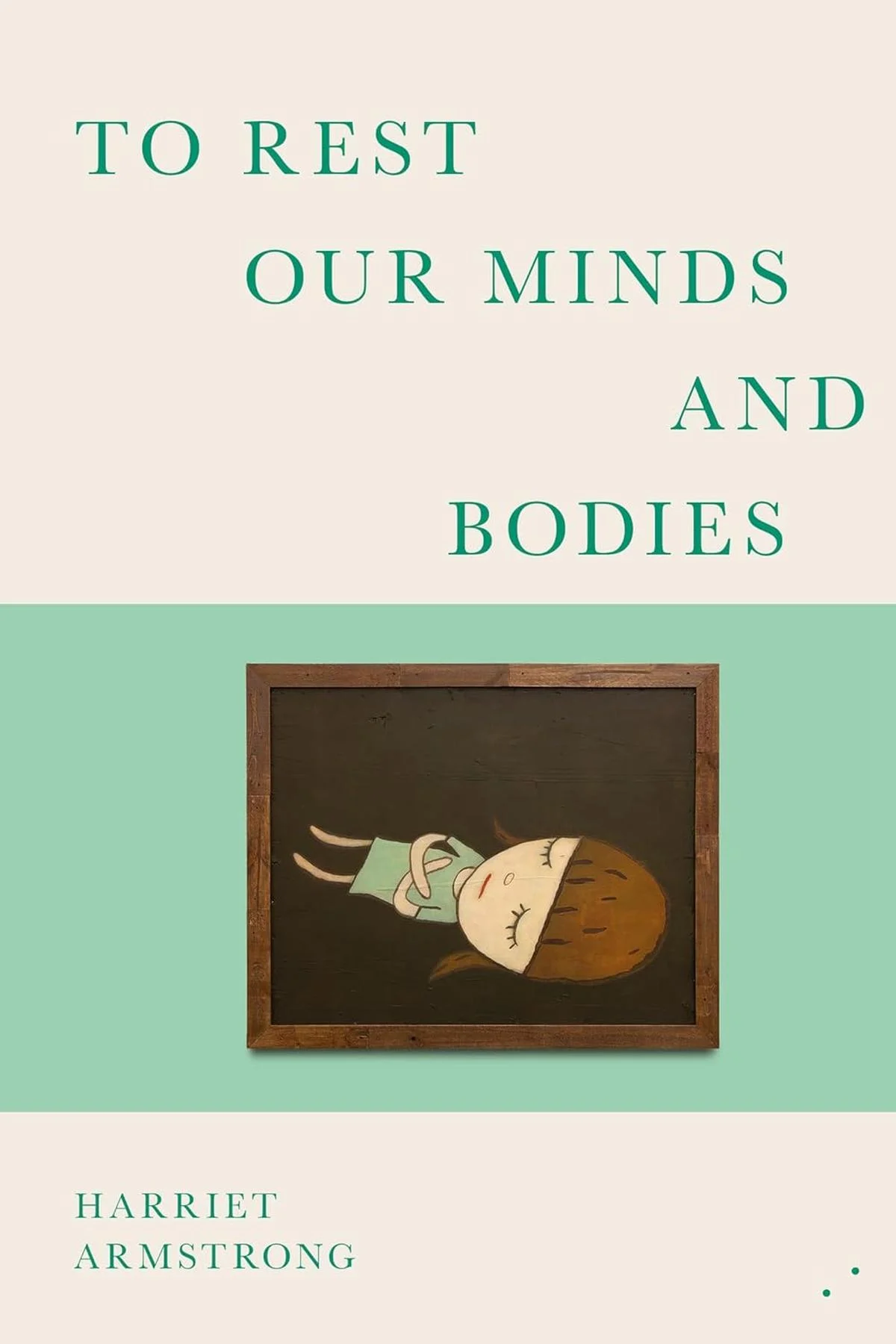
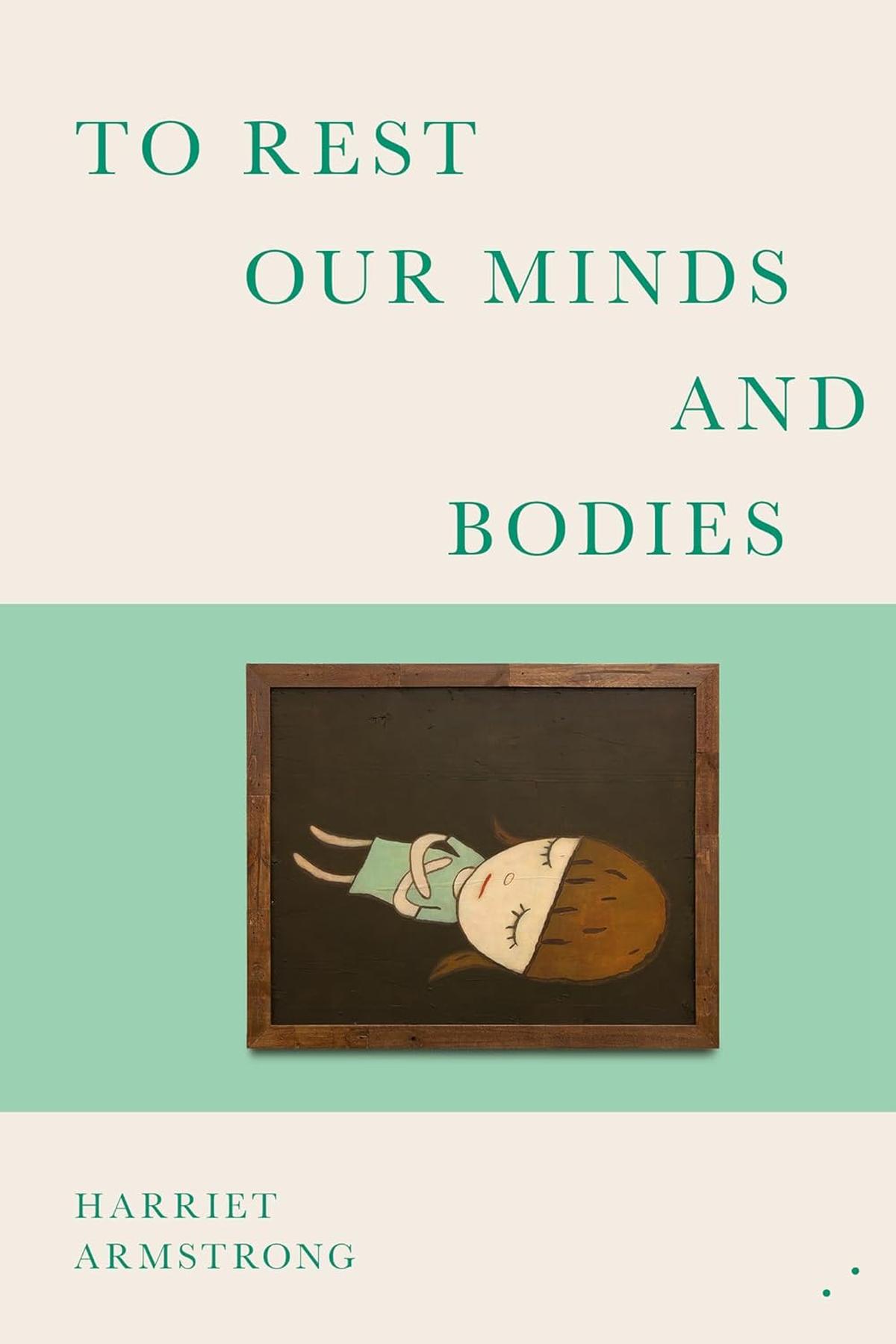
In the contemporary literary landscape, few debut novels have managed to mirror this specific O’Hara-esque blend of vulnerability and structural artifice as effectively as Harriet Armstrong’s To Rest Our Minds and Bodies. Published by the independent powerhouse Les Fugitives and recently shortlisted for the 2026 Dylan Thomas Prize, Armstrong’s novel has rapidly become a touchstone for a new generation of readers navigating the complexities of unrequited love and the fractured nature of 20-something identity.
As the novel prepares for translation into multiple languages, Armstrong reflects on the intersection of female sexuality, the limits of language, and the long shadow cast by literary predecessors like Sylvia Plath.
Main Facts: A Meteoric Rise in Contemporary Fiction
Harriet Armstrong, a London-based author, has emerged as a significant voice in what critics are calling the "New Interiority" movement. Her debut novel, To Rest Our Minds and Bodies, does not rely on the high-octane plotting of traditional thrillers or the tidy resolutions of romance. Instead, it offers a visceral, often uncomfortable deep dive into the mind of a narrator who is trying to make sense of her world through a fog of detachment and desire.
The book’s shortlisting for the 2026 Dylan Thomas Prize—one of the most prestigious awards for young writers—underscores its cultural relevance. The prize, which honors published works in the English language by authors aged 39 or under, has a history of identifying writers who push the boundaries of form. Armstrong’s inclusion in this list signals a shift in the literary zeitgeist toward stories that prioritize the "illegible" experiences of youth over traditional narrative arcs.

The novel is published by Les Fugitives, a press known for bringing innovative, often translated, female-centric literature to English-speaking audiences. The fact that an English-original debut is being championed by a press with such a curated aesthetic speaks to the novel’s unique "European" sensibility—a focus on atmosphere, philosophical inquiry, and the textures of everyday life.
Chronology: From Conceptual Vision to International Acclaim
The genesis of To Rest Our Minds and Bodies was not found in a character or a specific plot point, but in a visual geometric pattern. In discussions regarding the book’s origin, Armstrong notes that she had a "visual sense" of the novel’s trajectory long before the characters of the protagonist and her love interest, Luke, were fully realized.
The Visual Blueprint
Armstrong conceptualized the narrative as a physical movement. The protagonist begins in a state of profound detachment—a modern malaise characterized by a lack of connection to her surroundings. The story then follows a sharp move inward, toward a concentrated sense of meaning and connection that the character has long craved. However, this is not a permanent arrival. The final movement of the book flings the protagonist back out into a state of distance and disconnect, mirroring the cyclical nature of modern relationships and mental health struggles.
The Influence of the Canon
While writing the novel between the ages of 17 and 21, Armstrong found herself returning to Sylvia Plath’s The Bell Jar. This chronology of influence is vital to understanding the book’s DNA. By reading Plath during her formative years and again during the drafting process, Armstrong was able to engage in a cross-generational dialogue about the "disordered" female protagonist.
By the time the novel reached the hands of editors at Les Fugitives, it had evolved from a structural experiment into a searing exploration of female sexuality. Its subsequent shortlisting for the Dylan Thomas Prize in early 2026 acted as the catalyst for its international expansion, with translation rights being secured in several territories, including France, Germany, and South Korea.

Supporting Data: The Language of the Inexpressible
One of the most striking aspects of Armstrong’s work is her preoccupation with what cannot be said. This theme is explored not only in her novel but also in her acclaimed Granta essay, titled "Lol I’m trying to tell you how it feels for me."
The "Granta" Connection
In the essay, Armstrong uses the vernacular of the digital age—the "Lol" that acts as a shield or a conversational buffer—to explore the difficulty of articulating genuine emotion. This mirrors the protagonist in To Rest Our Minds and Bodies, who finds her love for Luke to be a concept that evades linguistic capture.
Data from literary critics suggest that this "inability to articulate" is becoming a hallmark of 2020s literature. Where 20th-century modernism used stream-of-consciousness to show the abundance of thought, Armstrong and her contemporaries use a "sparse interiority" to show the voids where language fails.
Breaking the "Sad Girl" Trope
While some have categorized the novel within the "sad girl" literary trend—alongside authors like Sally Rooney or Ottessa Moshfegh—Armstrong’s work provides a different data point. Her focus is less on the "rage-baiting" or "disordered" nature of the protagonist for the sake of shock, and more on the mechanical relationship between gender, sex, and interaction. Armstrong posits that the pushback in her writing is not against a specific gendered notion of the protagonist, but against the sanitized way sex is often depicted in literary fiction.
Official Responses: Insights from the Author
In a series of edited excerpts from a recent interview conducted by a prominent Delhi-based critic, Armstrong clarifies her intent and her relationship with the literary tradition.

On the Novel’s Structure:
"I wanted to attend to details, even details which seemed irrelevant, and to look honestly at experiences which feel, at least to the protagonist, incoherent or illegible," Armstrong explains. This commitment to the "irrelevant" is what gives the novel its sense of "life as it is lived." It rejects the "plot-heavy" requirements of commercial fiction in favor of a more honest, albeit fragmented, realism.
On the Comparison to Sylvia Plath:
Armstrong acknowledges the debt she owes to The Bell Jar. "I’m very happy my novel has been read by some as in conversation with Plath’s work," she says. However, where Plath’s Esther Greenwood struggled with the societal constraints of the 1950s, Armstrong’s protagonist struggles with the lack of constraints—the paralyzing freedom of the modern era that nonetheless leaves her feeling hollow.
On Writing Sex and Sexuality:
When asked if her work is a pushback against the rarity of "disordered" non-male protagonists, Armstrong offers a nuanced correction: "I was interested in trying to write about certain experiences which I hadn’t seen explored in fiction before, relating to female sexuality… I was trying to push boundaries in how I wrote about sex, more than through the gender of the protagonist."
Implications: A New Direction for the "Dylan Thomas" Generation
The success of To Rest Our Minds and Bodies has several implications for the future of the publishing industry and the evolution of the novel.
1. The Rise of Independent Presses
The fact that a debut novel from Les Fugitives reached the Dylan Thomas Prize shortlist suggests that independent presses are increasingly the primary incubators for high-concept literary talent. These houses are willing to take risks on "visual structures" and "incoherent" narratives that larger corporate publishers might deem too "difficult" for a debut.
2. The Validation of Digital Vernacular
By bridging the gap between high-literary essays in Granta and the visceral prose of her novel, Armstrong is validating the way young people actually communicate. The "Lol" in her essay title is not a dismissal of seriousness but a new tool for navigating it. This suggests that future literature will continue to incorporate "coded" states of feeling that reflect our mediated social lives.
3. Redefining Female Sexuality in Prose
Armstrong’s insistence on pushing boundaries regarding sex—focusing on the act as a site of gendered power dynamics and internal disconnect—sets a new standard for realism. It moves away from "romance" and toward a "phenomenology of the body."
4. The Global Reach of the "Inarticulate"
The translation of To Rest Our Minds and Bodies into multiple languages suggests that the feeling of "disconnect" is a global phenomenon. The "20-something narrator" is no longer a regional archetype but a universal figure representing a generation that feels "flung out into distance" by the very systems designed to connect them.
As Harriet Armstrong continues her ascent, To Rest Our Minds and Bodies stands as a testament to the power of the unsaid. Like O’Hara’s poem, it reminds us that while we may wander through cities that make and break us, and while we may struggle to find the words, the act of "telling you about it" is, in itself, the ultimate rationalization of our existence. In the end, the inability to speak clearly about love may be the most honest way to express it.
