

Beijing/Washington D.C. – June 18, 2024 – A high-stakes technology deal, initially heralded as a potential breakthrough in the intricate U.S.-China tech rivalry, has ground to a perplexing halt. Despite U.S. government clearance for approximately ten prominent Chinese firms to acquire Nvidia’s H200, its second-most powerful artificial intelligence (AI) chip, not a single delivery has been made to date. This unprecedented standstill leaves billions of dollars in potential revenue for the world’s most valuable chipmaker in limbo, underscoring the profound complexities and strategic recalibrations shaping global technology trade.
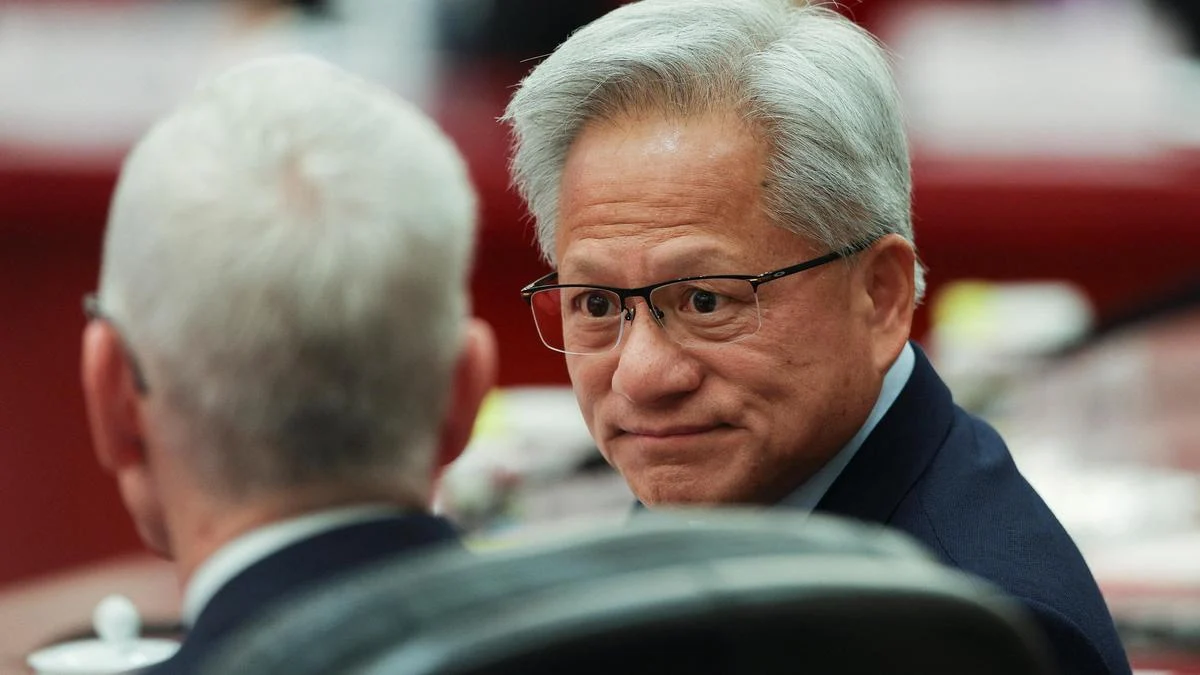
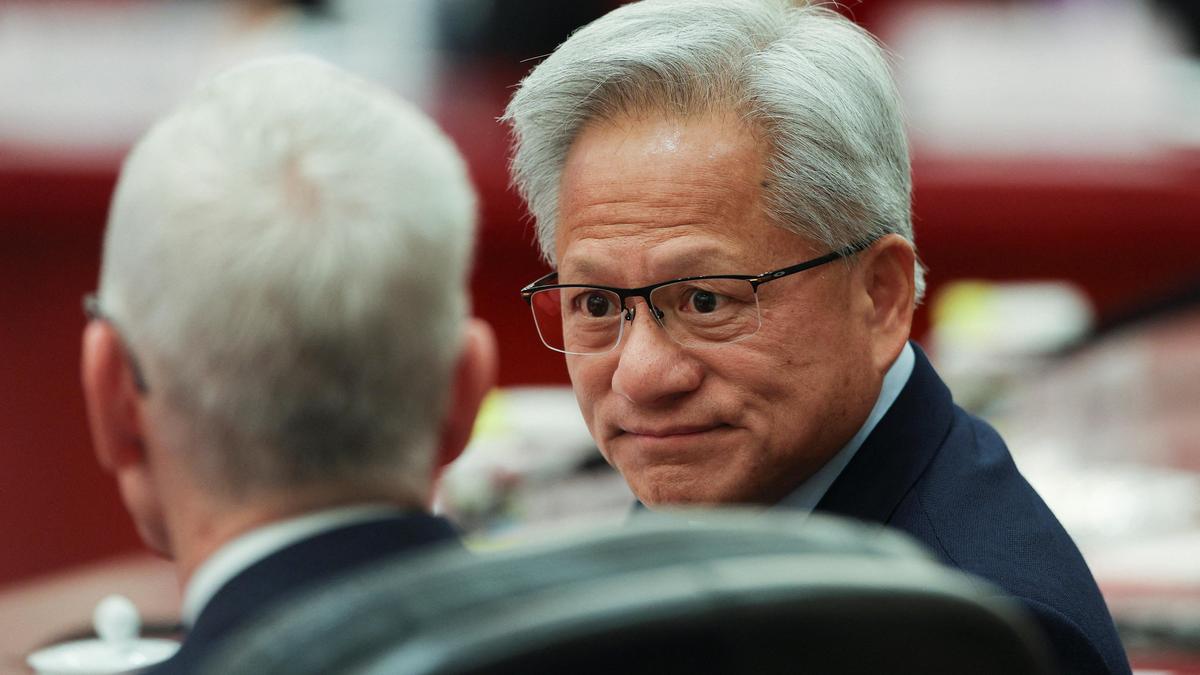
The situation casts a long shadow over the ongoing efforts to navigate the increasingly fraught relationship between the two economic superpowers. Nvidia CEO Jensen Huang, whose recent, unexpected inclusion in a White House delegation to Beijing raised hopes for a diplomatic solution, finds his company caught squarely between conflicting national priorities. The approved, yet undelivered, chips symbolize a critical juncture where economic interests clash head-on with national security imperatives and domestic industrial ambitions.
Main Facts: A Paradox of Approval and Stagnation
The core of the unfolding drama lies in a paradox: the U.S. Department of Commerce has officially sanctioned the sale of Nvidia’s advanced H200 AI chips to a select group of major Chinese technology companies and distributors. Yet, despite this explicit approval, the chips remain undelivered, their journey across the Pacific obstructed by a complex web of geopolitical considerations, regulatory hurdles, and strategic hesitations from both Washington and Beijing.
The H200 is a critical component for cutting-edge AI development, offering significant performance enhancements over its predecessor, the H100. Its capabilities are essential for training large language models and other sophisticated AI applications, making it a highly coveted asset for any nation or company aspiring to lead in the AI race. For Chinese tech giants like Alibaba, Tencent, ByteDance, and JD.com, access to such powerful hardware is paramount for maintaining their competitive edge and advancing their domestic AI ecosystems.
The list of approved buyers extends beyond these tech titans to include key distributors such as Lenovo and Foxconn. Under the terms of the U.S. licensing, each approved customer is permitted to purchase a substantial quantity – up to 75,000 H200 chips. This allocation underscores the scale of the potential deal and Nvidia’s significant commitment to the Chinese market, which, prior to tightened export curbs, accounted for approximately 13% of its global revenue and an estimated 95% of China’s advanced chip market. Jensen Huang himself had previously projected China’s AI market alone to be worth a staggering $50 billion this year, highlighting the immense economic stakes.
However, this commercial opportunity remains untapped. The current state of paralysis highlights a fundamental shift in the U.S.-China technology rivalry, where even officially sanctioned trade is susceptible to disruption, driven by evolving strategic calculations on both sides. The identities of these approved buyers and the intricacies of their relationships with Nvidia and authorized distributors, involving these highly sought-after AI chips, have not been previously reported, adding another layer of intrigue to this complex saga.
Chronology: A Winding Path to Stalled Deliveries
The journey of the H200 chips from U.S. factories to prospective Chinese data centers has been anything but straightforward, marked by a series of regulatory shifts, diplomatic overtures, and strategic pivots.
Initial Export Curbs and Nvidia’s Dominance
Before the U.S. began to significantly tighten its export controls on advanced semiconductors and AI technology, Nvidia enjoyed a near-monopoly in China’s burgeoning AI chip market. The company commanded approximately 95% of the market share for advanced chips, solidifying its position as an indispensable partner for Chinese tech firms. This period of dominance saw China become a significant revenue stream for Nvidia, contributing around 13% to its overall earnings. The rapid growth of China’s AI sector, projected by Huang to reach $50 billion this year, further underscored the market’s strategic importance.
The Introduction of H200 and U.S. Licensing
As the U.S. government intensified its efforts to restrict China’s access to cutting-edge AI capabilities, Nvidia was compelled to develop modified versions of its chips that complied with export control regulations. The H200 emerged as one such compliant chip, designed to offer high performance for AI workloads while falling within the parameters set by U.S. authorities. In January, the U.S. issued specific rules requiring Chinese buyers to demonstrate "sufficient security procedures" and provide assurances that the chips would not be diverted for military purposes. Nvidia, in turn, was mandated to certify that it maintained sufficient inventory within the United States.
Trump’s Intervention and Huang’s Beijing Trip
A pivotal moment arrived with the unexpected involvement of U.S. President Donald Trump. Initially not slated to be part of a White House delegation to Beijing, Nvidia CEO Jensen Huang joined the trip after a personal invitation from President Trump. The symbolic gesture of Trump picking up Huang in Alaska en route to a summit with Chinese President Xi Jinping was widely interpreted as a direct effort to unblock the stalled H200 sales and inject momentum into U.S.-China trade relations, particularly in the critical tech sector. During his visit, Huang publicly expressed optimism, telling state broadcaster CCTV that he hoped Trump and Xi would leverage their relationship to improve bilateral ties.
U.S. Commerce Department Approvals
Following these high-level engagements and the established regulatory framework, the U.S. Commerce Department proceeded to approve licenses for approximately ten Chinese companies to purchase the H200 chips. This list notably included major internet and cloud service providers such as Alibaba, Tencent, ByteDance, and JD.com, all of whom are significant players in China’s digital economy and AI development. Additionally, key hardware distributors like Lenovo and Foxconn also received approval, serving as intermediaries for direct purchases from Nvidia. The approved terms allowed each customer to acquire up to 75,000 chips, signaling a substantial potential transaction volume.
The Stalling of Deliveries: An Unforeseen Bottleneck
Despite these clear approvals, the flow of H200 chips has failed to materialize. Confidential sources familiar with the matter indicate that not a single delivery has been made so far. This unexpected impediment suggests a deeper, more complex set of issues at play than mere bureaucratic delays. One source pointed to a shift in guidance from Beijing, prompting Chinese firms to pull back from completing their orders, even after receiving U.S. clearance. The exact nature of this "shift" and any corresponding changes on the U.S. side remain unclear, adding to the ambiguity.
Beijing’s Hesitation and Strategic Shift
The prevailing narrative from Washington suggests that Beijing itself is the primary obstacle. Commerce Secretary Howard Lutnick articulated this view in a recent Senate hearing, stating that "the Chinese central government has not let them, as of yet, buy the chips, because they’re trying to keep their investment focused on their own domestic industry." This stance reflects a strategic calculation within Beijing: a fear that relying on imported advanced chips, even those approved by the U.S., could undermine China’s ambitious drive for technological self-sufficiency and the development of its homegrown AI chip industry. This hesitation has led to mounting pressure within Beijing to block or tightly vet these orders, prioritizing domestic champions like Huawei, whose AI chips are increasingly being touted by Chinese firms like DeepSeek.
The "25% Revenue Share" Arrangement
Adding another layer of complexity is a unique arrangement negotiated by the Trump administration. This deal stipulates that the U.S. would receive 25% of the revenue generated from these H200 chip sales. To comply with U.S. law, which does not permit direct imposition of export fees, this structure necessitates that the chips physically pass through U.S. territory before being shipped to China. While described by sources primarily as a workaround to legal constraints, this unusual requirement has reportedly prompted unease in Beijing. Concerns over potential tampering or hidden vulnerabilities within chips transiting through U.S. hands have been raised, highlighting a profound lack of trust that complicates even commercially beneficial arrangements.
China’s Supply Chain Security Regulations
Further intensifying scrutiny in China are two recent supply chain security regulations issued by the State Council. These directives have initiated a government-wide effort to identify and eliminate potential foreign dependencies in critical technology infrastructure. This heightened focus on national technological sovereignty inevitably places additional hurdles in the path of importing advanced foreign components, even those deemed compliant with U.S. export controls.
Supporting Data: The Stakes and the Players
The standoff over Nvidia’s H200 chips is not merely a commercial dispute; it’s a microcosm of the intense U.S.-China tech rivalry, where data points illuminate the colossal stakes involved.
Nvidia’s Market Dominance and Revenue Potential
Before the advent of stringent U.S. export controls, Nvidia held an almost insurmountable lead in China’s advanced chip market, commanding approximately 95% market share. This dominance translated into significant revenue, with China contributing about 13% to Nvidia’s overall financial performance. CEO Jensen Huang’s estimate of China’s AI market reaching $50 billion this year underscores the immense potential for growth that Nvidia now stands to lose. This market share and revenue stream are critical for Nvidia’s continued investment in research and development, maintaining its global lead in AI innovation.
The Impact of Export Controls on Nvidia
The effectiveness of U.S. export controls is evident in Nvidia’s reported decline in the Chinese market. Huang himself has starkly warned that these controls are "eroding the company’s foothold" in China, stating that its share of AI accelerators in the country has "effectively fallen to zero." This dramatic drop illustrates the profound impact of geopolitical tensions on even the most dominant global corporations.
Approved Buyers and Transaction Scale
The list of approved Chinese buyers represents the vanguard of China’s digital economy and AI development efforts. Alibaba, Tencent, ByteDance, and JD.com are not just large corporations; they are foundational pillars of China’s internet infrastructure, e-commerce, social media, and cloud computing. Their access to advanced AI chips is crucial for everything from enhancing e-commerce recommendation algorithms and powering cloud AI services to developing sophisticated autonomous systems and advanced generative AI models. The approval of distributors like Lenovo and Foxconn further indicates a broad intent to facilitate these sales across various segments of the Chinese tech industry. The individual purchase limit of 75,000 chips per approved customer highlights the potential for massive transactions, collectively representing billions of dollars in revenue for Nvidia.
China’s Domestic Alternatives and Self-Reliance
Beijing’s reluctance to greenlight the H200 purchases is directly tied to its strategic push for technological self-reliance. While Chinese AI chips, particularly from companies like Huawei, still lag behind Nvidia’s most advanced offerings, significant progress is being made. Firms like DeepSeek are increasingly showcasing their reliance on domestically developed chips, signaling a deliberate pivot. This move is not just about national pride; it’s a long-term strategy to mitigate vulnerabilities arising from foreign technological dependencies and to foster a robust indigenous semiconductor industry capable of supporting China’s AI ambitions independently.
The Broader Geopolitical Context
The H200 saga is a stark illustration of how the U.S.-China tech rivalry is "snarling even approved trade." It moves beyond simple trade tariffs or restrictions on sensitive military technologies to encompass dual-use civilian technologies that are critical for economic growth and innovation. This level of entanglement signals a deeper decoupling, where trust deficits and national security concerns override conventional commercial logic, even when regulatory hurdles are ostensibly cleared.
Official Responses: A Tapestry of Silence and Strategic Statements
The official responses to the H200 stalemate have been a mix of diplomatic silence, corporate caution, and pointed political commentary, reflecting the sensitive nature of the issue.
U.S. Commerce Department
A spokeswoman for the U.S. Department of Commerce, the agency responsible for overseeing export controls on semiconductors like the H200, declined to comment on the specific situation. This non-committal stance is typical for ongoing sensitive trade and national security matters, avoiding public pronouncements that could complicate delicate negotiations or reveal strategic positions.
China’s Ministry of Industry and Information Technology (MIIT) and National Development and Reform Commission (NDRC)
Similarly, China’s Ministry of Industry and Information Technology (MIIT) and the National Development and Reform Commission (NDRC), key government bodies involved in industrial policy and economic planning, did not respond to requests for comment. Their silence underscores Beijing’s strategic ambiguity, possibly indicating ongoing internal deliberations or a reluctance to publicly articulate a stance that could be perceived as either acquiescing to U.S. terms or overtly rejecting a commercially advantageous deal.
Lenovo’s Confirmation
Among the approved distributors, Lenovo issued a statement to Reuters, confirming that the company "is one of several companies approved to sell H200 in China as part of Nvidia’s export license." This partial confirmation from a major player provides direct evidence of the U.S. government’s approval process, even as the actual deliveries remain stalled. The other listed companies – Nvidia, Alibaba, Tencent, ByteDance, JD.com, and Foxconn – did not respond to requests for comment, adhering to a cautious approach given the political sensitivities.
Commerce Secretary Howard Lutnick’s Insight
A crucial piece of insight came from U.S. Commerce Secretary Howard Lutnick, who, in a Senate hearing, provided a direct explanation for the delay from the U.S. perspective. He stated that "the Chinese central government has not let them, as of yet, buy the chips, because they’re trying to keep their investment focused on their own domestic industry." Lutnick’s remarks offer a rare public confirmation of Beijing’s strategic calculation, framing the delay not as a U.S. restriction, but as a deliberate choice by China to prioritize indigenous development over foreign imports, even when those imports are sanctioned.
Jensen Huang’s Diplomatic Hopes
During his visit to Beijing, Nvidia CEO Jensen Huang adopted a diplomatic tone, telling CCTV that he hoped President Trump and President Xi would "build on their good relationship" during their talks to improve two-way ties. Huang’s statement reflects the profound interest of Nvidia, and indeed many global technology companies, in fostering a stable and predictable U.S.-China relationship that allows for continued market access and technological collaboration. His presence in Beijing and his comments underscore the commercial imperative to unblock the H200 sales.
Criticism from U.S. China Hardliners
The continued delay in H200 sales has been welcomed by China hardliners in Washington, who remain skeptical of any deals that might benefit China’s technological advancement. Chris McGuire, senior fellow for China and emerging technologies at the Council on Foreign Relations, articulated this sentiment sharply: "Any deal that allows Nvidia to sell more chips to China means fewer Nvidia chips for U.S. firms, and a smaller U.S. lead in AI over China." McGuire’s criticism, "It is remarkable that President Trump keeps getting convinced to put Nvidia’s interest ahead of America’s," highlights a deep ideological divide within U.S. policy circles regarding the optimal strategy for managing the tech rivalry with China. These voices dismiss claims that such sales would deter Chinese rivals from closing the gap with U.S. chip designers, arguing instead that they would only accelerate China’s progress.
Implications: A Shifting Global Tech Landscape
The indefinite delay in Nvidia H200 chip deliveries to China carries far-reaching implications for all stakeholders, reshaping the dynamics of global technology, trade, and geopolitics.
For Nvidia: Erosion of Market Share and Strategic Reorientation
For Nvidia, the immediate implication is a significant loss of potential revenue and a further erosion of its once-dominant market share in China. Having seen its AI accelerator share in China effectively fall to zero due to previous export controls, the H200 situation prolongs this commercial drought. This forces Nvidia to accelerate its strategy of developing "de-tuned" or compliant chips for the Chinese market, a costly and complex endeavor that may not fully capture the performance or profitability of its flagship products. Longer-term, it compels Nvidia to diversify its global market strategy, potentially reducing its reliance on China and exploring new growth opportunities elsewhere. The company faces the precarious challenge of balancing its commercial interests with navigating the complex and often contradictory demands of U.S. national security policy.
For Chinese Tech Firms: Pressure for Indigenous Innovation and Potential Delays
For Alibaba, Tencent, ByteDance, JD.com, and other approved buyers, the stalled deliveries mean a direct impediment to their AI development roadmaps. Access to cutting-edge hardware like the H200 is crucial for training increasingly complex AI models and maintaining competitiveness against global rivals. This delay will intensify pressure on these firms to invest more heavily in domestic AI chip alternatives, even if they are currently less powerful. While this accelerates China’s self-sufficiency drive, it could also lead to temporary setbacks or slower progress in certain advanced AI applications, particularly those requiring the absolute highest computational power. The shift towards domestic chips, such as those from Huawei, will likely become more pronounced, fostering a bifurcated AI ecosystem.
For the U.S.-China Tech Rivalry: Deepening Decoupling and Trust Deficit
The H200 saga is a potent symbol of the deepening technological decoupling between the U.S. and China. It demonstrates that even when the U.S. government approves high-tech sales, the underlying geopolitical tensions and strategic distrust can still block transactions. This situation signals a move beyond targeted restrictions to a broader environment where even sanctioned trade is fraught with uncertainty. The "25% revenue share" arrangement and Beijing’s reported unease over potential tampering highlight a profound trust deficit that complicates any form of technological exchange. This environment encourages both nations to accelerate their efforts to reduce dependencies on each other in critical technological sectors, leading to parallel and potentially incompatible technological ecosystems.
Broader Geopolitical Ramifications: Precedent and Global Supply Chain Shifts
The H200 situation sets a worrying precedent for future high-tech trade deals involving dual-use technologies. It suggests that national security considerations and industrial policy goals can override commercial agreements, even those with high-level diplomatic backing. This could lead to increased uncertainty in global supply chains, prompting other nations and companies to reassess their own dependencies and diversify their sourcing. The ongoing struggle over AI chips underscores the strategic importance of semiconductors as the "new oil" of the digital age, making their control and access a central battleground in geopolitical competition.
The Role of Diplomatic Efforts vs. National Security Imperatives
Jensen Huang’s inclusion in President Trump’s delegation initially sparked hope for a diplomatic resolution, underscoring the perceived power of high-level engagement to unblock trade. However, the continued stagnation suggests that national security imperatives and domestic industrial policy goals in both Washington and Beijing are currently outweighing commercial interests and diplomatic overtures. This raises fundamental questions about the efficacy of traditional diplomacy in navigating an era of strategic technological competition, where economic integration is increasingly viewed through the lens of national power and vulnerability.
Future Outlook: Continued Uncertainty and Strategic Adaptation
The path forward remains highly uncertain. Whether a breakthrough will eventually occur, allowing Nvidia to complete these sales, or if this marks a permanent shift towards greater technological independence for China and stricter controls from the U.S., is yet to be seen. The ongoing developments will force both nations to continue adapting their strategies: the U.S. will likely refine its export control mechanisms, while China will redouble its efforts to achieve self-sufficiency in advanced semiconductors. The H200 saga serves as a stark reminder that in the volatile landscape of U.S.-China relations, technology is not merely a product for trade, but a critical instrument of national power and a constant source of geopolitical tension.
