

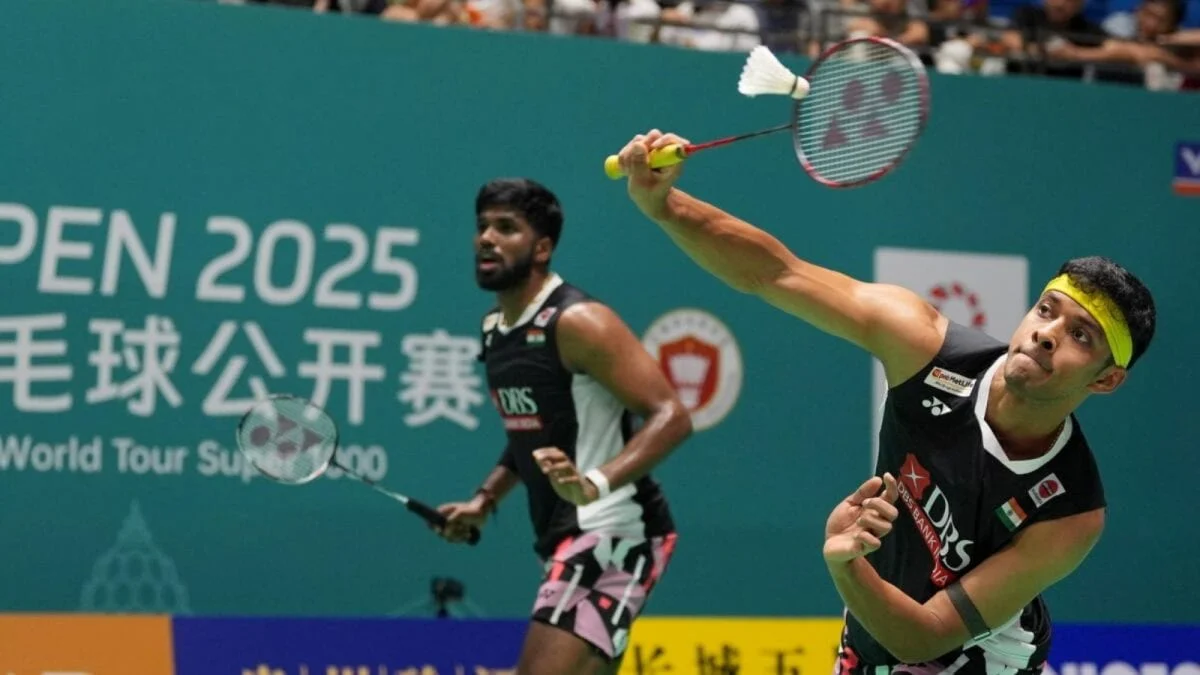
New Delhi, India – In a nation often characterized by its fervent devotion to cricket, a powerful call for broader recognition has emerged from the very heart of another highly successful sport. India’s premier men’s doubles badminton pair, Satwiksairaj Rankireddy and Chirag Shetty, affectionately known as ‘Sat-Chi’, have ignited a national conversation regarding the visibility and appreciation of badminton in India. Their recent remarks, following the Indian team’s bronze medal triumph at the Thomas Cup in Denmark, were not merely an expression of disappointment but a strategic and heartfelt plea to spark a wider dialogue about the sport’s place in the country’s mainstream consciousness.
The world No. 4 duo, who are also the reigning Asian Games champions and key architects of India’s historic 2022 Thomas Cup victory, articulated their concern over what they perceived as a relatively muted public and media response to their monumental achievements. Their comments, initially interpreted by some as a lament, were clarified by the athletes themselves as a deliberate effort to highlight the disparity in attention given to badminton compared to more dominant sports, particularly cricket. This bold stance from two of India’s most celebrated athletes underscores a deeper issue within the Indian sporting ecosystem: how to ensure that consistent international success across various disciplines translates into sustained public engagement, robust corporate sponsorship, and equitable media coverage.
A Legacy of Triumph, A Call for Recognition
Satwiksairaj Rankireddy and Chirag Shetty stand at the vanguard of a golden era for Indian badminton. Their journey is marked by numerous accolades, culminating in two of the most significant team achievements in the nation’s sporting history.
The Historic 2022 Thomas Cup Victory: A Watershed Moment
The year 2022 etched itself permanently into the annals of Indian sports with the men’s national team securing its maiden Thomas Cup title. Held in Bangkok, Thailand, this victory was nothing short of a fairytale. India, a perennial underdog in the event, defied all expectations to defeat badminton powerhouses en route to the final. The climactic encounter against 14-time champions Indonesia was a masterclass in resilience and strategic brilliance. Satwik and Chirag played a pivotal role in this historic campaign, often delivering crucial points that swung ties in India’s favour. The sheer magnitude of this achievement, winning the "World Cup of Men’s Team Badminton" for the first time ever, against the sport’s traditional titans, sent shockwaves through the global badminton community. It was hailed as one of India’s greatest sporting triumphs, sparking immense national pride and momentarily bringing badminton into the forefront of public discourse. Yet, as Chirag Shetty noted, the subsequent reception and sustained celebration back home fell short of what such a monumental feat deserved.
The 2026 Bronze Medal: A Continued Narrative of Excellence
Fast forward to the 2026 Thomas Cup in Denmark, where the Indian team, with Sat-Chi once again leading the charge, secured a commendable bronze medal. This achievement, while not replicating the gold of 2022, was a testament to India’s consistent strength in men’s team badminton. The level of competition in team events is exceptionally high, featuring nations like China, Indonesia, Malaysia, and Korea, all boasting deep benches of world-class talent. As Satwik pointed out, "Even a bronze medal is really tough to win because the level in team events is extremely high." He further elaborated on the intensity of the competition, stating, "Nobody expected Indonesia and Korea to be knocked out. I think we came closest to beating China. Had we won the doubles match, the tie could have ended 3-2 in our favour." This close encounter against formidable opponents underscores the difficulty of medaling consistently at such prestigious global events.
Despite these significant accomplishments – a historic gold and a hard-fought bronze – the athletes felt that the public and media engagement did not fully reflect the grandeur of their efforts. This recurring pattern prompted their recent comments.
The Athletes’ Candid Remarks: A Call to Action
Speaking to BWF after advancing to the quarterfinals of the Thailand Open Super 500 in Bangkok, Chirag Shetty articulated the core of their message. "I think it was really important for the sport to have a conversation," he stated. "I was unhappy because of the reception that we got back in 2022. We deserved a much bigger celebration. Nobody would have expected India to win a Thomas Cup gold." He acknowledged that their comments "blew up much more than we expected," generating a mixed bag of reactions. "There were obviously critics, but there were also a lot of positive reactions. I think that is a very positive sign because the conversation at least started. Hopefully, in the years to come, the sport will become even bigger."
Satwiksairaj Rankireddy echoed his partner’s sentiments, emphasizing the perceived lack of engagement from the wider public. "People are not watching badminton. That is what we felt like," he lamented. "We are wearing India jerseys, but people are more interested in IPL and other things happening around." He stressed that their concern extended beyond mere celebrations, focusing on the sport’s struggle for consistent mainstream attention despite its major successes. "There were negatives as well, but more than that I saw almost 90 per cent positive reactions. That is a good sign," Satwik added, highlighting the underlying support for their cause.
The Broader Landscape: Badminton vs. Other Sports in India
The sentiments expressed by Satwik and Chirag are not isolated. They reflect a deeper systemic challenge faced by numerous sports in India that consistently deliver international medals but struggle to break through the overwhelming dominance of cricket.
The Shadow of Cricket: A Perennial Challenge
Cricket, particularly in its Twenty20 format and the Indian Premier League (IPL), casts an enormous shadow over the Indian sporting landscape. The IPL, a multi-billion dollar enterprise, commands unparalleled media attention, corporate sponsorships, and fan engagement. Its annual spectacle often overshadows other sporting events, even those of international significance where Indian athletes excel. This disparity is evident in every facet: prime-time television slots, extensive newspaper coverage, and the sheer volume of marketing and promotional budgets allocated. For instance, an IPL match featuring non-national players might receive more prime-time coverage and sponsorship visibility than a major international badminton final featuring top Indian stars. This imbalance creates a vicious cycle where less visibility leads to less sponsorship, which in turn limits promotional activities and further reduces visibility.
India’s Rich Badminton Pedigree: A Legacy Underserved?
Despite the challenges, India boasts a formidable legacy in badminton. Legends like Prakash Padukone and Pullela Gopichand paved the way, followed by a generation of world-beaters including Saina Nehwal, PV Sindhu, Kidambi Srikanth, and Lakshya Sen, all of whom have achieved significant individual milestones, including Olympic medals, World Championship titles, and Super Series victories. Satwik and Chirag’s ascent to the world No. 4 ranking and their Asian Games gold further solidify India’s position as a global badminton powerhouse. The country has a robust talent pipeline, a dedicated coaching infrastructure, and a growing number of academies. Yet, even with this consistent stream of success and world-class talent, the sport struggles to maintain a consistent presence in the national consciousness outside of major multi-sport events like the Olympics or Asian Games. The Premier Badminton League (PBL), while a commendable effort to create a franchise-based model, has yet to capture the imagination or the commercial might of the IPL.
The Unique Spirit of Team Competitions
Chirag Shetty’s impassioned defence of team events like the Thomas Cup offers a crucial insight into the athletes’ perspective and the intrinsic value of such tournaments.
Beyond Individual Glory: The Camaraderie of Team Events
Badminton, at its core, is largely an individual sport. Players typically compete for personal glory, rankings, and prize money. This makes team events exceptionally rare and therefore "truly special," as Chirag emphasized. "If you ask players from any country, they will say the same thing. The euphoria, the tension, and the pressure make team events really exciting. I think it is one of the best things about badminton." The shift from individual rivalry to collective effort fosters a unique sense of camaraderie and shared purpose. Athletes, usually focused on their own performance, come together as a cohesive unit, celebrating each other’s victories and collectively bearing the weight of defeats. The emotional highs are amplified, and the pressure takes on a different dimension when the fate of an entire nation’s team rests on individual performances. This collective spirit, often missing in the day-to-day grind of the BWF tour, makes the Thomas Cup and Uber Cup (for women) treasured experiences for players worldwide.
The Global Standard of the Thomas Cup: A Test of National Strength
The Thomas Cup is widely regarded as the pinnacle of men’s team badminton. It is a grueling tournament that tests the depth of talent, strategic acumen, and mental fortitude of participating nations. Unlike individual tournaments where a single player can dominate, the Thomas Cup requires a balanced team across singles and doubles disciplines. A weak link can prove costly, making every match and every point critical. India’s ability to win gold in 2022 and bronze in 2026 against traditional giants like Indonesia, China, and Malaysia, who have dominated the event for decades, speaks volumes about the country’s emergence as a formidable force. These victories are not flukes but the result of years of dedicated training, strategic planning, and the emergence of multiple world-class players.
Sparking a National Dialogue
The candidness of Satwik and Chirag has, intentionally or not, achieved its primary objective: it has sparked a national conversation.
Public and Media Reception: A Mixed but Predominantly Positive Outlook
As Chirag noted, their comments "blew up" across various media platforms. The initial reactions were varied; some critics accused the players of being ungrateful or seeking undue attention, while others lauded their courage to speak truth to power. However, the overwhelming sentiment, as observed by both athletes, leaned towards positive reactions. This indicates a significant segment of the Indian public and sports enthusiasts who resonate with the idea of promoting diverse sports. The conversation moved beyond the immediate context of the Thomas Cup to encompass broader issues of sports promotion, media responsibility, and the equitable distribution of resources and attention.
The Amplifying Role of Social Media
In the digital age, social media platforms play a crucial role in amplifying such discussions. The athletes’ statements were quickly shared, debated, and analyzed across Twitter (now X), Instagram, and other platforms. This direct engagement bypasses traditional media gatekeepers to some extent, allowing fans and fellow athletes to weigh in, express support, or offer counter-arguments. This organic spread of information and opinion ensures that the conversation reaches a wider demographic, making it harder for the issue to be swept under the rug. It empowers athletes to use their platforms not just for sporting achievements but also for advocacy, giving them a powerful voice in shaping public discourse around their sport.
Industry Stakeholders’ Perspective: A Catalyst for Action
While no immediate official responses from the Badminton Association of India (BAI) or the Ministry of Youth Affairs and Sports were specifically cited regarding Sat-Chi’s comments, such public statements from top athletes invariably serve as a catalyst for introspection and action among industry stakeholders. Governing bodies like the BAI and the Badminton World Federation (BWF) are continually working to increase the sport’s global footprint and commercial appeal. The BWF’s efforts to globalize badminton, increase prize money, and enhance television production values are ongoing. From an Indian perspective, the athletes’ remarks could galvanize the BAI to redouble its efforts in marketing, securing sponsorships, and engaging with media houses to ensure better coverage. It highlights the need for a collaborative approach involving athletes, federations, media, and corporate entities to collectively elevate the sport’s profile.
Charting a Course for Enhanced Visibility and Growth
The conversation initiated by Satwik and Chirag has profound implications for the future trajectory of Indian badminton and, by extension, other non-cricket sports.
Potential for Increased Investment and Sponsorship
Greater mainstream visibility directly correlates with increased commercial interest. When a sport garners more eyeballs, it becomes a more attractive proposition for corporate sponsors looking to associate their brands with successful athletes and events. This could lead to more substantial sponsorship deals for players, better funding for tournaments, and improved infrastructure for training. The infusion of capital is crucial for establishing more academies, providing better coaching, ensuring access to cutting-edge sports science, and offering greater financial security to athletes, enabling them to focus solely on their performance without external pressures.
Grassroots Development and Talent Pipeline: Inspiring the Next Generation
The sustained visibility of national heroes like Satwik and Chirag on prime-time television, in prominent newspaper columns, and across digital platforms is essential for inspiring the next generation of athletes. When young children see badminton players celebrated with the same fervor as cricketers, it instills a sense of aspiration and makes the sport a viable career path. Increased mainstream attention can drive more children to take up badminton, expanding the talent pool and ensuring a continuous supply of future champions. This grassroots development is the bedrock of sustained sporting excellence for any nation.
Media’s Crucial Role: Building a Holistic Sports Culture
The media, both traditional and digital, bears a significant responsibility in shaping the national sporting narrative. While cricket undoubtedly holds a special place, a truly sporting nation celebrates excellence across all disciplines. Fair and balanced coverage, dedicating prime slots and significant real estate to non-cricket sports, is vital. Media houses can play a proactive role in telling the compelling stories of badminton players, highlighting their struggles, triumphs, and the sheer dedication required to compete at the highest level. Feature articles, documentaries, and consistent live coverage can significantly alter public perception and foster a more diverse sports culture.
Athletes as Advocates: Powerful Voices for Change
Satwiksairaj Rankireddy and Chirag Shetty have emerged not just as world-class athletes but also as powerful advocates for their sport. By using their platform to articulate these crucial concerns, they have demonstrated leadership beyond the badminton court. Their courage to speak out could embolden other athletes from various sports to voice similar sentiments, collectively pushing for a more equitable and inclusive sports ecosystem in India. Athletes, with their direct experience and public appeal, are uniquely positioned to drive such conversations and advocate for meaningful change.
Looking Ahead: Asian Games and Beyond
As Chirag Shetty looks forward to the upcoming Asian Games, he encapsulates the blend of athletic ambition and the broader goal of elevating badminton’s profile. "The Asian Games is obviously a very big event. Along with the World Championships, it is one of the major events of the year, and we really want to do well there," he stated. Continued success at major international tournaments like the Asian Games and World Championships will undoubtedly contribute to the sport’s growing recognition. However, as Satwik and Chirag have so eloquently highlighted, success on the court must be complemented by a concerted effort from all stakeholders to translate those victories into sustained mainstream attention and appreciation.
In conclusion, Satwiksairaj Rankireddy and Chirag Shetty’s "scream for mainstream attention" is far more than a cry for personal recognition. It is a clarion call for a more balanced and appreciative sporting culture in India. It challenges the media, sponsors, and the public to look beyond the dominant narratives and celebrate the diverse tapestry of sporting excellence that the nation consistently produces. Their initiative marks a pivotal moment, potentially heralding a new era where badminton, despite the overwhelming presence of cricket, might finally carve out a deserving and permanent space in the hearts and minds of millions of Indians, fostering a truly holistic and inclusive sporting nation.
