

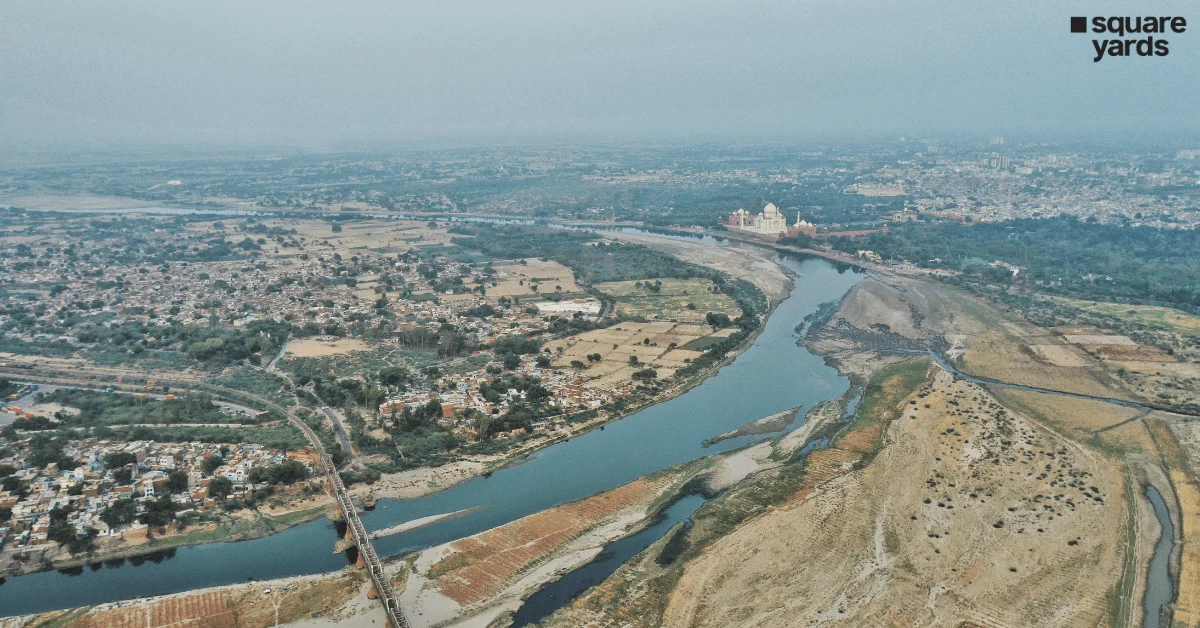
AGRA — In the heart of Uttar Pradesh, a state increasingly defined by its ambitious infrastructure milestones, a new blueprint for urban living and industrial prowess is taking shape. The proposed "New Agra Urban Centre," a massive satellite city spearheaded by the Yamuna Expressway Industrial Development Authority (YEIDA), is emerging as the cornerstone of the state’s strategy to become a $1 trillion economy.
Positioned along the high-speed Yamuna Expressway, this project is not merely an extension of the historic city of Agra but a futuristic, "smart" urban hub designed to accommodate 1.4 million residents and generate employment for nearly a million people. As North India transitions toward expressway-led development, New Agra stands as a testament to the shift from haphazard urban sprawl to meticulously planned economic corridors.
Main Facts: A Blueprint for a Megacity
The New Agra project is a multi-dimensional urban development initiative that seeks to bridge the gap between industrial necessity and sustainable living. Developed under the aegis of YEIDA’s Master Plan 2041, the city is slated to cover a staggering 14,480 hectares of land, encompassing 44 villages within the Agra district.
Unlike traditional townships that often prioritize residential real estate, New Agra is being marketed as a "diversified economic engine." The plan integrates industrial zones, logistics parks, tourism circuits, and high-tech residential clusters. At its core, the project aims to leverage its proximity to the Noida International Airport at Jewar, creating a seamless "Aerotropolis" effect that stretches from the outskirts of Delhi to the gates of the Taj Mahal.
The development is strategically divided to ensure that economic activity and environmental preservation coexist. Given its proximity to the Taj Trapezium Zone (TTZ), the city will exclusively host non-polluting "Green" and "White" category industries. This includes a focus on Information Technology (IT), electronics manufacturing, electric vehicle (EV) production, and renewable energy equipment.
Chronology: From Expressway to Economic Corridor
The genesis of New Agra can be traced back to the early 2010s with the completion of the 165-km Yamuna Expressway. While the expressway initially served as a high-speed link for tourists traveling from Delhi to the Taj Mahal, the state government soon recognized its potential as an industrial backbone.
- 2001–2010: The formation of the Taj Expressway Industrial Development Authority (later renamed YEIDA) to manage land along the proposed corridor.
- 2012–2018: The Yamuna Expressway opens, sparking a real estate boom in Noida and Greater Noida. However, the southern end of the corridor near Agra remained largely agricultural.
- 2019–2022: The approval and commencement of the Noida International Airport at Jewar changed the geography of investment. YEIDA began drafting "Master Plan 2041" to extend the "Noida Model" of development further south toward Agra.
- 2023–2024: Detailed Project Reports (DPRs) for the New Agra Urban Centre were finalized. The government identified 44 villages for land acquisition and integrated the project into the PM Gati Shakti National Master Plan for multi-modal connectivity.
- 2025–2026 (Projected): Commencement of primary infrastructure execution, including road networks, sewage treatment plants, and the first phase of industrial land allotment.
Supporting Data: The Numbers Behind the Vision
The scale of New Agra is best understood through the granular data released by YEIDA. The project is designed to be a self-sustaining ecosystem with a heavy emphasis on industrial output and environmental management.
| Key Data Insights | Details |
|---|---|
| Total Project Area | 14,480 Hectares |
| Industrial Allocation | 3,000+ Hectares |
| Village Integration | 44 Villages in Agra District |
| Estimated Population Capacity | 1.4 Million (14 Lakhs+) |
| Employment Generation | 1.0 Million (10 Lakhs+) |
| Connectivity Radius | 120 km from Noida International Airport |
| Environmental Infrastructure | 7 Dedicated Sewage Treatment Plants (STPs) |
| Zoning Categories | Residential, Industrial, Tourism, Logistics, and Green Space |
The allocation of over 3,000 hectares specifically for industrial use underscores the government’s intent to move beyond "dormitory town" status. Furthermore, the inclusion of seven sewage treatment plants and massive green belts highlights a shift toward the "Sustainable Cities" model, ensuring that the 14 lakh future residents have access to modern civic amenities.
Connectivity: The Multi-Modal Revolution
The primary catalyst for New Agra’s anticipated success is its unprecedented connectivity. The city is positioned at the intersection of several national-level infrastructure projects:
- The Yamuna Expressway: Provides a direct, six-lane (expandable to eight) link to the National Capital Region (NCR).
- Noida International Airport (Jewar): Located approximately 120 km away, this airport will serve as the global gateway for New Agra. A proposed high-speed rail link and a dedicated cargo corridor will connect the city to the airport’s integrated cargo terminal, facilitating international trade for local manufacturers.
- Eastern Dedicated Freight Corridor (EDFC): This rail-based cargo artery will allow heavy industries in New Agra to transport goods to Eastern India and maritime ports with significantly lower logistics costs.
- High-Speed Rail (HSR): Plans are underway to include New Agra as a node on future high-speed rail networks, potentially reducing travel time to Delhi to under 60 minutes.
This "infrastructure ecosystem" is designed to facilitate the smooth movement of both people and goods, making New Agra an attractive destination for global logistics firms and manufacturing giants who require "just-in-time" delivery capabilities.
Official Responses and Policy Framework
Officials from the Uttar Pradesh government and YEIDA have emphasized that New Agra is a "defining test" for the state’s urban growth model. Speaking on the Master Plan 2041, senior YEIDA officials noted that the project is designed to avoid the "urban chaos" seen in older Indian cities.
"The New Agra Urban Centre is being built on the principles of Transit-Oriented Development (TOD)," stated a senior planning official. "We are not just selling plots; we are building an economy. By focusing on green and white category industries, we are respecting the environmental sensitivity of the Taj Trapezium Zone while ensuring that the youth of Agra do not have to migrate to Delhi or Mumbai for high-quality jobs."
To attract investment, the state government is expected to offer a range of incentives, including capital subsidies, interest subvention, and stamp duty exemptions for units set up within the New Agra zone. The focus remains on "clean tech"—electronics, solar equipment, optical lenses, and hydrogen-based production units.
Implications: Real Estate, Economy, and Environment
The implications of New Agra extend far beyond the borders of Uttar Pradesh, affecting the real estate market and the regional economy of North India.
1. Real Estate Surge:
Market assessments by firms like Square Yards suggest that the New Agra corridor is poised for a significant spike in land value. As infrastructure execution begins, demand for plotted developments and commercial spaces is expected to rise by 20–30% annually over the next five to seven years. Investors who were previously focused on Gurgaon or Noida are now looking toward this southern corridor for higher yields.
2. Economic Decentralization:
For decades, economic activity in North India has been concentrated in the Delhi-NCR bubble. New Agra offers a viable alternative, potentially decentralizing industry and reducing the migratory pressure on Delhi. The generation of 10 lakh jobs will provide a massive boost to the local economy in the Braj region, spanning Agra, Mathura, and Firozabad.
3. The Tourism Pivot:
Agra has historically been a "one-day" tourist destination. By developing a modern urban centre with luxury hotels, convention centres, and high-end retail, the government aims to increase the "stay-time" of international tourists. The New Agra project includes dedicated tourism zones that will complement the heritage of the Taj Mahal with modern leisure facilities.
4. Environmental Stewardship:
The commitment to only "Green and White" industries is a significant policy shift. By banning polluting manufacturing, New Agra could become a blueprint for how industrialization can happen in ecologically sensitive zones. The emphasis on EV manufacturing and solar equipment units aligns with India’s national goal of achieving Net Zero emissions.
The Challenges Ahead
Despite the optimistic projections, the road to New Agra is fraught with challenges. Land acquisition remains a sensitive issue in Uttar Pradesh, and ensuring fair compensation for the 44 villages involved will be crucial to avoiding legal delays. Furthermore, the sheer scale of the project requires massive capital infusion, necessitating successful Public-Private Partnerships (PPP).
Executing a project of this magnitude—14,480 hectares—requires not just financial muscle but technical precision. The integration of high-speed rail, smart grids, and sustainable waste management systems will test the administrative capacity of YEIDA and the state government.
Conclusion
The New Agra Urban Centre represents a bold leap into the future for Uttar Pradesh. It is a project that attempts to marry the historical significance of Agra with the industrial ambitions of a modern India. If the execution matches the vision laid out in Master Plan 2041, New Agra will not only become a hub for IT and green manufacturing but will also serve as a model for expressway-led urban development across the Global South. For investors, residents, and policymakers, the message is clear: the road to India’s economic future now runs through the heart of the Yamuna Expressway.
