

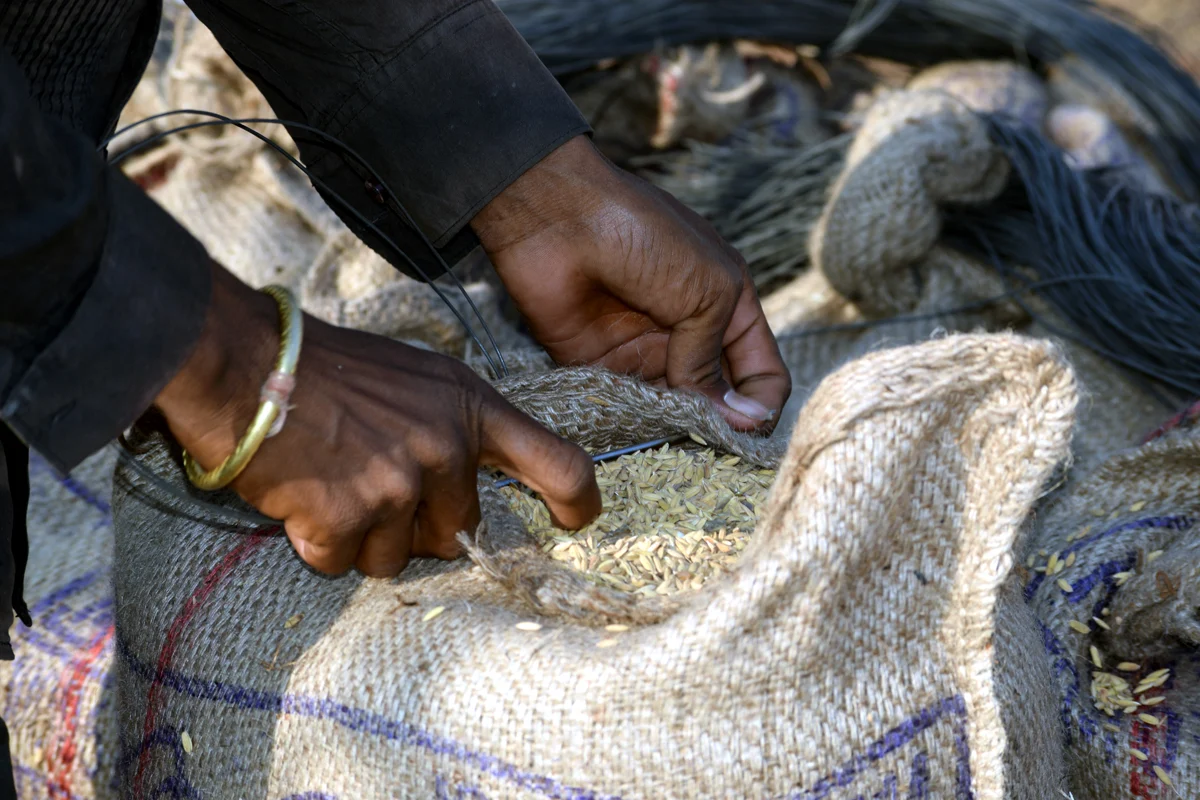
DHAMTARI/RAIPUR – On the sun-drenched edges of a vast field in the Kurud block of Dhamtari district, 60-year-old Sukhdev Sahu stands as a witness to a disappearing era. Where his father once cultivated a resilient mosaic of kodo, kutki, ragi, pulses, and oilseeds, there is now only a monolithic sea of paddy.
“In the past, we used to grow a variety of crops. Now, there is nothing but paddy,” Sahu says, his voice carrying a mix of pragmatism and nostalgia. For Sahu, the transition was not a matter of preference, but of survival. In the early 2000s, he was a practitioner of organic farming, maintaining a herd of 20 cattle to produce manure and meticulously saving seeds from season to season. Today, his 11 acres are dedicated entirely to chemically-treated paddy.
The reason is simple: ₹3,100 per quintal.
As the Chhattisgarh government continues to offer record-breaking procurement prices for paddy, a silent crisis is unfolding. While the state treasury pours billions into organic farming schemes, the actual certified organic acreage is in a state of freefall. This "paddy trap" is reshaping the ecology of Central India, trading long-term soil health for immediate financial security.
1. Main Facts: The Great Organic Recession
Despite the rhetoric of "Green Chhattisgarh," official data reveals a stark contradiction between policy intent and ground reality. The state, once considered a potential hub for organic exports, is seeing its certified organic footprint vanish.
The 70% Collapse
Over the last five years, the area under the National Programme for Organic Production (NPOP)—the gold standard for organic certification required for exports—has shrunk by nearly 70%. In the 2020–21 cycle, Chhattisgarh boasted 23,209 hectares of NPOP-certified land. By the 2024–25 period, that figure plummeted to a mere 6,822 hectares.
The Procurement Paradox
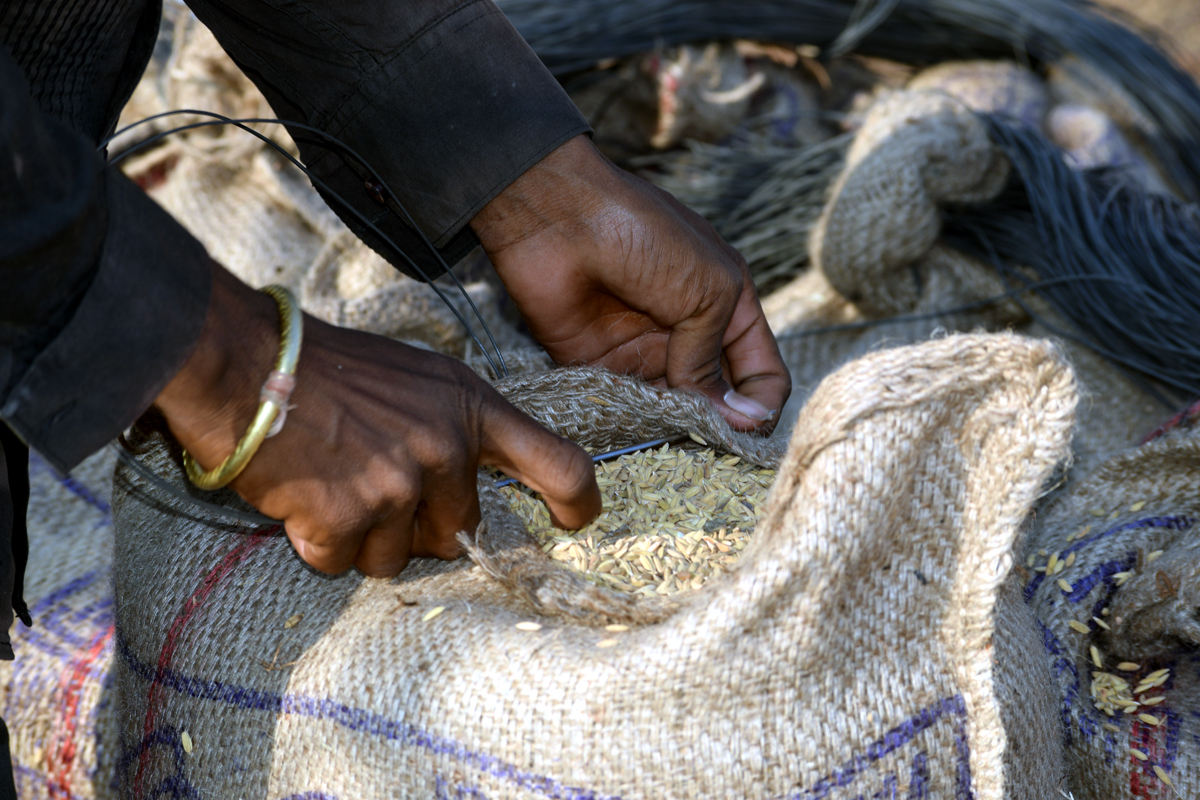
The primary driver of this shift is the government’s own procurement policy. By offering a guaranteed price of ₹3,100 per quintal for paddy, the state has inadvertently disincentivized crop diversification. For a farmer, the choice between an uncertain organic market and a guaranteed government check is no choice at all.
The Chemical Surge
As organic farming recedes, chemical dependency is skyrocketing. Statistics show that fertilizer consumption in Chhattisgarh rose from 374,000 tonnes in 2005–06 to over 737,350 tonnes in recent years. This intensive use of urea and DAP (Diammonium Phosphate) is directly linked to the state’s high paddy yields, but it comes at a significant environmental cost.
2. Chronology: From Biodiversity to Monoculture
The agricultural history of Chhattisgarh over the last two decades can be divided into three distinct phases:
The Traditional Era (Pre-2000s)
Before the massive expansion of the Public Distribution System (PDS) and aggressive procurement, Chhattisgarh’s tribal and rural heartlands practiced low-input, traditional farming. This was "organic by default." Farmers relied on local varieties of millets and pulses that were climate-resilient and required little more than monsoon rains and cow dung.
The Transition Phase (2000–2015)
As Chhattisgarh was formed and sought to establish its identity as the "Rice Bowl of India," the focus shifted toward irrigation and high-yielding varieties (HYV). Farmers like Sukhdev Sahu began to see the economic benefits of paddy but still maintained organic patches. However, the labor-intensive nature of making organic compost began to clash with the rising cost of manual labor and the dwindling number of cattle.
The Monoculture Explosion (2018–Present)
The escalation of the Minimum Support Price (MSP) and state-specific bonuses turned paddy into "white gold." With the government promising to buy 21 quintals per acre at premium rates, the economic logic for growing anything else—especially labor-intensive organic crops—collapsed.

3. Supporting Data: The Certification Gap
To understand the crisis, one must look at the two parallel tracks of organic certification in India: NPOP and PKVY.
- NPOP (National Programme for Organic Production): Managed by the Ministry of Commerce, this involves rigorous third-party inspections and is mandatory for export.
- PKVY (Paramparagat Krishi Vikas Yojana): A government-funded scheme aimed at domestic consumption, often involving a "conversion period" where farmers transition away from chemicals.
In Chhattisgarh, while NPOP-certified land (the "genuine" organic land, according to critics) has crashed by 70%, the area under PKVY has reportedly grown from 25,000 hectares to over 100,000 hectares.
Sanket Thakur, a former agricultural scientist at JN Agricultural University and convener of Abhuday Krishi Sansthan, explains the discrepancy. "NPOP data includes only those who have completed the full certification process. The decrease suggests that farmers are letting their certifications lapse because the market isn’t rewarding them. They are moving back to conventional farming because the export-oriented organic sector has slowed down, while paddy offers an easy exit."
Nationally, a similar trend is visible. India’s certified organic area grew from 2.65 million hectares in 2020–21 to 5.39 million hectares in 2022–23, only to drop back to 3.96 million hectares by 2024–25.
4. Official Responses and Expert Critique
The government’s claims of success in organic farming are increasingly being met with skepticism from field experts.
The "Fake" Growth Allegation
Prem Singh, Secretary of the Organic Farming Association of India, is blunt in his assessment of the PKVY numbers. He terms the reported increase in acreage under government schemes as "manipulated to show success."

"Organic farming requires intensive labor, but the government does not support it wholeheartedly," Singh argues. He points out a massive fiscal imbalance: the state and central governments allocate billions to chemical farming through fertilizer and pesticide subsidies, while the investment in organic infrastructure—like local markets and processing units—remains negligible.
The Yield Gap Reality
For farmers, the "organic vs. chemical" debate is an economic one. Digambar Prasad from Bilaspur district tried organic farming for three years (2013–2015). His results were sobering. "My paddy yield was 12 quintals per acre with organic methods. Today, with fertilizers, I get 21 quintals. Organic farming is the future, but paddy is the present reality. I cannot risk my children’s education on an experiment."
The Policy Expert View
Policy analyst Devinder Sharma describes this as a "policy-driven transition." He notes that while the shift to paddy appears voluntary, it is shaped entirely by government incentives. "When a single crop enjoys such overwhelming support in pricing and procurement, every other crop—no matter how environmentally vital—becomes a liability," Sharma says.
5. Implications: A Looming Ecological Debt
The abandonment of organic practices for intensive paddy cultivation carries severe long-term risks for Chhattisgarh’s environment and food security.
Soil Health Degradation
A 2024 policy brief by the Indian Council for Research on International Economic Relations (ICRIER) highlighted a disturbing trend: Chhattisgarh has some of the lowest levels of Soil Organic Carbon (SOC) in India. SOC is a critical indicator of soil fertility. The report directly linked this decline to the "excessive and imbalanced application of nitrogenous fertilizers" used to sustain high paddy yields.
Climate Change and Emissions
Agriculture contributes approximately 34% of global greenhouse gas emissions. Intensive paddy cultivation is a major source of methane, a potent greenhouse gas. By incentivizing a move away from millets (which require less water and no chemicals) toward paddy, the state is inadvertently increasing its carbon footprint.

The Livestock Crisis
Organic farming relies on a symbiotic relationship with livestock. However, mechanization and the shift to paddy have led to a shortage of cattle in many villages. Without cow dung, the cost of organic compost becomes prohibitive, creating a vicious cycle that forces farmers back to the urea bag.
The Financial Dead End
Despite receiving approximately ₹11.24 billion in organic farming funding between 2020 and 2025, Chhattisgarh has failed to build a "supportive ecosystem." Sanket Thakur observes that without local markets, robust supply chains, and—most importantly—assured procurement for organic produce, the funding is largely wasted.
"Farmers want to go organic," Thakur concludes, "but they cannot be expected to bear the cost of environmental conservation alone while facing debts and family obligations."
Conclusion: The Path Forward
The story of Sukhdev Sahu is a cautionary tale for agricultural policy in India. While the ₹3,100 procurement price has undoubtedly put money in the pockets of farmers in the short term, it has hollowed out the state’s organic ambitions.
For organic farming to survive in Chhattisgarh, experts argue that the government must move beyond mere subsidies. There must be a shift in the procurement mindset—treating millets, pulses, and organic rice with the same financial reverence currently reserved for chemical-heavy paddy. Until the "assured return" of organic farming matches that of the paddy procurement centers, the fields of Chhattisgarh will continue to lose their diversity, one quintal at a time.
As Sahu looks over his robust, chemical-fed crop, he summarizes the tragedy of the modern Indian farmer: "The crop looks good, and the government will buy it. But the soil… the soil is not what it once was."
