

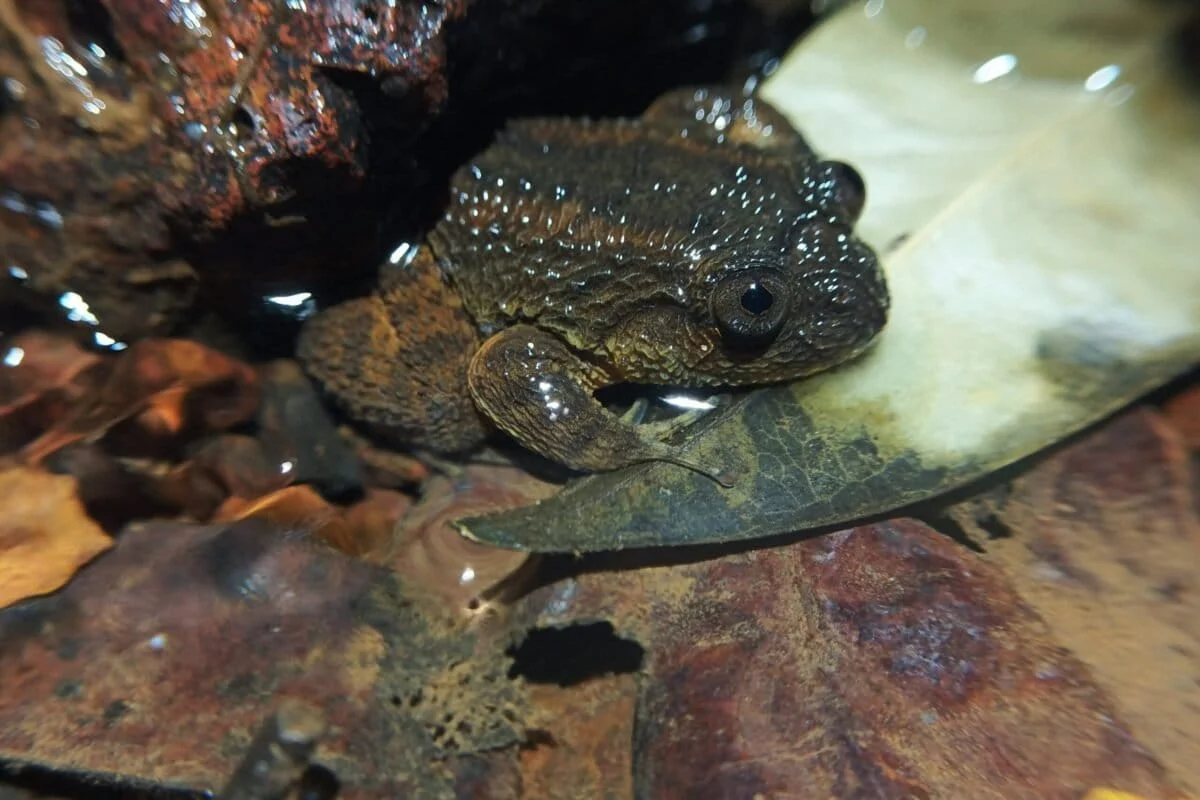
UTTARA KANNADA, KARNATAKA — In the dense, mist-shrouded rainforests of the central Western Ghats, a region long celebrated as one of the world’s most critical biodiversity hotspots, researchers have identified a new inhabitant that has managed to elude scientific classification for centuries.
The species, named Nyctibatrachus kali, or the Kali night frog, was recently described in a study published in the journal PeerJ. Its discovery in the Kali river basin of Karnataka is more than just an addition to the taxonomic records; it is a testament to the "cryptic" diversity hidden within India’s wilderness and a timely reminder of the fragile balance between industrial development and ecological preservation.
Main Facts: A New Lineage in the Western Ghats
The Kali night frog belongs to the genus Nyctibatrachus, a group of frogs commonly known as night frogs that are entirely endemic to the Western Ghats of India. This genus is ancient, representing an evolutionary lineage that has survived in these mountains for millions of years.
The identification of Nyctibatrachus kali brings the total number of amphibian species known in the Western Ghats to 253. Remarkably, nearly 94% of these species are found nowhere else on Earth. The Kali night frog itself appears to have an exceptionally restricted range, a common trait among its relatives; approximately 70% of Nyctibatrachus species are confined to very small geographic pockets, making them highly vulnerable to localized environmental changes.
Physically, the Kali night frog is a "cryptic species." To the untrained eye—and even to experienced naturalists in the field—it bears a striking resemblance to other members of its genus. However, through a rigorous process of "integrative taxonomy," which combines physical measurements (morphology), genetic sequencing (DNA), and the analysis of mating calls (bioacoustics), scientists have confirmed that it is a genetically and evolutionarily distinct entity.
Chronology: From Field Surveys to Laboratory Confirmation
The journey to the discovery of Nyctibatrachus kali began in the monsoon-soaked months of 2021.
2021: The Initial Encounter
During routine biodiversity field surveys in the Castlerock region of the Uttara Kannada district, researchers encountered a small, dark frog inhabiting the leaf litter near the streams of the Kali river catchment. At the time, the team suspected they were looking at the Kumbara night frog (Nyctibatrachus kumbara), a species first identified in 2014 in the nearby Agumbe region.
2022–2023: Laboratory and Acoustic Analysis
Suspecting that the population in the Kali basin might be unique, the research team, including scientist K.V. Gururaja and co-author Preeti Hebbar, began a multi-year analysis. They collected DNA samples to map the frog’s genetic distance from known species and deployed high-fidelity recording equipment to capture its vocalizations.
"Initially, the species was thought to be the already known Kumbara night frog," explained Dr. Gururaja. "Researchers later collected DNA samples, recorded its calls, and compared the findings, which showed that the frog was genetically and acoustically distinct."
2024: Formal Description
The findings were compiled into a comprehensive study, culminating in the formal naming of the species after the Kali River, which serves as the lifeblood of the ecosystem where the frog resides. The study was published, officially introducing Nyctibatrachus kali to the scientific community.
Supporting Data: The Science of "Integrative Taxonomy"
The discovery highlights a significant shift in how modern biology approaches the identification of life. For decades, morphology—the study of physical form and structure—was the primary tool for naturalists. However, in the lush, competitive environments of the Western Ghats, many species have evolved to look identical to avoid predators or because they occupy similar ecological niches.
Preeti Hebbar notes that relying solely on physical appearance is no longer a gold standard in herpetology. "Frog discoveries in the past were largely based on morphology alone, but that approach is no longer sufficient," she stated.
The identification of N. kali relied on three specific pillars of data:

- Genetic Divergence: By sequencing specific mitochondrial genes, the researchers found a significant percentage of genetic variation between the Kali night frog and the Kumbara night frog, indicating that the two lineages had been separated for a substantial evolutionary period.
- Bioacoustics: Every frog species has a unique "signature" call used to attract mates. The acoustic analysis revealed that the Kali night frog’s call differs in frequency and pulse rate from its closest relatives, acting as a biological barrier that prevents cross-breeding.
- Morphometrics: While they look similar at a glance, precise measurements of limb length, toe webbing, and head width revealed subtle but consistent differences that distinguish N. kali from its cousins.
This data underscores the "cryptic" nature of the Western Ghats’ biodiversity. Scientists believe there may be dozens, if not hundreds, of other species currently "hidden in plain sight" because they look like known animals but are biologically unique.
Official Responses and Collaborative Efforts
A standout feature of this discovery was the collaborative nature of the research. Unlike traditional expeditions led solely by academic institutions, the identification of the Kali night frog involved a synergy between scientists, citizens, and government officials.
"The discovery of the Kali night frog was a citizen-led effort in which forest department members also played a role," said Dr. Gururaja.
This involvement of the Karnataka Forest Department is seen as a critical step forward for conservation. By involving those who manage the land in the scientific process, the discovery gains immediate administrative weight. When forest rangers and local officers are part of the team that identifies a new species, the motivation to protect that specific habitat increases.
The official stance from the research team is one of cautious optimism. They argue that the presence of the Forest Department in these studies ensures that scientific data is directly translated into land-management policies.
Implications: Development vs. Conservation in the Western Ghats
The discovery of Nyctibatrachus kali arrives at a pivotal moment for the Uttara Kannada district. The region is currently at the center of a heated debate regarding infrastructure expansion, specifically the proposed expansion of railway lines through the pristine forests of the Western Ghats.
The Kali river basin, while ecologically vibrant, is increasingly fragmented by human activity. The researchers pointed out that had this frog remained undiscovered, the land it inhabits might have been dismissed as "low-value" or "already disturbed" during environmental impact assessments for new projects.
The "Hidden Biodiversity" Argument
One of the most profound implications of the study is the revelation that even "affected" landscapes—those near human settlements or infrastructure—can harbor unique, ancient life forms.
"A major takeaway from the study is that hidden biodiversity may exist even in landscapes already affected by development," the researchers noted. This challenges the notion that conservation should only focus on "untouched" wilderness. If a new species can be found in a region currently under threat from railway expansion, it suggests that many more unknown species could be lost before they are even documented.
A Path Toward Coexistence
Preeti Hebbar emphasizes that the goal of the study is not necessarily to halt all human progress, but to ensure that progress is informed by science. "Now, the forest department can intervene with a better understanding of the biodiversity present there. Development and conservation should go hand in hand," she said.
The identification of N. kali provides a new legal and ecological "anchor" for conservationists. In Indian law, the presence of endemic and endangered species can significantly influence the Environmental Impact Assessment (EIA) of large-scale projects. By proving that the Kali river basin is the only known home for this specific lineage of frog, the study provides a powerful argument for the protection of the Castlerock corridor.
Conclusion: The Tiny Sentinel
The Kali night frog is more than just a 30-millimeter amphibian living in a remote stream; it is a sentinel for the health of the Western Ghats. Its discovery highlights the immense gaps in our knowledge of the natural world and the urgent need for "integrative" scientific approaches.
As the Western Ghats continue to face pressures from climate change, habitat fragmentation, and infrastructure demands, the story of Nyctibatrachus kali serves as a reminder: we cannot protect what we do not know exists. The collaboration between citizens, scientists, and the state provides a potential roadmap for future conservation efforts, ensuring that the "night songs" of the Western Ghats continue for generations to come.
