

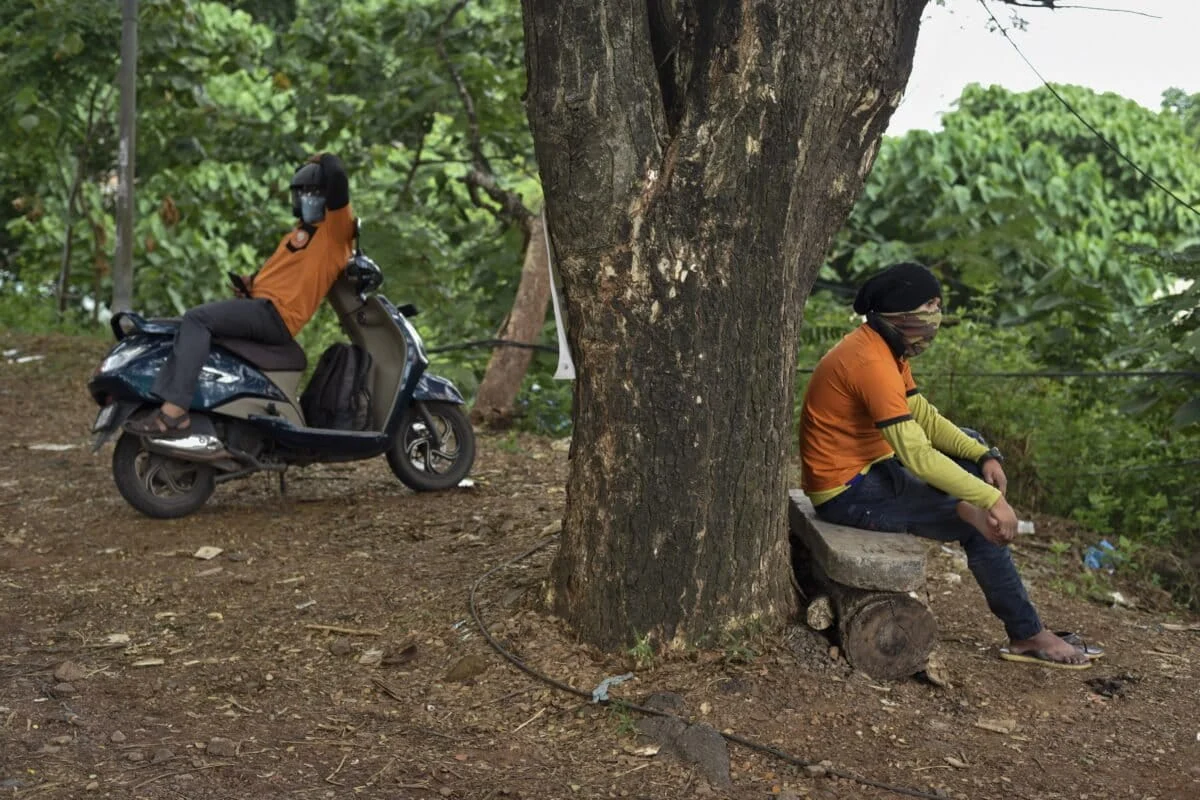
New Delhi – As India grapples with the escalating frequency and intensity of record-breaking heatwaves, a burgeoning movement led by labor unions is demanding a fundamental overhaul of the nation’s legal framework. For millions of workers—ranging from gig economy delivery partners to industrial laborers and street vendors—the current reliance on government "advisories" has proven to be a dangerously inadequate defense against life-threatening temperatures.
Three prominent labor organizations—the Amazon India Workers Association (AIWA), the Indian Federation of App-Based Transport Workers (IFAT), and the National Hawkers Federation—have submitted formal petitions to the government. Their message is clear: heat-related protections must be moved from the realm of optional "best practices" into the enforceable domain of India’s Labor Codes.
Main Facts: The Legislative Vacuum in a Warming World
The crux of the issue lies in the disconnect between India’s rapidly changing climate and its recently consolidated labor laws. In 2020, India simplified dozens of colonial-era and post-independence labor regulations into four distinct codes: the Code on Wages, the Industrial Relations Code, the Code on Social Security, and the Occupational Safety, Health and Working Conditions (OSH) Code.
While these reforms were intended to modernize the labor market and expand social security to the informal sector, they notably omitted specific, mandatory protections for extreme weather events. As ambient temperatures consistently breach the 40°C (104°F) mark during summer months, the lack of a statutory "right to cool" or "right to rest" has left the workforce vulnerable.
Labor leaders argue that "advisories"—non-binding suggestions issued by bodies like the National Disaster Management Authority (NDMA)—are routinely ignored by employers prioritized by productivity targets. "Advisories don’t scare anybody," says Nirmal Gorana, National Coordinator of the Gig & Platform Service Workers Union (GIPSWU). "Without the force of law, no one is compelled to comply."
The unions are now calling for "statutory conversion"—turning recommendations like mandatory shade, hydration breaks, and work suspensions during peak heat into enforceable minimum standards.
Chronology: From Reform to Crisis (2020–2025)
The path to the current labor unrest can be traced through a series of legislative shifts and climate shocks over the last five years.
2020: The Consolidation
The Indian government passed the four new labor codes. While the Code on Social Security brought gig workers into the legal fold for the first time, the OSH Code replaced the Factories Act of 1948. In doing so, it removed specific, state-mandated thresholds for temperature and ventilation, opting instead for broader, more generalized language.

2024: The Year of Awakening
India recorded its hottest year on record in 2024. For several consecutive days, temperatures in various regions crossed 40°C, and in some urban heat islands, peaked near 50°C. The human cost was staggering: over 40,000 suspected heatstroke cases were reported nationwide. This year served as a catalyst for public opinion, highlighting that heat was no longer a seasonal discomfort but a systemic occupational hazard.
2025: The NDMA Intervention
In response to the 2024 crisis, the NDMA issued comprehensive advisories specifically for gig and informal workers. These guidelines suggested suspending work between 11:00 AM and 4:00 PM and providing UV-protective gear. However, the voluntary nature of these guidelines meant that implementation remained patchy and at the discretion of individual platforms and employers.
April 2021 (Current Advocacy Cycle)
The IFAT and other unions submitted formal proposals to link heat protection to the Code on Social Security, demanding a dedicated climate-risk welfare fund and a verifiable mandate for water and rest.
Supporting Data: The Economics and Health of Heat
The demand for reform is supported by a growing body of scientific and economic evidence. Research indicates that working in ambient temperatures sustained above 32°C (89.6°F) significantly elevates the risk of heat exhaustion, heatstroke, and chronic kidney disease.
The Productivity-Health Paradox
Data from the University of Chicago’s Energy Policy Institute (EPIC) suggests a grim economic outlook for a warming India. Every 1°C rise in temperature is estimated to:
- Reduce annual industrial plant output by 2%.
- Decrease individual worker productivity by 2% to 4%.
For workers, this creates a "productivity trap." In the gig economy, where pay is often tied to the number of deliveries or tasks completed, falling productivity due to heat leads to lower wages. To compensate, workers push themselves harder during the hottest hours, further increasing their health risks.
The Gig Worker Survey
A 2024 joint survey by the Telangana Gig and Platform Workers Union (TGPWU) and HeatWatch revealed the physical toll on the frontlines:
- 51.81% of participants experienced heat exhaustion while on duty.
- 27% reported symptoms of severe dehydration.
- 18.07% suffered from sunburns or heat-related skin conditions.
Furthermore, investigative reports have highlighted instances where platform algorithms penalized workers for taking breaks or failing to meet delivery quotas during heatwaves, effectively forcing them to choose between their health and their livelihood.

Official Responses and Corporate Measures
In the face of mounting pressure, both the government and the private sector have begun to respond, though critics argue the efforts are largely cosmetic.
Government Stance
The NDMA’s 2025 advisory was a significant step in recognizing gig workers as a specific high-risk category. It encouraged the use of "Universal Account Numbers" (UAN) to track worker welfare. However, the Ministry of Labour and Employment has yet to signal a willingness to reopen the Labor Codes for amendments that would make these guidelines mandatory.
Corporate Initiatives
Several major platforms have announced "heatwave support measures":
- Amazon India: Announced the creation of "Amazon Ashray" centers—a network of 250 cooled resting points for delivery partners.
- Zomato and Blinkit: Introduced "cooling vests" for riders and enhanced health insurance coverage specifically for heat-related illnesses.
- Resting Points: Many platforms claim to be collaborating with local restaurants to provide access to water and restrooms.
The Union Critique
Labor unions remain skeptical of these corporate solutions. Nirmal Gorana points out that the accessibility of these "cooling centers" is often limited compared to the vast geographical area delivery partners cover. "Platforms shouldn’t engage with establishments that cannot provide basic facilities like washrooms for workers," Gorana argues. The unions demand that instead of a few hundred centers, every partner restaurant or shop should be legally required to provide a resting space for the workers who service them.
Legal Implications: The Centralization of Safety
A major point of contention identified by legal experts is the shift in how occupational safety is regulated. Deepa Padmar, a senior resident fellow at the Vidhi Centre for Legal Policy, notes that the new OSH Code has centralized authority in a way that may hinder local climate adaptation.
Under the old Factories Act of 1948, state governments had the power to set specific "wet-bulb" temperature thresholds (a measure of heat and humidity). States like Maharashtra and Tamil Nadu had rules stating that work should be considered unsafe if wet-bulb temperatures exceeded 30°C.
"Section 23 of the new OSH Code has centralized this provision," Padmar explains. "Now, only the central government can prescribe standards for ventilation and temperature. It is unclear to what extent states are empowered to make their own rules to address local climate realities."
This centralization creates a bottleneck. A "one-size-fits-all" temperature threshold for a country as climatically diverse as India may fail to protect workers in high-humidity coastal regions compared to the dry heat of the northern plains.

Broader Implications: Beyond the Gig Economy
The struggle for heat protection extends far beyond app-based delivery. For the National Hawkers Federation, the issue is one of urban planning and human rights. Street vendors, who lack the backing of a large corporate entity, often create their own shade using tarpaulins.
"These necessary coping mechanisms are frequently met with eviction drives and harassment by local authorities on grounds of encroachment," the Federation stated in its submission. They are calling for vendors to be recognized as "priority stakeholders" in municipal Heat Action Plans (HAPs). This would ensure that during extreme heat events, the focus of local government shifts from "encroachment removal" to "public health protection."
The Path Forward
The labor unions’ submissions propose a multi-pronged approach to integrating climate resilience into labor law:
- Paid Cooling Breaks: A mandate for at least 20 minutes of rest for every two hours worked during notified heatwaves.
- Climate Welfare Fund: A social security fund financed by a "climate-risk" tax on aggregators to cover medical costs and income loss.
- Algorithmic Transparency: Ensuring that heat-related downtime is not met with automated penalties and that any adverse action is reviewed by a human.
- Auditable Water Access: Moving beyond the "provision" of water to a "verifiable mandate" where companies must submit and audit their water access plans.
Conclusion
As India moves toward an era of "permanent heat," the traditional boundaries of labor rights are being redrawn. The transition from voluntary advisories to statutory mandates represents a pivotal moment in the country’s climate adaptation strategy. For the millions of workers who form the backbone of India’s burgeoning economy, the outcome of this legislative battle will determine whether they are treated as essential assets or as expendable components in a warming world.
The demands of the unions suggest that climate change is no longer just an environmental issue—it is a fundamental crisis of labor safety and social justice. Without legislative teeth, the "right to work" in India may soon become a "right to endure" conditions that the human body was never meant to withstand.
