

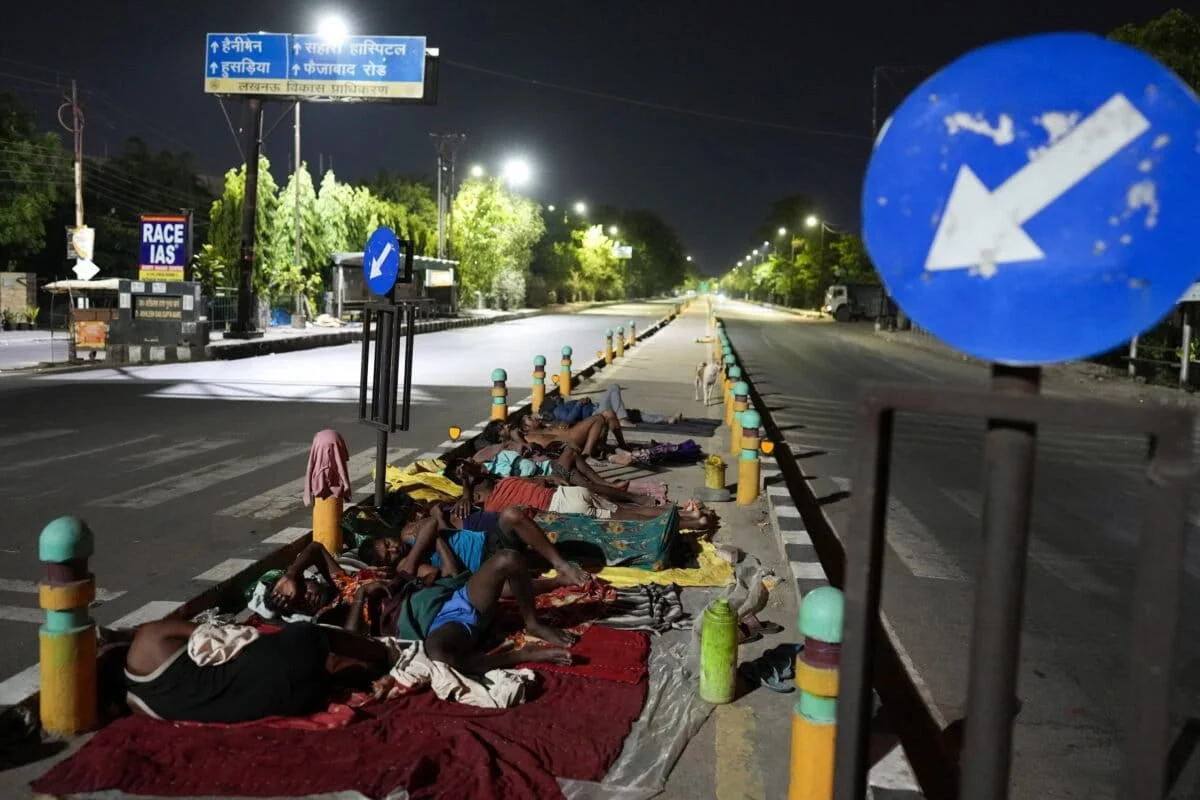
AHMEDABAD/NEW DELHI – For a construction laborer in the sprawling metropolis of Ahmedabad, a summer day is not merely a period of high temperature; it is a multi-front assault on survival. When the mercury nears 45°C (113°F), as it did during the punishing heatwaves of early 2024 and 2025, the worker faces a compounding crisis: a loss of physical capacity leading to diminished wages, an increased risk of workplace injury, and a return to a cramped, unventilated home that retains the day’s heat well into the early morning hours.
“That’s a labor problem, a housing problem, a health problem, and a finance problem, all at once, in a single day,” says Kartikeya Bhatotia, a Harvard climate fellow and co-author of a landmark white paper released in April 2026.
The report, Critical Perspectives on Extreme Heat in India, supported by Harvard University’s Salata Institute for Climate and Sustainability, warns that India is fundamentally underestimating its future heat risk. By treating extreme heat as an "episodic disaster" rather than a "structural, economy-wide risk," the nation’s current adaptation strategies may be failing the very people they are designed to protect.

Main Facts: A Nation at the Breaking Point
The Harvard white paper paints a sobering picture of a country where heat is becoming the "deadliest climate hazard." The core findings suggest that India’s current Heat Action Plans (HAPs) are often reactionary and insufficiently resourced.
Key takeaways from the research include:
- Massive Exposure: Approximately 75% of India’s workforce—roughly 380 million people—is engaged in heat-exposed labor. This includes construction workers, farmers, street vendors, and delivery personnel.
- The Muted Warming Paradox: While India has seen a temperature rise of 0.88°C compared to the 1980–1990 average, this warming has been artificially suppressed by local factors like aerosols and irrigation. As these factors shift, India faces a potential "warming surge" that historical data does not account for.
- The Night-Time Threat: Heat is no longer just a daytime phenomenon. Over 70% of Indian districts have seen a significant increase in "warm nights," preventing the human body from recovering from daytime heat stress.
- Infrastructure Gaps: Current cooling interventions, such as "cool roofs," are being treated as silver bullets when they actually address only a fraction of the heat ingress in modern urban buildings.
Chronology: From Record Temperatures to Academic Warning
The path to the 2026 white paper began with a series of escalating climate events and policy dialogues.
In April 2024, Ahmedabad recorded temperatures touching 44.8°C, marking one of the hottest April days in the city’s history. This event served as a catalyst for researchers to examine the intersection of urban design and human survival.

In March 2025, the "India 2047: Building a Climate-Resilient Future" workshop was convened in New Delhi. This gathering of climate scientists, urban planners, and policy experts—including Bhatotia—sought to move beyond traditional disaster management. The discussions held during this workshop formed the backbone of the Harvard white paper.
By April 2026, the Salata Institute officially released the findings, coinciding with another season of above-normal temperatures across the Indo-Gangetic Plain. The report was designed to influence the next decade of India’s climate adaptation funding, arguing that the "warming deficit" observed in recent decades is a dangerous baseline for future planning.
Supporting Data: The "Warming Deficit" and the Aerosol Mask
One of the most significant scientific contributions of the paper, authored by Peter Huybers, Professor of Earth and Planetary Sciences at Harvard, is the explanation of why India’s temperature rise has appeared "muted" compared to global land warming trends.
According to the data, monthly maximum temperatures in India have risen by approximately 0.28°C per decade since 1980. However, this trend has been suppressed by two primary factors:

- Aerosols: High levels of particulate matter from crop-residue burning, industrial emissions, and vehicular traffic scatter sunlight, effectively cooling the surface during the day.
- Irrigation: The massive expansion of irrigation in Northern India promotes evapotranspiration, which cools the near-surface air.
The white paper warns that as India cleans its air to meet health standards and as water tables deplete, these cooling mechanisms will weaken. "The recent historical temperature record in northern India likely understates the warming that the coming decades will bring," Bhatotia noted. If Heat Action Plans remain calibrated to these "muted" historical averages, they will systematically underestimate the lethal exposure populations will face by 2030 and 2040.
Official and Expert Responses: Beyond the "Cool Roof" Narrative
The report challenges the current obsession with "cool roofs"—painting rooftops with reflective white paint—as a primary adaptation strategy. While useful, experts argue they provide a false sense of security.
Rajan Rawal, a professor at CEPT University and senior advisor at the Centre for Advanced Research in Building Science and Energy (CARBSE), emphasizes that heat ingress is a three-dimensional problem. "In multi-storey structures, the roof may only represent approximately 5% of the total exterior surface area," Rawal explained. He argues that heat enters through walls, windows, and even floors, which absorb heat from the warming soil.
Rawal’s critique extends to urban planning policies that rely too heavily on land surface temperature data. He suggests that these frameworks ignore ambient air temperature and relative humidity—the two factors most critical for human "thermal survival." He calls for a "hybrid model" that integrates passive design (shading, low-conductivity materials) with low-energy cooling systems.

On the financial front, the paper critiques the rise of "parametric insurance." These products provide cash payouts to workers when temperatures hit a specific threshold. However, the report finds a fundamental flaw: because workers cannot predict if a payout will be triggered on any given day, they continue to work through the heat to ensure some form of income. Thus, the insurance acts as a post-exposure compensation rather than a preventative health measure.
Implications: The Economic and Health Burden of Warm Nights
The most harrowing implication of the report concerns the "downward shift" of climate costs. When the state and employers fail to invest in systemic heat resilience, the costs are externalized to the most vulnerable. For the 90% of India’s workforce in the informal sector, heat is an "economic burden" where falling ill leads to catastrophic out-of-pocket medical spending.
Furthermore, Vishwas Chitale of the Council on Energy, Environment and Water (CEEW) points to a rising "night-time crisis." CEEW analysis shows that 57% of Indian districts are at high risk, with a sharp increase in nights where temperatures do not drop sufficiently.
"When nights remain warm, the human body does not get the chance to recover," Chitale said. This cumulative exposure turns a heatwave from a manageable daytime event into a prolonged physiological stress period.

The Path Forward: A 24-Hour Management Approach
The Harvard white paper concludes that India must evolve its strategy from "short-term relief" to "long-term structural adaptation." This includes:
- Data Integration: Merging private sector health data with national registries to see the true "health burden" of heat, which is currently misclassified or unrecorded.
- 24-Hour Planning: Shifting city responses to account for "feels-like" conditions and night-time temperatures, rather than just peak daytime highs.
- Labor Reform: Moving beyond insurance to mandate work-rest cycles and provide "cooling as a service" for outdoor laborers.
As the 2026 summer begins to unfold, the message from the Salata Institute is clear: India’s modest warming trend of the past is an outlier, not a prophecy. Without a radical shift in how the nation builds, works, and protects its citizens, the structural risks of heat may soon outpace the country’s ability to adapt.
Credits:
Data and quotes sourced from the Salata Institute for Climate and Sustainability (Harvard University) and the "India 2047" workshop.
Additional analysis provided by CEW and CEPT University.
