

Main Facts: A Milestone for India’s Wetland Biodiversity
In a landmark achievement for wetland conservation, the first-ever scientific survey dedicated to the fishing cat (Prionailurus viverrinus) within the Kaziranga National Park and Tiger Reserve (KNPTR) has officially recorded the presence of 57 unique individuals. This census, conducted by the Kaziranga Tiger Cell in collaboration with the Fishing Cat Project, marks a pivotal moment in understanding the biodiversity of the Brahmaputra floodplains. The findings confirm that the fishing cat is not merely a transient resident but is widely distributed and actively breeding across the reserve’s complex network of marshes and grasslands.
The fishing cat, a medium-sized wild cat twice the size of a domestic feline, is one of the most specialized members of the felid family. Unlike most cats, it is uniquely adapted to a semi-aquatic lifestyle, possessing partially webbed feet and a deep-seated instinct for hunting fish and other aquatic prey. In the local Assamese culture, the animal is known as Meseka, a figure often featured in folk tales, yet it has long remained in the shadow of Kaziranga’s more "charismatic" megafauna, such as the one-horned rhinoceros and the Bengal tiger.
The recording of 57 individuals is being hailed by conservationists as one of the highest population densities for the species within a freshwater floodplain ecosystem in India. This data establishes Kaziranga as a premier habitat for the species, rivaling and in some cases exceeding the populations found in other major protected areas like Uttar Pradesh’s Dudhwa and Kishanpur. However, officials believe this number is a conservative estimate, providing a baseline for a species that serves as a vital indicator of the health of wetland ecosystems.
Chronology: From Camera Traps to International Recognition
The journey toward this scientific revelation began as an exercise in "bycatch" data analysis. For years, Kaziranga’s Tiger Cell has utilized an extensive network of camera traps primarily designed to monitor the movement and population of tigers. While these cameras successfully captured thousands of images of tigers, leopards, and rhinos, they also inadvertently documented the elusive movements of the fishing cat.

The formal decision to synthesize this data into a comprehensive report was catalyzed by a growing global interest in small cat conservation. The survey was meticulously organized throughout 2023 and early 2024, involving the coordination of park officials and specialized biologists from the Fishing Cat Project.
The culmination of this effort occurred on February 22, 2024, timed to coincide with International Fishing Cat Day. The release of the report was intended to draw global attention to the species and to underscore the importance of the Brahmaputra’s seasonal flood cycle in maintaining the cat’s habitat. The chronology of the study highlights a shift in conservation strategy: moving from a focus on "single-species" management (tigers) to a "landscape-level" approach that recognizes the importance of every niche occupant within the ecosystem.
Supporting Data: Methodology and the Challenges of "Bycatch" Science
The methodology behind the survey was both rigorous and labor-intensive. Because a dedicated, park-wide survey for every individual species is logistically impossible due to the sheer size of Kaziranga (over 430 square kilometers in its core area), researchers relied on existing camera trap grids.
The data set was staggering. Wildlife officials and biologists had to sift through more than 1.4 million images captured by camera traps. This process required distinguishing the fishing cat from other small carnivores, such as the jungle cat or the leopard cat, based on pelage patterns, tail length, and body structure.
However, using tiger-oriented camera traps presented significant technical hurdles. Tiasa Adhya, a wildlife biologist and co-founder of the Fishing Cat Project, noted several environmental and logistical constraints:
- Placement Bias: Tiger cameras are generally mounted higher on tree trunks to capture the flank of a large cat. Because fishing cats are much shorter, many images were partial, showing only the tops of heads or backs.
- Environmental Interference: The Brahmaputra floodplains are prone to heavy fog and monsoon rains. Poor visibility often rendered images unusable, and the high humidity of the marshlands frequently led to lens fogging.
- Proximity Issues: Some individuals walked too close to the sensors, resulting in overexposed or blurred images that made individual identification (based on unique spot patterns) difficult.
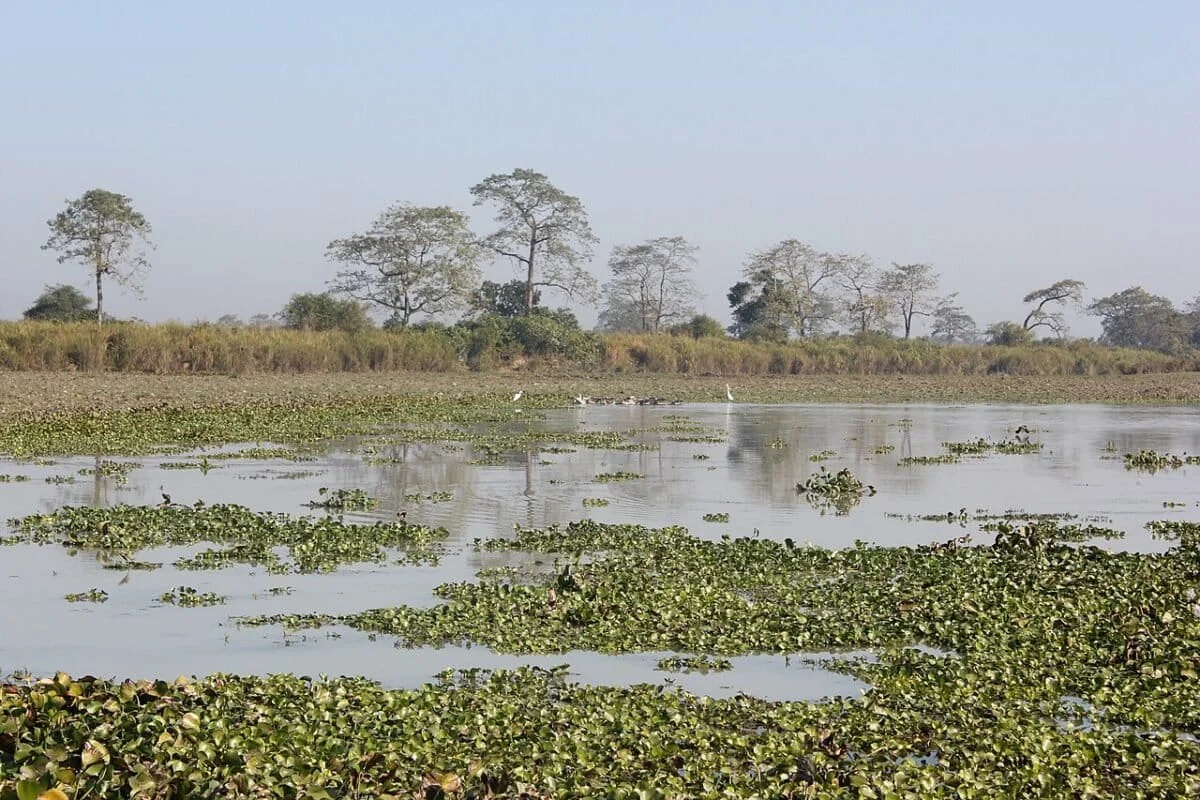
Despite these challenges, the confirmation of 57 individuals suggests a robust population. The survey notes that while estuarine environments like the Sundarbans might host higher fish densities and larger populations, Kaziranga stands as the gold standard for freshwater inland habitats. The data further suggests that the cats are concentrated in areas with high "edge complexity"—where tall alluvial grasslands meet permanent water bodies.

Official Responses: Reinstating Kaziranga’s Ecological Status
The reaction from the forestry department and the scientific community has been one of cautious optimism. Sonali Ghosh, the Director of Kaziranga National Park and Tiger Reserve, emphasized the strategic importance of these findings. "This is one of the highest numbers in the freshwater floodplain, which reinstates KNP as one of its finest habitats," Ghosh stated. She noted that knowing the specific habitat preferences of the fishing cat allows the department to fine-tune its management of the park’s "beels" (wetlands).
The role of the fishing cat as an "indicator species" was a recurring theme in official statements. Because the cats rely almost exclusively on fish and small aquatic reptiles, a thriving fishing cat population suggests that the water bodies are free of significant pollutants and that the natural flood cycle—which replenishes fish stocks annually—is functioning correctly.
Tiasa Adhya further elaborated on the ecological nuances, explaining that the fishing cat is a specialist of the "tall wet alluvial grasslands." Her insights highlight a critical concern: the cat is a victim of its own specialization. While generalist species can adapt to various environments, the fishing cat’s survival is inextricably linked to the presence of healthy marshes. Inside the protected boundaries of Kaziranga, officials confirmed that poaching is virtually non-existent, and the habitat remains pristine, providing a "fortress" for a species that is losing ground elsewhere in Asia.
Implications: Threats, Coexistence, and the Path Forward
While the survey results are a cause for celebration, they also illuminate the myriad threats facing the species outside the protected confines of the park. The fishing cat is currently listed as "Vulnerable" on the IUCN Red List and is protected under Schedule I of India’s Wildlife Protection Act, 1972—the same level of protection afforded to tigers and elephants.
The Threat of Succession and Climate Change
One of the most significant long-term threats identified by researchers is ecological succession. As the climate changes and drier years become more frequent, the woodland-grassland dynamics of the park may shift. "Drier years could lead to woodlands replacing marshes," Adhya warned. If the open wetlands are overtaken by woody vegetation, the fishing cat will lose its primary hunting grounds. This makes the annual Brahmaputra floods not just a seasonal event, but a biological necessity that "resets" the ecosystem and prevents the wetlands from disappearing.

Infrastructure and Roadkill
The proximity of National Highway 75 (NH-75) remains a lethal challenge. While the park interior is safe, the animals often move toward the southern hills during high floods. On September 24, 2024, a fishing cat was killed in a road accident on the highway. Local conservationist Manoj Baruah pointed out that many such incidents go unreported, particularly during the chaos of the monsoon season when animals are desperate to find higher ground.
The Myth of Conflict
A surprising and positive finding of the report and subsequent interviews is the lack of significant conflict between fishing cats and local human communities. In many parts of West Bengal and Southeast Asia, fishing cats are persecuted for allegedly stealing fish from commercial ponds. However, in the fringes of Kaziranga, the situation is different.
Ranger Bijit Dihingia of the Bagori range noted that the abundance of natural prey within the park’s 40+ wetlands keeps the cats from venturing too deep into human settlements. Furthermore, local fishermen have observed that smooth-coated otters are far more likely to deplete fish stocks than the solitary, stealthy fishing cat. "The fishermen don’t have conflicts with fishing cats," Dihingia remarked, suggesting a level of peaceful coexistence that could serve as a model for other regions.
Conclusion: A Baseline for the Future
The recording of 57 fishing cats in Kaziranga is more than just a number; it is a mandate for continued vigilance. This survey has established a critical baseline that will allow future researchers to monitor how the species responds to river modifications, climate-induced habitat shifts, and the encroaching pressure of infrastructure.
As Kaziranga continues to be a global success story for the recovery of the rhino and the tiger, the "Meseka" now joins the ranks of the reserve’s high-priority residents. The challenge moving forward lies in ensuring that the "ghosts of the wetlands" have a permanent home in an increasingly dry and fragmented world. The survey serves as a reminder that the health of the Brahmaputra is reflected in the eyes of its smallest, most elusive predators.
