

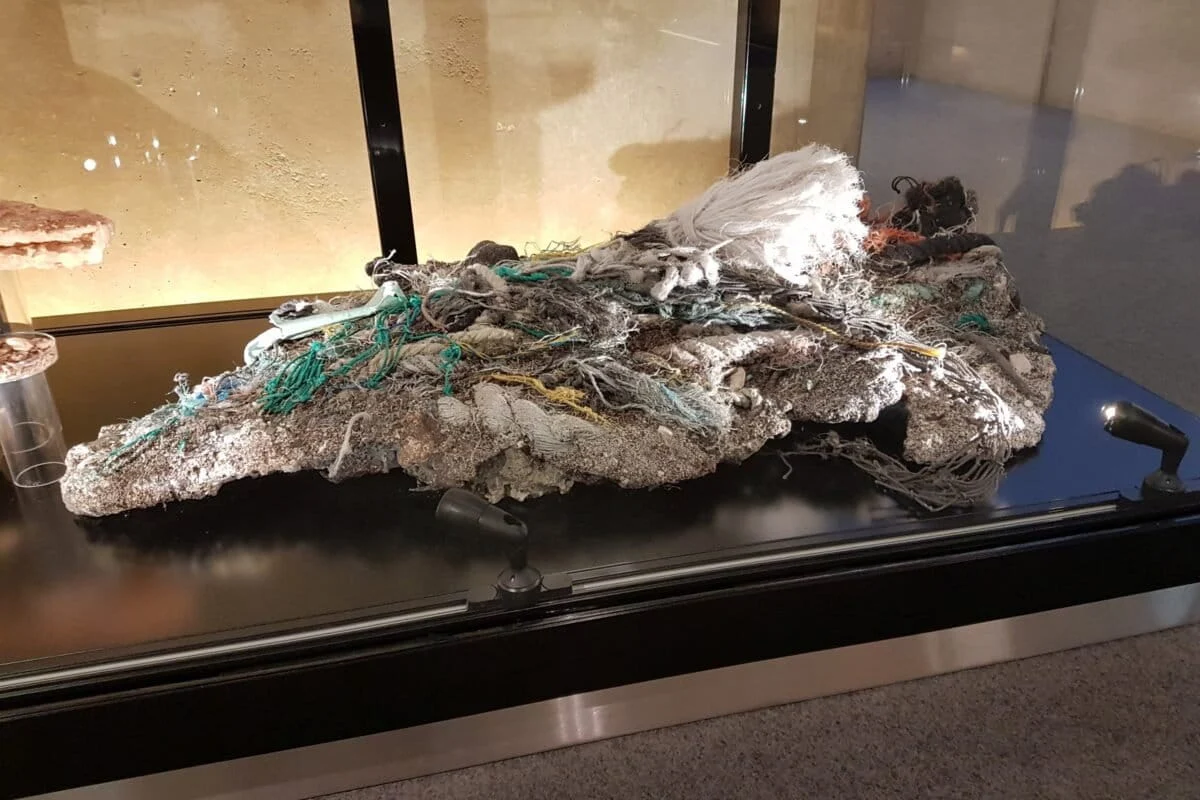
In the quiet coastal town of Diveagar, located in Maharashtra’s Raigad district, the rhythm of the Arabian Sea has long defined the landscape. However, beneath the surface of its picturesque sandy shores and rocky outcrops, a new and unsettling geological phenomenon has taken root. In May 2024, a team of researchers from the Indian Institute of Science Education and Research (IISER) Kolkata uncovered the first evidence of "plastistone" on India’s western coast—a hybrid substance where plastic waste has fused with natural rock through environmental processes.
This discovery marks a significant milestone in the study of the Anthropocene, the proposed geological epoch defined by human impact on Earth. It suggests that plastic pollution is no longer merely an unsightly layer of debris on the surface; it is becoming a permanent part of the planet’s lithology.
Main Facts: A New Class of Sedimentary Rock
The discovery at Diveagar beach represents the first recorded instance of plastistone on the Indian subcontinent’s western seaboard. While plastic-rock hybrids have been documented in other parts of the world—and previously in India’s Andaman and Nicobar Islands and Tamil Nadu—the Diveagar samples are distinct due to their formation process and composition.
Plastistone is categorized as a "novel form of sedimentary rock." Unlike "plastiglomerates" or "pyroplastics," which are typically formed through the human-induced burning of plastic (such as at beach bonfires), plastistone is the result of natural environmental forces. In Diveagar, researchers found that plastic debris—specifically discarded fishing nets—had become chemically and physically bonded with mineral sediments and biological matter.
The primary characteristics of the Diveagar discovery include:
- Location: A 10-kilometer stretch of the Raigad coastline, specifically in low-tide zones.
- Composition: A fusion of polyamide (nylon), polyethylene, polypropylene, and PET polymers with sand, mollusk shells, barnacles, and foraminifera.
- Formation Mechanism: Natural bonding facilitated by UV radiation, high ambient temperatures, and wave energy.
- Significance: It confirms that plastic has transitioned from a transient pollutant to a structural agent in coastal geology.
Chronology: From Fieldwork to Laboratory Revelation
The journey to this discovery began in the summer of 2024, but its roots lie in a multi-year effort to map the impact of plastic on India’s diverse marine ecosystems.

May 2024: The Expedition
A research group led by Punyasloke Bhadury, a professor at IISER Kolkata, arrived at Diveagar beach. The team chose this location due to Maharashtra’s reputation for high coastal pollution loads, driven by rapid urbanization, heavy tourism, and intensive commercial fishing. Using chisels and hammers, the researchers carefully extracted samples from rocky outcrops where strange green filaments appeared to be growing out of the stone.
June – August 2024: Forensic Analysis
The samples were transported to the Isotope Tracer and Marine Environmental Research Group (ITMERG) lab at IISER Kolkata. Lead author Nirupama Saini and her colleagues employed a suite of advanced analytical techniques:
- Microscopic Screening: High-magnification imaging confirmed that the plastic was not merely stuck to the surface but was "integrated" into the rock’s matrix.
- Spectroscopic Analysis: Infrared radiation was passed through the samples to identify the chemical signatures of the polymers. This revealed a cocktail of synthetic materials, primarily polyamide from "ghost" fishing nets.
September 2024: Peer Review and Publication
The findings were compiled into a study titled "Evidence of Plastistone from the West Coast of India," which was recently published in the journal Discover Oceans. The study officially identified the formation as the first of its kind in the region, distinguishing it from the burnt plastic hybrids found in the Andamans in 2023.
Supporting Data: The Chemistry of a Polluted Coastline
The scientific weight of the discovery is supported by the specific chemical and biological interactions found within the samples.
The Polymer Profile
The analysis identified four major types of plastic within the plastistone:
- Polyamide: Derived from nylon fishing nets, providing the structural "mesh" that holds the rock together.
- Polyethylene & Polypropylene: Common in single-use packaging and ropes.
- PET (Polyethylene Terephthalate): Typical of beverage bottles.
The Biological "Glue"
A crucial finding was the role of biogenic material. The researchers observed that mollusk shells and single-celled organisms called foraminifera were acting as biological binders. This three-way interaction—plastic, rock, and organism—accelerates the process of "lithification," where loose sediment turns into solid stone.

The Scale of the Crisis
The emergence of plastistone is a direct consequence of India’s massive plastic footprint. According to a 2024 study published in Nature, India emits approximately 9.3 million tonnes of plastic pollution annually. This accounts for nearly one-fifth of the world’s total plastic emissions. In Maharashtra specifically, a 2020 study had already highlighted that the state’s beaches harbor significantly higher concentrations of micro and macro-plastics compared to neighboring Karnataka and Goa.
The Ghost Gear Problem: A Structural Threat
One of the most alarming aspects of the Diveagar discovery is the role of "ghost gear"—abandoned, lost, or discarded fishing gear (ALDFG). The study found that the "skeleton" of the plastistone was a green nylon fishing net.
N. Pravin Kumar, a senior programme coordinator at WWF-India, notes that ghost gear makes up an estimated 10% to 50% of global marine plastic waste. Unlike consumer plastic bottles, which may eventually break down into microplastics, modern fishing gear is engineered for extreme durability. It is designed to resist UV degradation and mechanical wear.
When these nets get trapped in reef crevices or rocky shores, they don’t just sit there; they become "geochemical agents." They trap sediments, provide a surface for calcifying organisms to grow, and eventually facilitate the creation of plastistone. This process ensures that the "ghost" of the fishing industry will remain etched in the geological record for thousands of years.
Official Responses and Expert Warnings
The scientific community has reacted to the discovery with a mixture of professional intrigue and environmental dread.
Punyasloke Bhadury (IISER Kolkata): "We are witnessing an increasing record of human signatures on geological structures. This is not just about litter; it is about how we are fundamentally altering the Earth’s sedimentary processes. The fact that these formations are occurring naturally—without the need for fire—suggests that the environment is now ‘digesting’ our waste into its own fabric."

Anish Kumar Warrier (Manipal Institute of Technology): Warrier, a professor of geology not involved in the study, described plastistone as a "critical transition." He noted that plastics are no longer merely pollutants but are now active participants in the rock cycle. "Plastistones may act as indicators of environmental degradation, marking a point of no return for many coastal ecosystems," he said.
Nirupama Saini (Lead Author): Saini highlighted the potential health risks, noting the "biomagnification angle." Since the plastic is integrated with biological life (shells and organisms), there is a high probability that toxins are entering the food chain at the very base, eventually reaching human consumers.
Implications: A Permanent Legacy of Pollution
The discovery of plastistone at Diveagar has far-reaching implications for ecology, policy, and the future of Earth’s oceans.
1. Alteration of Habitats
Plastistone changes the physical properties of the coastline. Plastic-infused rocks have different heat retention capacities compared to natural basalt or limestone. They tend to trap more heat, which can raise the temperature of the immediate micro-environment. This "thermal pollution" can disrupt the breeding patterns of tide-pool organisms, crabs, and sea turtles that rely on specific temperature cues.
2. Reservoirs of Toxins
Rather than being washed away, microplastics and chemical additives (like phthalates and bisphenols) are now locked into the shoreline. As these rocks weather over centuries, they will act as a slow-release "pill" of toxins, leaching pollutants into the water long after humanity has potentially moved away from plastic use.
3. Impact on Microbial Communities
Preliminary research suggests that the "plastisphere"—the microbial community living on plastic—is different from natural rock-dwelling microbes. The presence of plastistone could lead to a shift in the microbial balance of coastal ecosystems, potentially favoring pathogenic or invasive species.

4. The Need for Policy and Monitoring
The researchers are now calling for a robust "coastal health monitoring" system. Bhadury’s team is reaching out to the Maharashtra state government, local NGOs, and Raigad’s fishing communities to increase awareness. There is an urgent need for "citizen science," where locals are trained to identify and report these formations.
5. Beyond the Ocean
Perhaps most chilling is the prediction that this is not just a marine issue. Professor Bhadury suspects that plastistones will soon be found in freshwater ecosystems—rivers, lakes, and reservoirs—wherever high plastic density meets natural sedimentation.
Conclusion
The rocks of Diveagar beach were once a record of volcanic activity and tectonic shifts spanning millions of years. Today, they contain a new chapter: one of nylon nets, PET bottles, and the indelible mark of 21st-century consumption. The discovery of plastistone on India’s western coast is a stark reminder that our "disposable" culture is, in fact, permanent. As these synthetic stones become part of the Earth’s crust, they stand as silent, durable monuments to an era where humanity’s waste became its heritage.
