

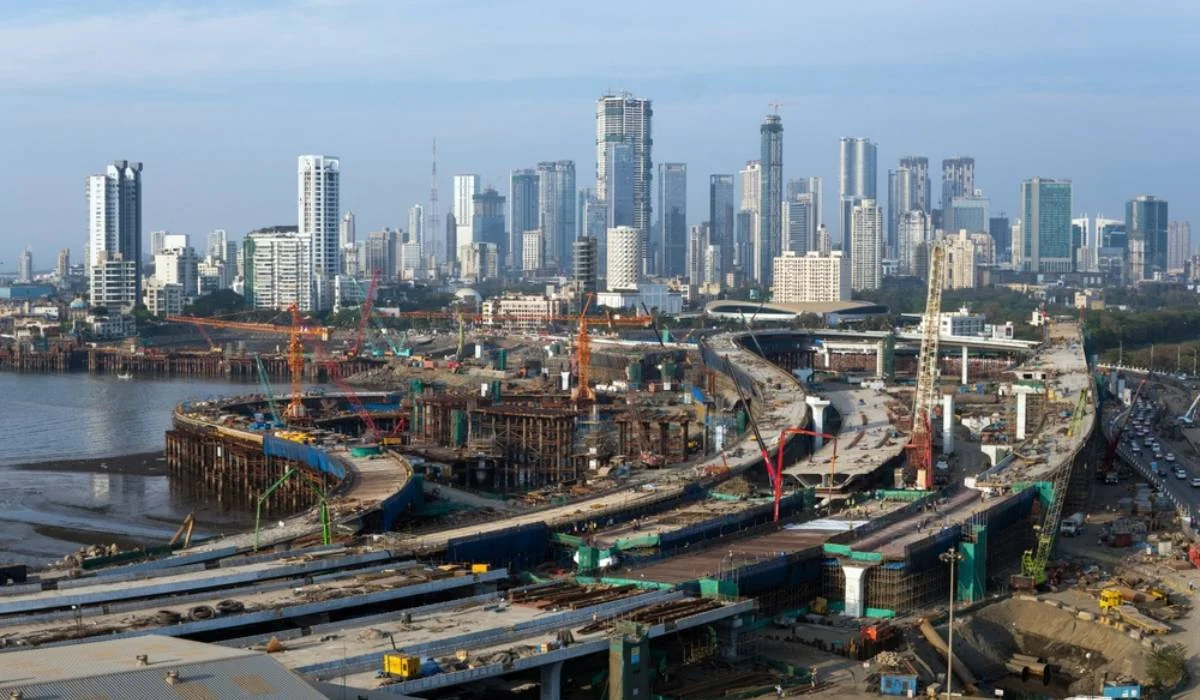
Mumbai, the financial heartbeat of India, has long been defined by its geography—a narrow peninsula where prestige was historically measured by one’s proximity to the southern tip. However, the narrative of the "Maximum City" is undergoing a radical transformation. No longer is the city’s real estate market a story of static legacy addresses; it is now a dynamic map being redrawn by massive infrastructure projects.
From the sweeping curves of the Mumbai Coastal Road to the sprawling reaches of the Metro network and the engineering marvel of the Atal Setu (MTHL), infrastructure has transitioned from being a mere utility to becoming the primary driver of capital appreciation and lifestyle shifts. This report explores the multi-faceted impact of these developments on the luxury housing sector, the emergence of new micro-markets, and the changing psychology of the high-net-worth homebuyer.
1. Main Facts: The Decentralization of Luxury
The central theme of Mumbai’s current real estate cycle is the "decentralization of prestige." For decades, South Mumbai (SoBo) held an undisputed monopoly on the "luxury" tag. Today, that definition is being challenged by the Western Suburbs and Navi Mumbai.
The Shift to the Western Corridor
Micro-markets such as Goregaon, Malad, Kandivali, and Borivali—once considered "distant suburbs"—have ascended into the luxury bracket. This shift is driven by a combination of modern supply and land availability. Unlike the structurally constrained neighborhoods of South Mumbai, these suburban pockets allow for large-scale "Integrated Developments." These projects offer what legacy buildings cannot: expansive gated communities, multi-level amenity decks, and "wellness zones" integrated into the residential ecosystem.
The New Definition of "Prime"
In the contemporary market, "prime" is no longer just a PIN code; it is a calculation of "Time-Value." Luxury buyers are increasingly prioritizing ease of movement, air quality, and the availability of modern facilities over the historical cachet of older districts. The conversation has moved from "living closer to the city center" to "living better within a connected ecosystem."
2. Chronology: A Timeline of Connectivity
The transformation of Mumbai’s real estate did not happen overnight. It is the result of a sequenced rollout of mega-projects that have systematically unlocked land value.
The Metro Era (2022–Present)
The commissioning of Metro Lines 2A (Dahisar to DN Nagar) and 7 (Dahisar East to Andheri East) marked a turning point for the Western Suburbs. By providing a predictable, traffic-free commute, these lines effectively "shortened" the distance between the residential north and the commercial hubs of Bandra-Kurla Complex (BKC) and Andheri.
The Coastal Road Milestone (2024)
The partial opening of the Mumbai Coastal Road has been a game-changer for North-South connectivity. By slashing travel times between the Western Suburbs and South Mumbai from 60 minutes to just 15-20 minutes, it has revitalized interest in suburban luxury projects, as the "commute penalty" has been significantly reduced.
The MTHL and the "Third Mumbai" (2024)
The inauguration of the Mumbai Trans Harbour Link (MTHL), or Atal Setu, has bridged the gap between the island city and the mainland. This has set the stage for the development of "Third Mumbai," turning areas like Ulwe and Panvel into hotbeds for investment.
The Future: Navi Mumbai International Airport (Upcoming)
Expected to be operational in the near future, the Navi Mumbai International Airport is the final piece of the puzzle. Historically, airports create "aerotropolis" ecosystems—hubs of hospitality, logistics, and Grade-A office spaces—which inevitably lead to a surge in high-end residential demand in the surrounding periphery.
3. Supporting Data: The "Infra-Impact" Tracker
Data from the Mumbai Property Exchange and various market analysts highlight a direct correlation between infrastructure proximity and price escalation.
The "1-KM Radius" Rule
According to the Mumbai Property Exchange infra-impact tracker, residential properties located within a 1-kilometer radius of an operational metro station typically experience a 20% to 35% price appreciation within the first two years of the line’s operation. This "Metro Premium" is now a standard metric used by investors to gauge potential returns.
Impact on Specific Nodes
- Borivali & Kandivali: With the full operations of Metro Lines 2A and 7, these markets have seen a price uplift of 15% to 20%. The predictability of the commute has turned these areas from "far-flung suburbs" into "practical luxury zones."
- The Coastal Road Corridor: Nodes adjacent to the Coastal Road entry and exit points have seen a 15% to 25% impact on prices. The reduction in travel time has allowed developers to price suburban projects at a premium, narrowing the gap with South Mumbai rates.
- Navi Mumbai & Ulwe: The MTHL has reduced travel time to South Mumbai by nearly 70 minutes. Consequently, emerging markets like Ulwe and Panvel have seen an estimated 30% to 40% uplift in land and apartment values as they become viable residential options for professionals working in South Mumbai and BKC.
4. Official Responses and Industry Perspectives
Industry leaders and developers are recalibrating their strategies to align with this infrastructure-led growth.
The Developer’s Viewpoint
The Director of CCI Projects notes that the "compounding effect" of simultaneous infrastructure projects is unprecedented. "Luxury housing is no longer confined to a narrow set of traditional addresses. It is spreading across infrastructure-led corridors where the quality of living experience can match, and in some cases exceed, older premium pockets," the Director stated.
The Shift Toward "Integrated Living"
Market analysts observe that developers are moving away from standalone towers. Because suburban land parcels allow for greater scale, the industry is pivoting toward "Township-style" formats. These developments offer:
- High-Level Security: Gated environments that provide a sense of sanctuary.
- Open Spaces: Large gardens and sports infrastructure that are impossible to replicate in the dense urban fabric of South Mumbai.
- The "Work-Live-Play" Ecosystem: Incorporating co-working spaces and retail outlets within the residential complex.
Institutional Sentiment
Real estate consultancy firms suggest that the current cycle is unique because it isn’t just about speculation; it’s about utility. The infrastructure is being used immediately upon completion, providing "proof of concept" to skeptical buyers and leading to sustained demand rather than a short-term bubble.
5. Implications: The Future of Mumbai’s Urban Fabric
The enrichment of Mumbai’s infrastructure has profound implications for the city’s socio-economic future and the real estate investment landscape.
1. The Democratization of Luxury
As infrastructure bridges the gap between different zones of the city, the "luxury" experience is becoming more accessible to a broader segment of high-income earners. A family can now afford a 3,000-square-foot apartment with world-class amenities in Borivali for the price of a cramped, older 2-bedroom flat in a "prestige" South Mumbai neighborhood. For many, the choice is increasingly leaning toward the former.
2. The Rise of the Aerotropolis
The Navi Mumbai International Airport will likely trigger a commercial boom. As businesses move closer to the airport to capitalize on logistics and connectivity, a new wave of "white-collar" residential demand will emerge. This will shift the city’s center of gravity further eastward, creating a polycentric urban structure rather than the traditional linear one.
3. Capital Appreciation vs. Rental Yield
While South Mumbai remains a stable store of value, the Western Suburbs and Navi Mumbai are offering higher capital appreciation potential. Investors are moving toward these "growth corridors" where the entry price is lower but the percentage growth—fueled by new infrastructure—is significantly higher.
4. Sustainability and Urban Planning
Integrated developments in the suburbs are often built with modern sustainability standards, including rainwater harvesting, solar energy, and better waste management. As the city expands, these planned communities offer a blueprint for a more sustainable Mumbai, contrasting with the aging, difficult-to-retrofit infrastructure of the island city.
5. The "Predictability" Premium
In a city notorious for its traffic, "predictability" has become a luxury asset. Whether it is the timed arrivals of the Metro or the signal-free stretches of the Coastal Road, the ability to schedule one’s life with certainty is a value proposition that developers are now successfully monetizing.
Conclusion
Mumbai’s real estate story is no longer written in the boardrooms of legacy developers alone; it is being written by the engineers and urban planners laying down tracks and paving new roads. The synergy between the Metro, the Coastal Road, and the MTHL has created a "connectivity web" that is dissolving the old boundaries of the city.
As we move forward, the distinction between "town" and "suburb" will continue to blur. In this new era, luxury will be defined by the quality of the air, the time saved on the road, and the comprehensiveness of the living ecosystem. For the Mumbai homebuyer, the horizon has never looked wider, and for the investor, the "growth corridors" of the western and eastern peripheries represent the new frontier of the Indian real estate market.
