

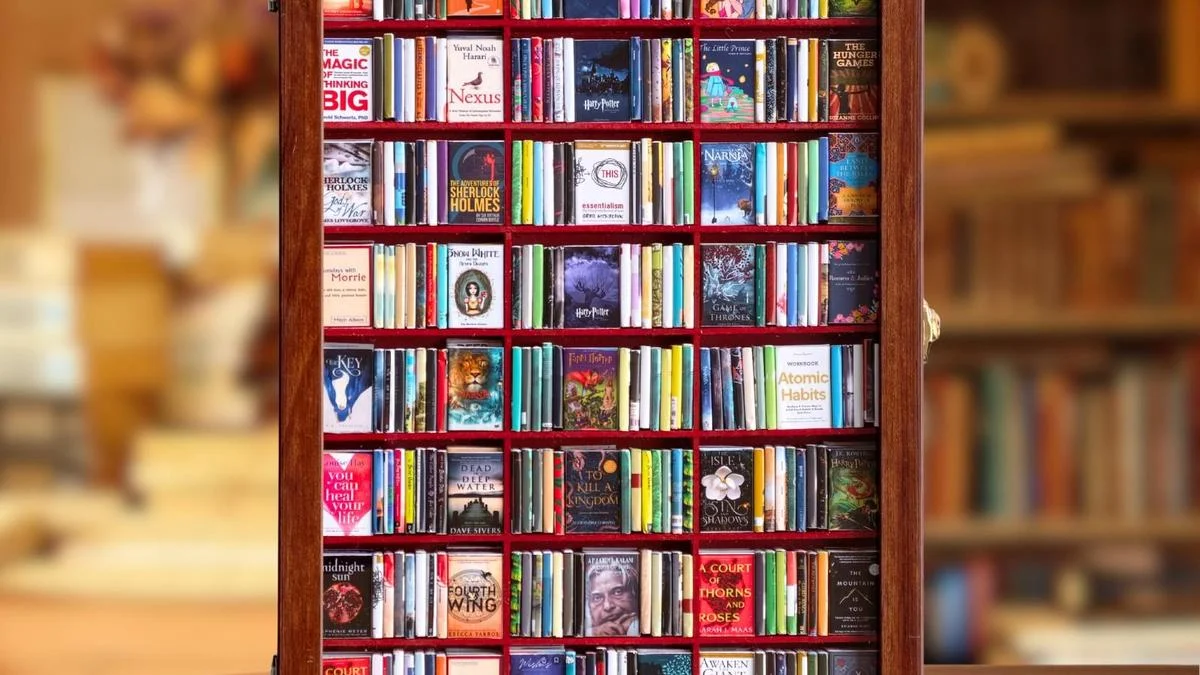
In an era dominated by the ethereal glow of e-readers and the infinite scrolling of digital libraries, the physical book remains a potent symbol of intellectual identity. However, for many, the dream of a sprawling personal library—floor-to-ceiling mahogany shelves housing thousands of volumes—remains an architectural and financial impossibility. Enter Prabin C, a software developer from Kuttipuram, Kerala, who has found a way to condense the grandeur of a bibliophile’s dream into an object that can be cradled in the palm of a hand.
Prabin’s venture, aptly titled "My Little Library," is more than a novelty craft; it is a meticulous intersection of craftsmanship, software-driven precision, and literary passion. By creating miniature bookcases filled with exact replicas of beloved titles, Prabin has tapped into a deep-seated human desire to curate and display the stories that shape us.
Main Facts: The Intersection of Software and Sentiment
At first glance, "My Little Library" appears to be a charming piece of home décor. However, the complexity of the project reveals the mind of its creator—a software developer by trade. Prabin C, the co-founder of a Kuttipuram-based startup specializing in e-commerce websites and digital products, has applied the principles of scalability and customization to a physical medium.
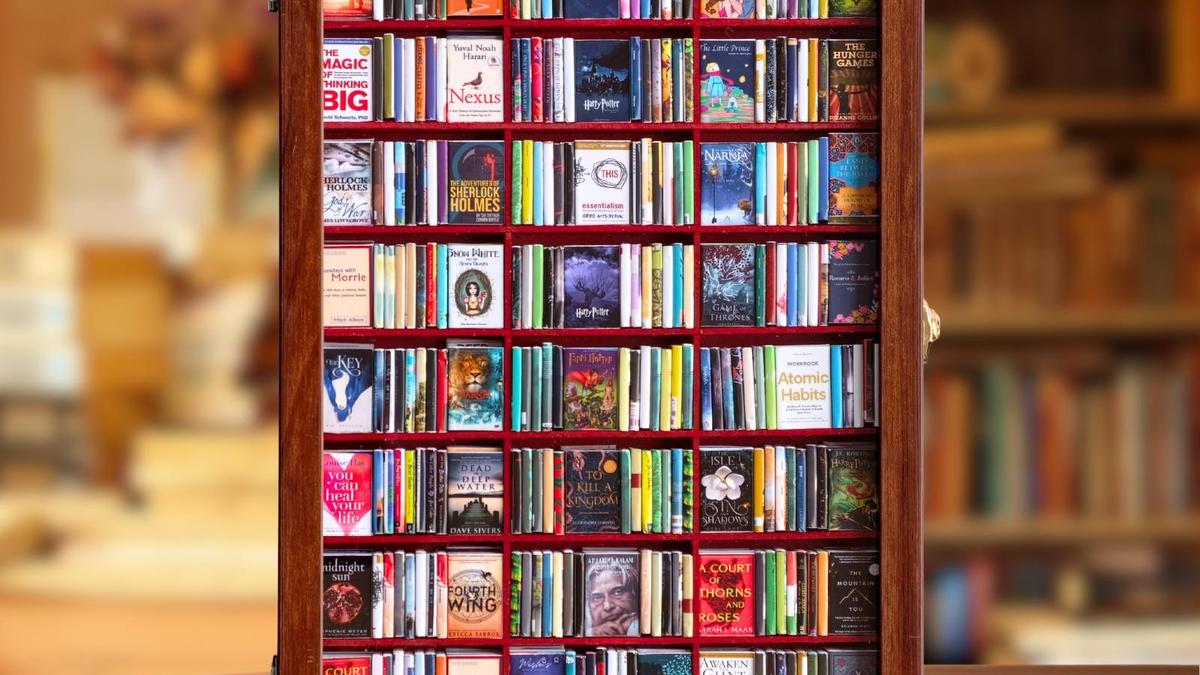
The product is a diminutive bookcase, varying in size from a compact 5×3 inches to a more substantial 12×8 inches. Within these frames reside miniature books—replicated with such precision that their covers are indistinguishable from the original editions, save for their size. The smallest units can house 50 books, while the largest models can accommodate an impressive collection of over 400 miniature volumes.
The primary appeal of these libraries lies in their permanence. As Prabin notes, readers often lose access to the physical copies of the books they have loved, whether they were borrowed from public libraries, lent to friends, or lost during moves. "We may not all possess the books we have read or want to read," Prabin explains. "This way, although you cannot read them, the books will be with you always." It is a concept of "symbolic ownership"—the idea that the presence of the book’s spine on a shelf serves as a mnemonic device for the knowledge and emotions contained within the text.
Chronology: From Personal Project to Commercial Success
The journey of "My Little Library" began approximately two years ago, born not from a business plan, but from a personal intersection of hobbies. Prabin, an avid reader and a fan of miniature art, began experimenting with ways to display his favorite titles in a space-efficient manner.
The Prototype Phase
The initial development of the product was fraught with the typical challenges of artisanal manufacturing. Prabin’s first iterations utilized traditional materials: solid wood and glass. While aesthetically pleasing, these materials proved impractical for the modern e-commerce landscape. Shipping glass and heavy wood led to frequent breakages, a setback that would have discouraged a less persistent creator.
The Material Pivot
Leveraging his problem-solving skills, Prabin transitioned the manufacturing process to use Medium-Density Fibreboard (MDF) and a specialized, shatter-resistant alternative to glass. This pivot was crucial; it allowed for a lighter, more durable product that could survive the rigors of national shipping while maintaining a high-end aesthetic.
Social Media as a Catalyst
The transition from a hobby to a business was catalyzed by Instagram. When Prabin first shared images of his creations online, he had no intention of monetization. However, the visual nature of the "Bookstagram" community—a global subculture of book lovers who share aesthetically pleasing photos of their collections—provided the perfect audience. Inquiries for custom orders began to flood in, prompting the software developer to apply his professional expertise to launch a formal brand.
In the eighteen months since its official launch, "My Little Library" has sold over 3,000 units. What started as a solo project has evolved into a structured operation where Prabin now employs assistance to meet the growing demand for these literary artifacts.
Supporting Data: The Mechanics of the Miniature
The success of "My Little Library" is backed by a robust database of literary titles and a clear pricing structure that caters to different segments of the market.
The Database of Titles
Central to the customization process is Prabin’s extensive digital library of book covers. He currently maintains a "collection" of more than 600 titles, spanning both Malayalam and English literature. This database is not merely a list; it is a repository of high-resolution graphic replicas.
- Language Distribution: The collection is currently split between Malayalam and English, reflecting the linguistic landscape of Prabin’s primary consumer base in Kerala and across India.
- Customization Constraints: Prabin maintains a strict rule: he generally only "shelves" books that are already in his collection or that he can personally verify. This ensures that the quality of the miniature cover remains high. However, exceptions are made for special requests, such as gifts for authors, where specific titles must be created from scratch.
Pricing and Specifications
The product line is designed to be accessible while reflecting the labor-intensive nature of the craft.
- Small Library: 5×3 inches, capacity of 50 books, priced at ₹1,299.
- Large Library: 12×8 inches, capacity of 400+ books, priced at ₹4,899.
The process of making a single miniature is described by Prabin as "a lot of work," involving precise cutting, gluing, and alignment to ensure the "shelf" looks like a realistic library rather than a toy.
Official Responses and User Testimonials
The reception to "My Little Library" has been overwhelmingly positive, particularly among the cultural influencers of South India. The libraries have become a favorite for gifting, especially for authors and academics.
The Author’s Perspective
One of the most significant endorsements of the product comes from the community of writers themselves. Prabin notes that he frequently receives requests to create libraries as gifts for authors. These "author editions" feature the writer’s own bibliography, allowing them to see their life’s work condensed into a single, hand-held display. This has turned the product into a prestigious token of appreciation within literary circles.

The Reader’s Sentiment
Content creator Afeefa VP, a recipient of one of the libraries, highlights the emotional weight these objects carry. "This is my small world comprising [Vaikkom Muhammad] Basheer, Madhavikutty [Kamala Das], and Benyamin," she says. "Certain things are special not because of their size but because of what they encompass!"
Afeefa’s comment underscores the cultural specificities of the product. For a reader in Kerala, seeing the miniature spines of Basheer’s Pathummayude Aadu or Kamala Das’s Ente Katha evokes a profound sense of heritage. The "Little Library" acts as a physical manifestation of one’s intellectual autobiography.
Implications: The Future of the "Micro-Artifact" Economy
The success of Prabin C’s venture points toward several broader trends in consumer behavior and the future of physical media.
The Resurgence of Tactility
As the world becomes increasingly digitized, there is a counter-movement toward "tactile nostalgia." People who read exclusively on Kindles still find themselves desiring the visual presence of books in their homes. "My Little Library" satisfies this aesthetic need without requiring the square footage of a traditional library. It suggests that the future of physical books may lie in their value as objects and symbols rather than just information carriers.
The Expansion into Regional Literature
Prabin has noted a surge in inquiries for libraries featuring Tamil, Telugu, and Hindi titles. While he has been cautious about expanding into languages where he is not familiar with the literature, the demand signals a massive untapped market. The "miniaturization" of India’s diverse regional literatures could serve as a unique way to preserve and celebrate linguistic identity across the diaspora.
Scaling the Artisanal
The primary challenge for "My Little Library" moving forward will be scaling. Unlike digital products, which have zero marginal cost for additional users, each miniature library requires physical labor. Prabin’s background as a software developer puts him in a unique position to automate parts of the design process, but the assembly remains an art form. His ability to balance the "software" of his database with the "hardware" of the MDF shelves will determine the brand’s longevity.
Conclusion
Prabin C has managed to capture the essence of the "Bibliosmia"—the love of the smell and sight of books—and package it for a modern, space-constrained world. "My Little Library" is a testament to the fact that our connection to stories is not just intellectual, but physical. By shrinking the library, Prabin has made the vast world of literature feel more intimate, more personal, and infinitely more portable. As he looks toward the future, potentially expanding into new languages and even larger collections, one thing remains clear: in the world of Prabin C, the smallest shelves often carry the heaviest meanings.
