

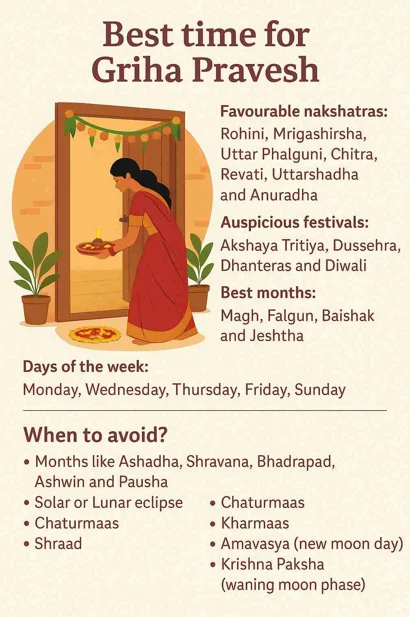
In the tapestry of Indian culture, a home is far more than a physical structure of bricks and mortar; it is viewed as a living entity that breathes and influences the lives of its inhabitants. According to Hindu traditions and the ancient science of Vastu Shastra, the transition into a new property—known as Griha Pravesh—is a pivotal life event. Selecting an auspicious date and time, or shubh muhurat, is believed to align the home’s energy with cosmic forces, ensuring long-term prosperity, health, and harmony.
As we look toward 2026 and early 2027, homeowners and investors are increasingly prioritizing these traditional alignments. This comprehensive report details the most favorable dates, the underlying astrological science, and the essential rituals required for a successful house-warming ceremony.
1. Main Facts: The Intersection of Vastu and Astrology
The concept of Griha Pravesh is rooted in the belief that the universe is governed by five elements: Earth (Prithvi), Water (Jal), Fire (Agni), Air (Vayu), and Space (Akash). A Griha Pravesh puja is designed to balance these elements within a new space.
Key Factors in Determining a Muhurat:
- The Hindu Panchang: The lunar calendar serves as the primary tool for calculating dates.
- Tithi (Lunar Day): Specific days of the lunar month are considered "pure," such as Dwitiya, Tritiya, and Dashami.
- Nakshatra (Lunar Mansion): The position of the moon in one of the 27 constellations significantly impacts the "vibration" of the day.
- Lagna (Ascendant): The rising sign at the time of entry must be stable (Fixed or Dual) to ensure the family’s roots remain strong.
Experts suggest that performing these rituals during a favorable planetary alignment removes Vastu Dosha (architectural or energetic flaws) and purifies the environment of negative energies left behind by construction or previous occupants.
2. Chronology: Auspicious Griha Pravesh Dates (2026 – April 2027)
The following tables outline the calculated auspicious windows for moving into a new home. Please note that these timings are generally based on the Hindu lunar calendar and may vary slightly depending on local sunrise/sunset times.
May – July 2026: The Summer Windows
The second quarter of 2026 offers several strong dates before the onset of the traditional "quiet" periods.
| Date | Day | Tithi | Nakshatra | Muhurat Window |
|---|---|---|---|---|
| May 4, 2026 | Monday | Tritiya | Anuradha | 05:49 AM to 09:58 AM |
| May 8, 2026 | Friday | Saptami | Uttara Ashadha | 12:21 PM to 09:20 PM |
| May 13, 2026 | Wednesday | Ekadashi | Uttara Bhadrapada | 05:45 AM to 01:29 PM |
| June 24, 2026 | Wednesday | Dashami | Chitra | 05:44 AM to 01:59 PM |
| June 26, 2026 | Friday | Trayodashi | Anuradha | 10:22 PM to 05:44 AM (Jun 27) |
| June 27, 2026 | Saturday | Trayodashi | Anuradha | 05:44 AM to 10:11 PM |
| July 1, 2026 | Wednesday | Dwitiya | Uttara Ashadha | 06:51 AM to 05:46 AM (Jul 02) |
| July 2, 2026 | Thursday | Dwitiya | Uttara Ashadha | 05:46 AM to 09:27 AM |
| July 6, 2026 | Monday | Saptami | Uttara Bhadrapada | 04:07 PM to 05:47 AM (Jul 07) |
Note on August – October 2026: There are no recommended Griha Pravesh dates during these months due to inauspicious periods such as Bhadrapada and Chaturmas, times traditionally reserved for penance and internal reflection rather than new beginnings.

November – December 2026: The Year-End Surge
The end of 2026 sees a significant increase in auspicious dates, coinciding with several major festivals.
| Date | Day | Tithi | Nakshatra | Muhurat Window |
|---|---|---|---|---|
| Nov 11, 2026 | Wednesday | Dwitiya | Anuradha | 06:19 AM to 11:38 AM |
| Nov 20, 2026 | Friday | Ekadashi | Uttara Bhadrapada | 06:56 AM to 06:24 AM (Nov 21) |
| Nov 25, 2026 | Wednesday | Pratipada/Dwitiya | Rohini/Mrigashira | 06:27 AM to 06:27 AM (Nov 26) |
| Dec 2, 2026 | Wednesday | Dashami | Uttara Phalguni | 10:51 PM to 06:31 AM (Dec 03) |
| Dec 11, 2026 | Friday | Tritiya | Uttara Ashadha | 03:04 AM to 06:37 AM (Dec 12) |
| Dec 19, 2026 | Saturday | Dashami | Revati | 06:40 AM to 03:58 PM |
January – April 2027: Early Year Opportunities
The beginning of 2027 provides a final cluster of dates before the Kharmas period begins in mid-April.
| Date | Day | Tithi | Nakshatra | Muhurat Window |
|---|---|---|---|---|
| Jan 1, 2027 | Friday | Dashami | Chitra | 01:09 PM to 05:29 PM |
| Feb 11, 2027 | Thursday | Panchami | Revati | 07:03 AM to 03:18 AM (Feb 12) |
| Feb 22, 2027 | Monday | Dwitiya/Tritiya | Uttara Phalguni | 11:54 AM to 06:53 AM (Feb 23) |
| March 10, 2027 | Wednesday | Dwitiya/Tritiya | Revati | 06:37 AM to 06:36 AM (Mar 11) |
| March 24, 2027 | Wednesday | Dwitiya/Tritiya | Chitra | 06:21 AM to 07:25 PM |
| April 1, 2027 | Thursday | Dashami | Uttara Ashadha | 06:12 AM to 09:25 AM |
3. Supporting Data: The Science of Selection
The selection of these dates is not arbitrary. It involves a deep analysis of several astronomical and cultural variables.
The Significance of Nakshatras
There are 27 Nakshatras, but not all are suitable for entering a new home. The most favored include:
- Fixed Nakshatras: Rohini, Uttara Phalguni, Uttara Ashadha, and Uttara Bhadrapada. These are ideal for long-term residency.
- Friendly/Gentle Nakshatras: Mrigashira, Chitra, Anuradha, and Revati. These foster peace and social harmony.
The Lunar Phase (Tithis)
The Shukla Paksha (Bright Fortnight) is generally preferred over the Krishna Paksha (Dark Fortnight). The 2nd, 3rd, 5th, 7th, 10th, 11th, and 13th days of the lunar month are considered peak windows for positivity.
Times to Avoid: Rahu Kaal
Even on an auspicious day, certain hours must be avoided for the actual entry. Rahu Kaal is a 90-minute period each day considered energetically "heavy."
| Day | Rahu Kaal Window |
|---|---|
| Monday | 07:30 AM – 09:00 AM |
| Tuesday | 03:00 PM – 04:30 PM |
| Wednesday | 12:00 PM – 01:30 PM |
| Thursday | 01:30 PM – 03:00 PM |
| Friday | 10:30 AM – 12:00 PM |
| Saturday | 09:00 AM – 10:30 AM |
| Sunday | 04:30 PM – 06:00 PM |
4. Official Responses and Expert Perspectives
Vastu experts and Vedic astrologers emphasize that while general calendars provide a baseline, "Personalized Muhurats" are the gold standard.

The "Living Entity" Doctrine
Professional Vastu consultants argue that a house reflects the destiny of its owner. "A Griha Pravesh is essentially an invitation to the Divine to reside within your walls," says one expert. "Performing the ceremony on a day that clashes with your birth star (Janma Nakshatra) can lead to restlessness, even if the general day is auspicious."
Types of Griha Pravesh
Experts categorize the ceremony into three types:
- Apoorva: Entering a newly constructed house for the first time.
- Sapoorva: Re-entering a house after a long period of absence (e.g., returning from abroad).
- Dwandwah: Entering a house after significant reconstruction or renovation due to natural calamities.
Ritual Significance: Boiling Milk
A common question asked of priests is the significance of boiling milk. Experts explain this as a "Purna Kumbha" ritual. As the milk boils over the vessel, it symbolizes the "overflowing" of wealth, food, and happiness in the household. It is also a scientific method of purification, as the steam helps cleanse the air.
5. Implications: Preparing for the Transition
Adhering to these dates has profound implications for the psychological and spiritual well-being of the family. A structured Griha Pravesh serves as a mental "reset," marking a clear boundary between the old life and a fresh beginning.
Essential Checklist for Homeowners:
- The Threshold (Toran): Decorate the main entrance with mango leaves and marigold flowers. This is the "face" of the home and must be welcoming.
- Vastu Shanti and Graha Shanti: These specific pujas are non-negotiable. They pacify the nine planets (Navagraha) and appease the Vastu Purush (the deity of the structure).
- Cleanliness: The house must be thoroughly cleaned before the puja. Avoid moving heavy furniture (beds, wardrobes) until the rituals are complete. Only the gas stove or cylinder should be brought in initially.
- Charity: Traditional wisdom suggests that a "housewarming" is incomplete without feeding the needy or a priest, which helps ground the new energy in service and gratitude.
Modern Trends: The Digital Puja
In a post-pandemic world, a new trend has emerged: Virtual Griha Pravesh. For NRIs or those with families spread across the globe, priests now offer guided ceremonies via video conferencing. While the physical rituals (like breaking a coconut or lighting the diya) are performed by the owners, the mantras and guidance are delivered digitally, ensuring that even the tech-savvy generation remains connected to their roots.
Conclusion
Selecting a Griha Pravesh Muhurat in 2026-2027 is a blend of ancient wisdom and personal intentionality. By aligning the move with the Hindu Panchang and Vastu principles, homeowners can transform a simple physical relocation into a sacred journey toward peace and prosperity. As the saying goes, "The stars impel, they do not compel," but moving with the cosmic tide certainly makes for a smoother journey into a new home.
