

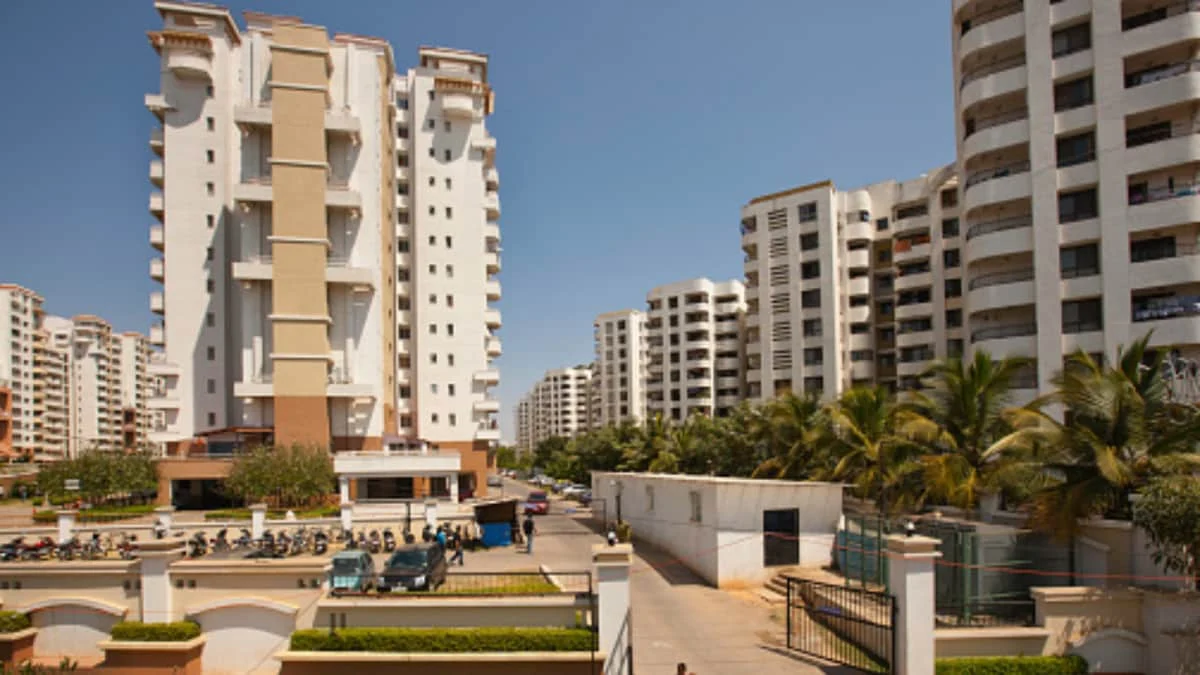
BENGALURU – The landscape of Indian real estate is undergoing a seismic shift, with the southern corridor emerging as the primary engine for the country’s ultra-luxury residential market. According to the latest industry data, the "Silicon Valley of India," Bengaluru, has been significantly outperformed by Hyderabad in the high-stakes arena of ultra-luxury home sales.
A comprehensive joint report titled ‘Southern India High End Luxury Housing,’ released by India Sotheby’s International Realty and CRE Matrix, reveals that the collective appetite for homes priced at ₹10 crore and above has reached unprecedented heights. In the 2025-26 financial year, the three major southern hubs—Hyderabad, Bengaluru, and Chennai—recorded the sale of 811 ultra-premium units, totaling a staggering transaction value of ₹11,246 crore.
While Bengaluru has traditionally been the face of premium real estate in the south, the new data suggests a changing of the guard, with Hyderabad now leading the charge in terms of both volume and total capital infusion.
1. Main Facts: The Statistical Surge of 2025-26
The report highlights a robust expansion in the luxury sector, driven by a post-pandemic preference for larger living spaces, modern amenities, and prestigious addresses. The data breaks down the performance of the three major cities as follows:
Hyderabad: The Undisputed Leader
Hyderabad has emerged as the powerhouse of South Indian luxury real estate. The city accounted for a lion’s share of the market, recording 625 ultra-luxury sales during the last financial year. These transactions generated a total value of ₹8,562 crore. This dominance is not merely a fluke but a reflection of the city’s aggressive infrastructure development and its ability to offer massive "value-for-space" that competitors struggle to match.
Bengaluru: Momentum Amidst Constraints
Bengaluru, despite its reputation for high-net-worth residency, took the second spot. The city saw 128 luxury units sold, with a total transaction value of ₹1,957 crore. While the numbers are healthy, the city’s growth in the ultra-luxury segment is facing headwinds from high land costs and limited availability of large contiguous land parcels in prime areas, leading to smaller unit sizes for the same price point.
Chennai: The Legacy Stronghold
Chennai remains a more conservative and niche market for ultra-luxury housing. It recorded 58 units sold, totaling ₹727 crore. Chennai’s market is characterized by "old money" and legacy buyers who prioritize established neighborhoods, though it lacks the sheer volume and rapid-fire transaction speed seen in its neighboring states.
2. Chronology: The Evolution of the Southern Luxury Market
The rise of the ₹10-crore-plus market in South India did not happen overnight. To understand the current peak, one must look at the trajectory of the last five years.
- 2020-2021 (The Pandemic Pivot): As the world went into lockdown, the definition of "home" changed for India’s elite. High-net-worth individuals (HNWIs) began seeking larger, self-contained ecosystems. This period saw the initial flight from cramped city centers to sprawling suburban villas.
- 2022-2023 (The Tech & Pharma Boom): The wealth generated in Hyderabad’s pharmaceutical sector and Bengaluru’s technology and startup ecosystem began pouring into real estate. Developers began pivoting from mid-range "affordable luxury" to "ultra-luxury" to meet this new demand.
- 2024-2025 (Infrastructure-Led Growth): The completion of major infrastructure projects, such as Hyderabad’s Outer Ring Road (ORR) and Bengaluru’s expanded metro connectivity, opened up new micro-markets. This set the stage for the massive sales figures recorded in the current report.
- 2025-2026 (The Current Peak): We are currently witnessing a "super-cycle" where luxury is no longer just a lifestyle choice but a preferred asset class for wealth preservation.
3. Supporting Data: The "Space Value" Proposition
One of the most revealing aspects of the India Sotheby’s International Realty and CRE Matrix report is the disparity in what a ₹10-crore investment actually buys a consumer in different cities. This "space value" is perhaps the single biggest reason for Hyderabad’s lead.
Square Footage Analysis (At the ₹10 Crore Benchmark)
- Hyderabad: Buyers can expect approximately 6,210 sq. ft. of living space.
- Chennai: Buyers receive approximately 4,290 sq. ft.
- Bengaluru: Buyers receive the least amount of space, averaging 3,930 sq. ft.
This data underscores a critical market dynamic: Hyderabad offers nearly 58% more space than Bengaluru for the same price. For HNWIs seeking "palatial" living, the choice becomes mathematically clear.
Key Micro-Markets Driving Growth
The report identifies specific neighborhoods that have become magnets for ultra-luxury investment:
- Kokapet (Hyderabad): Often referred to as the "New York of Hyderabad," this area has seen a vertical explosion. High-rise luxury apartments here are setting new benchmarks for amenities.
- Rajanukunte (Bengaluru): As the central business district becomes saturated, Rajanukunte has emerged as a preferred destination for those seeking gated villa communities and a quieter, greener lifestyle without leaving the tech hub’s orbit.
- Boat Club & Poes Garden (Chennai): These remain the "gold standard" in Chennai, though new luxury corridors are slowly emerging along the East Coast Road (ECR).
4. Official Responses: Expert Perspectives
Industry leaders believe that the current data is a harbinger of a long-term structural shift in the Indian economy.
Ashwin Chadha, CEO of India Sotheby’s International Realty, noted that the South Indian market is no longer a monolith. "South India’s luxury housing market reflects three distinct identities," Chadha explained. "Hyderabad stands out for its sheer scale and volume. Bengaluru is characterized by rapid transaction momentum—homes sell fast when they hit the market. Chennai, conversely, continues to draw its strength from legacy appeal and established premium neighborhoods."
Chadha further predicted that while Hyderabad currently leads in volume, Bengaluru is poised for "accelerated growth" as new high-end projects in the north of the city come online.
Abhishek Kiran Gupta, CEO and Co-Founder of CRE Matrix, described this era as a strategic turning point. "Hyderabad’s leadership is supported by strong structural fundamentals," Gupta said. "The city offers better space value and a consistent demand for large residential units. For investors, the key lies in tailoring strategies based on individual city dynamics rather than treating the southern segment as a uniform market."
Gupta emphasized that the demand is being driven not just by local buyers, but by a significant influx of Non-Resident Indians (NRIs) looking to park capital in high-appreciating Indian assets.
5. Implications: What This Means for the Future
The shift in dominance from Bengaluru to Hyderabad in the ultra-luxury segment has several wide-ranging implications for urban planning, the economy, and the real estate industry.
The Rise of the "Vertical Villa"
In Hyderabad, the trend is moving away from traditional landed bungalows toward "vertical villas"—ultra-luxury apartments that occupy an entire floor, offering 360-degree views and private elevators. This allows for high-density luxury, which is more sustainable for urban growth.
Wealth Concentration and Urban Migration
The concentration of ₹11,246 crore in just 811 homes suggests a massive consolidation of wealth in these three urban centers. This will likely lead to a "halo effect," where high-end retail, international schools, and premium healthcare facilities cluster around these luxury micro-markets, further driving up land values.
The Challenge for Bengaluru
For Bengaluru to regain its top spot, the city may need to address its infrastructure bottlenecks. The report suggests that while demand in Bengaluru is high, the "hassle factor" of the city—traffic congestion and high land costs—is pushing some ultra-luxury buyers to look toward Hyderabad, where the "ease of living" in newer developments is perceived to be higher.
Investment Strategy for the Next Decade
For institutional investors and developers, the data suggests a "multi-city" approach is essential.
- In Hyderabad, the play is on Scale: Large projects with thousands of square feet per unit.
- In Bengaluru, the play is on Velocity: High-end boutique projects that cater to the fast-moving tech elite.
- In Chennai, the play is on Scarcity: Small, exclusive redevelopments in legacy postcodes.
Final Outlook
As we move further into 2026, the southern luxury market shows no signs of cooling down. With the rise of the "Ultra-High Net Worth Individual" (UHNWI) population in India, the demand for homes that serve as both a sanctuary and a status symbol is expected to grow. While Hyderabad currently wears the crown, the fierce competition between these three southern titans is ultimately elevating the standard of living and architectural excellence across the entire region.
The "South India High End Luxury Housing" report serves as a clear signal: the luxury real estate market is no longer just about a roof over one’s head—it is about the acquisition of a unique, high-value asset in an increasingly globalized Indian economy.
