

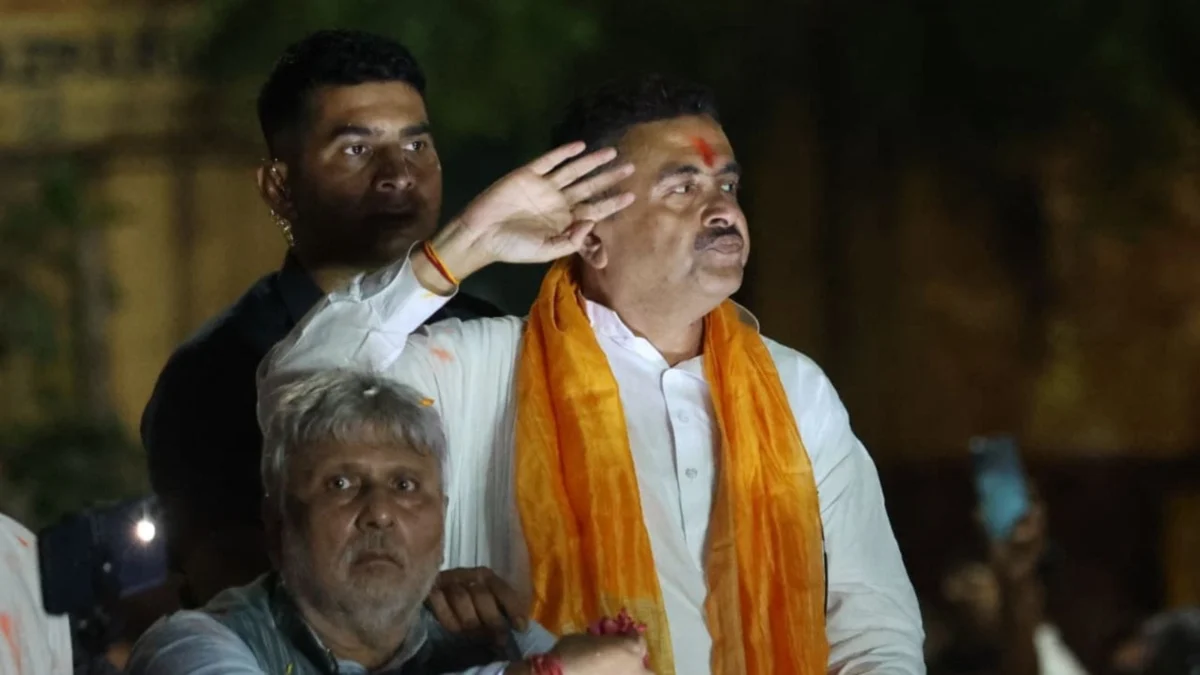
Kolkata, West Bengal – As the newly installed Suvendu Adhikari-led BJP government in West Bengal gears up to present its inaugural budget, it faces an immediate and daunting fiscal challenge: the near doubling of the state’s social welfare expenditure if it proceeds with its ambitious pre-poll promises. This delicate balancing act between electoral pledges and economic realities will define the initial trajectory of the "double engine" government, testing its capacity to deliver on expectations while navigating a substantial debt burden and a persistent revenue deficit.
The BJP, having secured a historic mandate and formed its first government in the state, campaigned aggressively on enhancing existing welfare schemes and introducing new ones. Key among these commitments were a significant increase in monthly assistance to women under the rebranded Annapurna Bhandar (formerly Lakshmir Bhandar) scheme, a hike in unemployment allowances, and the long-awaited clearance of Dearness Allowance (DA) dues for state government employees. Should all these promises be implemented as envisioned, the state’s annual expenditure on these fronts alone is projected to skyrocket to approximately Rs 1.29 lakh crore, a staggering leap from the current outlay of Rs 54,000 crore, which does not even account for the unpaid DA.
The Fiscal Abyss: A Snapshot of West Bengal’s Finances
West Bengal’s financial health has been a subject of concern for years, marked by a high debt-to-GSDP ratio and recurring revenue deficits. The estimated revenue deficit for 2026-27 is projected at Rs 21,759 crore. However, Finance Department officials indicate that the immediate expansion of welfare schemes and the settlement of DA dues could push this figure to over Rs 31,000 crore. More critically, the state’s debt burden for the current financial year is expected to reach an alarming Rs 8.15 lakh crore.
This figure places West Bengal’s outstanding debt at around 38% of its Gross State Domestic Product (GSDP), significantly exceeding the recommended fiscal prudency limits of 20% to 25% for states. The burden of servicing this massive debt diverts substantial funds that could otherwise be allocated to crucial developmental projects, infrastructure, education, or healthcare.
BJP sources, however, remain optimistic, asserting that the advent of a "double engine" government – with the same party in power both at the Centre and in the state for the first time – will provide the necessary impetus to overcome these financial hurdles. This theory posits that closer coordination and increased central assistance will alleviate the state’s fiscal stress, unlocking new avenues for revenue and support.
Unpacking the Promises: A Closer Look at Expenditure Spikes
The BJP’s manifesto, a blueprint for its governance, outlines ambitious welfare enhancements that carry significant price tags.
Annapurna Bhandar (formerly Lakshmir Bhandar): Empowering Women, Elevating Costs
The Lakshmir Bhandar scheme, launched by the previous Mamata Banerjee government in 2021, provided a monthly assistance of Rs 1,500 to general category women and Rs 1,700 to women from SC/ST groups. With around 2.20 crore women currently enrolled, including 29.45 lakh from SC and 4.78 lakh from ST communities, the scheme already incurs an annual expenditure of approximately Rs 39,000 crore.
The BJP, in a strategic move, has not only taken the first step towards refurbishing the scheme by renaming it Annapurna Bhandar but has also promised to significantly hike the benefits to a uniform Rs 3,000 per month for all beneficiaries. This populist measure, aimed at further empowering women and securing a vital vote bank, would nearly double the scheme’s annual cost to an estimated Rs 79,000 crore. The transition and expansion of this scheme represent a massive financial commitment, underscoring the government’s resolve to fulfill its electoral pledges.
Unemployment Allowance and the Job Creation Conundrum
Beyond direct financial assistance, the BJP manifesto also vowed to tackle the persistent issue of unemployment in West Bengal. The promise includes increasing the monthly assistance for the unemployed to Rs 3,000, alongside the ambitious target of creating 1 crore new jobs and self-employment opportunities over the next five years.
The previous TMC government had initiated the Yuba Sathi scheme, offering Rs 1,500 per month to unemployed youths. Reportedly, 84 lakh individuals signed up for this scheme within days of its launch, pushing the annual expenditure to around Rs 15,000 crore. Doubling this allowance, as promised by the BJP, would escalate the annual cost to approximately Rs 30,000 crore.
While the increased allowance provides immediate relief, the larger challenge lies in generating actual employment opportunities. West Bengal has historically struggled with industrialization and job creation, leading to significant out-migration for work. The commitment to create 1 crore jobs is a monumental task that requires robust industrial policy, skill development initiatives, and a conducive investment climate – areas where the state has lagged for decades. The Adhikari government will be under immense pressure to demonstrate concrete progress on this front, as a mere increase in allowance, without corresponding job creation, is not a sustainable solution.
Dearness Allowance Parity: A Long-Standing Grievance Addressed
Perhaps one of the most politically sensitive and financially impactful promises is the resolution of the long-standing dispute over Dearness Allowance (DA) for state government employees. For years, West Bengal government staff have agitated for parity with their Central government counterparts. Currently, Central government employees receive 60% DA, while West Bengal staff are entitled to a significantly lower 18%.
The BJP’s manifesto explicitly pledged to implement the Seventh Pay Commission recommendations and clear all pending DA arrears within 45 days of forming the government. This promise directly addresses a deep-seated grievance that has fueled numerous protests and legal battles. In a significant development, the Supreme Court, in an order dated February 5, had directed West Bengal to clear DA dues in accordance with the Fifth Pay Commission report, a directive that entails a one-time payment of approximately Rs 42,000 crore as compensation to government employees. To ensure ongoing DA parity with Central government staff, the state would need to allocate an additional Rs 20,000 crore annually. Together, these immediate and recurring DA payments could sum up to a staggering Rs 62,000 crore in the current fiscal year alone.
This commitment, while crucial for boosting employee morale and addressing a matter of justice, represents an enormous immediate financial outlay that will significantly strain the state exchequer. The government’s ability to fulfill this promise swiftly will be a key indicator of its seriousness and fiscal management capabilities.
Beyond the Big Three: Rationalizing Other Welfare Schemes
The previous TMC government had a wide array of other welfare schemes, including the Kanyasree Prakalpa for girl students (started in 2013), Rupasree Prakalpa for financial assistance for girls’ marriages (2018), Krishak Bandhu for farmers (2019), and several schemes targeting fishermen. These initiatives collectively cost the state approximately Rs 4,000 crore annually.
The Adhikari government plans to rationalize some of these schemes by subsuming them into existing Central government programs. For instance, schemes for farmers and fishermen are likely to be integrated with corresponding Central initiatives, potentially freeing up a portion of the state’s funds. This strategy aligns with the "double engine" narrative, allowing the state to leverage Central resources and reduce its independent financial burden on certain welfare fronts.
The Double Engine Promise: Hope or Hype?
The "double engine" argument is central to the BJP’s strategy for navigating West Bengal’s financial quagmire. BJP sources and Chief Secretary Manoj Agarwal have repeatedly emphasized that having the same party in power at both the state and the Centre will lead to unprecedented cooperation, unlocking Central funds and accelerating projects that were stalled under the previous regime.
This vision entails several key benefits:
- Increased Central Grants and Assistance: A BJP-led state government is expected to receive more favorable treatment and faster release of funds from the Central government, including special grants for development projects.
- Reintroduction of Stalled Central Schemes: Several flagship Central schemes, such as Ayushman Bharat (the national health insurance program), were not fully implemented in West Bengal due to political differences with the TMC government. The Adhikari government plans to reintroduce these, with Central funding replacing state-specific equivalents like Swasthya Sathi, thereby shifting the financial load from the state to the Centre.
- Faster Project Approvals: Infrastructure projects, industrial initiatives, and other developmental ventures often require clearances and coordination at both state and Central levels. A "double engine" setup is expected to streamline these processes, attracting more investment and fostering economic growth.
However, the "double engine" theory is not without its caveats. While Central support can provide significant relief, it is not an unlimited tap. States are still primarily responsible for generating their own revenue, managing their finances prudently, and prioritizing expenditure. The Centre’s assistance often comes with conditions and specific guidelines, and it cannot fully compensate for deep-seated structural issues within a state’s economy. The Adhikari government will still need to focus on improving tax collection, attracting private investment, and ensuring efficient utilization of resources to achieve long-term fiscal stability.
Official Responses and the Path Forward
Senior officials within the Finance Department acknowledge the impending increase in expenditure due to expanded schemes and DA payments. However, they express cautious optimism about the "double engine" advantage. "Chief Minister Suvendu Adhikari has made it clear that all Direct Benefit Transfer (DBT) schemes will continue," a senior Finance Department official stated. "Naturally, this will increase the revenue deficit and burden on the state exchequer. On the other hand, Central government schemes which were stalled during the TMC government will now be reintroduced, and the money for that will come from the Centre. So, Ayushman Bharat will replace Swasthya Sathi, taking that load off the state."
Chief Secretary Manoj Agarwal echoed this sentiment, outlining a two-pronged approach. "We will increase revenue and also decrease unnecessary expenditure. We will sit with finance officers and find a way out," Agarwal affirmed. He further stressed the immense responsibility accompanying the BJP’s historic mandate. "The BJP has got a huge mandate for the first time in this state after Independence. So, the government has to fulfil people’s expectations while finding a way to not be saddled with a huge debt burden."
Implications and the Road Ahead
The first budget of the Suvendu Adhikari government will be more than just a financial statement; it will be a political declaration of intent and a crucial test of its governance philosophy. The implications of its fiscal decisions are far-reaching:
- Public Trust and Expectations: Having made bold promises, the government is under immense pressure to deliver. Failure to do so could erode public trust and diminish the significance of its historic electoral victory.
- Fiscal Sustainability: Over-reliance on welfare schemes without a robust plan for revenue generation and economic growth could push West Bengal deeper into debt, making it increasingly difficult to fund essential services and development in the long run.
- Investment Climate: A state grappling with high debt and fiscal instability may deter potential investors, hindering job creation and economic diversification. The government needs to project an image of fiscal responsibility alongside its welfare commitments.
- Inter-State Comparison: West Bengal’s fiscal management will be closely watched, particularly in comparison to other states, as the BJP seeks to establish its governance model in a traditionally challenging political landscape.
- Redefining Welfare: The rebranding of Lakshmir Bhandar to Annapurna Bhandar and the integration of state schemes into central ones signal a strategic shift. This could be seen as an effort to align state welfare with national objectives, but also potentially as a move to dilute the legacy of the previous administration.
The Adhikari government finds itself on a precarious tightrope, balancing populist promises with the grim realities of state finances. Its ability to navigate this challenge, leverage the "double engine" advantage, and implement sustainable fiscal reforms will ultimately determine its success in transforming West Bengal’s economic future while meeting the aspirations of its citizens. The upcoming budget will be the first, critical step in this complex journey.
