

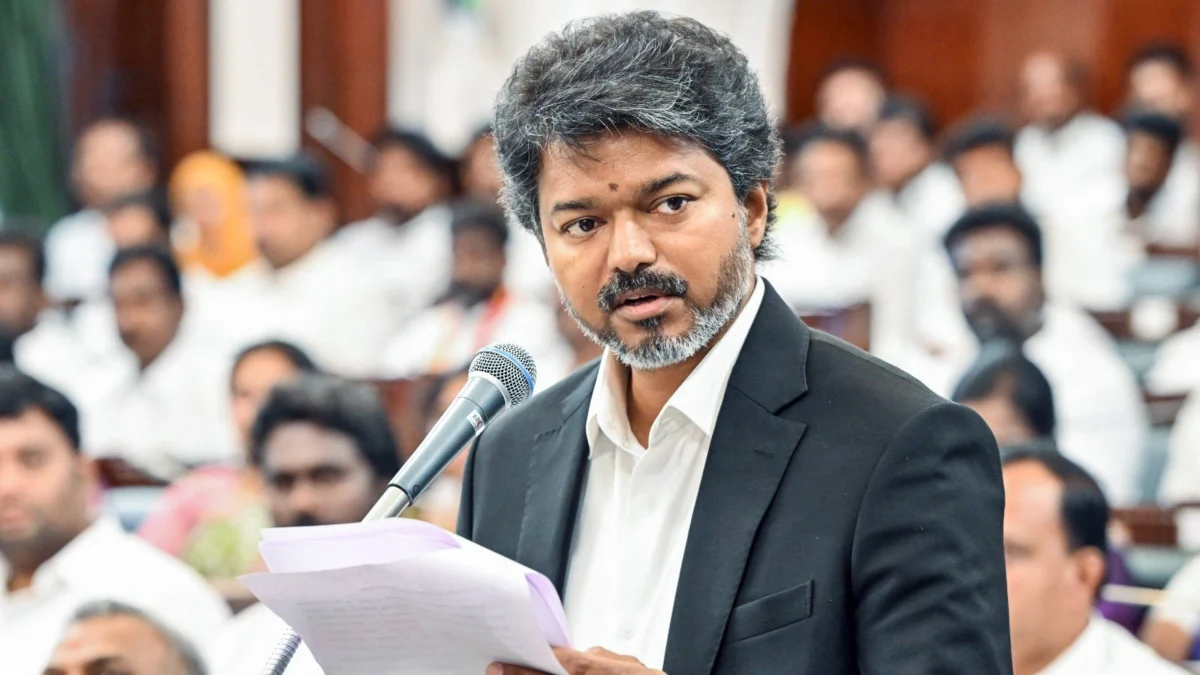
Chennai, Tamil Nadu – In a highly anticipated move that signals a clear blueprint for governance, Chief Minister C. Joseph Vijay has unveiled the portfolio allocations for his inaugural Cabinet in Tamil Nadu. The announcement, made through a Lok Bhavan press release on May 16, confirms Vijay’s firm grip on the state’s most sensitive and powerful departments, while strategically distributing key responsibilities among a blend of seasoned politicians and the Television Kazhagam (TVK) party’s emerging leaders.
The allocation sees Chief Minister Vijay personally retaining critical portfolios including Home, Police, General Administration, Women Welfare, Youth Welfare, and Municipal Administration. This centralisation of power underscores his intent to exert direct control over law and order, public administration, and vital social welfare initiatives that formed the bedrock of the TVK’s successful electoral campaign. In a significant appointment, veteran politician and former AIADMK stalwart K. A. Sengottaiyan has been entrusted with the crucial Finance Ministry, a decision widely interpreted as a strategic move to leverage his extensive administrative experience for the state’s economic stability.
The new Council of Ministers, sworn in alongside Chief Minister Vijay on May 10, now has defined roles, setting the stage for the TVK government to commence its legislative and administrative agenda. The allocation reflects a calculated balance between rewarding loyalists who transformed a fan club into a political juggernaut, acknowledging technocratic expertise, and ensuring administrative continuity, particularly in the face of the state’s complex challenges.
Chronology of a Political Transition
The formal announcement of portfolio allocations on May 16 marks the culmination of a dynamic political period following the state assembly elections. The journey began with the Television Kazhagam (TVK), under the charismatic leadership of C. Joseph Vijay, securing a decisive mandate from the people of Tamil Nadu. The election results, which saw a significant shift in the state’s political landscape, paved the way for the TVK to form its maiden government.
Following weeks of intense speculation and internal deliberations, Chief Minister-designate Vijay, along with his Council of Ministers, took the oath of office on May 10 in a ceremony presided over by Governor Rajendra Vishwanath Arlekar. This swearing-in, a moment of historical significance for the nascent TVK, immediately shifted public and political focus towards the distribution of ministerial portfolios. The days between the swearing-in and the portfolio announcement were filled with anticipation, as political observers and the public alike speculated on who would be entrusted with which crucial department, particularly given the TVK’s relatively fresh faces in electoral politics.
The Lok Bhavan press release, dated May 16, formally communicated Governor Arlekar’s approval of the portfolio recommendations made by Chief Minister Vijay. This official declaration finally brought clarity to the administrative structure of the new government, outlining the specific responsibilities of each minister and providing the first concrete insights into Chief Minister Vijay’s governance strategy and his trusted inner circle. The swiftness of the allocation post-swearing-in also suggests a well-prepared transition plan, indicating that strategic decisions regarding departmental responsibilities were likely made in advance of the formal announcement.
Supporting Data: A Deep Dive into Portfolio Allocations and Strategic Choices
The allocation of portfolios offers a window into Chief Minister Vijay’s leadership philosophy, his priorities for Tamil Nadu, and the internal dynamics of the TVK. It’s a blend of consolidating power, rewarding loyalty, and strategically placing experienced hands where they can make the most impact.
The Chief Minister’s Domain: Power and Control
Chief Minister C. Joseph Vijay has opted for a highly centralised approach by retaining direct control over a formidable array of departments. His portfolios include:
- Public and General Administration: These are the bedrock of governance, overseeing the entire civil service machinery (IAS, IPS, IFS) and district revenue officers. By holding these, Vijay ensures direct oversight over administrative efficiency, appointments, and the implementation of government policies across all levels. This move signals his intent to streamline bureaucracy and maintain tight control over the state apparatus.
- Police and Home: Traditionally held by chief ministers in many states, these departments are critical for law and order, internal security, and maintaining public peace. Vijay’s retention of these portfolios underscores his commitment to ensuring a stable and secure environment, a common campaign promise, and demonstrates a desire to directly steer the state’s security apparatus without delegation. It also allows him to respond swiftly to any law and order challenges.
- Special Programme Implementation: This portfolio suggests a focus on expediting key government initiatives and flagship projects, bypassing potential bureaucratic bottlenecks. It indicates a results-oriented approach, where the Chief Minister personally monitors the progress of high-priority schemes.
- Women Welfare, Youth Welfare, and Welfare of Children, Aged and Differently Abled Persons: These social welfare departments were central to the TVK’s populist appeal. By taking direct charge, Vijay reinforces his commitment to these vulnerable sections of society, ensuring that the party’s promises in these crucial areas are translated into tangible benefits under his direct supervision. This also provides him a direct channel to connect with significant voter demographics.
- Municipal Administration, Urban and Water Supply: This portfolio is vital for urban development, local governance, and addressing the critical issue of water management, especially in a rapidly urbanising state like Tamil Nadu. Direct oversight allows the Chief Minister to drive infrastructure projects, improve civic amenities, and tackle water scarcity, which are often major concerns for citizens.
Vijay’s decision to hold these diverse yet interconnected portfolios points towards a leadership style that is hands-on and aims for comprehensive oversight over the state’s administrative, security, and social development machinery.
The Veteran Hand: K. A. Sengottaiyan at Finance
The assignment of the Finance, Pensions, and Pension Allowances portfolio to K. A. Sengottaiyan is arguably one of the most significant and politically astute decisions in the new Cabinet. Sengottaiyan, described as an "AIADMK veteran" and one of the few ministers with "long legislative and administrative experience," brings a wealth of institutional knowledge to a government otherwise dominated by "first-generation TVK faces."
- Experience Over Ideology: Entrusting Finance to a leader with roots in a rival party (or former rival) highlights Vijay’s pragmatic approach. It suggests a prioritisation of administrative competence and experience over pure party loyalty for a critical department that requires deep understanding of state finances, budgetary processes, and economic policy.
- Economic Challenges: Tamil Nadu, like many Indian states, faces complex economic challenges, including managing debt, attracting investment, and ensuring sustainable growth. Sengottaiyan’s experience will be crucial in navigating these fiscal complexities, drafting sound budgets, and ensuring financial discipline. His presence also lends credibility to the new government’s economic policies in the eyes of investors and financial institutions.
- Balancing Act: This appointment also serves to reassure sections of the electorate who might have concerns about the administrative inexperience of a new party. It signals a willingness to draw upon talent from across the political spectrum for the larger good of the state.
The Architects of Victory: Key TVK Faces in Action
The portfolio allocation also strategically rewards and empowers the key figures instrumental in the TVK’s political ascendancy.
- N "Bussy" Anand (Rural Development and Water Resources): Anand’s journey from a fan club organiser to a cabinet minister underscores the TVK’s unique political trajectory. His deep understanding of the grassroots, cultivated through years of mobilising Vijay’s fan base, makes him a natural fit for Rural Development. This portfolio, encompassing panchayats, poverty alleviation, rural indebtedness, and irrigation, is critical for addressing the needs of Tamil Nadu’s vast rural population, which forms a significant part of the TVK’s support base. His role will be crucial in translating the party’s rural promises into tangible development.
- Aadhav Arjuna (Public Works and Sports Development): As a "key campaign manager" and "central figure in the party’s negotiations," Aadhav Arjuna’s assignment to Public Works (including buildings, highways, and minor ports) and Sports Development is strategic. Public Works is a high-visibility department that directly impacts infrastructure development and job creation. His role in sports development aligns with engaging the youth, a core demographic for the TVK, and promoting physical well-being and competitive sports.
- Dr K G Arunraj (Health, Medical Education and Family Welfare): Dr. Arunraj, an "former IRS officer" and one of the TVK’s "most technocratic faces," brings a professional and analytical approach to the crucial health sector. Tamil Nadu has a relatively strong healthcare infrastructure but faces challenges in public health, medical education, and family welfare. His expertise is expected to bring a data-driven and efficient approach to policy formulation and implementation in these vital areas.
Specialised Roles for Emerging Leaders
Other ministers have been assigned portfolios that align with specific sectoral needs and the party’s broader development agenda:
- P Venkataramanan (Food and Civil Supplies, Consumer Protection and Price Control): This portfolio is directly linked to the welfare of the common citizen, ensuring food security, managing public distribution systems, and controlling inflation. It’s a department with direct impact on household budgets and public satisfaction.
- R Nirmalkumar (Energy Resources and Law): A dual charge that encompasses critical infrastructure (electricity, non-conventional energy) and the foundational legal framework of the state (law, courts, prisons, prevention of corruption, legislative Assembly, governor, elections, and passports). This portfolio demands a keen understanding of both technical and legal complexities, essential for smooth governance and ensuring accountability.
- Rajmohan (School Education, Tamil Development, Information and Publicity): As the "digital-era communicator and TVK propaganda face," Rajmohan’s portfolio is tailored to his strengths. School Education is pivotal for human capital development, while Tamil Development, Information, and Publicity are crucial for promoting the state’s cultural heritage, disseminating government policies, and shaping public perception. His charge also includes archaeology, Tamil official language and culture, film technology, and the Cinematograph Act, reflecting the party’s emphasis on cultural identity and the media’s role.
- Dr T K Prabhu (Natural Resources): Responsible for minerals and mines, Dr. Prabhu will oversee a sector vital for state revenue but also prone to environmental concerns and regulatory challenges. This role requires a balance between economic exploitation and sustainable practices.
- S Keerthana (Industries and Investment Promotion): This portfolio is central to the state’s economic growth agenda, focusing on attracting investments, fostering industrial development, and creating employment opportunities. It signifies the government’s commitment to industrial expansion and job creation.
The Overall Cabinet Structure: Trust, Visibility, and Administrative Need
The allocation undeniably reflects Chief Minister Vijay’s strategic vision to balance:
- Trust: Rewarding long-time loyalists and those who played pivotal roles in the TVK’s rise, ensuring a cohesive and committed team.
- Visibility: Placing key communicators and popular figures in departments that directly engage with the public or oversee significant public works.
- Administrative Need: Entrusting experienced individuals like Sengottaiyan with critical, complex portfolios, and leveraging technocratic expertise where necessary (e.g., Dr. Arunraj).
- Campaign Promises: Aligning departments like Women/Youth Welfare, Rural Development, and Public Works with the TVK’s core electoral pledges, demonstrating a commitment to fulfilling its mandate.
The predominance of "first-generation TVK faces" alongside a few seasoned politicians suggests a dynamic shift in Tamil Nadu’s political landscape, where new leadership is keen to make its mark while drawing upon existing expertise.
Official Responses and Interpretations
The Lok Bhavan press release itself serves as the primary official response, formally notifying the public of the approved portfolio allocations. While direct quotes from Chief Minister Vijay or other ministers were not immediately available with the announcement, the strategic choices embedded within the allocation speak volumes about the government’s intentions.
Political analysts and observers have largely interpreted the allocations as a calculated move by Chief Minister Vijay to consolidate power while projecting an image of administrative competence and responsiveness to public needs. The retention of Home, Police, and General Administration by Vijay himself is seen as a strong statement of his leadership style – one that prefers direct oversight over critical functions.
The appointment of K. A. Sengottaiyan to Finance has been particularly noted. "This is a shrewd move by Vijay," commented Dr. R. Malathi, a Chennai-based political commentator. "It not only brings invaluable experience to a crucial ministry but also sends a signal of inclusivity and pragmatism, especially for a party that is relatively new to the complexities of state administration. It also might help in building bridges across the political spectrum if needed."
The elevation of figures like N. "Bussy" Anand and Aadhav Arjuna, who were instrumental in the TVK’s grassroots mobilisation and campaign strategy, is seen as a reward for their foundational contributions. "It shows that Vijay values loyalty and the hard work put in to build the party from the ground up," observed a senior journalist covering Tamil Nadu politics. "Placing them in departments directly related to development and public services ensures that the party’s original spirit and connection with the people remain strong."
The inclusion of technocrats like Dr. K. G. Arunraj in Health also indicates a desire for evidence-based policymaking and efficient implementation, moving beyond purely political considerations. The overall message conveyed through these allocations is one of a government that is prepared to be hands-on, strategic, and focused on delivering on its promises, while carefully managing the balance between political rewards and administrative efficacy.
Implications for Governance and Tamil Nadu’s Future
The inaugural portfolio allocation by Chief Minister C. Joseph Vijay carries significant implications for the governance of Tamil Nadu, the future trajectory of the TVK, and the broader political landscape of the state.
Centralised Governance and Decision-Making
Chief Minister Vijay’s decision to personally oversee key departments like Home, Police, and General Administration suggests a centralised model of governance. This could lead to quicker decision-making on critical issues, particularly those pertaining to law and order and administrative reforms. However, it also places an immense burden on the Chief Minister, requiring him to manage a vast array of responsibilities directly. The success of this approach will depend on his ability to delegate effectively within his trusted inner circle and ensure efficient coordination across departments. It also implies that major policy shifts or critical administrative actions will likely bear his direct imprint.
Economic Stability and Fiscal Management
The appointment of K. A. Sengottaiyan to the Finance Ministry is a strong indicator of the government’s prioritisation of economic stability. Given his extensive experience, the state can expect a focus on prudent fiscal management, potentially attracting investments, and addressing the state’s financial health. The success of this ministry will be crucial in funding the TVK’s ambitious welfare schemes and infrastructure projects. His ability to navigate the state’s financial challenges will be a key performance indicator for the new government.
Fulfilling Campaign Promises and Public Expectations
Many of the allocated portfolios directly align with the TVK’s core campaign promises. Departments like Women Welfare, Youth Welfare, Rural Development, and Municipal Administration are now in the hands of ministers expected to drive the party’s agenda for social upliftment, grassroots development, and urban improvement. The public will keenly watch how these ministers translate promises into concrete action, particularly in areas like poverty alleviation, infrastructure upgrades, and improved public services. The government’s ability to deliver on these fronts will significantly shape public perception and trust.
Party Building and Future Leadership
The elevation of key TVK strategists and communicators to ministerial roles serves a dual purpose: rewarding their contributions and providing them with administrative experience. This is crucial for the long-term growth and institutionalisation of the TVK as a political party. These "first-generation TVK faces" will gain invaluable exposure to governance, potentially grooming them for higher leadership roles within the party and the state administration in the future. Their performance in these initial portfolios will be critical for their individual political trajectories and the party’s overall credibility.
Relationship with Bureaucracy and Opposition
The new government, with many first-time ministers, will need to quickly establish effective working relationships with the state’s seasoned bureaucracy. The presence of technocrats and experienced hands like Sengottaiyan could facilitate this transition. Meanwhile, the opposition will closely scrutinise the performance of these new ministers and the overall effectiveness of Vijay’s centralised approach. Any missteps in governance or policy implementation could become points of attack for rival parties.
In essence, Chief Minister Vijay’s inaugural Cabinet allocation is a meticulously crafted statement of intent. It blends the urgency of a new political force with the need for seasoned administrative guidance, all while centralising critical levers of power under his direct supervision. The coming months will be crucial in observing how this carefully balanced team navigates the complexities of governing Tamil Nadu and delivers on the high expectations it has set for itself.
