

SEOUL, South Korea – May 17, 2026 – South Korea’s government is bracing for a potential economic tremor, with Prime Minister Kim Min-seok declaring on Sunday that "all options," including an unprecedented emergency arbitration order, are on the table to avert or mitigate a debilitating labor strike at Samsung Electronics. The world’s largest memory chipmaker, a titan of global technology and the undisputed anchor of the South Korean economy, faces a looming work stoppage by its labor union over stalled compensation talks, sending ripples of anxiety through financial markets and global supply chains.
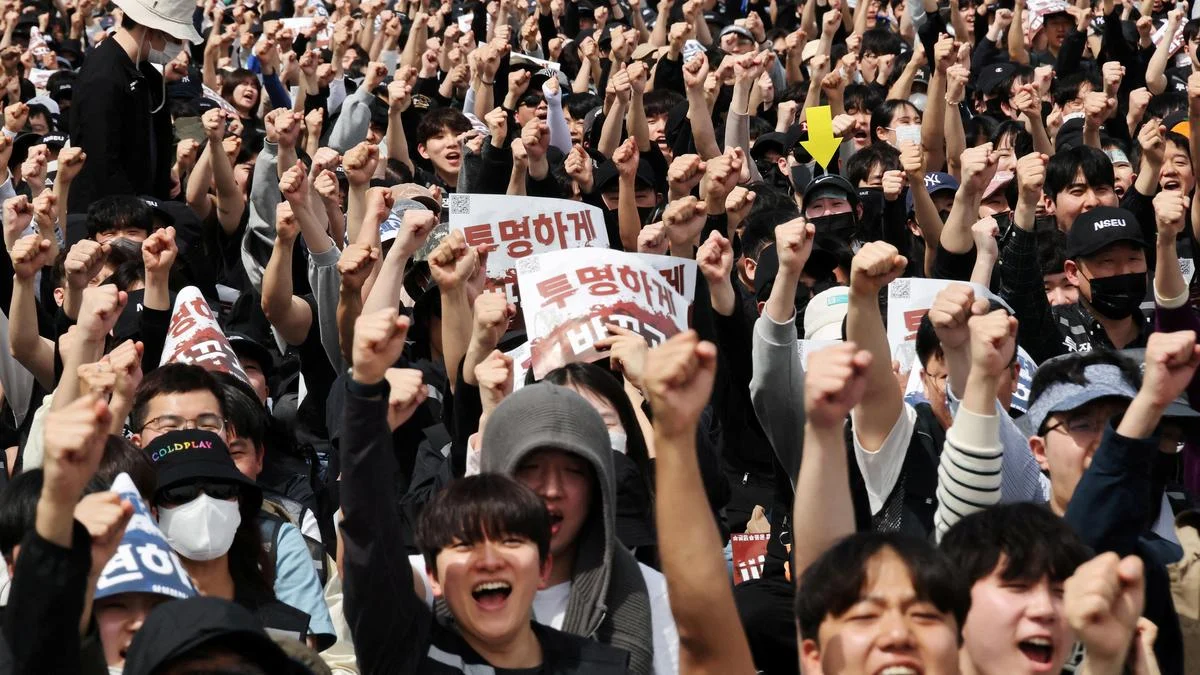
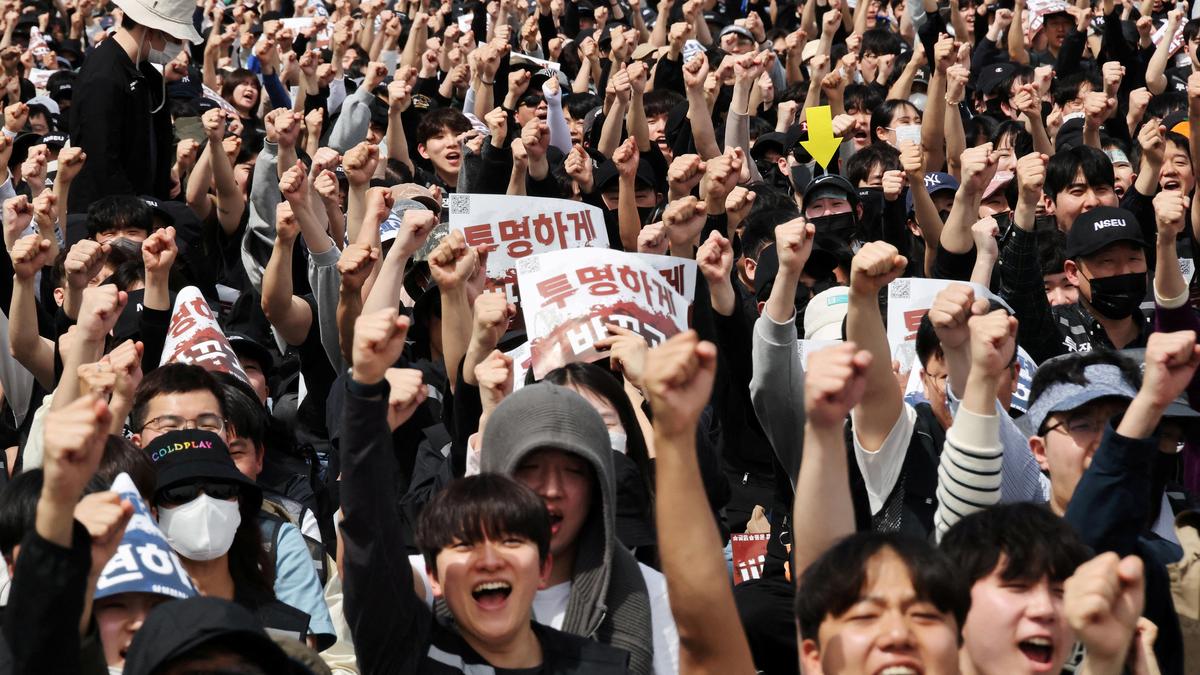
The escalating dispute reached a critical juncture as union members, galvanized by their demands for improved pay and conditions, staged protests outside Samsung’s massive semiconductor plant in Pyeongtaek just days prior, underscoring their resolve. With negotiations set to resume on Monday, May 18, 2026, under the aegis of a government mediator, the stakes could not be higher for a nation heavily reliant on the tech giant’s unparalleled export prowess and economic footprint. The government’s stern warning reflects a profound concern over the potential for colossal financial damage and disruption to industries worldwide, underscoring the delicate balance between workers’ rights and national economic stability.
Main Facts: A Nation Holds Its Breath
The threat of a strike at Samsung Electronics is not merely an internal corporate matter; it is a national crisis in the making for South Korea. The conglomerate, which encompasses a vast array of businesses from semiconductors and smartphones to home appliances and shipbuilding, is an economic behemoth whose operations are intrinsically linked to the nation’s prosperity. Its semiconductor division, in particular, holds a pivotal position in the global technology ecosystem, supplying memory chips essential for everything from personal computers and servers to artificial intelligence infrastructure and advanced automotive systems.
Prime Minister Kim Min-seok’s extraordinary intervention highlights the gravity of the situation. Following an emergency ministerial meeting on Sunday, Kim minced no words, articulating the government’s alarm over the potential fallout. He emphasized that a single day of production suspension at Samsung’s semiconductor facilities could translate into direct losses of approximately 1 trillion won ($667.68 million). More ominously, he warned of a snowballing crisis, where a temporary halt could lead to months of inactivity due to the intricate and sensitive nature of chip manufacturing, potentially ballooning the economic damage to an astronomical 100 trillion won if critical materials had to be discarded.
The government’s consideration of emergency arbitration underscores the exceptional nature of this dispute. This rarely invoked legal mechanism grants the Labour Minister the power to immediately prohibit industrial action for 30 days if a dispute is deemed likely to harm the national economy or daily life. During this period, the National Labour Relations Commission would conduct compulsory mediation and arbitration. Such a move would be a powerful, albeit controversial, demonstration of the state’s intent to safeguard its economic interests, potentially setting a significant precedent for labor relations within the country’s powerful chaebol system.
The union, for its part, has expressed its willingness to negotiate in good faith, suggesting that a resolution remains possible. However, the chasm between management and labor over compensation levels has proven difficult to bridge, pushing the situation to the brink. The global tech industry, still recovering from recent supply chain disruptions, watches anxiously, aware that any significant disruption from Samsung could reverberate across continents, affecting product availability, pricing, and the stability of numerous downstream industries.
Chronology: A Brewing Storm
The current standoff is the culmination of a protracted period of negotiations and a significant shift in Samsung’s long-standing labor policies. Historically, Samsung Electronics was known for its "no union" policy, a stance maintained for decades under the stewardship of its founder, Lee Byung-chul, and later his son, Lee Kun-hee. This corporate culture began to shift in the late 2010s amidst growing public pressure, legal challenges, and a broader movement towards greater transparency and workers’ rights in South Korea. The current union, the National Samsung Electronics Union (NSEU), which claims a substantial membership, was officially formed and recognized, marking a significant departure from the past.
Key Events Leading to the Current Crisis:
- Early 2025: Initial discussions for the 2026 wage and compensation package begin between Samsung management and the NSEU. The union, emboldened by its growing membership and a desire to reflect Samsung’s record profits in worker benefits, puts forth ambitious demands, reportedly including a significant wage hike, improved performance bonuses, and more transparent compensation structures.
- Late 2025 – Early 2026: Negotiations stall. Management reportedly offers a more modest increase, citing global economic uncertainties and the need to maintain competitiveness. The union rejects these offers, viewing them as insufficient given the company’s robust financial performance and the demanding nature of their work.
- March 2026: With talks deadlocked, the union declares a dispute and proceeds with official arbitration. When arbitration fails to yield an agreement, the union gains the legal right to strike.
- April 2026: The NSEU conducts a strike vote among its members. A substantial majority vote in favor of industrial action, signaling their strong mandate for a walkout if their demands are not met. This vote marks a critical escalation, transforming the threat into a tangible possibility.
- May 15, 2026 (Friday): Union members organize a high-profile protest outside Samsung Electronics’ semiconductor plant in Pyeongtaek, South Korea. Chanting slogans and displaying banners, they publicly denounce the company’s compensation levels and reiterate their commitment to a "lengthy strike" if no resolution is found. Images of this protest circulate widely, drawing national and international attention.
- May 17, 2026 (Sunday): The South Korean government, recognizing the imminent threat to the national economy, convenes an emergency meeting of key ministers. Following this meeting, Prime Minister Kim Min-seok issues a stark public statement, emphasizing the severe economic consequences of a strike and announcing the government’s readiness to explore "all options," including emergency arbitration. He confirms that government mediators will oversee a resumption of talks.
- May 18, 2026 (Monday): Scheduled resumption of pay talks between Samsung Electronics management and the labor union, with a government mediator present. This meeting is widely seen as a last-ditch effort to avert the strike and find common ground.
The trajectory of this dispute highlights the evolving landscape of labor relations in South Korea, where the once unassailable authority of conglomerates is increasingly being challenged by organized labor, particularly in a climate where corporate profits often do not seem to trickle down sufficiently to the workforce.
Supporting Data: The Unthinkable Economic Impact
The South Korean government’s profound concern is not merely rhetorical; it is rooted in Samsung Electronics’ colossal and interwoven role within the national and global economies. The figures cited by Prime Minister Kim Min-seok provide a stark illustration of the potential devastation.
Direct Losses and the "Cleanroom" Conundrum:
- 1 Trillion Won ($667.68 Million) Daily Direct Loss: This figure represents the immediate revenue loss from halted production. Samsung’s semiconductor factories operate 24/7, manufacturing highly valuable memory chips and foundry products. Even a single day of stoppage means billions of dollars in lost output that cannot be easily recovered. The cost is compounded by fixed operational expenses, including wages, utilities, and maintenance, which continue to accrue despite the lack of production.
- 100 Trillion Won ($66.7 Billion) Potential Total Loss: This far more alarming figure underscores the unique vulnerabilities of semiconductor manufacturing. Chip fabrication takes place in highly controlled "cleanroom" environments, where even microscopic dust particles can ruin an entire batch. The production process involves hundreds of steps, often taking weeks or months to complete a single wafer. A sudden shutdown dueenses the risk of:
- Material Spoilage: Highly sensitive chemicals, gases, and partially processed wafers can be rendered unusable if production lines are stopped abruptly or left idle for extended periods. Disposing of these materials incurs significant costs and environmental concerns.
- Equipment Damage/Recalibration: Advanced lithography machines, etchers, and deposition tools are incredibly complex and expensive. A shutdown can necessitate lengthy and costly recalibration processes, or worse, lead to damage requiring extensive repairs or replacement.
- Supply Chain Disruption and Rerouting Costs: Customers, unable to receive chips from Samsung, would scramble to find alternative suppliers, often at higher prices or with longer lead times. This creates chaos across the global tech supply chain.
- Loss of Market Share: Competitors like SK Hynix, Micron Technology, and TSMC could capitalize on Samsung’s incapacitation, potentially seizing market share that would be difficult for Samsung to reclaim.
Samsung’s Indispensable Role in South Korea:
- 22.8% of South Korea’s Exports: This staggering proportion illustrates Samsung’s dominance in the nation’s export-driven economy. A strike would severely impact South Korea’s trade balance, potentially weakening the won and slowing overall economic growth. Major export categories include semiconductors, smartphones, displays, and other electronic components.
- 26% of the Domestic Stock Market: Samsung Electronics’ market capitalization alone constitutes over a quarter of the entire Korea Exchange (KRX). Any significant disruption to its operations or investor confidence would send shockwaves through the stock market, impacting pension funds, institutional investors, and individual shareholders across the country.
- Over 120,000 Employees: Samsung Electronics is one of South Korea’s largest direct employers. A strike would not only affect these employees but also the vast ecosystem of contractors and service providers who rely on Samsung’s operations.
- 1,700 Suppliers: This extensive network of upstream suppliers and downstream partners would face immense pressure. Many small and medium-sized enterprises (SMEs) are deeply integrated into Samsung’s supply chain, and a disruption could threaten their viability, leading to broader job losses and economic distress.
Global Supply Chain Vulnerability:
Samsung’s position as the world leader in memory chips (DRAM and NAND flash) and a major player in foundry services (contract manufacturing of chips for other companies like Qualcomm and NVIDIA) makes its stability critical to the global technology industry. A strike would immediately exacerbate existing concerns about semiconductor supply, potentially leading to:
- Price Hikes: Reduced supply from Samsung would inevitably drive up prices for memory chips, affecting manufacturers of PCs, smartphones, servers, and automotive electronics.
- Production Delays: Companies reliant on Samsung’s chips would face delays in bringing their products to market, impacting everything from consumer electronics launches to critical data center expansions.
- Economic Ripple Effects: Given the ubiquity of semiconductors in modern life, a prolonged disruption could have far-reaching effects on global GDP growth, inflation, and technological innovation.
The data paints a clear picture: a strike at Samsung Electronics is not just a company problem; it is a global economic threat that South Korea, and indeed the world, can ill afford.
Official Responses: Government’s Stern Warning and Diplomatic Push
The South Korean government’s response to the looming strike has been swift, decisive, and exceptionally vocal, underscoring the extraordinary nature of the threat. Prime Minister Kim Min-seok has emerged as the leading voice, framing the potential strike as a national emergency rather than a mere industrial dispute.
Prime Minister Kim Min-seok’s Stance:
"Just one day of suspension at Samsung Electronics’ semiconductor factory is expected to incur direct losses of as much as 1 trillion won ($667.68 million)," Kim declared, his words carrying the full weight of the executive branch. "What is more concerning is that a temporary pause on semiconductor manufacturing lines leads to months of inactivity. There are worries about economic damage ballooning to as much as 100 trillion won if materials had to be disposed of due to a strike."
His statements are a clear warning to both the union and management: the government views this as a critical issue demanding immediate resolution. The use of such stark figures is intended to impress upon all parties the catastrophic implications and to pressure them towards a swift agreement. Kim’s administration is clearly prioritizing national economic stability above all else, signaling that it will not tolerate a protracted standoff.
The Threat of Emergency Arbitration:
The mention of "emergency arbitration" is particularly significant. This measure, outlined in the Trade Union and Labour Relations Adjustment Act, grants the Labour Minister the power to intervene directly. Key aspects of this power include:
- Immediate Prohibition of Industrial Action: Once invoked, all strike activities must cease for a period of 30 days.
- Compulsory Mediation and Arbitration: During this 30-day period, the National Labour Relations Commission (NLRC) steps in to mediate and arbitrate the dispute, with the aim of reaching a binding settlement.
- Rarely Invoked: This power is reserved for situations where a labor dispute is deemed to "seriously impair the national economy or daily life." Its infrequent use highlights the government’s perception of the current situation as an exceptional crisis. It has historically been used in critical sectors like public transportation, hospitals, or energy. Invoking it for a private company, even one as large as Samsung, would be an extraordinary step, potentially drawing criticism from labor rights advocates who might view it as an overreach of state power and an infringement on workers’ fundamental right to strike.
- Union-Friendly Administration: The current administration, while generally seen as more attuned to labor concerns than some predecessors, is clearly demonstrating that even a "union-friendly" stance has its limits when national economic interests are severely threatened.
The Government’s Mediating Role:
The fact that a government mediator will oversee Monday’s resumed talks indicates the administration’s active engagement in trying to broker a deal. This involvement signals that the government is not merely issuing warnings but is also actively facilitating dialogue, aiming to find a compromise that satisfies both parties while averting a strike.
Union’s Response:
The union’s statement that it would "negotiate in good faith to reach an agreement with management" is a positive sign, suggesting that they are open to compromise despite their strong stance on compensation. However, the definition of "good faith" and the acceptable terms of agreement remain the critical point of contention. The union’s leadership is under pressure from its members to deliver substantial gains, particularly given Samsung’s immense profitability.
Samsung Management’s Position (Inferred):
While direct quotes from Samsung management regarding the strike threat were not provided in the original text, it can be inferred that the company is deeply invested in avoiding a strike. A work stoppage would not only incur massive financial losses but also damage its reputation as a reliable global supplier, potentially affecting long-term contracts and customer loyalty. Management’s objective would be to reach a settlement that balances employee demands with corporate financial prudence and market competitiveness, ideally without resorting to government intervention.
The collective responses indicate a high-stakes environment where the government is prepared to use its full authority to safeguard the national economy, while both labor and management face intense pressure to find a mutually acceptable resolution.

Implications: Beyond the Pyeongtaek Plant
The ramifications of a Samsung Electronics strike would extend far beyond the gates of its Pyeongtaek semiconductor plant, rippling through global markets, reshaping South Korea’s economic landscape, and setting precedents for industrial relations.
Impact on Global Technology Markets:
- Exacerbated Chip Shortages: Even minor disruptions in Samsung’s production can send shockwaves through the global semiconductor market. A strike would undoubtedly lead to a significant tightening of supply for memory chips (DRAM and NAND flash), which are foundational components for virtually all modern electronic devices. This could lead to a resurgence of chip shortages, impacting industries from automotive and consumer electronics to cloud computing and artificial intelligence.
- Price Volatility: Reduced supply would almost certainly lead to price increases for memory chips. This would inflate manufacturing costs for device makers, potentially translating into higher prices for consumers or reduced profit margins for tech companies.
- Innovation Slowdown: Delays in chip supply can hamper research and development efforts and slow the pace of technological innovation, particularly in emerging fields heavily reliant on advanced memory and processing power.
- Supply Chain Re-evaluation: Global companies reliant on Samsung might accelerate efforts to diversify their supply chains, potentially leading to a shift away from over-reliance on a single dominant supplier, even if it is the market leader. This could have long-term strategic implications for Samsung.
Reputational Damage for Samsung:
A prolonged or acrimonious strike could severely tarnish Samsung’s meticulously cultivated image as a reliable, high-quality, and innovative global leader. Such a reputation is crucial for maintaining customer trust, attracting top talent, and securing international partnerships. News of labor unrest, especially in a critical sector like semiconductors, could make international clients nervous about future supply stability.
Precedent for Labor Relations in South Korea:
The outcome of this dispute will undoubtedly set a significant precedent for labor relations, particularly within South Korea’s powerful chaebol structure.
- Empowerment of Unions: If the union achieves significant concessions, it could embolden other labor organizations within Samsung and across other major conglomerates to pursue more aggressive demands, potentially leading to a new era of heightened labor activism.
- Government Intervention: The government’s willingness to consider emergency arbitration, while aimed at averting economic disaster, could be viewed by some as a potential infringement on labor rights. However, if it successfully resolves the dispute, it might become a more readily considered tool in future critical industrial disputes.
- Shifting Corporate Culture: Samsung’s historical "no union" stance has steadily eroded. This strike threat signifies a further evolution, forcing the company to adapt to a more robust and organized labor presence.
Impact on South Korea’s Economic Stability and International Standing:
- Economic Downturn: A prolonged strike could severely dent South Korea’s GDP growth projections, trigger inflation, and create significant fiscal challenges for the government. The sheer scale of Samsung’s contribution to exports and the stock market means its instability translates directly into national economic instability.
- Investor Confidence: International investors closely monitor labor stability in key economic powerhouses. A major industrial dispute at Samsung could deter foreign direct investment and negatively impact South Korea’s sovereign credit ratings.
- Global Competitiveness: South Korea prides itself on its technological prowess and economic dynamism. A disruption at its leading company could raise questions about the country’s long-term global competitiveness, particularly in high-tech manufacturing.
Long-term Consequences for Workers and Management:
While the immediate focus is on averting a strike, the long-term relationship between Samsung management and its labor union will be shaped by the outcome. A fair and mutually respected agreement could foster greater trust and cooperation, leading to a more stable and productive work environment. Conversely, a forced resolution or a prolonged period of acrimony could leave lasting scars, affecting morale, productivity, and the overall corporate culture.
The Samsung Electronics labor dispute is more than just a battle over wages; it is a critical test of South Korea’s ability to balance economic imperative with evolving labor rights, with profound implications for the global technology landscape and the very fabric of the nation’s prosperity.
Conclusion
As South Korea holds its breath, the resumption of pay talks on Monday, May 18, 2026, represents a pivotal moment for Samsung Electronics, its vast workforce, and the entire national economy. Prime Minister Kim Min-seok’s urgent intervention and the unprecedented consideration of emergency arbitration underscore the critical nature of the situation. The potential for a colossal economic hit, estimated at up to 100 trillion won, casts a long shadow over the negotiations.
The world watches closely, aware that the stability of global technology supply chains hinges significantly on the outcome of these discussions. Whether a last-minute compromise can be forged, or if the government is compelled to take extraordinary measures, the resolution of this dispute will not only define the future of labor relations at Samsung but also send a powerful message about South Korea’s commitment to its economic stability in an increasingly volatile global environment. The coming days will reveal whether compromise or confrontation will prevail in this high-stakes industrial drama.
