

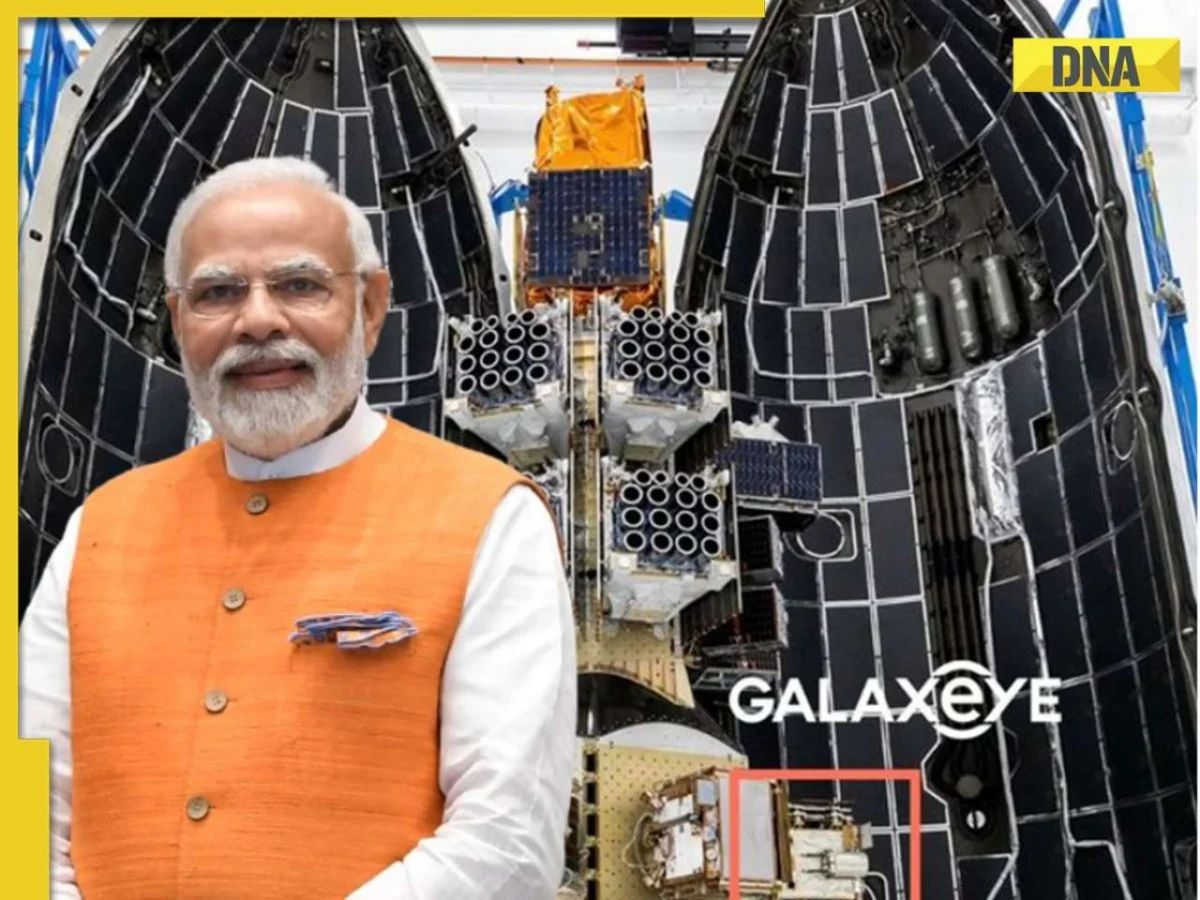
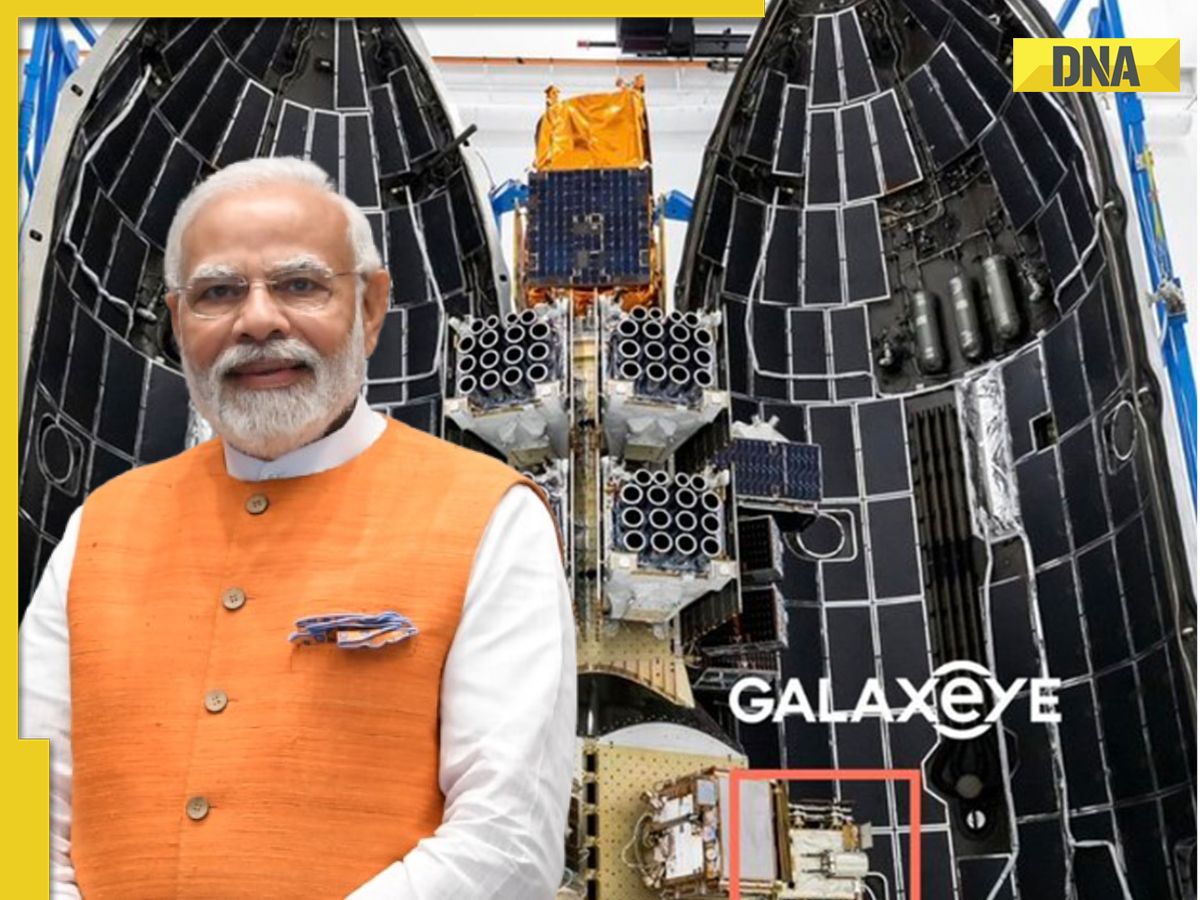
BENGALURU, INDIA – May 3, 2026 – India has unequivocally cemented its position as a high-tier global space power with the resounding success of Mission Drishti, launched on Sunday. This monumental achievement signals the arrival of a transformative, hybrid space ecosystem, where the agility and innovation of private enterprise converge seamlessly with national strategic imperatives. Developed by the Bengaluru-based startup GalaxEye, the launch marks a pivotal moment, introducing the world’s first OptoSAR satellite and positioning India at the forefront of advanced Earth observation capabilities.
The 190 kg satellite, now India’s largest privately built spacecraft, embarked on its journey aboard a SpaceX Falcon-9 rocket from the Vandenberg Space Force Base in California, United States. Its successful deployment into orbit was met with widespread acclaim from the highest echelons of the Indian government and the national space agency, ISRO, underscoring its profound significance for the nation’s technological prowess and global standing.
A New Dawn in India’s Space Odyssey
Mission Drishti is more than just a satellite launch; it represents a paradigm shift in India’s engagement with the final frontier. For decades, India’s space program was predominantly driven by the state-owned Indian Space Research Organisation (ISRO), achieving remarkable feats on a shoestring budget. However, the successful orbital insertion of GalaxEye’s OptoSAR satellite heralds a new era where private players are not just participants but pioneers, developing cutting-edge technologies that complement and extend national strategic goals. This collaborative model, often termed the "hybrid space ecosystem," is designed to accelerate innovation, reduce development cycles, and broaden the scope of India’s space ambitions.

The successful launch underscores India’s strategic intent to leverage its burgeoning private sector for dual-use technologies, catering to both commercial demands and national security requirements. The OptoSAR satellite, with its unprecedented imaging capabilities, is poised to offer invaluable data for a multitude of applications, from climate monitoring and disaster management to urban planning and defense intelligence, thereby strengthening India’s self-reliance and influence in critical technological domains.
The Genesis of OptoSAR: A Technological Marvel
At the heart of Mission Drishti’s revolutionary potential lies its OptoSAR technology. This world-first for a commercial satellite ingeniously fuses two distinct and powerful Earth observation techniques: Optical Sensors and Synthetic Aperture Radar (SAR). Traditional optical satellites, while providing high-resolution, intuitive visual data, are inherently limited by atmospheric conditions – cloud cover, smoke, and the absence of light during nighttime. SAR technology, conversely, excels at penetrating these barriers, using radar pulses to generate images regardless of weather or time of day.
GalaxEye’s "made-in-India" system overcomes the limitations of standalone technologies by integrating them into a single, cohesive platform. This allows for the simultaneous acquisition and fusion of optical and radar data in real-time, providing an unparalleled, comprehensive view of Earth’s surface. The ability to "see through" clouds and darkness with high fidelity represents a monumental leap forward in persistent Earth observation, offering continuous, reliable data streams crucial for time-sensitive applications.
)
GalaxEye: A Testament to Private Prowess
The architect behind this groundbreaking mission, GalaxEye, is a Bengaluru-based startup that has rapidly emerged as a torchbearer for India’s private space sector. Founded by a team of young, ambitious engineers and entrepreneurs, GalaxEye’s journey from a nascent idea to deploying India’s largest privately built satellite in orbit is a testament to the nation’s vibrant startup ecosystem and supportive policy environment. Their success validates the government’s push to liberalize the space sector, creating pathways for private innovation to flourish alongside established entities like ISRO.
The 190 kg weight of the OptoSAR satellite signifies a substantial undertaking for a private venture, demonstrating GalaxEye’s engineering capabilities and ambition. It highlights the growing maturity of India’s private aerospace manufacturing and integration capabilities, attracting significant investment and fostering a new generation of space engineers and entrepreneurs.
The Journey to Orbit: A Chronological Account
The successful launch of Mission Drishti on Sunday, May 3, 2026, was the culmination of years of meticulous planning, rigorous development, and strategic partnerships. The timeline reflects not just GalaxEye’s dedication but also the evolving landscape of global space collaboration.

From Concept to Reality: GalaxEye’s Vision
GalaxEye was founded with a clear vision: to revolutionize Earth observation by providing reliable, all-weather, and continuous data. The concept of OptoSAR emerged from a deep understanding of the limitations faced by existing satellite imaging technologies and the growing demand for uninterrupted, high-quality geospatial intelligence. The initial phases involved extensive research and development, prototyping, and securing crucial seed funding from investors who recognized the disruptive potential of their integrated sensor technology.
Over several years, GalaxEye’s team worked tirelessly on developing the complex algorithms for data fusion, miniaturizing the sophisticated optical and SAR payloads, and designing a robust satellite platform capable of housing these innovative instruments. This period was characterized by intense engineering challenges, requiring breakthroughs in sensor calibration, power management, data processing, and thermal control within a compact satellite structure. The journey involved multiple testing cycles, simulations, and collaborations with academic institutions and industry experts to refine the OptoSAR system.
The Choice of Falcon-9: Strategic Partnerships
The decision to launch Mission Drishti aboard a SpaceX Falcon-9 rocket from the Vandenberg Space Force Base in California was a strategic one, reflecting the globalized nature of the modern space industry. SpaceX, renowned for its reliable and cost-effective launch services, offered GalaxEye a proven platform for its critical mission. This partnership underscores the increasing trend of Indian private space companies seeking international launch providers, even as ISRO’s commercial arm, NewSpace India Limited (NSIL), expands its own launch capabilities.
)
The launch on the Falcon-9 was part of a rideshare mission, designated CAS500-2, carrying 45 diverse payloads into orbit. This rideshare model offers a cost-effective solution for smaller satellites and private ventures, allowing them to access space without the prohibitive costs of a dedicated launch. GalaxEye’s inclusion in such a high-profile mission further validates its technological readiness and global competitiveness.
The Successful Deployment
The launch on Sunday proceeded flawlessly, with the Falcon-9 rocketing skyward and successfully deploying its numerous payloads, including Mission Drishti, into their designated orbits. The moment of separation, confirmed by telemetry data, marked the successful culmination of years of effort. Following deployment, the GalaxEye team immediately began establishing communication with the satellite, initiating its commissioning phase, which involves checking all systems, calibrating the OptoSAR sensors, and preparing for operational data acquisition. This critical phase will ensure that the satellite is fully functional and ready to deliver on its promise of unparalleled Earth observation.
Unpacking the Technology: The Power of OptoSAR
The OptoSAR technology embedded within Mission Drishti is a game-changer, addressing long-standing challenges in Earth observation and opening up new frontiers for data utilization. Its hybrid nature represents a significant leap from conventional single-sensor platforms.
)
Beyond Traditional Imaging: Overcoming Limitations
Traditional Earth observation satellites typically rely on either optical sensors or radar (SAR) sensors. Optical sensors, akin to advanced digital cameras in space, capture images in visible and infrared light, providing vivid, detailed, and easily interpretable visual data. However, their Achilles’ heel is their dependence on clear atmospheric conditions and sunlight. A persistent cloud cover can render an optical satellite blind for days or even weeks, severely impacting its ability to monitor dynamic events like natural disasters, agricultural health, or security developments.
SAR satellites, on the other hand, actively transmit radar pulses and measure the echoes reflected back from Earth’s surface. This active sensing allows them to penetrate clouds, smoke, and even operate effectively in complete darkness, making them invaluable for all-weather, day-and-night monitoring. However, SAR images require specialized interpretation and often lack the intuitive visual clarity of optical images, sometimes making it challenging for non-experts to fully grasp the information conveyed.
The Fusion Advantage: Optical and SAR Explained
GalaxEye’s OptoSAR technology marries the strengths of both systems while mitigating their weaknesses. The satellite is equipped with both high-resolution optical cameras and a sophisticated Synthetic Aperture Radar unit. The core innovation lies in the ability to:
)
- Simultaneous Data Acquisition: Both sensor types collect data over the same geographical area at virtually the same time. This synchronicity is crucial for accurate data fusion.
- Real-time Processing and Fusion: Onboard processing capabilities or rapid ground processing fuses the optical and SAR data streams. This fusion creates a composite image that combines the visual richness and intuitive detail of optical imagery with the all-weather, day-and-night penetration capabilities of SAR. Imagine a clear, high-resolution photograph of an area, even if it’s shrouded in clouds or being imaged at midnight.
- Enhanced Information Content: The combined dataset offers a richer tapestry of information. For instance, optical data might reveal the type of vegetation, while SAR data can provide information about moisture content, biomass, or even subtle ground deformation not visible optically. In urban areas, optical sensors can map buildings and infrastructure, while SAR can detect changes in building height or structural integrity.
This synergistic approach ensures that critical information is never obscured, providing continuous, reliable, and comprehensive intelligence for a wide array of applications.
Market Needs and Commercial Applications
The demand for persistent and reliable Earth observation data is skyrocketing across numerous sectors. Mission Drishti’s OptoSAR technology is perfectly positioned to cater to these diverse needs:
- Agriculture: Farmers and agricultural agencies can monitor crop health, soil moisture, and predict yields irrespective of weather conditions, optimizing resource allocation and food security.
- Disaster Management: During floods, wildfires, or earthquakes, OptoSAR can provide immediate, actionable intelligence on affected areas, even if covered by smoke or clouds, facilitating faster response and damage assessment.
- Urban Planning & Infrastructure: Continuous monitoring of urban sprawl, infrastructure development, and land use changes can inform sustainable planning and detect unauthorized construction.
- Environmental Monitoring: Tracking deforestation, glacier melt, coastal erosion, and pollution events becomes more robust and consistent, aiding climate change research and policy implementation.
- Maritime Surveillance: Monitoring shipping lanes, detecting illegal fishing, and tracking icebergs can be done more effectively, enhancing maritime safety and security.
- Defense & Security: Providing all-weather, day-and-night surveillance capabilities for border monitoring, troop movements, and strategic asset tracking offers a significant advantage in intelligence gathering.
The commercial market for such integrated data is immense, estimated to be worth billions globally, with a strong growth trajectory driven by the increasing need for geospatial intelligence in a data-hungry world.
)
India’s Growing Space Economy: A Broader Context
Mission Drishti’s success is not an isolated event but a powerful indicator of a broader transformation within India’s space sector. Over the past few years, the Indian government has initiated significant reforms, including the establishment of IN-SPACe (Indian National Space Promotion and Authorisation Centre) and the formulation of the Indian Space Policy 2023. These measures aim to open up the sector to private participation, foster innovation, and create a robust ecosystem where startups, academia, and industry can thrive alongside ISRO.
IN-SPACe acts as a single-window agency for private players, providing regulatory clarity, technical guidance, and access to ISRO’s facilities. This supportive environment has led to a proliferation of Indian space startups focusing on diverse areas like launch services, satellite manufacturing, Earth observation, and space applications. Mission Drishti exemplifies the success of this policy push, showcasing how private innovation can contribute significantly to national capabilities and economic growth.
Widespread Acclaim: Leaders Laud Mission Drishti
The successful launch of Mission Drishti resonated deeply across India’s political and scientific landscape, drawing effusive praise from key leaders who recognized its multi-faceted significance.
)
Prime Minister Modi’s Vision for a "New India"
Prime Minister Narendra Modi, a staunch proponent of leveraging technology for national progress, was among the first to laud the achievement. In a post on social media, he termed it "a major achievement in our space journey." He stated, "Mission Drishti by GalaxEye marks a major achievement in our space journey. The successful launch of the world’s first OptoSAR satellite and the largest privately-built satellite in India is a testament to our youth’s passion for innovation and nation-building."
The Prime Minister’s remarks highlighted several crucial aspects:
- Youth and Innovation: He underscored the role of India’s young talent in driving technological breakthroughs, aligning with his vision of a "New India" powered by innovation.
- Private Sector Empowerment: His praise for GalaxEye, a private startup, reinforces the government’s commitment to fostering a vibrant private space industry.
- National Pride: The achievement is framed as a source of national pride, elevating India’s global standing in the critical domain of space technology.
This public endorsement from the highest office is a powerful signal to both domestic and international investors about the Indian government’s full backing for its burgeoning private space sector.
)
EAM Jaishankar on Global Standing
External Affairs Minister S Jaishankar, known for his incisive geopolitical commentary, described Mission Drishti as a reinforcement of India’s "growing global standing." He emphasized that the mission is "a testament to the strengthening of the nation’s technical and innovation ecosystems."
Jaishankar’s comments place the achievement within a broader geopolitical context. A nation’s space capabilities are increasingly seen as a direct measure of its technological prowess, economic strength, and strategic autonomy. By developing and launching cutting-edge satellites like OptoSAR, India not only addresses its own needs but also positions itself as a reliable partner and a significant player in the global space arena, capable of offering advanced solutions and services. This enhances India’s diplomatic leverage and influence on the international stage.
ISRO’s Endorsement: Nurturing the Ecosystem
The Indian Space Research Organisation (ISRO), the venerable institution that laid the foundation for India’s space program, also extended its congratulations. In a post on X, ISRO stated, "Congratulations to GalaxEye on the successful launch of Mission Drishti! A significant milestone in India’s space journey, with world’s first OptoSAR satellite and India’s largest privately built satellite, advancing all-weather Earth observation capabilities."
)
ISRO’s endorsement is particularly significant. It signifies a harmonious relationship between the state-run agency and the emerging private sector. Far from seeing private players as rivals, ISRO has actively embraced its role as a mentor and enabler, sharing expertise, infrastructure, and a vision for a collaborative space ecosystem. This collaborative spirit, where ISRO focuses on fundamental research and strategic missions while private entities innovate in commercial applications, is crucial for the sustainable growth of India’s overall space program. It highlights ISRO’s commitment to strengthening the country’s private space ecosystem, viewing their successes as collective national achievements.
The Role of IN-SPACe and NSIL
The success of Mission Drishti is also a vindication of the policy reforms spearheaded by entities like IN-SPACe and NewSpace India Limited (NSIL). IN-SPACe, established in 2020, has been instrumental in providing a regulatory framework and facilitating private sector access to ISRO facilities and technical expertise. Its role in streamlining processes and fostering a conducive environment for innovation cannot be overstated.
NSIL, ISRO’s commercial arm, is tasked with promoting Indian space technologies and services globally, and increasingly, with facilitating the growth of the domestic private space industry. While GalaxEye used a SpaceX launch, the overall ecosystem fostered by NSIL and IN-SPACe played a critical role in nurturing the startup to this point of success, demonstrating the effectiveness of India’s multi-pronged approach to space sector development.
)
Far-Reaching Implications: Shaping the Future of Space
Mission Drishti’s impact extends far beyond the immediate technical achievement. It sets in motion a cascade of implications that will profoundly shape India’s future in space, its economy, and its strategic posture.
Boosting India’s Global Strategic Position
The successful deployment of the world’s first OptoSAR satellite solidifies India’s position as a technological leader in advanced Earth observation. This capability enhances India’s strategic autonomy, reducing reliance on foreign sources for critical intelligence and data. It also allows India to offer these advanced services to friendly nations, strengthening diplomatic ties and projecting soft power. In a world where geospatial intelligence is a key component of national security and economic competitiveness, Mission Drishti elevates India’s standing significantly. It positions India not just as a consumer but as a net provider of cutting-edge space solutions.
Catalysing the Private Space Sector
GalaxEye’s achievement serves as a powerful proof-of-concept for the viability and potential of India’s private space sector. It will undoubtedly inspire more entrepreneurs, attract greater domestic and international investment, and accelerate the development of other innovative space technologies within India. The "SpaceTech" sector in India is poised for exponential growth, mirroring trends seen in other leading space nations. This success demonstrates that Indian startups can compete and excel on a global scale, pushing the boundaries of what is possible.
)
Economic Opportunities and Job Creation
A thriving private space sector translates directly into economic growth and job creation. The development, manufacturing, launch, and operation of satellites like OptoSAR require a diverse workforce, from highly specialized engineers and scientists to manufacturing technicians and data analysts. This burgeoning industry will create high-value jobs, foster skill development, and contribute significantly to India’s GDP. Furthermore, the commercial applications of OptoSAR data will spawn new businesses and services in downstream sectors such as agriculture, logistics, insurance, and environmental consulting.
Dual-Use Capabilities: Security and Civilian Benefits
The OptoSAR technology’s ability to provide continuous, all-weather Earth observation has significant dual-use implications. While its commercial applications are vast, its utility for national security and defense cannot be overstated. Real-time, uninterrupted surveillance capabilities are invaluable for border security, monitoring strategic installations, tracking potential threats, and supporting disaster relief efforts in conflict zones. This convergence of civilian and military utility makes Mission Drishti a strategic asset of immense value, enhancing India’s overall resilience and response capabilities.
The Road Ahead: Future Missions and Collaborations
Mission Drishti is likely just the beginning for GalaxEye. The startup has indicated plans for a constellation of OptoSAR satellites, which would provide even greater revisit rates and global coverage, further solidifying its market position. This initial success will likely pave the way for more sophisticated missions, potentially involving higher resolution sensors, advanced data analytics, and even in-orbit servicing capabilities.
)
Furthermore, the model of private innovation collaborating with national strategic goals is expected to deepen. Future collaborations between GalaxEye, ISRO, and other Indian space entities could lead to synergistic projects, combining the innovative spirit of startups with the established infrastructure and scientific expertise of the national agency. This hybrid approach promises a dynamic and accelerated future for India in space, marked by continuous innovation and global leadership.
Conclusion
The successful launch of Mission Drishti is a watershed moment for India. It is a powerful affirmation of the nation’s technological prowess, its commitment to fostering private innovation, and its ambitious trajectory towards becoming a preeminent global space power. With the world’s first OptoSAR satellite now in orbit, India has not only opened a new chapter in Earth observation but also illuminated the path for a collaborative, dynamic, and prosperous future in space. This achievement will resonate for years to come, inspiring a new generation of innovators and cementing India’s indelible mark on the cosmos.
