

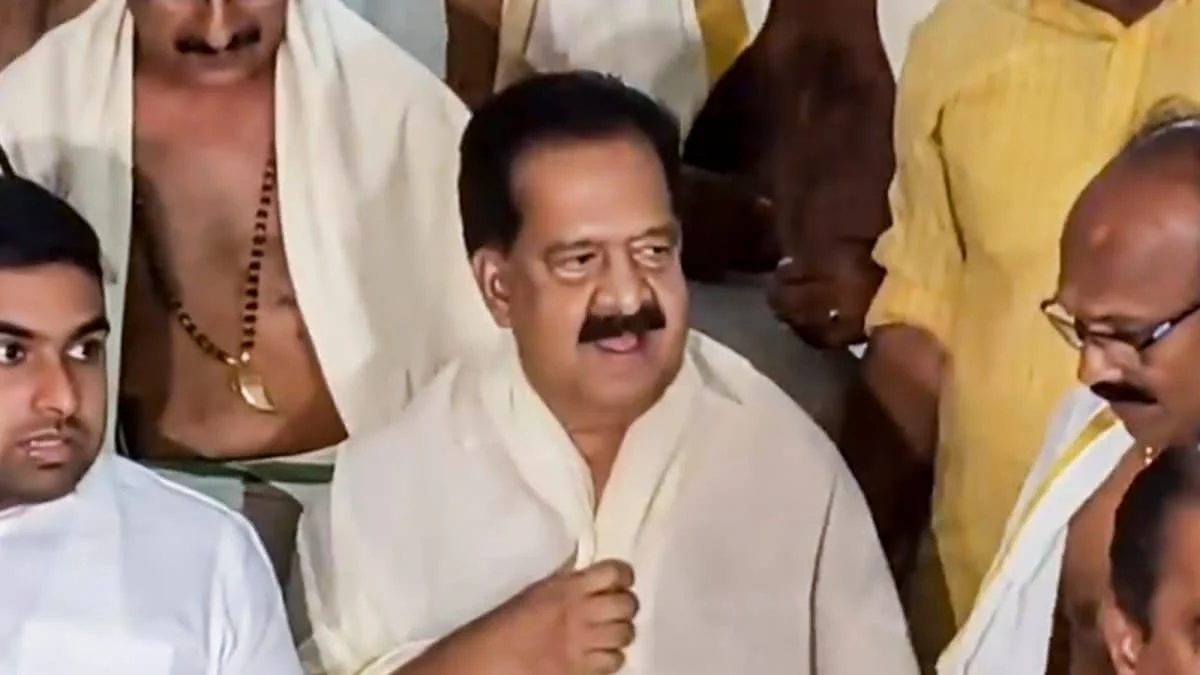
Thiruvananthapuram, Kerala – May 17, 2026: In a significant political realignment following the United Democratic Front’s (UDF) resounding victory in the recent assembly elections, senior Congress leader V.D. Satheesan has been officially named the new Chief Minister of Kerala. The announcement, coming a day before the swearing-in ceremony, marks a pivotal moment for the state’s political landscape, ushering in a new era after the Left Democratic Front’s (LDF) tenure.
Amidst intense speculation and internal deliberations, the Congress High Command’s decision saw veteran leader Ramesh Chennithala, a prominent contender for the top post, stepping into the crucial role of Home Minister. Chennithala, known for his decades of service and deep understanding of state affairs, publicly affirmed his commitment to the party’s decision, declaring that "it isn’t about my happiness or unhappiness. The party is more important." His statement underscored a display of party discipline and unity, crucial for the newly formed government.
The UDF’s triumph, securing a remarkable 102 seats, has been hailed as a "spectacular victory," reflecting a strong mandate from the people of Kerala. This shift in power necessitates a unified front and strategic leadership to address the state’s pressing issues and fulfill electoral promises. Chennithala’s acceptance of the Home portfolio, despite his Chief Ministerial aspirations, is widely seen as a mature move designed to strengthen the UDF’s administrative backbone and ensure a smooth transition of power.
The Road to Resurgence: UDF’s Decisive Mandate
The 2026 Kerala Assembly elections witnessed a dramatic political upheaval, culminating in the United Democratic Front’s decisive return to power. After a period in opposition, the UDF, primarily led by the Indian National Congress, managed to dismantle the incumbent Left Democratic Front government with an impressive tally of 102 seats. This victory not only exceeded the expectations of many political pundits but also signaled a clear public desire for change and a fresh approach to governance.
The electoral campaign was fiercely contested, marked by intense debates on economic policies, social welfare schemes, and issues of governance. The UDF’s narrative, focusing on anti-incumbency sentiments, allegations of corruption against the previous administration, and a renewed promise of inclusive development, resonated strongly with the electorate. Issues such as unemployment, agricultural distress, and the perceived shortcomings in handling post-flood rehabilitation efforts were key points of contention that the UDF effectively leveraged.
V.D. Satheesan, who served as the Leader of the Opposition in the previous assembly, emerged as a strong and articulate voice for the UDF during the campaign. His ability to connect with diverse sections of society and his clear vision for the state’s future played a crucial role in mobilizing support. Similarly, Ramesh Chennithala, as a seasoned campaigner and former Leader of Opposition, contributed significantly to the UDF’s electoral strategy, drawing on his extensive experience and popularity across various constituencies.
The "spectacular victory" of 102 seats in the 140-member assembly provided the UDF with a comfortable majority, granting the new government a robust mandate to implement its agenda. This strong electoral performance contrasts sharply with the narrow margins often seen in Kerala politics, indicating a significant swing in voter sentiment. The outcome has not only invigorated the Congress party in Kerala but also sent a clear message across the national political spectrum about the dynamics of regional politics.
The Leadership Conundrum: A High-Stakes Decision
The period immediately following the election results was characterized by intense internal deliberations within the Congress party regarding the selection of the Chief Minister. With a convincing mandate in hand, the focus quickly shifted to who would lead the UDF government. Two prominent figures emerged as frontrunners for the coveted post: V.D. Satheesan and Ramesh Chennithala, both stalwarts with significant contributions to the party and the state. Adding another layer of complexity was the name of Congress MP K.C. Venugopal, a powerful figure in national politics, who was also considered a potential candidate.
V.D. Satheesan, 59, represents the younger, more dynamic face of the Kerala Congress. Known for his sharp intellect, debating prowess, and clean image, he has steadily risen through the party ranks. His tenure as Leader of Opposition was marked by effective articulation of public concerns and rigorous scrutiny of the LDF government, earning him considerable public goodwill and the confidence of many party colleagues. His background as a lawyer and his progressive outlook were seen as assets in leading a modern Kerala.
Ramesh Chennithala, 67, on the other hand, brought to the table unparalleled experience and a deep understanding of Kerala’s political machinery. A veteran of several decades, he has held numerous significant positions, including Minister for Home Affairs and Leader of Opposition, demonstrating his administrative capabilities and political acumen. His long-standing loyalty to the party and his extensive network within the organization made him a formidable contender, with many believing his experience was essential for navigating the complexities of governance.
The decision ultimately rested with the Congress High Command in Delhi, which engaged in extensive consultations with state leaders and observers. The process involved weighing various factors: public perception, caste and community equations, the need for generational change, and the imperative to ensure party unity. The initial speculation surrounding the Chief Ministerial pick reached a fever pitch, with various factions lobbying for their preferred candidate.
A crucial moment in this leadership selection process was the Congress Legislative Party (CLP) meeting in Thiruvananthapuram. Reports indicated that Ramesh Chennithala initially skipped this meeting, fueling widespread speculation about his potential disgruntlement over being overlooked for the CM post. This absence, though brief, created ripples across the political landscape, suggesting a possible internal rift. Such situations are not uncommon in coalition politics or large national parties like the Congress, where individual aspirations often clash with collective decisions.
However, the Congress High Command, demonstrating its intent to maintain unity and present a cohesive front, reportedly intervened directly. It is understood that high-level party leadership engaged in discussions with Chennithala, urging him to accept a significant role in the cabinet and emphasizing the need for his experience and leadership. This intervention was critical in assuaging any concerns and securing his commitment to the new government, ensuring that the party could move forward unitedly after its electoral success. The eventual inclusion of Chennithala in the cabinet, particularly with a portfolio as crucial as Home, signifies a successful effort by the central leadership to balance aspirations and secure stability.
Chennithala’s Stature and the Call of Party Discipline
Ramesh Chennithala’s acceptance of the Home Department portfolio, despite being a strong contender for the Chief Minister’s position, is a testament to his long-standing commitment to party discipline and his understanding of the larger political exigencies. His public declaration to CNN-News18 that "the party’s decision was more important than his personal ambition" and that he would carry out his responsibilities with "utmost sincerity" resonates deeply within the Congress tradition of collective leadership and sacrifice for the greater good.
Chennithala’s political journey in Kerala is one marked by consistent service and a deep understanding of the state’s socio-political fabric. With a career spanning several decades, he has held virtually every significant position within the Kerala Congress framework. From his early days as a student leader, his rise through the Youth Congress, to his terms as a Member of Parliament and multiple stints as a Member of the Legislative Assembly, Chennithala has cultivated a formidable political profile. His experience as the Home Minister in the Oommen Chandy government from 2014 to 2016 provided him with invaluable administrative exposure, particularly in managing the sensitive areas of law and order and internal security. Subsequently, his role as the Leader of the Opposition saw him as the primary voice challenging the LDF government, meticulously scrutinizing its policies and holding it accountable.
His electoral performance in the 2026 elections further reinforced his individual political strength. Contesting from his traditional stronghold of Haripad in the Alappuzha district, Chennithala secured a victory with a commanding margin of 23,377 votes, defeating CPI’s T.T. Jismon. What makes this victory particularly significant is the broader electoral trend in Alappuzha. The district largely resisted the UDF’s surge, with many constituencies electing LDF candidates. Chennithala’s win stood out as a solitary triumph for the UDF in a district that otherwise leaned heavily towards the Left, underscoring his personal popularity and the loyalty he commands among his constituents, irrespective of the prevailing political wave.
This electoral mandate, coupled with his extensive experience, naturally positioned him as a strong candidate for the Chief Minister’s post. Therefore, his decision to step aside and accept the Home portfolio, a department he has managed before, speaks volumes about his political maturity and dedication to the party’s collective vision. In a political landscape often marred by factionalism and personal ambition, Chennithala’s public stance serves as a powerful message of unity, particularly important for a party returning to power after a period in opposition. It demonstrates an understanding that the stability and effectiveness of the new government hinge on the seamless collaboration of its senior leaders. His commitment to uphold the party’s decision is not merely a formality but a strategic move that could significantly influence the cohesion and performance of the UDF administration in its initial crucial years.
The Cabinet Unveiled: Balancing Experience and New Blood
The announcement of V.D. Satheesan’s cabinet a day ahead of the swearing-in ceremony revealed a carefully constructed team, designed to blend experience with fresh perspectives, and to ensure representation across various factions and communities within the United Democratic Front. The new cabinet is tasked with translating the UDF’s electoral promises into tangible governance, a challenge that requires both seasoned administrators and dynamic new leaders.
At the core of this new administrative structure is Ramesh Chennithala, who has been assigned the pivotal Home Department. This portfolio is arguably one of the most critical in any state government, overseeing law and order, internal security, crime investigation, and public safety. Chennithala’s previous experience as Home Minister from 2014 to 2016 makes him a natural fit for this role. His familiarity with the intricacies of the state’s police force, intelligence gathering, and judicial system will be invaluable in ensuring stability and effective governance. Entrusting such a vital department to a leader of his stature also serves to reassure the public of the government’s commitment to maintaining peace and security.
Beyond Chennithala, the cabinet includes other significant figures who bring a wealth of experience and political clout. K. Muraleedharan, another prominent Congress leader and former MP, has been included, signaling the party’s intent to utilize his administrative and legislative experience. Similarly, Sunny Joseph, a seasoned politician, is part of the new team, ensuring a balance of regional and community representation. The full composition of the cabinet reflects a strategic distribution of portfolios aimed at leveraging individual strengths and fostering collective responsibility.
In addition to the ministerial appointments, the UDF has also named Thiruvanchoor Radhakrishnan, a respected veteran, as the Speaker of the Assembly. The Speaker’s role is crucial for maintaining legislative decorum, facilitating productive debates, and ensuring the smooth functioning of the house. His experience will be vital in navigating potentially contentious legislative sessions. Complementing this, Shanimol Usman has been appointed as the Deputy Speaker, representing another key leadership position within the legislative arm of the government. Her appointment adds diversity to the leadership team and signals the party’s commitment to inclusive representation.
The selection of these key individuals reflects a conscious effort by the Congress leadership to project an image of unity and competence. By bringing together leaders with diverse backgrounds and levels of experience, the UDF government aims to address the multifaceted challenges facing Kerala, from economic recovery and infrastructure development to social welfare and environmental protection. The initial days of this cabinet will be crucial in setting the tone for the next five years, as they embark on the task of fulfilling the mandate given by the people of Kerala.
Navigating the Future: Implications for the UDF Government
The formation of the new UDF government under Chief Minister V.D. Satheesan, with Ramesh Chennithala taking charge of the Home Department, marks the beginning of a challenging yet hopeful chapter in Kerala’s political narrative. The implications of this leadership transition and cabinet composition are far-reaching, impacting not only the Congress party but also the state’s governance, its socio-economic trajectory, and the dynamics of its political opposition.
For the UDF Government and Chief Minister Satheesan:
The immediate challenge for Chief Minister Satheesan will be to consolidate power, ensure seamless coordination within the multi-party UDF coalition, and translate the electoral promises into concrete action. His leadership will be under intense scrutiny, particularly on issues of economic revival post-pandemic, job creation, and sustainable development. Satheesan, a relatively younger face in the CM’s chair compared to past incumbents, will need to balance the expectations of change with the wisdom of experienced leaders like Chennithala. His success will depend on his ability to forge consensus, inspire confidence, and deliver results on the ground. The smooth integration of Chennithala into a vital ministerial role is a strong start, showcasing a united front that can prevent internal squabbles from derailing administrative efficiency.
For Ramesh Chennithala’s Role and Future:
Chennithala’s acceptance of the Home portfolio, despite his Chief Ministerial ambitions, positions him as a crucial pillar of the new government. It demonstrates his commitment to the party and offers him a significant platform to contribute to the state’s administration. His experience in this department will be invaluable, particularly in maintaining law and order, which is often a critical benchmark for governmental stability. While he may have foregone the top job, his continued presence in a powerful cabinet position ensures his influence and relevance in Kerala politics. This move could also pave the way for future leadership roles, cementing his reputation as a loyal and capable statesman.
For the Congress Party in Kerala:
The UDF’s victory and the subsequent leadership arrangement offer a much-needed boost to the Congress party in Kerala. It signals a successful generational transition at the top while retaining the wisdom of its veterans. The challenge for the party will be to maintain this unity and capitalize on the mandate to strengthen its grassroots presence and appeal to a broader demographic. Factionalism has historically plagued the Congress in Kerala, and the harmonious transition observed now is a positive indicator that needs to be sustained.
For the Opposition (LDF):
The LDF, now in opposition, faces the daunting task of regrouping and re-strategizing after its defeat. Its role will be to hold the new UDF government accountable, act as a constructive opposition, and rebuild its base. The UDF’s strong majority means the LDF will have to work harder to make its voice heard and offer a compelling alternative narrative for the future.
Challenges and Expectations:
The new government inherits a state grappling with various challenges, including fiscal constraints, the lingering effects of the pandemic on tourism and remittances, and environmental concerns. The public will expect swift action on these fronts, along with effective implementation of welfare schemes and development projects. The UDF’s promises during the election, particularly regarding economic growth and addressing unemployment, will be keenly watched. The initial months of the new administration will be critical in setting the tone for the next five years, with an emphasis on transparent governance and inclusive policies.
The Enduring Legacy of Party Discipline
Ramesh Chennithala’s decision to embrace the Home Minister’s role, setting aside his Chief Ministerial aspirations, underscores an enduring aspect of India’s political tradition: party discipline and the collective good. In an era often characterized by political opportunism and intense individual ambition, his public statement, "It isn’t about my happiness," stands as a powerful testament to the value of party loyalty. This act is not merely a personal concession but a strategic move that significantly bolsters the UDF’s internal cohesion and presents a united front to the electorate.
Historically, the Congress party, particularly in states like Kerala, has witnessed numerous instances of internal power struggles. Chennithala’s move, therefore, serves as a crucial precedent, demonstrating how senior leaders can navigate personal disappointments for the greater stability of the party and the government. It minimizes potential factionalism at the outset, allowing the new administration to focus its energies on governance rather than internal strife. His long and distinguished career, now capped by this act of deference, reinforces his image as a loyal party man, capable of placing institutional interests above individual glory. This approach is vital for any democratic government, especially one taking over after a significant electoral shift, as it ensures a stable foundation upon which to build policy and deliver on public expectations. The legacy of such discipline will undoubtedly shape future leadership dynamics within the Kerala Congress and could serve as a model for other state units grappling with similar succession challenges.
