

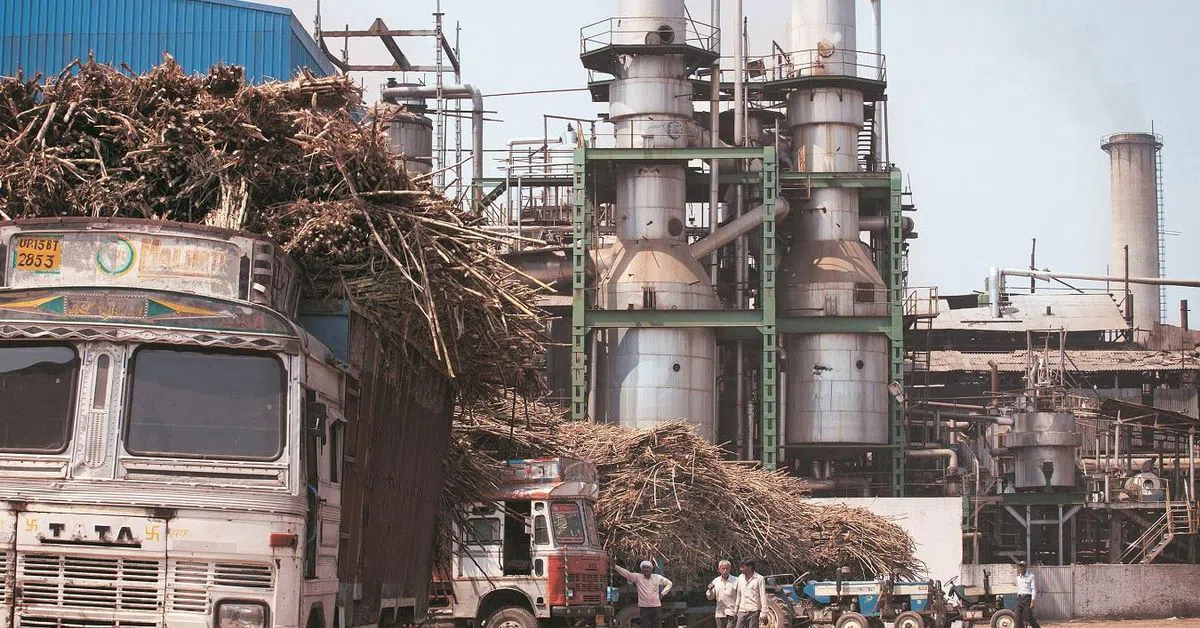
Uttar Pradesh, India – Balrampur Chini Mills Ltd (BCML), a venerable giant in India’s sugar industry, is poised to make a monumental leap into the realm of sustainable manufacturing with the imminent commissioning of its ambitious Poly Lactic Acid (PLA) bio-plastic plant. Slated to commence operations during the December quarter of the current fiscal year, this state-of-the-art facility in Uttar Pradesh represents a strategic pivot, promising an impressive annual revenue of approximately ₹2,000 crore once fully operational, according to a senior company official.
The significant investment of over ₹3,000 crore underscores Balrampur Chini’s commitment to diversification and environmental stewardship. With an installed capacity of 80,000 tonnes per annum (TPA), the plant is set to establish BCML as a formidable player in the burgeoning global bioplastics market, leveraging its extensive agricultural feedstock base and manufacturing expertise. This venture not only signifies a substantial expansion of the company’s revenue streams beyond its traditional sugar, distillery, and power cogeneration businesses but also positions it at the forefront of India’s green industrial revolution.
Avantika Saraogi, Executive Director of Balrampur Chini Mills, expressed strong confidence in the project’s potential in an exclusive interview with PTI. "This new plant will be operational in the third quarter of this fiscal," she confirmed, highlighting the advanced stage of construction and readiness. Pertaining to the financial outlook, Saraogi added, "We are expecting a revenue of about ₹2,000 crore at full capacity." This projected figure represents a significant enhancement to the company’s existing revenue profile, which stood at around ₹6,300 crore during the last fiscal year, signaling a potential one-third increase from this single new segment alone. The full impact of this transformative PLA plant is anticipated to be reflected in the company’s financial performance by the 2027-28 fiscal year.
Main Facts: A Bold Step Towards Sustainability
Balrampur Chini Mills Ltd (BCML), one of India’s leading sugar producers, is undergoing a profound strategic transformation, moving beyond its core business into the high-growth sector of bio-plastics. The cornerstone of this pivot is its new Poly Lactic Acid (PLA) manufacturing facility in Uttar Pradesh, a project of immense scale and strategic importance.
The plant, with an investment exceeding ₹3,000 crore, is designed to produce 80,000 tonnes of PLA per annum. This capacity is not merely substantial by Indian standards but positions BCML as a significant global producer of this versatile and environmentally friendly polymer. The strategic decision to enter the bioplastics market is driven by several compelling factors: the escalating global demand for sustainable alternatives to conventional plastics, stringent environmental regulations, and the abundant availability of renewable plant resources, particularly sugarcane, which is central to BCML’s existing operations in Uttar Pradesh.
The financial projections are equally compelling. Executive Director Avantika Saraogi has articulated a clear vision for the plant’s economic contribution, forecasting an annual revenue of approximately ₹2,000 crore once it achieves full operational capacity. This figure is particularly noteworthy when juxtaposed with BCML’s consolidated revenue of around ₹6,300 crore in the last fiscal year (FY2025-26). The addition of ₹2,000 crore from a single new segment promises to significantly enhance the company’s top line and diversify its income streams, reducing its reliance on the often-volatile sugar and ethanol markets. The full financial benefits are expected to materialize and be fully reflected in the company’s financial statements by FY2027-28, allowing for a ramp-up period post-commissioning.
The plant’s commissioning during the December quarter (Q3 FY2025-26) marks a critical milestone, transitioning the project from a capital expenditure phase to an operational revenue-generating asset. This timely launch is indicative of robust project management and execution capabilities within BCML. Furthermore, the company’s proactive approach to market readiness is evident in its ongoing efforts to conduct analysis and product development using imported PLA, ensuring that a comprehensive portfolio of applications is ready for commercial deployment as soon as the plant comes online.
The strategic importance of this venture extends beyond mere financial metrics. It represents a deep commitment to environmental responsibility, aligning with national and global sustainability agendas. By producing PLA from renewable plant resources such as sugarcane, corn starch, and tapioca roots, BCML is directly contributing to the reduction of plastic pollution and promoting a circular economy. The biodegradable nature of PLA, which breaks down naturally without leaving toxic residues, offers a compelling solution to the pervasive challenge of plastic waste. This initiative also stands to benefit from supportive government policies, notably the Bio Plastic Industrial Policy 2024 announced by the Uttar Pradesh government, which offers incentives that will further bolster the project’s economic viability and strategic advantage.
Chronology: A Journey from Sugar to Sustainable Polymers
Balrampur Chini Mills’ journey into bioplastics is not an overnight development but rather a culmination of strategic planning and foresight, building upon decades of expertise in agro-based industries.
Deep Roots in Sugar (Pre-2000s): Balrampur Chini Mills has been a dominant force in the Indian sugar industry for decades, establishing itself as one of the largest and most efficient sugar manufacturers. With 10 sugar factories strategically located across Uttar Pradesh, the company boasts a massive sugarcane crushing capacity of 80,000 tonnes per day. This foundational strength in sugar production has provided a stable platform and a rich understanding of agricultural feedstock management, which is proving invaluable for its bioplastics venture.
Diversification into Allied Businesses (2000s onwards): Recognizing the inherent volatility of the sugar cycle, BCML strategically diversified into allied businesses. This included robust distillery operations, with a capacity of 1050 kilolitres per day, primarily producing ethanol from molasses. Concurrently, the company invested in power cogeneration, utilizing bagasse (a byproduct of sugarcane crushing) to generate 175.7 MW (saleable) of electricity. These diversifications not only added stability to its revenue but also showcased its capability to extract higher value from its primary agricultural input – sugarcane.
Identifying the Bioplastics Opportunity (Early 2020s): The global imperative for sustainable solutions, coupled with India’s growing focus on reducing plastic waste and promoting green manufacturing, likely spurred BCML to explore new avenues for value addition. The abundance of sugarcane, a renewable resource, positioned the company uniquely to pivot into PLA production, which utilizes plant sugars as feedstock. This alignment with both environmental needs and existing resource strengths made bioplastics a natural fit for BCML’s long-term growth strategy.
Project Inception and Investment Announcement: While the exact date of the initial project announcement isn’t detailed, the sheer scale of the investment – over ₹3,000 crore – indicates a multi-year planning and execution phase. Such a significant capital outlay would have involved extensive feasibility studies, technological tie-ups, regulatory approvals, and financial structuring. The commitment to such a large-scale project underlines the company’s conviction in the future of bioplastics.
Construction in Full Swing (Past 12-18 months): As highlighted by Executive Director Avantika Saraogi, "Construction activities on the site are undergoing at full speed." This suggests an intensive phase of civil engineering, equipment procurement, and installation has been underway, bringing the project rapidly towards completion. The swift progress is crucial for meeting aggressive commissioning targets and capitalizing on market demand.
Product Development and Market Preparation (Recent Months): To ensure a smooth market entry, BCML has been actively engaged in "analysis and product development through imported PLA." This critical preparatory phase allows the company to understand market requirements, refine product specifications, and develop a range of applications for its future domestically produced PLA, ensuring that it can hit the ground running post-commissioning. This includes testing various end-products, exploring processing techniques, and establishing quality control protocols.
Securing First Institutional Order (February this year): A significant early success came in February this year when the company secured its "first institutional order from Lucknow Cantonment Board to supply green bioplastic products, including compostable garbage bags." This order is a crucial validation of the market’s readiness for bioplastic products and BCML’s ability to meet institutional demand even before its plant is operational. It demonstrates proactive market engagement and confidence in its product pipeline.
Government Policy Support (October 2024): The announcement of the Uttar Pradesh government’s Bio Plastic Industrial Policy 2024 in October 2024 provides a timely boost to BCML’s project. As Saraogi confirmed, Balrampur Chini is "eligible to get incentives under the Bio Plastic Industrial Policy 2024." Such policies typically offer financial subsidies, tax breaks, and other support mechanisms, significantly improving the project’s financial viability and competitive edge.
Commissioning Target (December Quarter, FY2025-26): The current focus is on the critical commissioning phase, targeted for the December quarter of the current fiscal year. This involves rigorous testing, calibration, and fine-tuning of the plant’s processes to ensure optimal production efficiency and product quality.
Full Operational Impact (FY2027-28): While commissioning is expected soon, the full financial and operational impact, including the projected ₹2,000 crore revenue, is anticipated to be realized by the 2027-28 fiscal year. This allows for a gradual ramp-up of production, market penetration, and the establishment of stable supply chains.
Supporting Data: Market Dynamics and Financial Context
The strategic move by Balrampur Chini Mills into bioplastics is underpinned by compelling market dynamics and is poised to significantly reshape its financial trajectory.
Global Bioplastics Market Boom: The global bioplastics market is experiencing exponential growth, driven by increasing environmental consciousness, stringent regulations on conventional plastics, and growing consumer demand for sustainable products. Reports from market research firms consistently project a Compound Annual Growth Rate (CAGR) of 15-20% for the bioplastics market over the next decade. PLA, in particular, is a dominant segment within this market due to its versatility, biodegradability, and derivation from renewable resources. It is widely used in packaging, textiles, automotive components, medical devices, and agriculture. The shift from a linear "take-make-dispose" economy to a circular one strongly favors materials like PLA.
India’s Green Push: India is a crucial battleground in the fight against plastic pollution. The government’s ban on single-use plastics, coupled with initiatives like "Swachh Bharat Abhiyan" and "Make in India," creates a fertile ground for domestic bioplastic production. With a massive population and a rapidly growing economy, India represents an enormous potential market for biodegradable alternatives. The ability to produce PLA domestically will reduce reliance on imports and contribute to the nation’s self-sufficiency in green materials. Uttar Pradesh, being an agrarian state and a major sugar producer, is strategically positioned to support such an industry, providing both feedstock and a large industrial base.
Poly Lactic Acid (PLA) – The Sustainable Choice: PLA is a thermoplastic polyester derived from renewable biomass, typically fermented plant starch (like corn, sugarcane, or tapioca). Its production process involves the fermentation of sugars to produce lactic acid, followed by polymerization. Key advantages of PLA include:
- Biodegradability and Compostability: Under industrial composting conditions, PLA breaks down into natural elements, leaving no toxic residues.
- Renewable Resource Base: Unlike fossil-fuel-based plastics, PLA is made from plants, making it a sustainable alternative.
- Versatility: It can be processed using standard plastic manufacturing equipment (injection molding, extrusion, thermoforming), making it adaptable for a wide range of applications from food packaging and disposable cutlery to medical implants and 3D printing filaments.
- Lower Carbon Footprint: Its production generally involves lower greenhouse gas emissions compared to conventional plastics.
Balrampur Chini’s Financial Landscape:
BCML’s existing business portfolio comprises sugar, distillery (ethanol), and power cogeneration. The company reported a total income of ₹6,307.95 crore in the 2025-26 fiscal year, a healthy increase from ₹5,504.19 crore in 2024-25, reflecting strong revenue growth. However, the consolidated net profit saw a decline, dropping to ₹378.46 crore in FY2025-26 from ₹436.92 crore in the preceding year (FY2024-25). This divergence between rising revenue and declining profit could be attributed to various factors, including higher input costs, increased operational expenses, or significant investments in new projects like the PLA plant, which incur pre-operating expenses before generating returns.
The projected ₹2,000 crore annual revenue from the PLA plant at full capacity represents a transformative addition. It is approximately 31.7% of the company’s current total income, indicating a significant diversification and a new pillar of growth. This substantial revenue stream is expected to not only offset potential volatilities in its traditional sugar and ethanol markets but also drive overall profitability once the plant is fully integrated and optimized.
Investment and Funding: The over ₹3,000 crore investment in the PLA plant is a substantial capital outlay. Such projects are typically funded through a mix of internal accruals, debt financing, and potentially equity infusions. The eligibility for incentives under the UP Bio Plastic Industrial Policy 2024 will further de-risk the investment and improve its return on capital employed (ROCE) by providing subsidies or tax benefits.
Uttar Pradesh – A Green Manufacturing Hub: Uttar Pradesh, India’s most populous state, is not only the country’s sugar bowl but is rapidly emerging as a hub for industrial growth and green manufacturing. The state government’s proactive policies, including the recently announced Bio Plastic Industrial Policy, are designed to attract investment in sustainable industries, create jobs, and foster economic development. BCML’s decision to locate its PLA plant in UP leverages the state’s abundant agricultural resources, established industrial infrastructure, and supportive policy environment.
Official Responses: Confidence and Strategic Vision
The leadership at Balrampur Chini Mills has articulated a clear vision and strong confidence in the strategic importance and operational success of the new PLA plant. Executive Director Avantika Saraogi has been particularly vocal, offering insights into the project’s timeline, financial potential, and strategic alignment.
"This new plant will be operational in the third quarter of this fiscal," Saraogi affirmed, underscoring the advanced stage of the project and the meticulous planning that has gone into its execution. This statement is a powerful signal to stakeholders, indicating that the multi-year investment cycle is nearing its fruition, and the company is on the cusp of entering a new phase of revenue generation from this pioneering venture. The timely commissioning during the December quarter (Q3 FY2025-26) also highlights the efficiency of the project management team in navigating the complexities of setting up a large-scale, technologically advanced manufacturing facility.
When pressed about the financial prospects, Saraogi confidently stated, "We are expecting a revenue of about ₹2,000 crore at full capacity." This projection is not merely an optimistic estimate but is likely based on thorough market research, demand assessments, and competitive pricing strategies. It reflects a deep understanding of the global and domestic demand for bioplastics and BCML’s anticipated ability to capture a significant share of this market. The target revenue figure, which represents a substantial addition to the company’s existing turnover, speaks volumes about the transformative potential of this single project.
Addressing the operational progress, Saraogi reassured, "Construction activities on the site are undergoing at full speed." This statement confirms that the physical infrastructure and installation of machinery are progressing rapidly and efficiently, aligning with the aggressive commissioning timeline. The commitment to maintaining this pace indicates a focused effort to bring the plant online without undue delays, ensuring that BCML can quickly capitalize on the market opportunity.
A key pillar of BCML’s confidence in achieving full capacity utilization post-commissioning is the robust market demand. Saraogi emphasized, "The plant would run at full capacity after commissioning, considering a huge demand for biodegradable plastic." This assertion is supported by global trends, increasing consumer preference for eco-friendly products, and regulatory pressures pushing industries towards sustainable alternatives. The "huge demand" is not just a general observation but is likely informed by BCML’s own market intelligence, including the positive response to its early product development efforts using imported PLA and the securing of its first institutional order. The success with the Lucknow Cantonment Board for compostable garbage bags serves as an early validation of this demand and BCML’s ability to meet it.
Furthermore, Saraogi highlighted the strategic advantage of government support, stating, "Balrampur Chini is also eligible to get incentives under the Bio Plastic Industrial Policy 2024 announced by the UP government in October, 2024." This eligibility is a significant booster for the project’s financial viability. Government incentives, such as capital subsidies, tax benefits, or preferential procurement policies, can substantially reduce the initial investment burden and improve long-term profitability, making the venture even more attractive. It also signifies a supportive regulatory environment, which is crucial for pioneering industries.
Beyond these specific comments, the overarching message from BCML’s leadership is one of strategic transformation. The investment in PLA is not just an opportunistic diversification but a foundational step towards becoming an integrated bio-refinery. By leveraging its core competency in sugar and agro-processing, BCML is positioning itself as a leader in sustainable manufacturing, adding significant value to agricultural produce, and contributing to a greener economy. This vision extends to other expansion plans, such as the recently announced ₹160 crore lactogypsum processing plant in UP, demonstrating a broader strategy of optimizing by-products and enhancing environmental footprint. The company’s commitment to innovation and sustainability is clearly driving its future growth trajectory.
Implications: Reshaping Balrampur Chini and the Indian Industry
The commissioning of Balrampur Chini Mills’ PLA bio-plastic plant carries far-reaching implications, not just for the company itself, but for the broader Indian industrial landscape, the environment, and the future of sustainable manufacturing.
For Balrampur Chini Mills:
- Financial Transformation: The projected ₹2,000 crore annual revenue from the PLA plant at full capacity is a game-changer. It represents a substantial diversification of BCML’s revenue streams, reducing its historical reliance on the cyclical and often volatile sugar and ethanol markets. This will lead to more stable and predictable earnings, enhance overall profitability, and improve the company’s financial resilience. The significant investment of over ₹3,000 crore, while initially impacting short-term profits (as seen in the FY2025-26 decline despite revenue growth, possibly due to pre-operative expenses), is expected to yield substantial long-term returns, boosting shareholder value.
- Strategic Repositioning: BCML is transforming from a traditional sugar company into an integrated bio-refinery. This strategic pivot positions it at the forefront of the green economy, enhancing its brand image as an innovative and environmentally responsible leader. This can attract new investors, talent, and partnerships focused on sustainability.
- Market Leadership in Bioplastics: With an 80,000 TPA capacity, BCML will become a major player in India’s nascent but rapidly growing bioplastics market. This early mover advantage can help establish strong market positions, build crucial supply chain relationships, and develop proprietary product applications.
- Enhanced Value Addition: The PLA plant represents a significant step in value addition to sugarcane, moving beyond basic sugar and ethanol production to high-value, advanced materials. This optimizes the utilization of agricultural resources and creates a more sustainable business model.
For the Indian Economy:
- Boost to "Make in India" and Green Manufacturing: The plant is a prime example of the "Make in India" initiative, promoting domestic manufacturing of advanced green materials. It will reduce India’s dependence on imported bioplastics and traditional plastics, contributing to self-reliance.
- Job Creation: A project of this scale will generate substantial direct and indirect employment opportunities, particularly in Uttar Pradesh, from manufacturing and R&D to logistics and sales. This will stimulate local economies and enhance skill development.
- Investment Attraction: BCML’s success in this venture could serve as a blueprint and attract further domestic and international investment into India’s bioplastics sector, fostering a vibrant green manufacturing ecosystem.
- Agricultural Linkages: By creating a new, high-value demand for sugarcane, the PLA plant indirectly supports sugarcane farmers, potentially leading to better prices and improved livelihoods.
For the Environment and Sustainability:
- Reduction in Plastic Pollution: The production of 80,000 TPA of biodegradable PLA will significantly contribute to reducing the burden of conventional plastic waste, which pollutes land, water, and air for centuries.
- Promotion of Circular Economy: PLA, being derived from renewable plant resources and designed for biodegradability, aligns perfectly with the principles of a circular economy, where resources are kept in use for as long as possible.
- Lower Carbon Footprint: The shift from fossil-fuel-based plastics to bio-based alternatives generally results in a lower carbon footprint, contributing to India’s climate change mitigation efforts.
- Showcasing Sustainable Alternatives: BCML’s visible commitment will raise awareness about the viability and benefits of bioplastics, encouraging broader adoption across various industries and by consumers.
For the Sugar Industry:
- Diversification Model: BCML’s bold move provides a compelling model for other sugar companies in India and globally to diversify their operations beyond sugar and ethanol. It demonstrates how existing agricultural infrastructure and feedstock can be leveraged for high-tech, sustainable products.
- Increased Resilience: By diversifying into less volatile sectors, the sugar industry as a whole can build greater resilience against price fluctuations, policy changes, and climatic impacts that traditionally affect agricultural commodities.
Competitive Landscape:
BCML’s entry will intensify competition in the Indian bioplastics market, pushing existing players to innovate and expand. However, its scale, established distribution networks, and strong financial backing give it a significant competitive advantage. The ability to source feedstock internally (or from its established network of farmers) also provides cost advantages and supply chain stability.
In conclusion, Balrampur Chini Mills’ new PLA plant is more than just a capital expenditure; it is a strategic investment in the future – a future where industry and environment can thrive in synergy. It marks a pivotal moment for the company, for the Indian manufacturing sector, and for the nation’s journey towards a more sustainable and circular economy. The successful commissioning and full operationalization of this plant will undoubtedly cement BCML’s legacy as a pioneer in India’s green industrial revolution.
