

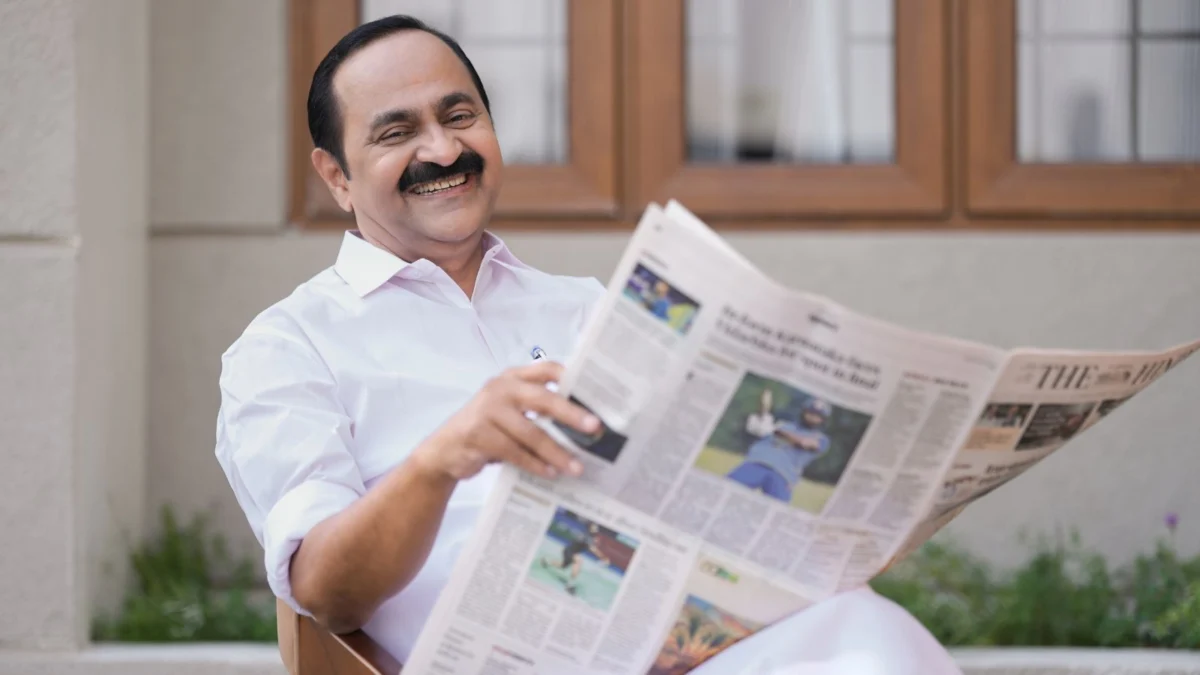
Thiruvananthapuram, Kerala – In a significant moment for Kerala politics, Congress leader V. D. Satheesan was sworn in as the state’s Chief Minister on Monday, heading a 21-member cabinet that represents a blend of seasoned political veterans, emerging leaders, and a notable contingent of political heirs. The composition of the new United Democratic Front (UDF) government, formed after a decisive electoral victory, signals a strategic attempt to combine continuity with a fresh outlook, while also acknowledging the deep-rooted political legacies that shape the state’s public life.
The new council of ministers, including the Chief Minister himself, reflects the diverse fabric of the UDF alliance, bringing together representatives from the Indian National Congress, Indian Union Muslim League (IUML), Revolutionary Socialist Party (RSP), Kerala Congress (Joseph), and Kerala Congress (Jacob), along with the Communist Marxist Party (CMP). This carefully curated lineup aims to ensure broad representation across communities and regions, setting the stage for the Satheesan administration’s five-year term.
Main Facts: A Cabinet of Continuity and Change
Chief Minister V. D. Satheesan’s inaugural cabinet features a striking generational mix, with members ranging from the youngest, O. J. Janeesh at 37, to the eldest, Sunny Joseph at 73. A prominent aspect of this new government is the significant presence of individuals who are direct descendants of former ministers or legislators, often referred to as "political heirs." Five ministers and the government’s chief whip fall into this category, underscoring the enduring influence of political families in Kerala’s democratic landscape.
Key Figures and Political Legacies:
- K. Muraleedharan (Congress): Son of the late Chief Minister K. Karunakaran, a towering figure in Kerala politics for decades. Muraleedharan brings extensive legislative and parliamentary experience to the table.
- Shibu Baby John (RSP): Son of veteran leader Baby John, who served as national general secretary of the RSP and held ministerial portfolios in various state governments.
- Anoop Jacob (Kerala Congress (Jacob)): Son of party founder T. M. Jacob, a four-term minister. Anoop Jacob himself has served as a minister previously.
- P. K. Basheer (IUML): Son of the late P. Seethi Haji, a five-time MLA and former chief whip.
- V. E. Abdul Gafoor (IUML): Son of the late V. K. Ibrahim Kunju, who served as a minister in a previous UDF government.
- Apu John Joseph (Chief Whip, Kerala Congress (Joseph)): Son of Kerala Congress (Joseph) chairman P. J. Joseph, a formidable political figure who has held the Thodupuzha constituency for over five decades.
This generational transfer of political capital is a defining characteristic of the new cabinet, sparking discussions about dynastic politics versus meritocracy within the democratic framework. Beyond these legacies, the cabinet also includes seasoned parliamentarians like Ramesh Chennithala and P. K. Kunhalikutty, who bring decades of administrative and legislative experience crucial for navigating the complexities of governance. The inclusion of first-time MLAs like Bindu Krishna, K. A. Thulasi, O. J. Janeesh, and M. Liju also signals the UDF’s intent to nurture new talent and infuse fresh perspectives into the administration.
Chronology: The Road to the New Cabinet
The formation of V. D. Satheesan’s cabinet follows a period of intense political activity and strategic maneuvering within the United Democratic Front. The UDF’s victory in the recent Assembly elections marked a significant shift in the state’s political dynamics, unseating the incumbent Left Democratic Front (LDF) government after a fiercely contested campaign. Satheesan, a prominent Congress leader known for his oratorical skills and incisive interventions in the Assembly, emerged as the consensus choice for Chief Minister, signaling a generational change within the Congress leadership.
The UDF, a long-standing political alliance in Kerala, has historically been a coalition of diverse parties, each bringing its unique regional and community support base. The Congress, as the largest constituent, plays a pivotal role, but the strength and stability of the front depend heavily on the harmonious integration of its allies, particularly the Indian Union Muslim League (IUML) in the Malabar region and various Kerala Congress factions in the central Travancore belt. The RSP and CMP, though smaller partners, also contribute to the UDF’s broad appeal.
The negotiations for cabinet portfolios were reportedly intricate, balancing the aspirations of senior leaders, the demands of coalition partners, and the need for geographical and social representation. The resolution of internal party dynamics, such as bringing veteran leader Ramesh Chennithala on board, was crucial for projecting a united front. Chennithala, a former Home Minister and Leader of Opposition, is a permanent invitee to the Congress Working Committee, and his experience is invaluable to the new government. Similarly, P. K. Kunhalikutty of the IUML, a stalwart who has been part of every UDF cabinet since 1991, plays a critical role in ensuring alliance cohesion and stability.
The journey of many cabinet members began in student politics, a common pathway to leadership in Kerala. From the Kerala Students Union (KSU) and Youth Congress to the Muslim Students Federation (MSF) and student wings of the Kerala Congress factions, these early experiences shaped their political ideologies and honed their organizational skills. This deep-rooted connection to grassroots politics and party structures is a recurring theme in the profiles of the newly sworn-in ministers, reflecting a long-standing tradition in the state’s political development.
Supporting Data: Profiles of the New Ministers
The 21-member cabinet is a mosaic of varied experiences, educational backgrounds, and political trajectories. Here’s a detailed look at the individuals who will steer Kerala’s future:
The Congress Contingent:
- V. D. Satheesan (Chief Minister): A prominent Congress leader and legal professional, Satheesan has built a reputation as a sharp parliamentarian and an articulate voice for the opposition. His elevation to Chief Minister marks a new era for the Congress in Kerala, emphasizing a blend of intellectual prowess and administrative ambition.
- Ramesh Chennithala: A political heavyweight celebrating his 70th birthday this month, Chennithala is one of the most senior legislators in the cabinet. First elected to the Assembly in 1982 at just 28, his five-decade career includes leadership roles in the KSU, Youth Congress, and state Congress. He previously served as Home Minister (2014-2016) and Leader of Opposition, bringing unparalleled experience in governance and legislative affairs. His inclusion underscores the UDF’s commitment to leveraging seasoned leadership.
- K. Muraleedharan: The 69-year-old former Lok Sabha MP carries the significant legacy of his father, late CM K. Karunakaran. Muraleedharan’s political journey began with a Lok Sabha win from Kozhikode in 1989. Despite a brief stint as Power Minister in 2004, which ended after a by-election loss, he has remained a prominent figure, serving as state Congress president. His return to the state cabinet symbolizes the enduring power of political lineage and the rehabilitation of experienced leaders.
- Sunny Joseph: The current state Congress president, 73, took charge of party affairs a year ago. Representing Peravoor in Kannur since 2011, he achieved a notable victory this time by defeating CPI(M) heavyweight and former minister K. K. Shailaja. Joseph’s rise through the Congress ranks in Kannur, under the mentorship of veteran K. Sudhakaran, highlights his grassroots strength and organizational capabilities.
- P. C. Vishnunadh: At 48, Vishnunadh is one of the younger working presidents of the Kerala Pradesh Congress Committee (KPCC). First elected to the Assembly in 2006 from Chengannur, he was one of the youngest legislators then. His career spans student and youth leadership roles, culminating in his current position as an All India Congress Committee (AICC) member. After a previous electoral defeat, he has represented Kundara in Kollam since 2021, demonstrating resilience and a growing stature.
- Bindu Krishna: A first-time MLA from Kollam, 58-year-old Bindu Krishna hails from a Congress family. She has steadily risen to become one of the party’s most recognizable women leaders, having headed the Mahila Congress in the state and currently serving as the Kollam District Congress Committee (DCC) president. Despite losing three previous elections, her perseverance and dedication to party work have finally earned her a seat in the Assembly and a place in the cabinet. Her husband, S. Krishna Kumar, is a DCC general secretary in Thiruvananthapuram, further rooting her in the party’s organizational fabric.
- T. Siddique: The 51-year-old two-term legislator from Kalpetta, part of Priyanka Gandhi’s Wayanad Lok Sabha constituency, is a former Youth Congress state president. Siddique gained prominence with the backing of his mentor, the late Oommen Chandy. His notable act in 2019 was suspending his Lok Sabha campaign in Wayanad to make way for Rahul Gandhi, showcasing his loyalty and strategic importance within the party.
- A. P. Anil Kumar: A KPCC vice president and one of the most prominent Dalit leaders in the Congress, 61-year-old Anil Kumar has represented Vandoor in Malappuram since 2001. He has served as a minister in UDF governments from 2004-2006 and 2011-2016, bringing significant administrative experience and a strong voice for marginalized communities.
- K. A. Thulasi: A first-time MLA from Kongad in Palakkad, 51-year-old K. A. Thulasi represents a new generation of women leaders. Married to Palakkad MP V. K. Sreekandan, her political journey began with Congress student politics. She was a Thrissur district panchayat member in 2000 and is currently a general secretary in the KPCC, reflecting her long-standing commitment to party organization.
- O. J. Janeesh: At 37, Janeesh is the youngest cabinet minister and the state president of the Youth Congress. His debut electoral contest saw him elected from Kodungallur in Thrissur district. Janeesh was entrusted with leading the Youth Congress last year, highlighting his potential and the party’s faith in younger leadership, especially after a period of organizational challenges.
- Roji M. John: A prominent youth face of Congress, 43-year-old Roji M. John has represented Angamaly in Ernakulam since 2016. With an MPhil in political science from Jawaharlal Nehru University, he rose to national leadership within the NSUI (Congress’s student wing) before returning to Kerala. He has also served as an AICC secretary in charge of Karnataka, demonstrating his pan-India organizational experience.
- M. Liju: A first-time legislator from Kayamkulam in Alappuzha district, 46-year-old M. Liju’s victory follows three previous defeats, showcasing his perseverance. He became the president of the state Youth Congress in 2009 through a talent hunt initiated by Rahul Gandhi, indicating his early recognition as a promising leader. He is currently one of the KPCC general secretaries.
Indian Union Muslim League (IUML) Ministers:
- P. K. Kunhalikutty: At 74, Kunhalikutty is a decision-maker in the IUML and a prominent UDF face for three decades. A nine-time legislator, first elected in 1982, he has been part of every UDF cabinet since 1991, serving under CMs Karunakaran, Antony, Chandy, and now Satheesan. He was the second-in-command in the previous UDF cabinet, bringing immense experience in coalition management and administration.
- N. Samsudheen: A 56-year-old IUML state secretary, Samsudheen has represented Mannarkkad in Palakkad since 2011. He began his political journey through the Muslim Students Federation (MSF) and, as a lawyer by profession, previously served as a Malappuram district panchayat member before moving to state politics.
- K. M. Shaji: The 54-year-old started his career as a village panchayat vice president in Wayanad at 22. Known as a vocal critic of former CM Pinarayi Vijayan, Shaji served the student and youth wings of the IUML. After being elected from Azhikode in Kannur in 2011 and 2016, and then losing in 2021, he successfully won from Vengara in Malappuram this time, showcasing his electoral adaptability and resilience.
- P. K. Basheer: The 66-year-old MLA of Ernad in Wayanad is the son of the late IUML legislator P. Seethi Haji. Basheer rose through party ranks after serving as a village panchayat member. He has notably been in charge of IUML’s rehabilitation project for Wayanad landslide victims, demonstrating his commitment to social welfare.
- V. E. Abdul Gafoor: At 49, Gafoor is one of the few well-known IUML leaders outside the party’s stronghold of Malappuram. The son of the late V. K. Ibrahim Kunju, a former minister, Gafoor is a professional lawyer. After losing the 2021 election from Kalamassery in Ernakulam, he successfully wrested back the seat this time, a constituency his father previously represented, continuing a significant family legacy.
Other Alliance Partners:
- Mons Joseph (Kerala Congress (Joseph)): A 61-year-old leader of the Kerala Congress (Joseph), Mons Joseph served as Public Works Minister for 22 months when his party was part of the LDF (2006-2009). He has represented Kaduthuruthy in Kottayam since 2006. A lawyer by profession, he also began his political career with the student wing of the Kerala Congress, highlighting the common thread of student activism.
- Shibu Baby John (RSP): The 63-year-old RSP face in the UDF cabinet is the son of veteran leader Baby John, who served as a minister in both Congress and Left cabinets. Shibu himself was a minister in the previous UDF government, bringing invaluable experience to the new council.
- Anoop Jacob (Kerala Congress (Jacob)): The lone Kerala Congress (Jacob) legislator in the UDF, Anoop Jacob is the son of the late Kerala Congress leader T. M. Jacob, a former minister. After his father’s passing, Anoop successfully contested from Piravom and also served as a minister in the previous UDF government, demonstrating his ability to uphold his family’s political mantle.
- C. P. John (Communist Marxist Party – CMP): The 69-year-old chairman of the Communist Marxist Party, a CPI(M) rebel outfit founded by the late M. V. Raghavan in 1986, C. P. John has been part of the UDF since the CMP joined in 1991. Despite being a senior UDF leader, this is his first victory in the Assembly. He previously served as a member of the state planning board and is currently the secretary of the UDF, bringing a unique perspective from the Left-leaning segment of the alliance.
The Political Heir Phenomenon:
The presence of five ministers and the chief whip as "political heirs" is a significant aspect of this cabinet. This phenomenon, where children of former politicians follow in their parents’ footsteps, is not unique to Kerala but is particularly visible in this new government. While critics often raise concerns about dynastic politics undermining meritocracy, supporters argue that these individuals often possess inherent political acumen, name recognition, and an understanding of the political landscape from an early age. Their experience within party structures, combined with the legacy of their predecessors, can provide a head start, though electoral success ultimately depends on their individual appeal and performance. In Kerala, where political loyalty often runs deep within families and communities, such transitions are often seen as natural extensions of established political lines.
Official Responses: A Vision for Unity and Progress
While specific direct quotes from the immediate aftermath of the swearing-in are not extensively available in the original prompt, the formation of such a balanced cabinet inherently conveys several official positions and intentions.
Chief Minister V. D. Satheesan is expected to emphasize his cabinet’s collective commitment to transparent governance, inclusive development, and addressing the pressing issues facing Kerala. The blend of experience and youth, he would likely articulate, is designed to ensure both stability and dynamism in policy-making and implementation. The inclusion of veteran figures like Ramesh Chennithala and P. K. Kunhalikutty would be presented as a testament to the UDF’s ability to unite senior leadership and leverage their vast knowledge.
"This cabinet is a reflection of Kerala’s aspirations and the strength of the United Democratic Front," a senior Congress spokesperson might state, highlighting "the blend of seasoned leadership and vibrant new voices, ensuring that every facet of our society and every challenge facing our state receives due attention. We are committed to building on the legacies of the past while charting a progressive path forward."
Leaders from alliance partners, such as the IUML and Kerala Congress factions, would likely express satisfaction with their representation, viewing it as a recognition of their contributions to the UDF’s electoral success. "The UDF’s strength lies in its unity and shared vision," an IUML leader might comment. "Our party is fully committed to supporting CM Satheesan and working collaboratively to fulfill the mandate given by the people of Kerala."
The Chief Whip, Apu John Joseph, representing the younger generation of political heirs, might speak to the responsibility of carrying forward a legacy. "It is an immense privilege to serve the people, and to do so following in the footsteps of a veteran leader like my father is both an honor and a great responsibility. We, the younger generation, are eager to contribute our energy and fresh perspectives, guided by the wisdom of our senior colleagues." These statements, implicit in the cabinet’s formation, underscore a strategic approach to governance that aims to balance diverse interests and foster a cohesive working environment.
Implications: Challenges and Opportunities Ahead
The formation of V. D. Satheesan’s cabinet carries significant implications for Kerala’s political landscape and the future trajectory of the state.
Challenges and Opportunities for the New Government:
The new government faces a multitude of challenges, including navigating the state’s economic recovery post-pandemic, addressing unemployment, tackling climate change-related issues (especially recurring floods), and ensuring sustainable development. The cabinet’s diverse composition, with ministers from various districts and backgrounds, offers an opportunity for a comprehensive approach to these issues. The experienced hands of Chennithala and Kunhalikutty will be crucial in providing administrative stability and policy direction, while the younger ministers like Janeesh, Liju, and Roji M. John can bring fresh ideas and a more contemporary understanding of public aspirations, particularly among the youth. The presence of leaders like Bindu Krishna and K. A. Thulasi also highlights a renewed focus on women’s representation and empowerment in governance.
Impact on UDF Cohesion:
The delicate balance achieved in cabinet formation is critical for the long-term cohesion of the UDF. The careful allocation of portfolios and the representation of various factions and communities indicate a conscious effort to maintain unity. The successful integration of senior leaders, even those who may have harbored chief ministerial ambitions, speaks to Satheesan’s ability to forge consensus. However, the dynamics within a multi-party coalition always remain fluid, and the government’s ability to deliver on its promises will be key to sustaining this unity. Any perceived imbalances or policy disagreements could test the alliance’s strength, making Satheesan’s leadership crucial in fostering continued collaboration.
Future of Kerala Politics:
The new cabinet also holds implications for the future of Kerala politics. The emphasis on both experience and youth could pave the way for a new generation of leaders to emerge and take on more prominent roles. The debate around political dynasties, while ongoing, is also part of this evolving narrative. The performance of ministers like Muraleedharan, Shibu Baby John, and Anoop Jacob, who carry significant political legacies, will be closely watched. Their success or failure could either reinforce or challenge the prevailing notions about dynastic succession in Indian politics.
Furthermore, the UDF’s return to power under new leadership offers an opportunity to refresh its political agenda and connect with a broader electorate. The blend of traditional political strengths with modern approaches to governance could set a new benchmark for state administration. The new government will be under pressure to distinguish itself from previous administrations and demonstrate tangible progress on key issues, thereby shaping not just its own legacy but also the broader direction of Kerala’s political future. The careful crafting of this cabinet signals a strategic intent to address these complexities and usher in a new era of governance for the southern state.
