

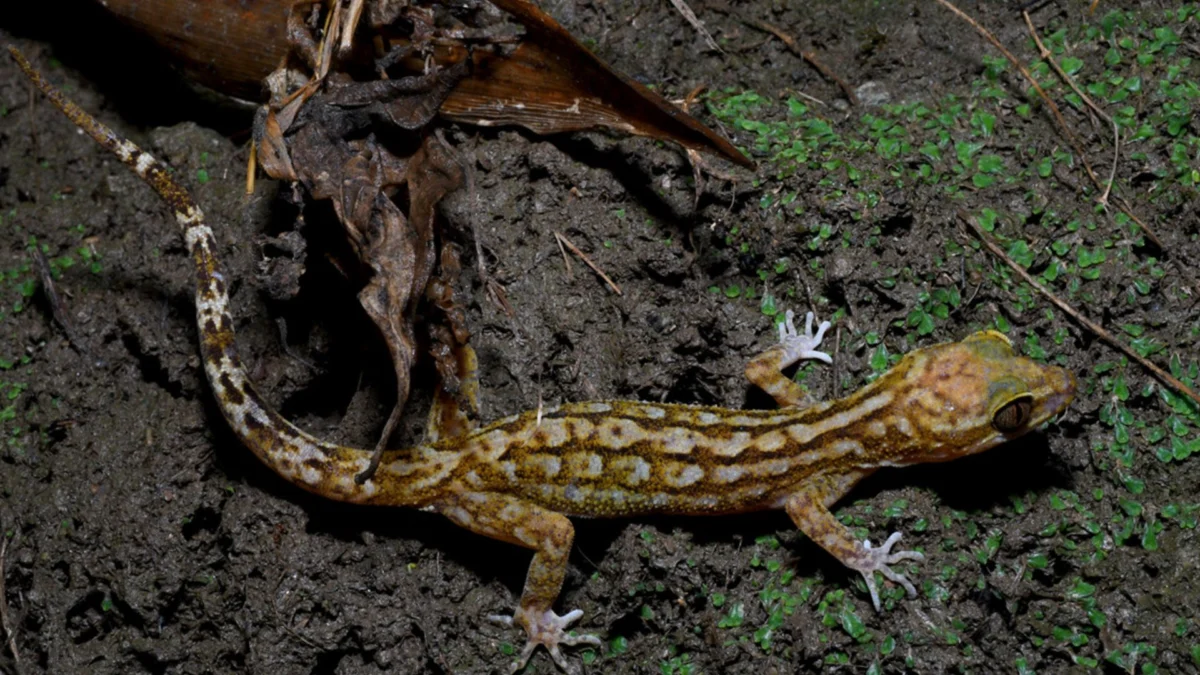
DARJEELING — In the verdant, fog-shrouded altitudes of the Eastern Himalayas, where the air remains heavy with moisture and the forest canopy hides secrets yet to be cataloged by modern science, a new resident has been officially introduced to the world. A collaborative team of Indian scientists has announced the discovery of a new species of bent-toed gecko, a cryptic reptile that has long lived in the shadows of the Darjeeling hills.
The species, scientifically named Cyrtodactylus nebulicola, was identified following an extensive wildlife survey in the Kurseong division of the Darjeeling district. This discovery, spearheaded by researchers from the Zoological Survey of India (ZSI), Fakir Mohan University, and the Human and Environment Alliance League (HEAL), underscores the critical biological importance of the North Bengal region and highlights how much of India’s high-altitude biodiversity remains unexplored.
The Discovery: From Rock Crevices to Scientific Journals
The journey to identifying Cyrtodactylus nebulicola began not in a sterile laboratory, but on the rugged, moisture-slicked slopes of Latpanchar, a village situated on the fringes of the Mahananda Wildlife Sanctuary. The researchers were conducting a systematic survey of the herpetofauna (reptiles and amphibians) of the Kurseong division, an area renowned for its steep gradients and mixed-wet forests.
While many new species are found in remote, untouched wilderness, the "Mist-dweller" was found living in surprising proximity to human habitation. Researchers observed the small reptiles clinging to rock crevices and, notably, the walls of local houses within the village. This ability to coexist on the periphery of human settlements initially masked the gecko’s unique identity, as it was often mistaken for more common local varieties.
However, the team’s keen eyes noted subtle differences in the gecko’s color patterns and physical structure. Suspecting they had encountered a distinct lineage, the researchers collected specimens for a rigorous dual-approach investigation involving both classical morphology (physical traits) and modern molecular phylogenetics (DNA analysis).

A Chronology of Taxonomic Identification
The process of confirming a new species is an arduous one, requiring a bridge between field observation and laboratory precision.
- Field Collection (Post-Monsoon Period): The team identified the geckos during night surveys, when the nocturnal reptiles are most active. They documented the micro-habitats, noting the gecko’s preference for the cool, damp micro-climates characteristic of the 1,200 to 1,500-meter altitude range.
- Morphological Examination: Back in the laboratory, the researchers performed a "meristic" analysis—a process of counting scales, measuring limb proportions, and examining the arrangement of pores. It was here that the unique physical signature of C. nebulicola began to emerge.
- Genetic Sequencing: To provide irrefutable evidence, the team extracted DNA to compare the Latpanchar specimens with other known species in the Cyrtodactylus genus. The results were startling: the DNA showed a genetic divergence of 12% to 20% from its closest evolutionary relatives. In the world of herpetology, a gap of this magnitude is a definitive "smoking gun" for a new species.
- Formal Naming: Once the data was peer-reviewed and validated, the species was officially named. The name nebulicola was chosen to honor the environment that shaped the creature’s evolution.
Supporting Data: What Makes the Mist-Dweller Unique?
The Cyrtodactylus genus, commonly known as bent-toed geckos, is one of the most diverse groups of lizards in the world. They are distinguished by their slender, "bent" toes, which lack the broad adhesive pads found in common house geckos. This adaptation allows them to navigate the uneven surfaces of rocks and forest floors with extreme agility.
Cyrtodactylus nebulicola possesses several "diagnostic" features that separate it from its cousins, C. gubernatoris and C. bhupathyi:
Scale Patterns and Tubercles
The back of the Mist-dweller is covered in 15 to 22 regular rows of small, bumpy scales known as "tubercles." These provide the gecko with a textured appearance that aids in camouflage against the mossy rocks and lichen-covered trees of the Darjeeling hills.
The Mystery of the Femoral Pores
One of the most significant biological markers found by the researchers involves the femoral pores—specialized secretory glands found on the underside of the hind legs. In many related species, these pores are either absent in females or arranged in a different configuration. In C. nebulicola, the females possess specific specialized pores that serve as a key morphological differentiator, providing a vital clue for scientists trying to distinguish between look-alike species in the field.

Lamellae Count
The researchers also conducted a "lamellae count"—counting the fine, transverse scales on the underside of the toes. These scales are essential for the gecko’s grip. The specific count and arrangement of these lamellae in the Latpanchar species are distinct from those found in the bent-toed geckos of neighboring Assam or the lower plains, suggesting an evolutionary adaptation to the specific grip requirements of the misty, high-altitude terrain.
Etymology: The "Dweller of the Mist"
The scientific naming of a species is rarely a matter of chance. For the researchers, the environment of Latpanchar was as much a part of the discovery as the gecko itself.
The name nebulicola is a linguistic marriage of two Latin roots:
- Nebula: Meaning mist, cloud, or vapor.
- Cola: Meaning dweller, inhabitant, or one who frequents a place.
Together, the name translates to "Dweller of the Mist." This reflects the high-altitude cloud forests of the Kurseong division, where the humidity is perpetually high and the landscape is frequently swallowed by moving clouds. This specific micro-climate is essential for the gecko’s survival, providing the moisture necessary for its skin health and the abundance of insects it preys upon.
Official Responses and Scientific Context
The discovery has been hailed by the scientific community as a testament to the "hidden" biodiversity of the Eastern Himalayas. Dr. Kailash Chandra, a former director of the Zoological Survey of India, has frequently noted that the Himalayan foothills are a "biodiversity hotspot" where new species are often "hidden in plain sight."

Representatives from the Human and Environment Alliance League (HEAL) emphasized that this discovery is part of a larger pattern. Only recently, another bent-toed gecko species was discovered on the edge of India’s Raimona National Park in Assam. The fact that two distinct species have been found in such a short timeframe suggests that the Cyrtodactylus genus is undergoing a period of rapid taxonomic expansion as genetic testing becomes more accessible to Indian researchers.
"Every time we look closer at these isolated mountain pockets, we find something new," one researcher noted. "The genetic divergence of 12% to 20% tells us that this species has been evolving independently in the Darjeeling hills for millions of years. It isn’t just a ‘new’ find; it’s an ancient resident we are only just meeting."
Implications: Conservation in the Age of Tourism
While the discovery of Cyrtodactylus nebulicola is a cause for celebration among biologists, it also brings a sobering realization regarding the vulnerability of the species.
The Narrow Distribution Risk
Because C. nebulicola has only been recorded in a very specific geographic range—around the village of Latpanchar and the peripheries of the Mahananda Wildlife Sanctuary—it is considered a "narrowly distributed" species. This makes it particularly susceptible to extinction. If its specific habitat is destroyed or altered, there is no "backup" population elsewhere to ensure the species’ survival.
The Impact of Unregulated Tourism
Latpanchar has recently seen a surge in popularity among wildlife photographers and eco-tourists, largely driven by the presence of the rare Rufous-necked Hornbill. However, the researchers warn that this "tourism boom" is a double-edged sword.

- Habitat Degradation: The construction of new homestays and roads to accommodate tourists can lead to the removal of the very rock crevices and old-growth trees the geckos rely on.
- Light Pollution: As a nocturnal species, the gecko’s hunting and mating patterns can be disrupted by the increased artificial lighting associated with human expansion.
- Disturbance: Unregulated wildlife photography, which often involves moving rocks or disturbing micro-habitats to get the "perfect shot," can cause significant stress to these small reptiles.
The Path Forward: Community-Based Conservation
The researchers conclude their report with an urgent call for community-based conservation. Historically, the local communities in Darjeeling have lived in harmony with their environment. The team suggests that by involving the residents of Latpanchar in the protection of the "Mist-dweller," the village can become a model for sustainable eco-tourism.
"The goal is not to stop people from visiting Darjeeling," the study suggests, "but to ensure that the very biodiversity they come to see is not destroyed by their presence."
As the mist rolls over the Kurseong hills tonight, the Cyrtodactylus nebulicola will emerge from its crevice to hunt, unaware that it is now a named member of the global tree of life. Whether it continues to survive for another million years depends largely on the conservation efforts sparked by this discovery.
