

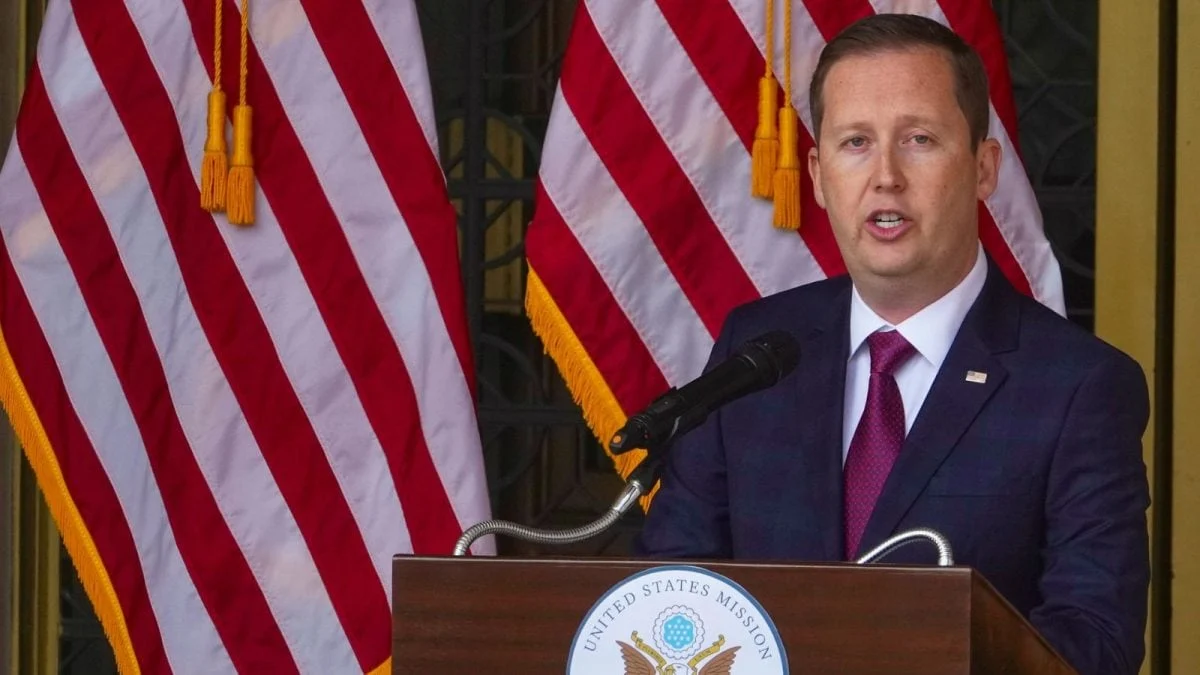
New Delhi, India – May 21, 2026 – In a significant affirmation of deepening economic ties, US Ambassador to India Sergio Gor today lauded Indian companies for committing over $20 billion in new investments in the United States. Speaking at a key address to the American Chamber of Commerce in India (AMCHAM India) in the national capital, Ambassador Gor expressed immense satisfaction with the burgeoning bilateral economic relationship, highlighting that the US embassy in India had ranked first globally in attracting Indian investments at the recent annual Select Investment Summit.
The Ambassador’s remarks underscored not only the substantial financial commitment from Indian firms but also the reciprocal expansion of US businesses into India’s rapidly growing market. This two-way investment flow is seen as a cornerstone of the strategic partnership between the two democracies, with both nations poised to unlock unprecedented economic prosperity through collaborative growth and a soon-to-be-finalized interim trade agreement.
A New Era of Economic Partnership: The $20 Billion Milestone
Ambassador Gor’s "thrilled" reaction to the more than $20 billion investment pledge by Indian companies signals a robust and dynamic shift in the global investment landscape. This monumental figure, announced during the prestigious Select Investment Summit, represents a powerful vote of confidence from Indian industry in the resilience and opportunities within the American economy. The fact that the US Embassy in India outperformed all other diplomatic missions worldwide in facilitating these investments is a testament to dedicated diplomatic efforts and the inherent strength of the Indo-US economic corridor.
The investments, as detailed in an embassy factsheet, are strategically diversified across critical sectors. Pharmaceuticals, advanced manufacturing, energy infrastructure, and emerging technologies are the primary beneficiaries, indicating a forward-looking approach to fostering innovation and supply chain resilience. This influx of capital is projected to create thousands of jobs across the United States, thereby invigorating local economies and enhancing US production capacity. For India, these investments signify a maturing global economic presence, moving beyond traditional trade to becoming a significant capital exporter and job creator in developed markets.
The Select Investment Summit itself is an annual high-profile event organized by the US Department of Commerce, designed to attract foreign direct investment (FDI) into the United States. It serves as a crucial platform for international companies to explore investment opportunities, connect with state and local economic development organizations, and understand the US business environment. The record-breaking commitment from Indian firms at this summit positions India as a leading investor in the US, challenging perceptions and solidifying its role as a key economic partner.
Chronology of Bilateral Economic Engagements
The current surge in investments and the imminent trade deal are not isolated events but rather the culmination of sustained efforts and a progressively strengthening relationship between India and the United States. For the past several years, both nations have prioritized deepening their economic ties, recognizing the mutual benefits of enhanced trade, investment, and technological collaboration.
Ambassador Gor has been a consistent voice in advocating for closer economic integration. His tenure has been marked by a concerted push to facilitate easier market access for businesses on both sides and to streamline regulatory processes. Earlier this month, prior to his AMCHAM address, Ambassador Gor had publicly hinted at the substantial investment figures, building anticipation for today’s formal announcement. This consistent messaging underscores a strategic diplomatic approach aimed at fostering confidence and encouraging cross-border economic activity.
The interim trade agreement, now reportedly "on the table to be finalized," has been a subject of intense negotiations for approximately one-and-a-half years. This timeline, highlighted by Ambassador Gor, is remarkably swift when compared to other complex bilateral agreements, such as the European Union’s trade negotiations, which famously spanned nearly two decades. This accelerated pace reflects a shared sense of urgency and mutual political will to finalize an agreement that can significantly boost economic growth and stability.
Recent diplomatic exchanges further illustrate the advanced stage of these negotiations. Last month, a high-level Indian delegation visited Washington, D.C., specifically to advance discussions on the trade deal. This visit was reciprocated, with a US delegation scheduled to visit India next month, indicating a rapid exchange of technical and policy experts aimed at ironing out the final details. These visits are critical for addressing specific sectorial concerns, tariff issues, and regulatory harmonization that are often the most challenging aspects of trade negotiations.
Historically, the India-US economic relationship has evolved from primarily being focused on services and IT outsourcing to a more diversified and strategic partnership encompassing defense, energy, technology, and now, significant cross-investments. The early 2000s saw the laying of foundational agreements, which have since been built upon by successive administrations in both countries, leading to the comprehensive economic engagement witnessed today.
Supporting Data and Broader Economic Context
Investment Flows: A Two-Way Street
While Indian investments in the US are capturing headlines, Ambassador Gor was keen to emphasize that the economic partnership is very much a two-way street. US firms are simultaneously expanding their footprint in India’s fast-growing market, drawn by its demographic dividend, burgeoning middle class, and robust economic reforms. Sectors like digital services, e-commerce, renewable energy, and advanced manufacturing in India have seen significant capital infusion from American giants. Companies like Amazon, Google, Apple, and various venture capital funds continue to pour billions into India’s tech ecosystem, recognizing its potential as a global innovation hub. Similarly, American manufacturing and pharmaceutical companies are leveraging India’s skilled workforce and cost-effective production capabilities to enhance their global supply chains. This reciprocal flow of capital underscores a symbiotic relationship where each economy provides unique advantages to the other.
Beyond the Numbers: Strategic Implications
The magnitude and nature of these investments carry profound strategic implications beyond mere economic figures. In a world grappling with supply chain disruptions, geopolitical uncertainties, and the imperative for de-risking from over-reliance on single manufacturing hubs, the India-US economic corridor offers a powerful alternative. Indian investments in the US, particularly in pharmaceuticals and advanced manufacturing, directly contribute to strengthening critical supply chains within America, reducing vulnerabilities, and enhancing national security. Conversely, US investments in India help diversify global manufacturing bases and foster technological independence, aligning with India’s "Make in India" initiative.
The focus on emerging technologies also highlights a shared vision for future economic growth driven by innovation. Both countries recognize the importance of collaborating on areas like artificial intelligence, quantum computing, biotechnology, and clean energy to maintain a competitive edge and address global challenges. This strategic alignment ensures that economic growth is not just about quantity but also about quality and resilience.
The Interim Trade Agreement: A Catalyst for Growth
The interim trade agreement, poised for finalization, is expected to be a significant catalyst for further bilateral growth. Ambassador Gor elaborated on its multifaceted goals: improving market access, reducing trade barriers, and providing greater certainty for businesses operating in both countries. For Indian exporters, this could mean easier entry into the vast US consumer market for goods and services, potentially boosting sectors like textiles, agriculture, and IT. For American companies, it could translate into streamlined processes for investing and operating in India, unlocking the full potential of its rapidly expanding consumer base and skilled workforce.
Furthermore, the agreement is designed to strengthen supply chains, encourage fresh investments, and support long-term inclusive economic growth. The Ambassador’s qualifier, "if done right," acknowledges the complexities inherent in such negotiations. A truly effective agreement must address sensitivities in various sectors, navigate regulatory differences, and ensure equitable benefits for both partners. It will likely include provisions on intellectual property rights, tariff reductions, non-tariff barriers, and dispute resolution mechanisms, all critical for creating a predictable and attractive investment environment. The comparison to the EU’s lengthy trade negotiations emphasizes the political will and focused effort invested by both India and the US to expedite this crucial accord, demonstrating a commitment to rapid economic integration in a strategically important partnership.
Official Responses and Stakeholder Perspectives
Ambassador Gor’s Vision
Ambassador Sergio Gor’s fervent advocacy for deeper Indo-US economic integration is clearly articulated in his recent statements. His vision aligns with the broader strategic objectives of the US government to forge robust partnerships that bolster American economic interests while fostering global stability. By highlighting the $20 billion investment and the embassy’s leading role, Gor is not just celebrating a numerical achievement but also emphasizing the practical outcomes of sustained diplomatic engagement. He consistently positions these developments as tangible steps towards a more prosperous and secure future for both nations, driven by mutual economic benefit.
The Trump Administration’s Economic Diplomacy
Ambassador Gor’s remarks explicitly put forth the Trump administration’s position, stating that "President Trump’s goal is to facilitate bilateral trade in a way that creates lucrative opportunities for American businesses and workers." This aligns perfectly with the "America First" economic philosophy, which prioritizes domestic job creation, strengthening American industries, and ensuring fair and reciprocal trade deals. The interim trade agreement, therefore, is viewed through the lens of maximizing benefits for American enterprises and their workforce, while simultaneously offering growth opportunities for India. The administration’s focus on securing "wins" for American interests is evident, yet the nature of this bilateral agreement suggests a recognition of mutual benefit as a pathway to achieve those wins. The emphasis on strengthening supply chains and expanding US production capacity directly addresses core tenets of the administration’s economic security agenda.
AMCHAM India’s Role and Industry Sentiment
The American Chamber of Commerce in India (AMCHAM India) serves as a vital bridge between American businesses and the Indian market, advocating for policies that foster a conducive business environment. Hosting Ambassador Gor’s address underscores its pivotal role in facilitating dialogue and partnership. Industry sentiment within AMCHAM is likely overwhelmingly positive regarding these developments. The commitment of Indian firms to invest in the US creates a positive feedback loop, demonstrating confidence and potentially easing market access for American firms in India.
However, industry stakeholders would also be keenly watching the final details of the interim trade agreement. Businesses typically seek clarity, predictability, and a level playing field. While enthusiasm is high, there would be an expectation for the agreement to address long-standing concerns such as regulatory consistency, intellectual property protection, and specific market access barriers in sectors like agriculture, automotive, and services. The ongoing negotiations provide a critical opportunity to resolve these issues, ensuring that the agreement truly unlocks the prosperity touted by Ambassador Gor.
Indian Government’s Stance
While not directly quoted in the original article, the Indian government’s enthusiastic participation in these discussions and the dispatch of a high-level delegation to Washington confirm its strong commitment to strengthening economic ties with the US. For India, this partnership is crucial for several reasons: access to advanced US technology and capital, diversification of export markets, and bolstering its strategic autonomy. The "Make in India" initiative and the push for greater self-reliance are well-served by attracting US investment and integrating into global value chains through this bilateral framework. The Indian government would likely view the interim trade agreement as a significant step towards achieving its ambitious economic growth targets and elevating its global standing. The strategic imperative of balancing economic partnerships in a complex geopolitical environment also plays a role, with the US being a key partner in India’s broader foreign policy objectives.
Implications for the Future
Strengthening the Indo-US Strategic Partnership
The deepening economic ties, exemplified by the $20 billion investment pledge and the imminent trade deal, are foundational to the broader Indo-US strategic partnership. This relationship extends beyond economics to encompass defense cooperation, counter-terrorism efforts, and collaboration on global issues like climate change and public health. A robust economic framework provides the ballast for these other pillars, ensuring that shared values and geopolitical interests are underpinned by tangible mutual benefits. The economic partnership acts as a crucial enabler, fostering trust and interdependence that are essential for a resilient and enduring alliance in the Indo-Pacific region and beyond.
Global Economic Impact
A flourishing India-US economic corridor holds significant implications for the global economy. As two of the world’s largest democracies and rapidly growing economies, their enhanced cooperation can set new benchmarks for international trade and investment. It can inspire other nations to pursue similar bilateral agreements, contributing to a more diversified and resilient global trading system. The focus on strategic sectors like pharmaceuticals, advanced manufacturing, and emerging technologies could also drive global innovation, establish new supply chain paradigms, and collectively address challenges such as climate change through collaborative research and development. This partnership has the potential to become a model for how major economies can leverage their strengths for mutual benefit and global good.
Challenges and Opportunities Ahead
Despite the palpable optimism, challenges remain. Finalizing the interim trade agreement will require careful navigation of specific sectorial interests, particularly concerning tariffs on agricultural products, automotive parts, and certain manufactured goods. Intellectual property rights protection and data localization policies could also be areas requiring detailed negotiation. Furthermore, ensuring that the benefits of the agreement are widely distributed and contribute to inclusive growth in both countries will be critical for its long-term success.
However, the opportunities far outweigh the challenges. The agreement is expected to unlock new avenues for collaboration in areas like green energy transition, digital infrastructure, and space technology. Both nations can leverage their respective strengths—India’s burgeoning tech talent and market size, and the US’s innovation leadership and capital—to create a powerful synergy that drives future economic growth. The continued exchange of high-level delegations signals a proactive approach to addressing these complexities, with a clear mandate to bring the deal to fruition.
In conclusion, Ambassador Sergio Gor’s announcement marks a pivotal moment in the Indo-US economic narrative. The commitment of over $20 billion in Indian investments in the US, coupled with the imminent finalization of a comprehensive trade agreement, signals an era of unprecedented economic partnership. This collaboration is not merely about financial figures; it is about building a resilient, innovative, and mutually prosperous future for two global powers, with far-reaching implications for the international economic order. The rapid pace of negotiations and the consistent high-level engagement underscore a shared determination to cement an alliance that will undoubtedly shape the 21st century.
